

Recommended AI agents for multilingual support in restaurants?
The Bottom Line: Why Multilingual AI is No Longer Optional for Restaurants
The best AI agents for multilingual restaurant support combine natural language processing, voice recognition, and direct integration with existing POS and reservation systems. These solutions handle real-time translation, cultural nuances, and cuisine-specific terminology while maintaining the personal touch that defines exceptional hospitality.
The Evolving Restaurant Environment: A Diverse Clientele
Modern restaurants serve increasingly diverse communities where English isn’t always the primary language. Your potential customers speak Spanish, Mandarin, French, Arabic, and dozens of other languages. When language barriers disrupt ordering, reservations, or service inquiries, you lose revenue and create frustration that drives customers to competitors.
Beyond Reservations: The Full Spectrum of Multilingual Guest Interaction
Multilingual support extends far beyond taking reservations. Guests need help with menu explanations, dietary restrictions, special requests, order modifications, and payment questions. They want to understand wine pairings, ask about ingredients, and communicate preferences. AI agents that handle these interactions in multiple languages create inclusive experiences that turn first-time visitors into loyal customers.
Quantifiable Business Impact: More Bookings, Fewer Errors, Higher Satisfaction
Revenue Impact: Restaurants implementing multilingual AI support often see 15%-25% increases in bookings from non-English-speaking customers, a 40% reduction in order errors, and higher customer satisfaction scores across diverse demographic groups.
The numbers tell a clear story. When customers can communicate comfortably in their preferred language, they order more confidently, return more frequently, and recommend your restaurant to others in their community. These AI solutions deliver measurable outcomes by removing communication barriers that previously limited market reach.
AI Agent Marketplace: Key Capabilities for Hospitality
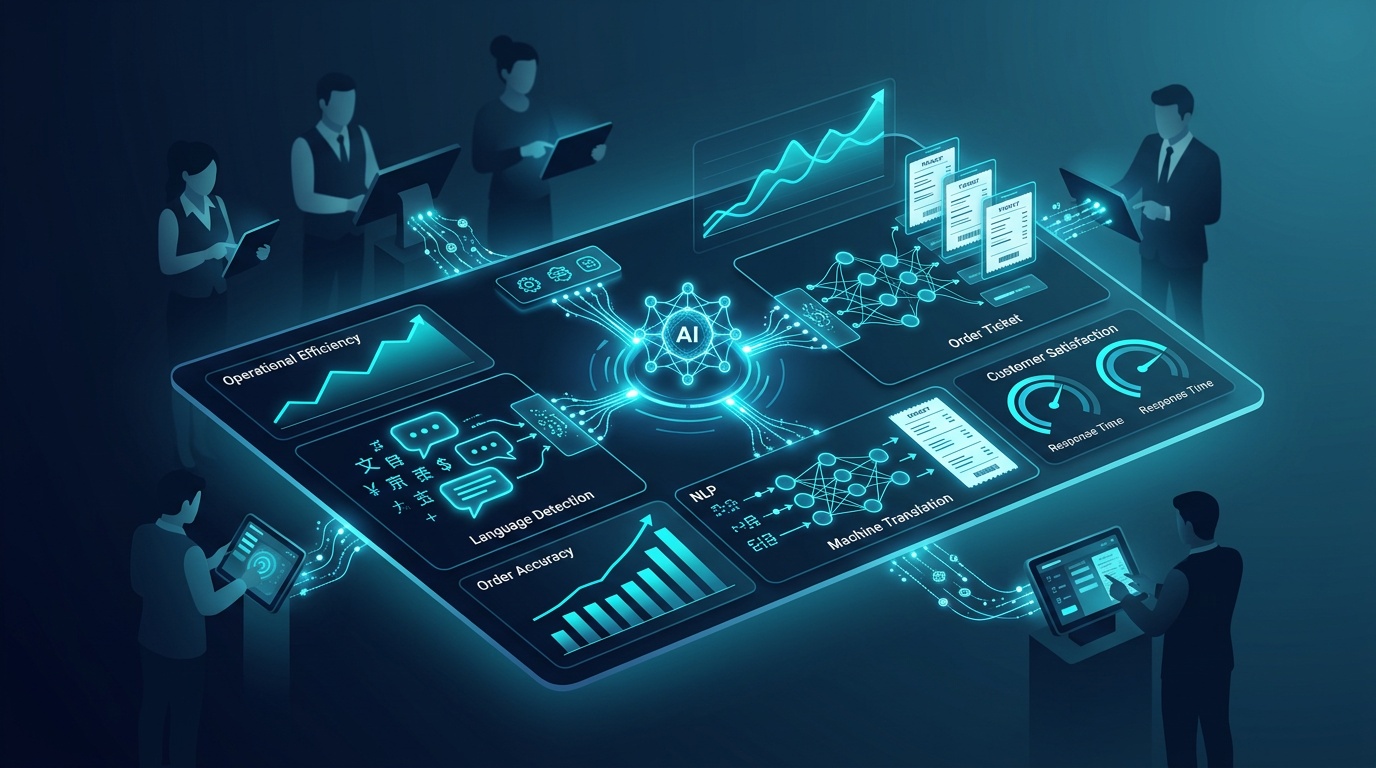
Core AI Functions: Language Detection, Natural Language Processing, and Machine Translation
Effective restaurant AI agents automatically detect a customer’s preferred language within seconds of initial contact. Advanced natural language processing understands context, slang, and regional variations, while machine translation stays accurate with complex food terminology. The system must also recognize when a customer switches languages mid-conversation and adapt instantly.
Voice Recognition and Conversational AI: Mimicking Human Interaction
Top-tier AI agents process spoken language with accent recognition across multiple dialects. They understand when customers say “sin cebolla” instead of “no onions,” and they recognize that “épicé” signals that the guest wants spicy food. The conversational flow should feel natural and aligned with the warm hospitality atmosphere guests expect.
Integration Power: Connecting with Your Existing Tech Stack
Smart multilingual AI agents integrate directly with your POS system, reservation platform, and inventory management tools. When a Spanish-speaking customer orders “pollo asado,” the AI translates it to “roasted chicken” in your system while preserving special requests and modifications. This approach prevents errors and supports operational efficiency.
Scalability and Customization: Tailoring AI to Your Unique Brand
Restaurant AI solutions must scale with growth while keeping brand voice consistent. The system should learn your menu items, house specialties, and service style. Whether you operate a family taco shop or an upscale steakhouse, the AI should match your establishment’s tone and vocabulary across all supported languages.
| Capability | Basic AI | Restaurant-Optimized AI |
|---|---|---|
| Language Support | 5-10 common languages | 20+ languages with regional dialects |
| Food Terminology | Generic translation | Cuisine-specific vocabulary database |
| Cultural Context | Limited understanding | Dietary restrictions, cultural preferences |
| POS Integration | Manual data entry | Direct system synchronization |
Beyond the Surface: Evaluating AI Agents for True Hospitality Impact
Assessing AI’s Nuance: Handling Cuisine-Specific Terminology and Cultural Context
The difference between adequate and exceptional multilingual AI comes down to cultural sophistication. When a customer asks for “halal” options, the system must understand religious dietary requirements, not just translate the word. Similarly, recognizing that “vegetariano” may include fish in some cultures while “vegano” excludes all animal products prevents misunderstandings that harm guest trust.
Measuring ROI Beyond Bookings: AI’s Role in Upselling and Customer Lifetime Value
Smart restaurant owners track metrics beyond reservation increases. Well-designed multilingual AI can suggest wine pairings, appetizers, and desserts in a customer’s native language. Done well, this increases average order value by 20%-30% while feeling genuinely helpful. When configured properly, the AI can also reference past preferences in future conversations to drive repeat visits.
The Human-AI Collaboration Framework: Supporting Your Team, Not Replacing It
Strategic Partnership: Strong implementations position AI as a multilingual communication bridge that helps staff deliver great service to every guest, regardless of language barriers.
Your servers, hosts, and managers remain the heart of the hospitality experience. AI handles initial communication, order clarification, and basic inquiries, then transfers complex requests to staff with full context and translation support. This model preserves personal connection while reducing friction caused by miscommunication.
Actionable Steps: Choosing and Implementing the Right AI Agent
Defining Your Needs: Which Languages, Which Services?
Start by analyzing customer demographics and identifying the top three languages beyond English in your market. Decide whether you need phone support, online ordering help, or in-person tablet interactions. Document current pain points: Are phone reservations being lost due to language barriers? Do online orders contain frequent errors from non-English-speaking guests?
The Vendor Selection Checklist: Key Questions to Ask Potential AI Partners
Evaluate providers based on restaurant-specific experience, not generic AI capabilities. Ask for demonstrations using your menu items and common guest scenarios. Verify integration compatibility with existing systems. Request references from similar establishments and ask about ongoing support, system updates, and performance monitoring. Quality multilingual restaurant AI should provide transparent pricing and clear feature packages.
Phased Implementation: Strategies for a Smooth Rollout
Begin with one channel, such as phone reservations, before expanding to online ordering and in-person support. Train staff on AI handoff procedures and establish protocols for situations requiring human judgment. Monitor performance metrics weekly during the first month, adjusting language models and response templates based on real interactions.
Ongoing Optimization: Ensuring Your AI Agent Delivers Sustained Results
Regular performance reviews should track booking conversion rates, order accuracy, and customer satisfaction across language groups. Update the AI’s menu knowledge monthly and seasonal offerings immediately. Collect feedback from multilingual customers to spot gaps in cultural understanding or service quality that need refinement.
Pre-Implementation Checklist
- Identify the top 3-5 languages in your customer base
- Audit technology stack compatibility
- Define success metrics and tracking methods
- Set a staff training timeline
- Create escalation procedures for complex requests
- Test AI responses with native speakers
The Vynta AI Advantage: Enterprise-Grade Solutions for Hospitality Growth
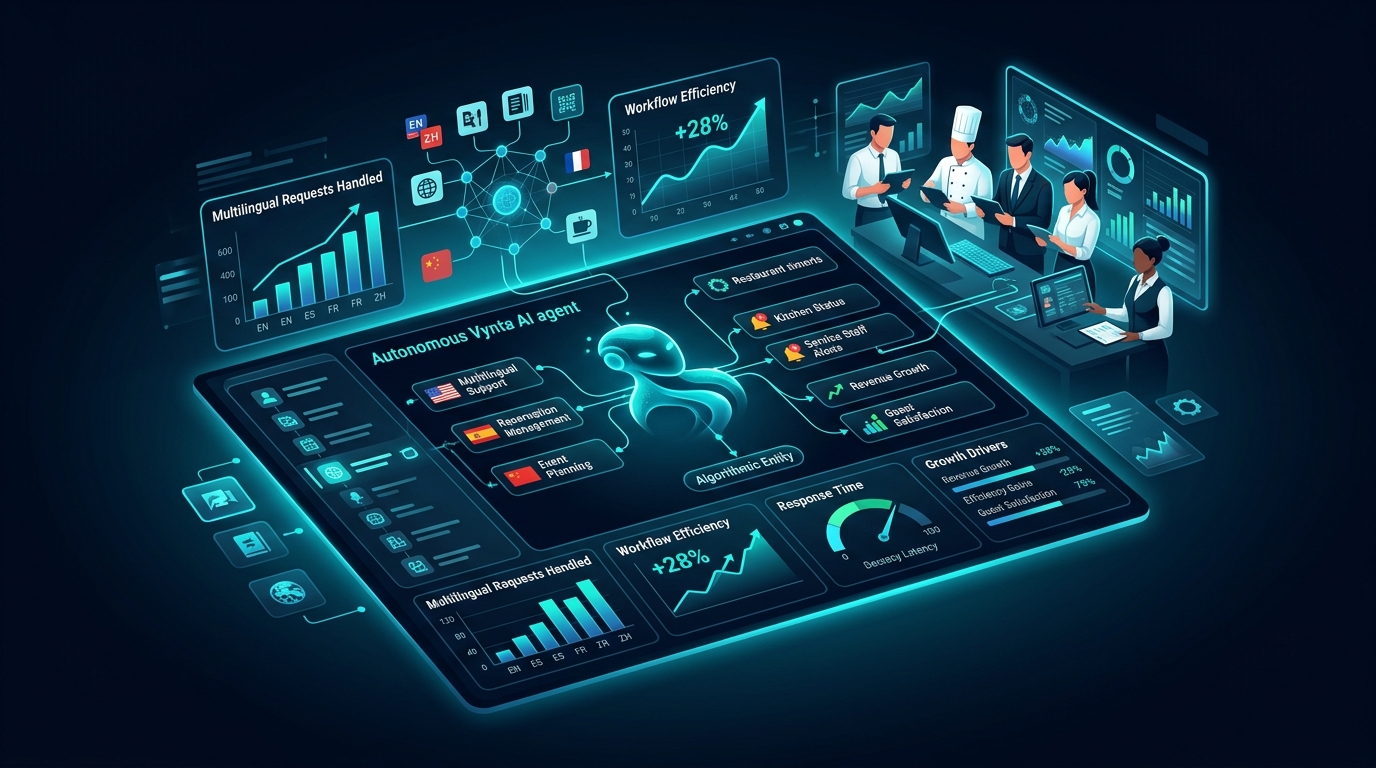
Our Approach: Industry Specialization for Real Business Outcomes
Vynta AI delivers custom AI agents designed specifically for premium hospitality venues such as restaurants, luxury bars, nightclubs, and beach clubs. Our AI agents respond instantly to inquiries within client-defined hours and mimic human-like response timing with natural pauses and delays. We understand restaurant operations, peak service periods, and the nuanced communication required for exceptional guest experiences.
Tailored Solutions for Hospitality: From Guest Experience to Operational Efficiency
Our AI agents integrate in real time with CRMs such as SevenRooms, synchronizing guest data, reservations, tags, and updates automatically while maintaining the personal touch that defines great hospitality. The system can increase booking conversion by 50% and reduce customer inquiry abandonment by 60%. The AI agents can increase average guest spend by up to 25% through brand-safe upselling tailored to guest profiles and channel specifics.
Partnering for Success: How We Support Your AI Journey
Strategic Partnership: Vynta AI provides implementation support, ongoing optimization, and performance monitoring so your multilingual AI investment delivers sustained improvements in guest experience and operations.
Success with multilingual AI requires more than technology deployment. Our team provides training, performance monitoring, and continuous optimization so AI agents keep pace with business needs and guest expectations. Operational costs can be reduced by 30% using Vynta AI Agents, while ensuring VIP guests always receive human care via escalation. The AI supports multilingual capabilities and channel-specific personalization, tailoring responses appropriately across WhatsApp, SMS, Instagram, and email.
Frequently Asked Questions
Why is multilingual AI support important for restaurants today?
Modern restaurants serve diverse communities, meaning many potential customers speak languages other than English. When language barriers prevent smooth ordering or service, restaurants risk losing revenue and customer satisfaction. Implementing multilingual AI agents ensures every guest can communicate comfortably, expanding market reach.
What specific guest interactions can AI agents handle in multiple languages?
Multilingual AI agents extend support beyond just reservations. They can assist guests with menu explanations, dietary restrictions, special requests, order modifications, and payment questions. This creates inclusive experiences, helping turn first-time visitors into loyal customers.
How do AI agents improve restaurant business outcomes?
Restaurants implementing multilingual AI support often see significant business improvements. This includes increases in bookings from non-English-speaking customers and a reduction in order errors. Vynta AI Agents, for example, can increase booking conversion by 50% and reduce customer inquiry abandonment by 60%.
What core AI functions are essential for effective multilingual restaurant support?
Effective AI agents for multilingual restaurant support require several core functions. These include automatic language detection, advanced natural language processing to understand context, and accurate machine translation for complex food terminology. Voice recognition and conversational AI are also key for mimicking natural human interaction.
How do AI agents manage cuisine-specific terminology and cultural context?
The difference between adequate and exceptional multilingual AI lies in its cultural sophistication. Top AI agents understand cuisine-specific terminology, like ‘pollo asado,’ and cultural nuances, such as the meaning of ‘halal’ options. This prevents misunderstandings and builds guest trust.
Can AI agents help increase revenue beyond just bookings?
Absolutely, smart AI agents can significantly increase average order value. They can suggest wine pairings, appetizers, and desserts in a customer’s native language, leading to an increase in average guest spend by up to 25%. This feels helpful to the guest and directly impacts revenue.
How do AI agents work with existing restaurant staff?
AI agents act as a multilingual communication bridge, supporting staff rather than replacing them. They handle initial communication and basic inquiries, then transfer complex requests to human staff with full context and translation support. This model preserves personal connection while reducing friction from miscommunication. Vynta AI Agents ensure VIP guests always receive human care via escalation.