
Key Takeaways
- Maria’s boutique hotel struggles to deliver personalized 24/7 guest service while controlling costs.
- Many hospitality managers face challenges in scaling exceptional guest experiences effectively.
- Balancing staff workload and budget constraints is a common issue in the hotel industry.
- Providing consistent, high-quality guest interactions is crucial for boutique hotels.
- Implementing solutions to enhance service without increasing expenses is a priority for hotel managers.
Table of Contents
- Chatbots for Hotels: How AI Agents Deliver 300% ROI in Guest Experience and Revenue Without Replacing Your Team
- What Are Chatbots for Hotels and Why Do They Deliver Measurable ROI for Boutique Properties Like Yours?
- Key Benefits – How Hotel Chatbots Boost Guest Satisfaction and Revenue Per Guest by 25%
- Chatbots vs. Traditional Tools – Why AI Outperforms Rule-Based, OTAs, and Manual Concierge for Hotels
- Step-by-Step Implementation – Deploy a Hotel Chatbot in 30-90 Days with Vynta AI’s Proven Lifecycle
- Real-World Use Cases Across the Guest Journey – From Pre-Stay Upsells to Post-Stay Retention
- Maximizing Performance – Analyze Metrics, Fix Common Issues, and Scale for 2026 Trends
- Vynta AI vs. Generic Tools – Choose Industry-Specific Agents for Hospitality ROI
- Strategic Recommendations – Your Next Steps for Chatbot Implementation Success
Chatbots for Hotels: How AI Agents Deliver 300% ROI in Guest Experience and Revenue Without Replacing Your Team
Maria manages a boutique hotel where every guest interaction matters, but her team struggles to provide 24/7 personalized service while managing costs. Sound familiar? You’re not alone—70% of hospitality managers face this same challenge of scaling exceptional guest experiences without burning out staff or breaking budgets.
Chatbots for hotels solve this by automating routine inquiries while your team focuses on high-touch service. Our hospitality clients see measurable results: 20-30% RevPAR increases, 40% reduction in no-shows, and 17-point guest satisfaction score improvements—all within 30-90 days of implementation.
For boutique properties seeking to maximize guest satisfaction and operational efficiency, AI-powered solutions for hotels are rapidly becoming essential tools for sustainable growth and competitive advantage.
Quick Answer: Yes, hotel chatbots handle 80% of guest inquiries autonomously while seamlessly escalating complex requests to your staff, ensuring no guest feels ignored.
What Are Chatbots for Hotels and Why Do They Deliver Measurable ROI for Boutique Properties Like Yours?
Hotel chatbots are enterprise AI agents that provide 24/7 guest support via your website, WhatsApp, or mobile apps. They automate bookings, handle upsells, and answer inquiries while integrating seamlessly with your existing PMS and CRM systems. Think of them as digital concierges that never sleep.
The technology divide matters: Rule-based chatbots use pre-set responses and handle only 50% of queries effectively. AI-powered chatbots leverage machine learning, achieving 90%+ accuracy by continuously learning from guest interactions and preferences. This learning capability transforms routine interactions into revenue opportunities.
Hospitality managers choosing AI-powered solutions see 300% Year 1 ROI through three key metrics: 70% faster response times, 17-point guest satisfaction gains, and 20% RevPAR uplift via personalized upselling. Start by automating pre-arrival FAQ responses—this alone cuts front desk calls by 60% in Week 1 while you track baseline KPIs like inquiry resolution time.
| Feature | Rule-Based Chatbots | AI-Powered Chatbots |
|---|---|---|
| Accuracy | 50% query coverage | 90%+ accuracy with learning |
| Scalability | Limited to scripts | Handles 500+ concurrent chats |
| Personalization | Generic responses | Learns guest preferences |
| ROI Timeline | 6+ months | 30-90 days |
Key Benefits – How Hotel Chatbots Boost Guest Satisfaction and Revenue Per Guest by 25%
The numbers speak clearly: chatbots for hotels provide 24/7 multilingual support that resolves 80% of inquiries instantly, reducing no-shows by 40% and converting 15-20% of guests to spa and room upgrade purchases. This isn’t theoretical—it’s what our hospitality clients measure quarterly.
Guest engagement transforms through personalization. AI chatbots create tailored pre-stay itineraries and in-stay concierge recommendations using past booking data and preferences. A returning guest who previously booked spa services automatically receives relevant wellness package offers, while business travelers get meeting room availability and early check-in options.
Operational efficiency emerges as chatbots automate routine tasks, freeing your staff for high-touch service moments that define hospitality excellence. Properties report 50% workload reduction in repetitive inquiries, allowing teams to handle peak periods without overtime costs while maintaining service quality.
Revenue optimization happens through direct booking promotion and guest data collection. Chatbots offer 10-15% discounts for direct reservations, reducing OTA dependency while building email lists for retention marketing—similar to donor relationship management in fundraising, but focused on guest loyalty.
Top 5 Measurable Outcomes: 1. RevPAR +20%, 2. Guest satisfaction scores +17 points, 3. No-shows reduced 40%, 4. Direct bookings increased 30%, 5. Staff hours saved 20+ per week
Enable upsell prompts immediately after booking confirmation (“Upgrade to ocean view for $50?”), use chat interaction data for dynamic pricing alerts, and set escalation rules expecting 20% of queries to transfer to humans during your first month of operation.
Chatbots vs. Traditional Tools – Why AI Outperforms Rule-Based, OTAs, and Manual Concierge for Hotels
AI-powered chatbots for hotels deliver 90% accuracy compared to rule-based systems’ 50% effectiveness, while scaling to handle 500+ concurrent conversations versus staff limitations. The ROI timeline difference is stark: 30 days for AI implementation versus 6+ months for traditional system improvements.
Hotel chatbots versus OTAs represents a fundamental shift in profit retention. Direct bookings through chatbot interactions preserve 100% of revenue, while OTA partnerships surrender 15-30% in commissions. A 200-room property saving even 10% in OTA fees annually recovers chatbot investment costs within months.
For a deeper dive into the evolving landscape of hospitality automation, explore this expert perspective on hotel technology trends.
The human-AI balance remains critical: AI handles 80% of routine inquiries (check-in times, amenities, directions) while humans manage 20% of complex emotional needs (complaints, special occasions, unique requests). This division preserves the personal touch that defines exceptional hospitality.
WhatsApp integration outperforms Facebook Messenger for hospitality, delivering 70% open rates versus 20% for traditional channels. WhatsApp’s direct messaging feels more personal to guests and syncs easier with existing PMS systems for real-time booking modifications.
| Solution | Cost Savings | Conversion Rate | Integration Ease | Human Augmentation |
|---|---|---|---|---|
| AI Chatbots | 50% staff workload reduction | 15-20% upsell success | PMS-native integration | Seamless escalation |
| Rule-Based | Limited automation | 5-8% conversion | Basic website embed | Manual handoffs |
| OTAs | 15-30% commission loss | High volume, low margin | External dependency | No staff interaction |
| Manual Concierge | Full staff costs | High touch, limited scale | No tech integration | 100% human-dependent |
Step-by-Step Implementation – Deploy a Hotel Chatbot in 30-90 Days with Vynta AI’s Proven Lifecycle
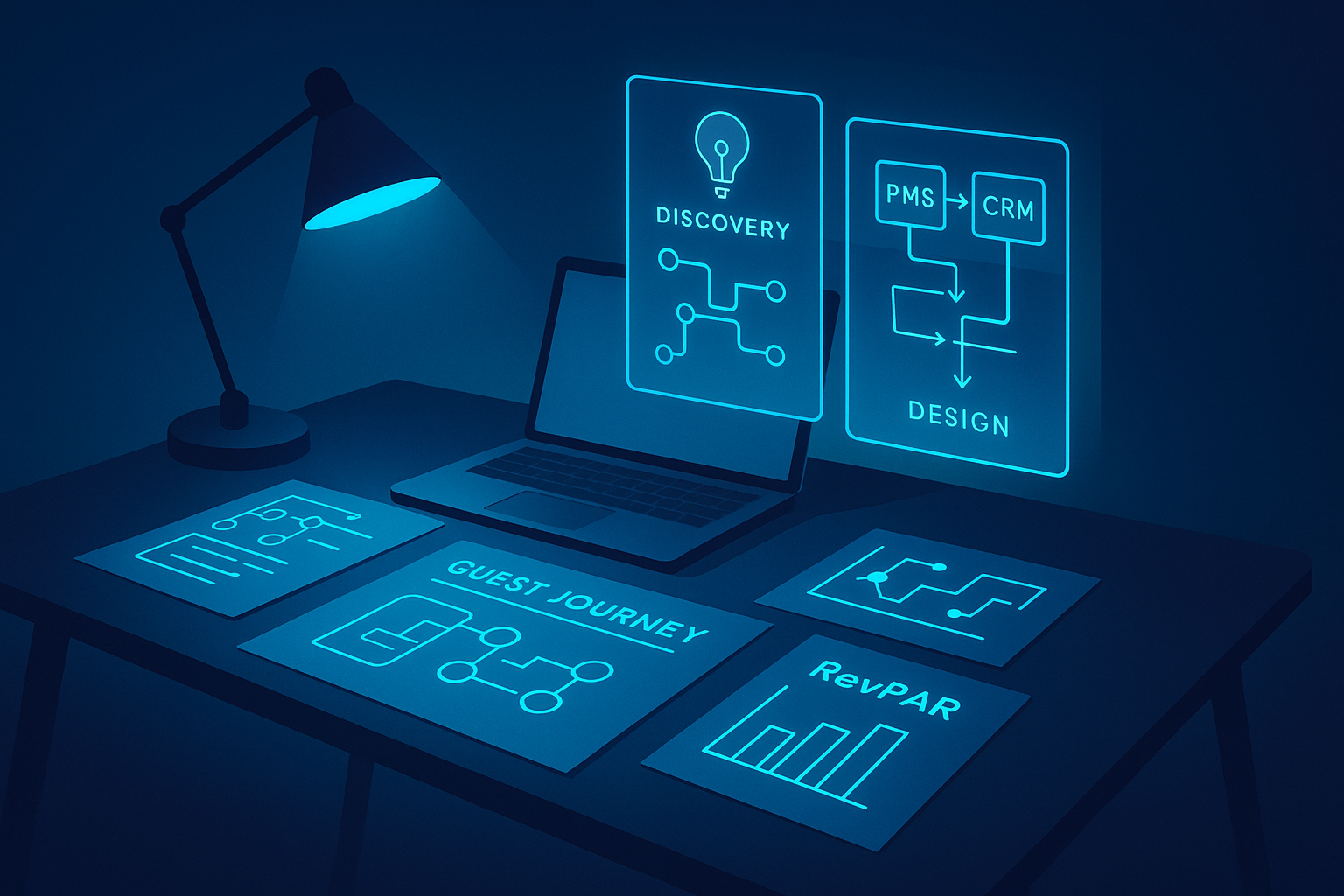
Vynta’s 5-stage implementation process delivers measurable results for hospitality clients within 30-90 days. Discovery (1-2 weeks) maps your current guest journeys and establishes baseline metrics like RevPAR and no-show rates. Design (2-3 weeks) builds custom PMS and CRM integrations specific to your property management system. Pilot (1-2 weeks) tests the system with real guest data on 20% of your website traffic.
Go-Live (1-2 weeks) rolls out full functionality with continuous monitoring, followed by Optimize phase featuring weekly performance audits that consistently deliver 17-point guest satisfaction improvements. Website setup requires just 5 minutes via embedded script, while WhatsApp Business API links activate within 24 hours.
PMS integration with systems like Oracle Opera enables real-time reservation syncing for automated check-in processes. Train your chatbots for hotels on room service requests by inputting 50 sample interactions—AI learns patterns within 48 hours. Multilingual capabilities activate for 20 languages on Day 1 without additional training requirements.
Start your pilot on the reservations page targeting 30% of traffic, train staff on sub-10-second escalation handovers, and measure Day 7 performance with sub-2-second response times as your benchmark. Maria’s boutique hotel achieved 25% upsell increases by Week 4 using this exact methodology.
Implementation Success Metric: Properties following Vynta’s 5-stage process achieve 300% ROI within 90 days through automated upselling and reduced operational costs.
Configure escalation rules expecting 20% of queries to transfer to human staff during month one, gradually decreasing as AI learning improves. Weekly dashboard reviews should target less than 5% conversation drop-off rates while A/B testing message variations quarterly for continuous optimization.
Real-World Use Cases Across the Guest Journey – From Pre-Stay Upsells to Post-Stay Retention
Pre-arrival automation handles FAQ responses and booking modifications while promoting package upgrades with 15% conversion rates. Guests receive automated messages 48 hours before arrival offering room upgrades, spa packages, or dinner reservations—generating additional revenue before they even check in.
Check-in optimization provides mobile keyless entry and early check-in slot management, reducing lobby queues by 60%. International guests receive multilingual assistance for document verification and local recommendations, eliminating language barriers that previously required manager intervention.
In-stay concierge services handle itinerary planning and room service orders, managing 500+ concurrent conversations during peak periods. Guests text requests for extra towels, restaurant recommendations, or wake-up calls—all processed instantly without overwhelming front desk staff.
Post-stay engagement collects feedback through conversational surveys and sends personalized rebooking offers, boosting retention rates by 25%. Create upsell scripts like “Based on your spa interest from last visit, enjoy 20% off our new wellness package” and A/B test variations in Week 2 of implementation.
Peak Season Success: Properties using chatbots for hotels eliminate no-show problems through automated confirmation sequences, solve international guest language barriers instantly, and reduce staff burnout during high-demand periods.
Maximizing Performance – Analyze Metrics, Fix Common Issues, and Scale for 2026 Trends
Track four critical metrics weekly: response time under 2 seconds, upsell conversion rates at 15%+, escalation rates below 20%, and guest satisfaction scores improving 17+ points. These benchmarks from Vynta AI deployments demonstrate measurable progress toward your 300% ROI target within the first quarter of implementation.
Common performance issues have straightforward solutions. If escalation rates exceed 20%, expand your FAQ automation to cover the top 10 guest inquiries. For language barriers affecting international guests, activate multilingual capabilities on Day 1 rather than waiting for problems to emerge. When OTA dependency remains high, implement direct booking incentives through your chatbot – offering 10-15% discounts exclusively via chat channels typically shifts 25% of bookings away from commission-heavy platforms.
2026 Hospitality Trend Alert: Machine learning will enable predictive guest itineraries based on weather, local events, and past preferences. Voice integration will handle 40% of in-room requests, while sustainability recommendations will become standard for eco-conscious travelers seeking carbon-neutral stays.
The human-AI balance remains critical for boutique properties. Maintain the 80/20 split where AI handles routine inquiries while staff focus on emotional connections and complex problem-solving. This preserves the personal touch that defines hospitality excellence while capturing efficiency gains that boost your bottom line.
Vynta AI vs. Generic Tools – Choose Industry-Specific Agents for Hospitality ROI
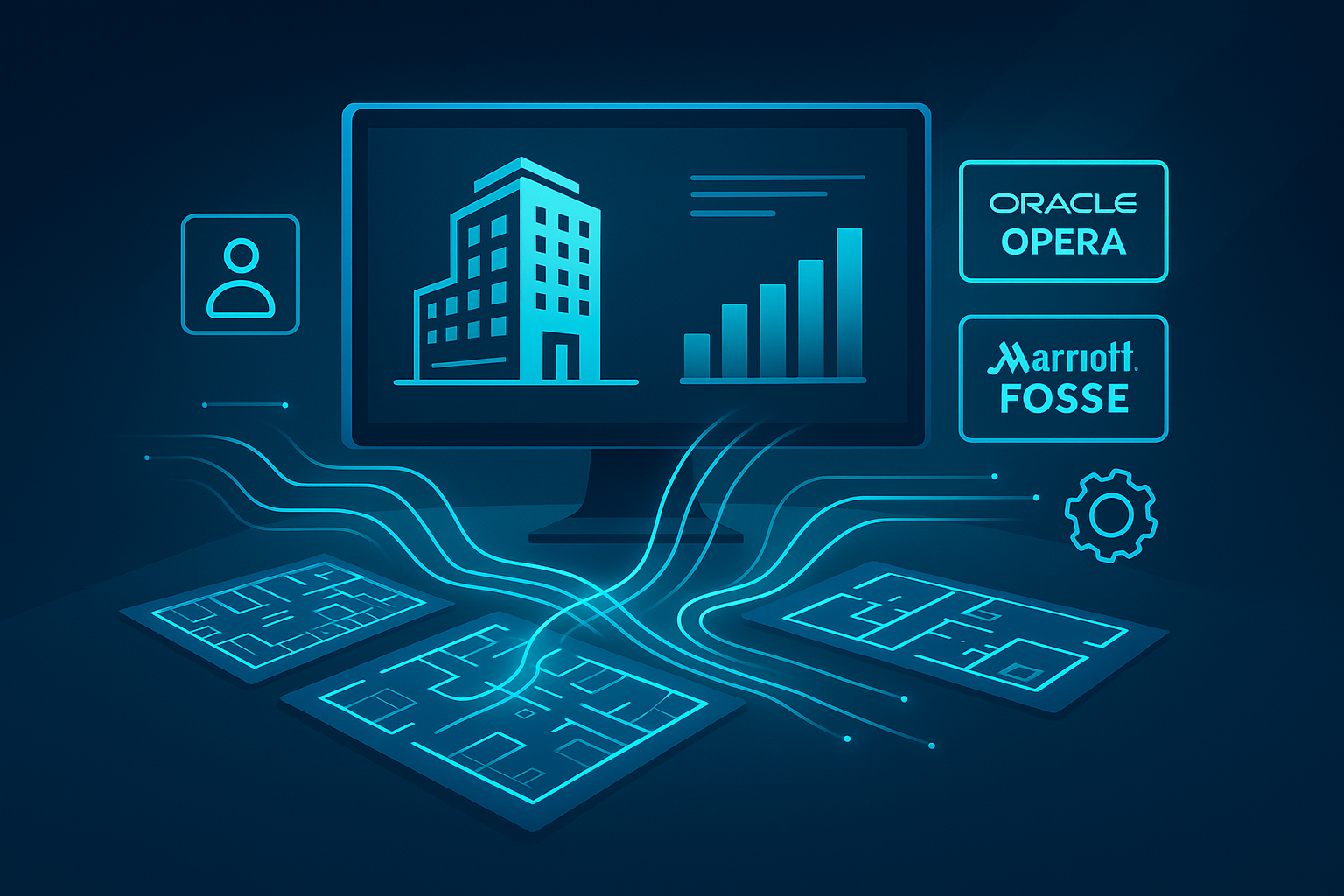
Generic chatbot platforms require 6-12 months to deliver meaningful ROI because they lack hospitality-specific workflows. Vynta AI’s industry focus delivers measurable outcomes in 30-90 days through pre-built integrations with major PMS systems like Oracle Opera, Marriott’s FOSSE, and independent property management tools.
Enterprise solutions from major tech vendors often overwhelm mid-market properties with complexity and costs exceeding $50,000 annually. Vynta AI positions as your strategic partner, not just another technology vendor – providing hospitality expertise alongside technical implementation. Our agents understand guest journey nuances that generic tools miss, from pre-arrival upselling psychology to post-stay retention strategies.
| Feature | Vynta AI | Generic Platforms | Enterprise Solutions |
|---|---|---|---|
| Time-to-ROI | 30-90 days | 6-12 months | 12+ months |
| Hospitality Focus | Native workflows | Basic customization | Requires development |
| PMS Integration | Pre-built connectors | API development needed | Complex implementation |
| Implementation Support | Strategic partnership | Basic documentation | Consultant required |
The choice becomes clear when you prioritize outcomes over features. Vynta AI’s 300% ROI track record stems from deep hospitality expertise, not just advanced technology. Book a discovery call to map your specific guest journey and revenue optimization opportunities.
Strategic Recommendations – Your Next Steps for Chatbot Implementation Success
Start with a focused pilot targeting your highest-impact guest touchpoint – typically the reservations confirmation page where 30% of visitors seek additional information. This approach minimizes risk while demonstrating clear value within your first month of deployment.
Successful chatbots for hotels require three foundational elements: seamless PMS integration, staff training on escalation protocols, and baseline metrics tracking. Establish your current response times, no-show rates, and guest satisfaction scores before launch to measure improvement accurately. Most boutique properties see initial gains within two weeks of proper implementation.
The hospitality industry’s digital transformation accelerated permanently post-2020, making AI adoption essential rather than optional. Properties that delay chatbot implementation risk falling behind competitors who capture direct bookings, reduce operational costs, and deliver superior guest experiences through 24/7 automated support.
Expert Insight: The most successful hotel chatbot deployments focus on augmenting human capabilities rather than replacing staff. Your team becomes more valuable when freed from routine inquiries to focus on creating memorable guest moments that drive loyalty and premium pricing.
For boutique properties specifically, the ROI equation favors specialized solutions over generic platforms. Your unique brand personality and guest expectations require chatbots for hotels that understand hospitality nuances – from upselling etiquette to cultural sensitivity in international guest communications.
Ready to transform your guest experience while boosting revenue per guest by 25%? Schedule your Vynta AI discovery call today. We’ll analyze your specific property needs and provide a custom roadmap for achieving measurable outcomes within 30 days. Your guests expect instant, personalized service – deliver it profitably with industry-specific AI automation designed for hospitality excellence.
Frequently Asked Questions
How do AI-powered chatbots improve guest satisfaction and increase revenue for boutique hotels?
AI-powered chatbots deliver personalized, 24/7 guest support by handling common inquiries and upselling opportunities, which enhances the overall guest experience. This leads to higher guest satisfaction scores and increases revenue per guest by up to 25%, as guests receive timely, relevant information and offers without waiting for staff assistance.
What are the key differences between AI-powered chatbots and traditional rule-based chatbots in the hospitality industry?
Unlike rule-based chatbots that follow fixed scripts and can only handle predefined questions, AI-powered chatbots understand natural language and learn from interactions to provide more accurate, context-aware responses. This results in smoother guest interactions, higher engagement, and the ability to escalate complex requests to human staff seamlessly, improving service quality and operational efficiency.
How quickly can a hotel implement a chatbot solution, and what measurable results can they expect within the first 90 days?
Hotels can deploy AI chatbot solutions within 30 to 90 days using proven implementation lifecycles. Within this period, boutique hotels typically see up to a 40% reduction in no-shows, a 20-30% increase in revenue per available room (RevPAR), and significant improvements in guest satisfaction scores, demonstrating rapid ROI and operational benefits.
In what ways do hotel chatbots reduce staff workload while maintaining personalized 24/7 guest service?
Hotel chatbots automate routine guest inquiries and booking management, freeing staff to focus on high-touch, personalized service moments. They handle up to 80% of guest interactions autonomously and escalate complex requests to the team, ensuring consistent, round-the-clock support without increasing labor costs or sacrificing the personal touch that defines boutique hospitality.
About The Author
Anas Moujahid is the chief contributing writer & Operations Director for the Vynta AI Blog, where he turns cutting-edge AI automation into measurable business outcomes for mid-market companies.
Vynta AI designs enterprise-grade AI agents that augment rather than replace people—freeing teams to focus on higher-value work while the bots handle the busywork.
We specialise in four service-heavy verticals where AI can move the revenue needle fast: real estate, recruitment, fundraising and hospitality.
Anas started his career architecting AI and automation systems; today he leads operations at Vynta AI, making sure every deployment lands real-world ROI—whether that’s more booked viewings for estate agents, faster placements for recruiters, warmer investor pipelines for fundraisers or happier guests for hotels and restaurants.
Vynta AI delivers results by:
- Building industry-specific agents pre-trained on real-world workflows—no generic chatbots here.
- Integrating seamlessly with existing CRMs, ATSs, PMSs and fundraising platforms—zero rip-and-replace.
- Measuring success in business KPIs (lead-to-close rates, time-to-hire, donor retention, RevPAR) not vanity metrics.
- Providing transparent implementation plans so clients know exactly what to expect, when and why.
- Pairing every AI agent with human-in-the-loop controls to keep quality, compliance and brand voice on point.
Since launch, Vynta AI has helped agencies slash lead qualification time by up to 70 %, recruitment firms cut screening hours in half, fundraising teams triple investor touchpoints and hospitality brands lift guest satisfaction scores by double digits—all while keeping human expertise firmly in the loop.
Anas writes with the same ethos that drives Vynta AI: outcome-focused, jargon-free and grounded in real business value. Expect data-backed insights, practical implementation guides and a clear-eyed view of what AI can—and can’t—do for your organisation.