

react native chatbot
Beyond the UI: Building Enterprise-Ready React Native Chatbots for Business Automation
A react native chatbot transforms mobile customer interactions through cross-platform development efficiency and native performance. Basic chat interfaces? Easy. Enterprise-grade solutions that actually drive revenue? That’s where most teams hit a wall.
The difference lies in sophisticated AI integration, conversation flow management, and industry-specific automation that turns chat into a revenue driver.
Why React Native for Business Chatbots?
React Native cuts development time by 40% to 60% compared to native development. One codebase, two platforms, faster market entry. The framework’s component architecture mirrors modular chatbot design patterns, which speeds up iteration cycles.
Performance matters when you’re processing complex business logic or managing high-volume customer interactions. Native performance handles real-time messaging, voice input, and multimedia exchanges without the lag you’ll find in web-based chat solutions.
This advantage becomes critical across real estate lead qualification, recruitment screening, fundraising campaigns, and hospitality guest services. All sectors where response speed directly impacts conversion rates.
The Core Challenge: Bridging UI with AI Power
Most teams can build polished chat interfaces using react-native-gifted-chat. Where they struggle? Connecting those interfaces to intelligent backend systems that understand context, maintain conversation state, and execute business processes automatically.
The 80/20 Reality
Building a functional chat UI represents roughly 20% of enterprise chatbot development effort. The remaining 80% involves natural language processing, intent recognition, API orchestration, error handling, and industry-specific business logic integration.
From Generic Template to Industry Agent
Generic react native chatbot template solutions give you messaging functionality. They don’t give you business automation.
We bridge this gap by combining React Native’s development speed with pre-trained industry agents designed specifically for lead qualification, candidate screening, donor engagement, and guest services. Our framework transforms standard chat components into intelligent business tools that understand industry terminology, follow compliance requirements, and integrate with existing business systems.
No months of AI model training. Just production-ready automation with measurable business impact.
The React Native Chatbot Toolkit: Essential Components for Business Applications

Choosing Your UI Foundation: React Native Gifted Chat and Alternatives
react-native-gifted-chat dominates the messaging component space with over 12,000 GitHub stars. Good reason too. It provides message bubbles, typing indicators, file attachments, and avatar management out of the box. Stream Chat excels in real-time performance. Sendbird offers moderation tools for customer-facing applications.
Business applications need more than standard messaging: conversation transcripts, message encryption, offline synchronization, and branded styling. Custom implementations give you maximum control but demand significant development resources.
Integrating Core AI Models: A Unified API Strategy
Modern react native ai integration relies on cloud-based APIs rather than device-side processing. OpenAI GPT models, Google Dialogflow, Microsoft Bot Framework, and AWS Lex each offer distinct advantages for natural language understanding.
Smart teams create abstraction layers that allow model switching without rebuilding conversation logic. This prevents vendor lock-in while enabling A/B testing of model performance across specific business use cases.
Response caching and fallback mechanisms maintain consistent user experiences during API outages or rate limiting. Because uptime matters when you’re processing sales leads.
Handling Conversation Flow: Intents, Entities, and Structured Dialogue
Intent recognition transforms user messages into actionable business processes. Real estate agents need lead qualification intents. Recruitment firms require skill assessment flows. Hospitality businesses need reservation management capabilities.
Entity extraction identifies specific data points within conversations. Property addresses, candidate qualifications, booking dates. This structured data feeds directly into your CRM systems for automated follow-up workflows.
Conversation State Management
Enterprise chatbots must maintain context across multiple message exchanges. State machines track conversation progress, store collected information, and determine appropriate response paths based on business rules and user permissions.
Structured dialogue trees prevent conversations from becoming circular. Each business vertical needs specialized flows: property showing scheduling, candidate screening questionnaires, donor contribution processing, guest service requests. These flows integrate with existing CRM systems to update records and trigger automated workflows.
Persistence and State Management: Keeping Conversations Alive
Conversation persistence requires local storage for immediate access and cloud synchronization for cross-device continuity. AsyncStorage handles message caching, user preferences, and offline draft composition. Redux or Zustand manage application state, while WebSocket connections maintain real-time synchronization.
Business applications demand audit trails and compliance reporting. Message encryption protects sensitive customer data. Structured logging supports performance monitoring and conversation quality analysis.
Integration with business intelligence platforms turns chat interactions into actionable insights about customer behavior and operational efficiency.
Unlocking Measurable Outcomes: Industry-Specific React Native Chatbot Use Cases
Real Estate: Automating Lead Qualification and Property Matching
Real estate agencies deploy conversational AI to capture and qualify leads 24/7. Response time drops from hours to seconds. Intelligent chatbots collect buyer preferences, budget constraints, and location requirements while querying MLS databases for matching properties.
Result? Lead conversion rates increase by 35% to 40% compared to traditional contact forms.
Advanced implementations integrate with CRM platforms like Salesforce or HubSpot, automatically scoring leads based on engagement patterns and financial qualifications. The chatbot schedules property showings, sends automated follow-ups, and triggers agent notifications for high-value prospects.
Our agentic systems for real estate provide specialized automation that understands property terminology and buyer behavior patterns.
Recruitment: Streamlining Candidate Screening and Interview Scheduling
Recruitment firms use intelligent screening to evaluate candidate qualifications before human recruiter involvement. Conversational agents conduct initial interviews, assess technical skills through structured questionnaires, and verify employment history.
This process reduces screening time by 60% while maintaining consistent evaluation criteria across all candidates.
Bias Reduction Through Standardization
Automated screening reduces unconscious bias by applying consistent evaluation criteria to each candidate. Structured conversations focus on skills, experience, and qualifications rather than subjective impressions during initial contact.
Integration with applicant tracking systems enables automatic candidate ranking, interview scheduling, and status updates. Candidates receive timely updates about application status, improving candidate experience while reducing administrative overhead.
Our agentic systems for recruitment streamline the entire hiring pipeline with intelligent automation.
Fundraising: Optimizing Investor Outreach and Donor Engagement
Nonprofit organizations and startups deploy conversational AI to personalize donor communications and streamline contribution processing. Intelligent agents segment donors based on giving history, engagement preferences, and cause interests.
Automated outreach campaigns achieve 25% to 30% higher response rates compared to generic email marketing.
Chatbots handle recurring donation setup, event registration, and volunteer coordination while maintaining detailed interaction logs for relationship management. Integration with payment processors enables secure donation collection directly within conversation flows, reducing friction and increasing completion rates.
Our AI-powered fundraising platform combines conversational AI with donor analytics for maximum campaign effectiveness.
Hospitality: Optimizing Guest Experience and Upselling Automation
Hotels and restaurants implement mobile concierge services that handle reservations, room service orders, and local recommendations. Conversational AI analyzes guest preferences from previous stays to suggest personalized experiences and premium services.
This targeted approach increases upsell revenue by up to 25% while improving guest satisfaction scores.
Post-stay engagement automation collects feedback, processes loyalty program updates, and encourages future bookings through personalized offers. Integration with property management systems supports real-time availability and pricing accuracy across guest interactions.
Our Vynta AI agents for hospitality deliver personalized guest experiences that drive revenue and satisfaction. For deeper insights into hospitality automation, explore our guide on chatbots for hotels and their implementation strategies.
Beyond the Code: Strategic Implementation and AI Partnership for SMEs
Common Concerns and How We Address Them
Mid-market businesses often hesitate to implement AI automation due to integration complexity, data security concerns, and staff training requirements. We address these challenges through pre-configured industry templates, enterprise-grade security protocols, and onboarding programs that reduce disruption to existing operations.
Cost predictability remains a primary concern for SMEs evaluating AI investments. Our subscription-based pricing model includes development, hosting, maintenance, and ongoing optimization without hidden fees or usage overages.
This approach supports accurate ROI calculations and budget planning for growing businesses.
The Human-AI Collaboration Advantage
Successful chatbot implementations augment human capabilities rather than replacing staff entirely. AI handles routine inquiries, data collection, and initial customer triage, freeing employees to focus on complex problem-solving and relationship building.
This collaboration model improves team productivity while maintaining the personal touch customers value.
Staff training programs support adoption by showing how AI tools simplify daily tasks rather than threatening job security. Employees learn to manage conversation escalations, review AI-generated insights, and refine automation rules based on customer feedback patterns.
Scalability and Production Readiness: Your Path to Enterprise AI Agents
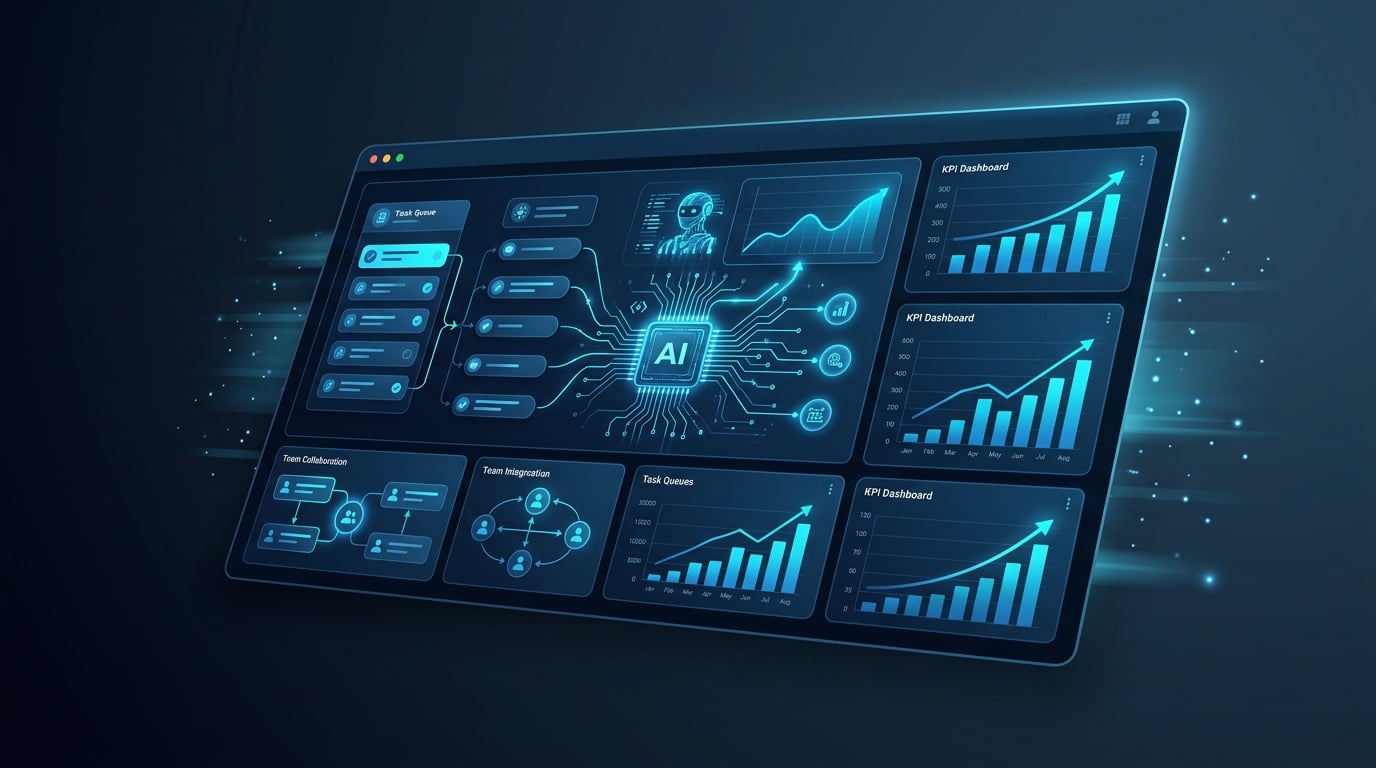
Production-ready chatbots require monitoring, performance optimization, and continuous model refinement. We provide analytics dashboards that track conversation success rates, user satisfaction scores, and business outcome metrics.
These insights guide iterative improvements that increase automation effectiveness over time.
Scalability planning addresses growing conversation volumes, expanding feature requirements, and multi-location deployments. Cloud-native architecture supports consistent performance during traffic spikes, while API-first design supports integration with new business systems as companies grow and evolve their technology stack.
Your React Native Chatbot Roadmap: From Prototype to Revenue Growth
Accelerating Development with Vynta AI’s Framework
Our development framework turns months-long chatbot projects into week-long implementations. Pre-built industry agents, tested conversation flows, and proven integration patterns reduce common development pitfalls while supporting compliance requirements and best practices.
Measuring Success: KPIs That Matter for Your Business
Effective chatbot measurement focuses on business outcomes rather than technical metrics. Lead conversion rates, customer satisfaction scores, operational cost reduction, and revenue attribution provide clear ROI indicators.
Monthly reporting includes conversation analytics, user engagement trends, and recommendations for optimization.
Partnering for Continuous AI-Driven Business Transformation
Long-term success requires ongoing optimization, feature expansion, and adaptation to changing business needs. Vynta AI partnerships include quarterly strategy reviews, performance optimization, and access to new AI capabilities as they become available.
This collaborative approach ensures your react native chatbot evolves alongside your business growth and market demands.
Ready to Transform Your Customer Interactions?
Schedule a consultation with Vynta AI to explore how industry-specific chatbot automation can drive measurable results for your business. Our team will assess your current processes and design a custom implementation roadmap tailored to your growth objectives.
Frequently Asked Questions
Is React Native still relevant in 2026?
React Native remains highly relevant, especially for enterprise-ready chatbots. Its ability to deliver a single codebase across iOS and Android significantly reduces time to market for conversational AI applications. The framework’s native performance ensures real-time messaging and complex business logic processing without latency, which is critical for high-volume customer interactions.
How to make a chatbot in React Native?
Building a React Native chatbot involves more than just the UI, which is about 20% of the effort. You start with a UI foundation like react-native-gifted-chat, then integrate powerful AI models for natural language processing and intent recognition. The remaining 80% focuses on backend systems for conversation flow management, API orchestration, and industry-specific business logic.
Which AI tool is best for React Native?
For React Native chatbots, popular AI tools include OpenAI GPT models, Google Dialogflow, Microsoft Bot Framework, and AWS Lex. The best approach is to create abstraction layers that allow you to switch between these cloud-based AI providers without rebuilding conversation logic. At Vynta AI, we combine React Native with pre-trained industry agents, reducing the need for extensive AI model training.
Does ChatGPT use React Native?
ChatGPT is an advanced AI language model developed by OpenAI, not a user interface framework. React Native, on the other hand, is a framework for building mobile application UIs. You can certainly integrate AI models like OpenAI’s GPT, which powers ChatGPT, into a React Native chatbot to give it intelligent conversational capabilities.
Is React Native losing popularity?
On the contrary, React Native continues to be a strong choice for business applications, particularly for chatbots. Its efficiency in cross-platform development and native performance capabilities are major advantages for businesses seeking to automate customer interactions. For enterprise solutions requiring sophisticated AI and business logic, React Native offers a compelling foundation.