

hotel guest experience ai
Beyond the Buzzwords: How AI Delivers Measurable Improvements to Hotel Guest Experience
Modern hotel guest experience ai transforms hospitality operations through intelligent automation, predictive personalization, and data-driven service optimization. Unlike generic chatbots, enterprise AI agents analyze guest behavior patterns, anticipate needs, and coordinate experiences that drive revenue while reducing operational costs.
The Real Problem: Why “Generic AI” Falls Short in Hospitality
Most hotels deploy superficial AI solutions that frustrate guests with robotic interactions and limited functionality. These basic chatbots for hotels handle simple FAQs but fail to understand context, preferences, or the nuanced nature of hospitality service.
Guests encounter scripted responses that feel impersonal. They often still need human intervention.
The hospitality industry needs sophisticated AI that understands guest intent, remembers preferences across stays, and integrates with property management systems. Generic solutions create more friction than value, leading to abandoned bookings and negative reviews.
The Vynta AI Approach: Enterprise AI Agents for Practical Outcomes
Vynta AI deploys industry-specific agents trained on hospitality workflows, guest communication patterns, and revenue optimization strategies. These AI agents for hospitality understand booking modifications, concierge requests, and upselling opportunities while maintaining the warmth expected in hospitality interactions.
| Feature | Generic AI Chatbots | Vynta AI Enterprise Agents |
|---|---|---|
| Guest Data Integration | Limited to the current conversation | Full guest history and preferences |
| Revenue Optimization | Basic booking assistance | Intelligent upselling and cross-selling |
| Service Personalization | Template responses | Context-aware, tailored interactions |
| Staff Integration | Separate system | Smooth handoffs with notifications |
Quantifying Success: Key Metrics for AI-Driven Guest Experience
Successful hotel guest experience ai implementation shows measurable improvements across key performance indicators. Properties typically see a 25% to 40% reduction in front desk inquiries, a 15% to 30% increase in ancillary revenue through intelligent recommendations, and improved guest satisfaction scores driven by faster, more accurate service delivery.
Revenue per available room increases when AI agents identify strong upselling moments, suggest relevant amenities, and streamline booking modifications. Guest retention improves when personalized service creates memorable stays that drive repeat visits and positive reviews.
From Data Overload to Delightful Personalization: Anticipating Guest Needs with AI
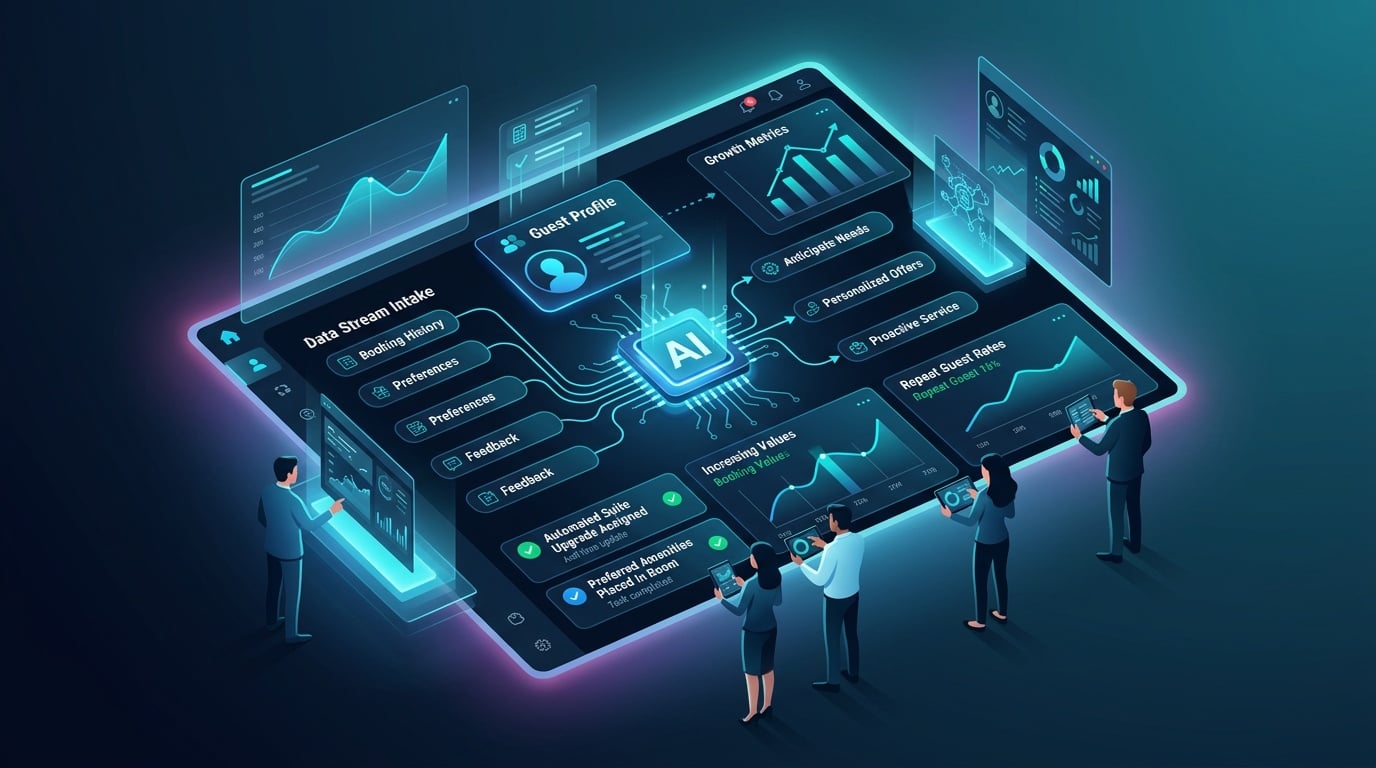
Deconstructing Guest Data: What AI Can Actually “See”
Enterprise AI agents process multiple data streams to build detailed guest profiles: booking patterns, room preferences, dining choices, spa services, and communication history. These systems analyze check-in times, service requests, amenity usage, and feedback patterns to identify behavioral trends that predict future needs.
Advanced algorithms correlate seemingly unrelated data points. Business travelers who book late often prefer express check-in, while leisure guests with spa bookings typically appreciate restaurant recommendations. This analysis allows for proactive service delivery that feels intuitive rather than intrusive.
The “Malicious Compliance” Trap: Avoiding Superficial Interactions
Superficial AI implementations follow rigid scripts that technically answer questions while missing emotional context. When guests express frustration about room temperature, basic chatbots provide thermostat instructions instead of dispatching maintenance or offering room changes.
That’s frustrating. And it shows.
Sophisticated hotel guest experience ai recognizes sentiment, urgency, and guest value to determine appropriate responses. High-tier guests receive immediate escalation to staff, while routine requests get efficient automated resolution with empathetic communication that acknowledges concerns.
Predictive Personalization: How AI Orchestrates Unique Stays
Intelligent systems anticipate needs before guests articulate them. AI agents identify patterns like business travelers who typically request late checkout, families who need cribs, or spa enthusiasts who book treatments on arrival day. These insights trigger proactive outreach with relevant offers and services.
Predictive Impact: Hotels using advanced AI personalization see higher guest satisfaction and increased ancillary spending through well-timed recommendations that feel like genuine hospitality rather than a sales pitch.
The technology coordinates housekeeping, concierge, and dining services based on predicted guest behavior. This creates memorable stays that support loyalty and positive reviews.
AI as Your Hotel’s “Always-On” Analyst: Optimizing Operations and Revenue
The “Analyst” Mindset: AI for Operational Efficiency
Modern AI agents function as tireless analysts, processing reservation data, occupancy patterns, and market conditions to optimize hotel operations. These systems identify bottlenecks in housekeeping schedules, predict maintenance needs, and recommend staffing adjustments based on booking forecasts and historical demand patterns.
Unlike human analysts who work business hours, AI continuously monitors performance metrics, guest feedback trends, and competitive pricing. Real-time operational insights improve efficiency and profitability across hotel departments.
Reservation Management: Reducing No-Shows and Optimizing Occupancy
Intelligent systems analyze booking behavior, payment patterns, and communication frequency to predict no-show probability. Hotels can then deploy targeted retention tactics: confirmations for higher-risk reservations, flexible cancellation options for uncertain bookings, and automated reminders with personalized incentives.
AI-driven overbooking optimization balances revenue goals with guest satisfaction by considering historical patterns, seasonal trends, and current market conditions. This reduces walked guests while improving occupancy rates and revenue per available room.
Upselling Automation: Driving Ancillary Revenue Without Being Pushy
Smart hotel guest experience ai identifies strong moments for service recommendations based on guest profiles, stay duration, and spending patterns. Business travelers might receive productivity-focused options like express laundry or meeting room upgrades. Leisure guests see spa packages and dining experiences aligned with their preferences.
AI-Driven Upselling Benefits and Considerations
Pros
- Personalized recommendations increase acceptance rates
- Automated timing captures peak decision moments
- Revenue optimization without additional staff training
- Guest satisfaction improves through relevant suggestions
Cons
- Requires full guest data integration
- Initial setup needs hospitality expertise
- Over-automation can feel impersonal without careful calibration
Bridging the Gap: AI for Staff Augmentation, Not Replacement
Effective implementation supports front desk teams with quick access to guest histories, preferences, and service opportunities. AI handles routine inquiries while flagging complex situations that need human attention. This allows staff to focus on high-value interactions and problem resolution.
Housekeeping receives automated scheduling based on checkout patterns. Maintenance gets predictive alerts about equipment issues. Concierge teams access curated recommendations tailored to individual guest interests. This coordination improves service in hotels while reducing operational stress.
Implementing AI for Guest Experience: Practical Steps for Mid-Market Hotels
Beyond the Enterprise Giants: AI for SMEs Like Yours
Mid-market hotels often assume sophisticated AI requires massive budgets and large technical teams. Vynta AI’s enterprise agents are designed for properties with 50 to 500 rooms, offering enterprise-grade capabilities without complex infrastructure requirements or extensive IT resources.
Our industry-specific approach supports faster deployment, quicker time to value, and transparent pricing that scales with property size and guest volume. This makes hotel guest experience ai accessible to independent hotels and regional chains.
Understanding Your Needs: What AI Can and Cannot Do for Your Hotel
AI excels at data processing, pattern recognition, and consistent service delivery. But it can’t replace genuine human empathy or reliably handle complex emotional situations. Properties often use AI for reservation management, routine inquiries, and service coordination while keeping human touchpoints for complaints, special occasions, and nuanced problem-solving.
Integration and Transparency: Building Trust Through Smart AI Adoption
Successful implementation requires integration with existing property management systems, staff training on handoff protocols, and clear communication with guests about AI capabilities. Transparent deployment builds trust while setting appropriate expectations for service interactions.
Partnership Approach: Vynta AI provides dedicated hospitality specialists who understand hotel operations, guest service standards, and revenue optimization strategies. We help your implementation deliver measurable results.
Many hotels also benefit from understanding various scenarios of customer service to better prepare their AI systems for real-world interactions and provide smooth guest experiences.
Frequently Asked Questions
What is hotel guest experience AI and how does it differ from basic chatbots?
Hotel guest experience AI transforms hospitality operations through intelligent automation, predictive personalization, and data-driven service optimization. Unlike generic chatbots that offer limited functionality, enterprise AI agents analyze guest behavior patterns, anticipate needs, and coordinate seamless experiences. This approach drives revenue while reducing operational costs for hotels.
How does Vynta AI personalize a guest's stay?
Vynta AI agents process multiple data streams, including booking patterns, preferences, and communication history, to build comprehensive guest profiles. This allows them to anticipate needs, such as a business traveler needing express check-in or a family requiring a crib. The technology then orchestrates services and offers, creating memorable stays that feel genuinely intuitive.
What measurable improvements can hotels expect from implementing guest experience AI?
Hotels implementing successful guest experience AI typically see a 25% to 40% reduction in front desk inquiries and a 15% to 30% increase in ancillary revenue. We also observe improved guest satisfaction scores due to faster, more accurate service delivery. This leads to increased revenue per available room and better guest retention.
How does Vynta AI contribute to increasing hotel revenue?
Vynta AI agents are trained on revenue optimization strategies, identifying strong upselling and cross-selling opportunities. They can increase average guest spend by up to 25% through brand-safe recommendations tailored to guest profiles. This intelligent approach streamlines booking modifications and suggests relevant amenities, directly contributing to higher ancillary revenue.
How does Vynta AI handle sensitive guest interactions or VIP requests?
Vynta AI agents are designed to recognize sentiment, urgency, and guest value, determining the most appropriate response. For VIP guests or complex queries, clients can set strict escalation rules to route these directly to human staff. This ensures that while routine requests are handled efficiently, high-tier guests always receive personalized human care.
How does Vynta AI integrate with existing hotel systems?
Vynta AI agents integrate in real-time with existing hotel systems, including CRMs like SevenRooms. This synchronization automatically updates guest data, reservations, tags, and other information. This seamless handoff with notifications ensures staff are always informed and operations run smoothly.
Can Vynta AI help optimize hotel operational efficiency?
Yes, Vynta AI agents function as tireless analysts, processing reservation data, occupancy patterns, and market conditions to optimize hotel operations. They identify bottlenecks, predict maintenance needs, and recommend staffing adjustments based on forecasts. This continuous monitoring provides real-time operational insights, improving efficiency and profitability across hotel departments.