
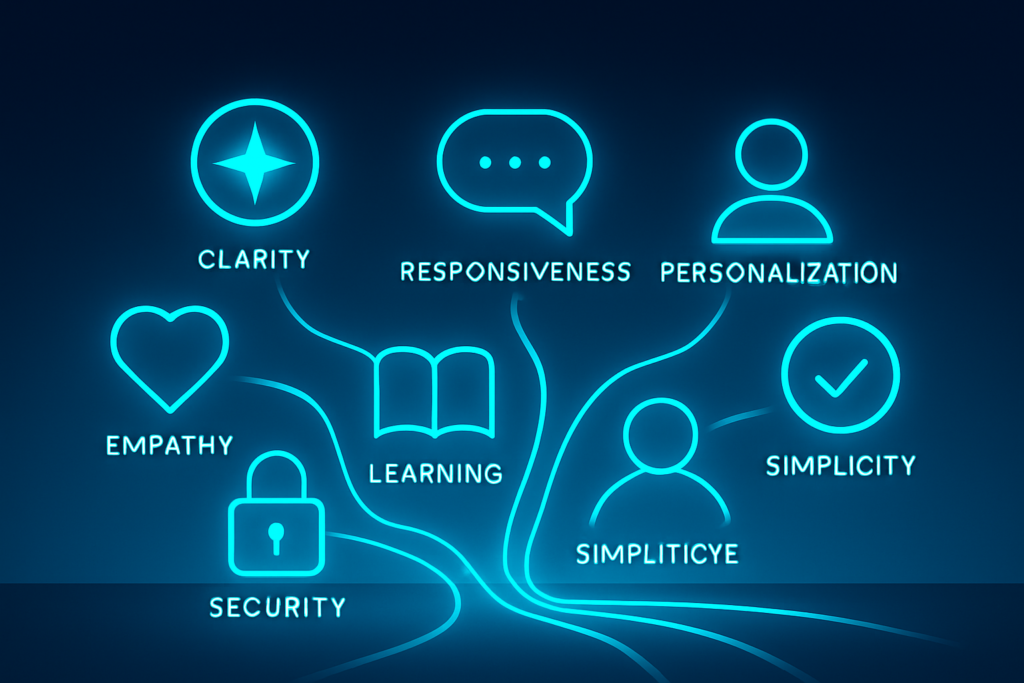
In 2025, chatbots have evolved from simple FAQ responders to sophisticated AI-powered business tools that can transform customer interactions across industries. Whether you're a real estate agency looking to qualify leads 24/7, a recruitment firm screening candidates, or a hospitality business managing guest inquiries, implementing chatbot best practices isn't just about technology,it's about creating meaningful conversations that drive measurable business outcomes.
Key Takeaways
- Chatbots in 2025 have advanced into AI-powered tools that enhance customer interactions across various industries.
- Effective chatbot implementation goes beyond technology to focus on creating meaningful conversations.
- Industries like real estate, recruitment, and hospitality benefit from chatbots by automating lead qualification, candidate screening, and guest inquiry management.
- Following chatbot best practices can drive measurable business outcomes.
Table of Contents
- Understanding Chatbots and Their Business Impact
- Strategic Planning: The Foundation of Chatbot Success
- Chatbot Design & Build Best Practices
- Data Privacy, Security, and Transparency
- Launch, Monitor, and Optimize Performance
- Advanced Best Practices for 2025
- Common Pitfalls and Solutions
- Measuring ROI and Long-term Success
- Conclusion
The stakes have never been higher. Today's customers expect instant, personalized responses across multiple channels, and businesses that fail to meet these expectations risk losing competitive ground. A well-designed chatbot can handle up to 80% of routine inquiries while seamlessly escalating complex issues to human agents, but only when built with strategic intent and industry-specific expertise,especially when paired with b2b sales tools.
Quick Answer
Chatbot best practices for 2025 focus on seven core principles: defining clear business objectives with measurable KPIs, understanding your target audience's specific needs, designing natural conversation flows with proper escalation paths, maintaining consistent brand personality across channels, implementing robust data privacy measures, continuously monitoring performance metrics, and optimizing based on real user interactions. Success depends on strategic planning before deployment and ongoing refinement based on actual business outcomes.
Understanding Chatbots and Their Business Impact
Before diving into implementation tactics, it's crucial to understand what modern chatbots can actually accomplish for your business through small business workflow management software. A chatbot is an automated conversational interface that uses either rule-based logic or artificial intelligence to interact with users through text or voice. However, the real value lies not in the technology itself, but in how it augments your team's capabilities to deliver better customer experiences at scale.
In real estate, chatbots can qualify leads by asking targeted questions about budget, timeline, and property preferences,information that helps agents prioritize their outreach efforts. For recruitment agencies, they can conduct initial candidate screenings, checking basic qualifications and availability before human recruiters invest time in detailed interviews. Hospitality businesses use chatbots to handle reservation inquiries, provide local recommendations, and manage guest services without requiring staff availability around the clock.
Key Insight: The most successful chatbot implementations focus on augmenting human capabilities rather than replacing them entirely. In our experience working with mid-market SMEs, businesses see the highest ROI when chatbots handle routine, high-volume interactions while seamlessly escalating complex issues to skilled team members.
The distinction between rule-based and AI-driven chatbots matters significantly for your strategic planning. Rule-based chatbots follow predetermined conversation trees,ideal for handling frequently asked questions or guiding users through specific processes like booking appointments or requesting property information. AI-driven chatbots leverage natural language processing to understand intent and context, making them better suited for complex customer support scenarios or nuanced lead qualification conversations.
Strategic Planning: The Foundation of Chatbot Success
vynta.ai/wp-content/uploads/2025/07/flat_illustration_of_interconnected_glowing_nodes_-4.webp" alt="Flat illustration of interconnected glowing nodes, geometric shapes, and digital grid on dark blue background." />
What should you do before using an AI chatbot? The answer lies in comprehensive strategic planning that aligns your chatbot's capabilities with specific business objectives. This preparation phase determines whether your chatbot becomes a valuable business asset or an expensive digital novelty.
Define Clear Goals and Measurable KPIs
Every successful chatbot deployment begins with clearly defined business objectives. Are you looking to reduce response times for customer inquiries? Increase lead qualification efficiency? Improve after-hours service availability? Your goals should be specific, measurable, and directly tied to business outcomes that matter to your industry.
For real estate agencies, relevant KPIs might include lead qualification rate, response time to inquiries, and conversion from initial contact to property viewing. Recruitment firms should focus on candidate screening efficiency, time-to-first-interview reduction, and quality of pre-qualified applicants. Hospitality businesses often prioritize guest satisfaction scores, booking conversion rates, and reduction in routine service requests to front desk staff.
The key is establishing baseline metrics before implementation. If your current lead response time averages 4 hours, a chatbot that provides instant initial responses and qualifies leads for priority follow-up creates measurable value. Without these baseline measurements, you cannot demonstrate ROI or identify areas for improvement.
Know Your Target Audience
Understanding your audience goes beyond basic demographics,you need to map their specific pain points, communication preferences, and behavioral patterns within your industry context. Real estate clients often have urgent questions about property availability, pricing, and viewing schedules. They value quick responses and detailed property information but expect human expertise for complex decisions about neighborhoods, market conditions, and negotiation strategies.
Recruitment candidates typically seek information about job requirements, application status, and company culture. They appreciate efficient screening processes but want human interaction for salary negotiations and career discussions. Hospitality guests need immediate assistance with reservations, local recommendations, and service requests, but prefer human attention for complaint resolution and special occasion planning.
This audience analysis should inform every aspect of your chatbot design, from conversation flow to escalation triggers. A chatbot that understands when to provide automated assistance versus when to connect users with human expertise creates better experiences and stronger business outcomes when coupled with robust marketing sales tools.
Choose the Right Communication Channels
Channel selection significantly impacts your chatbot's effectiveness and user adoption. Your audience's preferred communication methods should drive this decision, not just what's technically easiest to implement. Real estate clients often prefer website chat for initial inquiries but may want SMS updates about new listings or appointment confirmations.
Recruitment candidates might engage through LinkedIn messaging for professional inquiries but prefer email for application updates and interview scheduling. Hospitality guests increasingly expect chatbot availability through multiple channels,website chat for pre-arrival questions, SMS for during-stay requests, and social media for quick service inquiries.
Multi-channel deployment offers broader reach but requires consistent experience across platforms. A guest who starts a conversation on your website chat should be able to continue it via SMS without losing context or having to repeat information. This consistency requires careful technical planning and ongoing maintenance but significantly improves user experience and business efficiency.
Chatbot Design & Build Best Practices
Once your strategic foundation is solid, the design and build phase determines whether your chatbot delivers exceptional user experiences or frustrates customers into abandoning conversations. Effective chatbot UX design examples consistently demonstrate that success lies in creating natural, intuitive interactions that feel helpful rather than robotic.
Craft an Engaging Brand Persona
Your chatbot's personality should authentically reflect your brand while remaining appropriate for your industry context. A real estate chatbot might adopt a knowledgeable, consultative tone,professional yet approachable, similar to how your best agents interact with prospects. Recruitment chatbots often benefit from a more formal, efficient personality that conveys competence and respect for candidates' time.
In hospitality, chatbots can embrace a warmer, more conversational tone that reflects the service-oriented nature of the industry. However, avoid overly casual language that might undermine credibility when discussing important matters like booking policies or billing questions. The key is consistency,your chatbot should sound like a natural extension of your team, not a completely different entity.
Consider these chatbot responses examples for different industries:
- Real Estate: "I'd be happy to help you find properties in your target area. To show you the most relevant options, could you share your preferred neighborhood and budget range?"
- Recruitment: "Thank you for your interest in this position. I'll ask a few quick questions to ensure we present you with opportunities that match your experience and career goals."
- Hospitality: "Welcome! I'm here to help make your stay exceptional. Whether you need dining recommendations, local attractions, or assistance with hotel services, just let me know how I can help."
Design Natural Conversation Flows
Effective conversation design mirrors how humans naturally exchange information, starting with context, asking relevant follow-up questions, and providing helpful responses based on gathered information, as outlined in textai. Begin every interaction with a clear greeting that sets expectations and offers specific ways the chatbot can assist.
Map out typical user journeys before building conversation flows. Real estate prospects might follow paths like: initial inquiry → property preferences → budget qualification → viewing appointment scheduling → agent handoff. Each step should feel logical and provide value to the user while gathering information your team needs for effective follow-up.
Use progressive disclosure to avoid overwhelming users with too many options at once. Instead of presenting a massive menu of services, guide users through relevant choices based on their initial intent. A hospitality chatbot might first ask whether guests need help with reservations, local information, or hotel services, then provide specific options within their chosen category.
Pro Tip: Design conversation flows using the "Yes Ladder" technique,start with easy questions that users can answer quickly, building momentum toward more complex interactions. This approach increases completion rates and user satisfaction across all industries.
Interactive Elements and User Guidance
Quick reply buttons, carousels, and structured menus significantly improve user experience by reducing typing effort and eliminating guesswork about available options. These elements are particularly valuable for mobile users, who represent an increasing percentage of chatbot interactions across all industries.
For real estate chatbots, property carousels allow users to browse listings visually while quick reply buttons enable easy filtering by price range, property type, or location. Recruitment chatbots benefit from structured menus for job categories and quick replies for availability, experience level, and salary expectations.
Always provide clear help options and retry prompts when users encounter difficulties. Include phrases like "Type 'help' for assistance" or "Say 'start over' to begin again" in your conversation flows. These simple additions prevent user frustration and reduce abandonment rates significantly.
Handle Errors and Escalation Gracefully
Even the most sophisticated chatbots encounter queries they cannot handle effectively. Your error handling and escalation strategy often determines whether users have positive or negative experiences with your business. Plan for common failure scenarios and provide helpful alternatives rather than generic "I don't understand" responses.
Create context-aware fallback messages that acknowledge the user's intent while offering alternative solutions. Instead of saying "I don't understand," try responses like "I'm not sure about that specific question, but I can connect you with our property specialist who can provide detailed neighborhood information" for real estate inquiries.
Establish clear escalation triggers based on conversation complexity, user sentiment, or specific keywords. High-value prospects asking about luxury properties might warrant immediate human handoff, while routine questions about office hours can be handled automatically. The goal is ensuring users receive appropriate assistance without unnecessary delays or frustration.
Data Privacy, Security, and Transparency
Modern chatbot implementations must prioritize data protection and user transparency to build trust and ensure regulatory compliance. This is particularly crucial for businesses handling sensitive information like financial details, personal preferences, or employment history.
Communicate AI Use Clearly
Transparency about chatbot interactions builds trust and sets appropriate user expectations. Clearly identify your chatbot as an automated system from the first interaction, but do so in a way that emphasizes helpfulness rather than limitations. Phrases like "Hi, I'm your AI assistant" or "I'm here to help you get started" work better than technical explanations about artificial intelligence.
I can access your search criteria, preferred locations, contact information, and interaction history to help you search our current property listings and schedule viewings with our agents; any information you share will be used to personalize recommendations, streamline scheduling, and may be reviewed by our team to improve your experience. For more on how intelligent assistants work, see types of bots.
Comply with Data Privacy Laws
Implement robust data collection and storage practices that comply with relevant regulations like GDPR, CCPA, and industry-specific requirements. This includes obtaining appropriate consent for data collection, providing clear opt-out mechanisms, and ensuring secure data transmission and storage.
Consider creating a comparison table of privacy features to demonstrate your commitment to data protection:
| Privacy Feature | Implementation | User Benefit |
|---|---|---|
| Data Encryption | End-to-end encryption for all conversations | Personal information protected during transmission |
| Consent Management | Clear opt-in prompts for data collection | Users control what information is shared |
| Data Retention | Automatic deletion after specified periods | Information not stored indefinitely |
| Access Controls | Role-based access to conversation data | Only authorized staff can view interactions |
Provide users with easy options to request data deletion, modify their preferences, or opt out of data collection entirely. These controls should be accessible through simple commands within the chatbot interface, not buried in separate privacy policy pages.
Launch, Monitor, and Optimize Performance
Successful chatbot deployment extends far beyond the initial launch. Continuous monitoring and optimization based on real user interactions determine long-term success and ROI. This phase separates businesses that achieve lasting value from those whose chatbots become neglected digital assets.
Comprehensive Testing Before Launch
Thorough testing prevents embarrassing failures and ensures smooth user experiences from day one. Conduct usability testing with real users from your target audience, not just internal team members who understand your business intimately. Real estate prospects, job candidates, or hotel guests will interact with your chatbot differently than your employees, so be sure to evaluate your auto chats for optimal performance.
Test edge cases and unusual scenarios that might not occur in normal conversation flows. What happens when users provide incomplete information, ask multiple questions simultaneously, or use industry jargon your chatbot hasn't been trained to recognize? These scenarios reveal gaps in your conversation design and help identify necessary improvements before public launch.
Performance Monitoring and Key Metrics
Track metrics that directly relate to your defined business objectives rather than vanity metrics that look impressive but don't drive real value. Engagement rates matter less than conversion rates, completion rates, and user satisfaction scores. Monitor conversation abandonment points to identify where users become frustrated or confused.
Industry-specific metrics provide more actionable insights than generic chatbot analytics. Real estate chatbots should track lead qualification rates, property inquiry conversions, and appointment booking success. Recruitment chatbots need to monitor candidate screening efficiency, application completion rates, and quality of pre-qualified applicants passed to human recruiters.
Hospitality businesses should focus on guest satisfaction improvements, service request resolution rates, and impact on staff workload reduction. These metrics directly correlate with business outcomes and help justify continued investment in chatbot optimization.
Continuous Improvement and Iteration
Regular optimization based on real user data transforms good chatbots into exceptional business assets. The most successful implementations we've seen involve monthly review cycles where teams analyze conversation logs, identify common failure points, and update responses accordingly. This isn't a one-time setup,it's an ongoing process that directly impacts your bottom line.
Train your AI models with new data from actual customer interactions, not just theoretical scenarios. Real estate chatbots learn to handle local market questions better when fed conversations about neighborhood schools, commute times, and property tax rates. Recruitment chatbots improve candidate screening accuracy when trained on successful placement outcomes and hiring manager feedback.
A/B test different conversation flows, greeting messages, and call-to-action prompts to optimize for your specific business goals. Simple changes like adjusting the timing of when a chatbot offers human handoff can significantly impact conversion rates. We've observed hospitality clients increase booking conversions by 23% simply by repositioning their "speak to reservations" option later in the conversation flow.
Optimization Insight: The most impactful chatbot improvements often come from analyzing where users drop off in conversations. If 40% of users abandon during property preference questions, the issue might be too many options at once rather than technical limitations.
Advanced Best Practices for 2025

As chatbot technology evolves, leading businesses are implementing sophisticated strategies that go beyond basic question-and-answer interactions. These advanced approaches create competitive advantages through personalization, seamless multi-channel experiences, and intelligent automation integration.
Personalization at Scale
Modern chatbots excel when they leverage existing customer data to provide tailored experiences from the first interaction. Integration with your CRM system allows chatbots to greet returning visitors with context about their previous inquiries, preferences, and interaction history. A real estate prospect who previously inquired about downtown condos shouldn't need to re-explain their preferences during subsequent conversations.
Implement dynamic content that adapts based on user behavior patterns and demographic information. Hospitality chatbots can suggest room upgrades, dining reservations, or local activities based on guest profiles and previous stays. This level of personalization increases engagement rates and drives higher per-customer revenue without requiring additional staff resources.
Context persistence across sessions and devices ensures seamless user experiences. When a job candidate starts an application on their phone during lunch and continues on their laptop at home, the chatbot should maintain conversation context and progress. This technical capability significantly improves completion rates and user satisfaction.
Multi-Channel Consistency
Users expect consistent experiences whether they interact with your chatbot through your website, Facebook Messenger, WhatsApp, or mobile app. Successful multi-channel strategies maintain unified conversation flows, personality, and capabilities across all platforms while adapting to each channel's unique constraints and user expectations.
Centralized conversation management allows your team to monitor and optimize chatbot performance across all channels from a single dashboard. This approach provides comprehensive analytics and enables consistent updates without managing multiple separate systems. The efficiency gains are particularly valuable for recruitment agencies managing candidate interactions across job boards, social media, and company websites.
Platform-specific optimizations enhance user experience without fragmenting your overall strategy. Instagram chatbots might emphasize visual property showcases for real estate, while LinkedIn integrations focus on professional networking and career opportunities. The key is maintaining brand consistency while leveraging each platform's strengths.
Strategic Integrations and Automation
Advanced chatbot implementations seamlessly connect with existing business systems to automate routine tasks and provide real-time information. CRM integration enables automatic lead scoring, appointment scheduling, and follow-up task creation without manual data entry. This automation reduces response times and eliminates the administrative burden on your team.
Real-time inventory and availability integration ensures chatbots provide accurate information about property listings, job openings, or hotel room availability. Nothing damages user trust faster than booking a "available" room that's actually occupied or applying for a position that's already filled. Live data connections prevent these frustrating experiences.
Workflow automation triggers based on chatbot interactions create efficient handoff processes. When a qualified lead requests a property viewing, the chatbot can automatically schedule the appointment, send calendar invites, notify the assigned agent, and add the prospect to relevant nurture campaigns. This level of automation ensures no opportunities fall through the cracks while maintaining personalized service.
Common Pitfalls and Solutions
Even well-intentioned chatbot implementations can fail due to predictable mistakes that undermine user experience and business objectives. Understanding these common pitfalls helps you avoid costly errors and accelerate your path to chatbot success.
Avoiding Implementation Mistakes
The most frequent mistake is launching chatbots without clearly defined success metrics or business objectives. "Improving customer service" isn't specific enough to guide design decisions or measure success. Instead, define measurable goals like "reduce average response time to under 2 minutes" or "increase qualified lead conversion by 15%." These specific targets inform every aspect of your chatbot strategy.
Overcomplicating initial conversation flows leads to user confusion and high abandonment rates. Start with simple, high-value use cases like appointment scheduling or basic information requests. Once users are comfortable with these interactions, gradually introduce more sophisticated features. This progressive approach builds user confidence and provides valuable data for optimization.
Neglecting mobile optimization is particularly problematic given that over 60% of chatbot interactions occur on mobile devices. Ensure your conversation flows work seamlessly on small screens, minimize typing requirements, and provide large, easily tappable buttons. Mobile-first design principles apply just as much to chatbot interfaces as they do to websites.
Technical Maintenance Considerations
Failing to update chatbot knowledge bases and conversation flows results in outdated information and frustrated users. Real estate markets change, job requirements evolve, and hospitality services expand. Regular content audits ensure your chatbot provides accurate, current information that reflects your business reality.
Insufficient fallback planning creates dead ends when users ask unexpected questions or encounter technical issues. Every conversation flow should include graceful error handling and clear escalation paths. Users should never feel trapped or abandoned when the chatbot can't help them immediately.
Security and compliance oversights can expose your business to significant risks, especially when handling sensitive information like financial details or personal data. Regular security audits, encryption updates, and compliance reviews protect both your business and your customers' privacy.
Measuring ROI and Long-term Success
Demonstrating chatbot value requires tracking metrics that directly correlate with business outcomes rather than vanity metrics that look impressive but don't drive revenue. Focus on conversion rates, cost per acquisition, customer satisfaction scores, and operational efficiency gains that justify your investment.
Calculate time savings for your team by measuring how many routine inquiries chatbots handle without human intervention. If your chatbot answers 200 basic questions per week that previously required 5 minutes of staff time each, you're saving over 16 hours of labor weekly. This efficiency gain allows your team to focus on high-value activities like closing deals or providing personalized service.
Track user satisfaction through post-conversation surveys and sentiment analysis of chat transcripts. Positive user experiences lead to increased engagement, higher conversion rates, and valuable word-of-mouth marketing. Negative experiences provide specific feedback for improvement priorities.
Monitor long-term trends in customer behavior and business metrics to identify chatbot impact on overall performance. Are customers completing more transactions? Are support tickets decreasing? Are sales cycles shortening? These broader business indicators demonstrate chatbot success beyond immediate conversation metrics.
Conclusion
Successful chatbot implementation in 2025 requires strategic planning, user-focused design, and continuous optimization based on real business outcomes. The most effective chatbots don't just answer questions,they guide users through valuable interactions that drive measurable results for your business.
Whether you're in real estate, recruitment, fundraising, or hospitality, the fundamental principles remain consistent: understand your audience, design natural conversation flows, prioritize data privacy, and continuously improve based on user feedback. The businesses that master these chatbot best practices will gain significant competitive advantages through improved customer experiences and operational efficiency.
Remember that chatbot success isn't measured by technological sophistication but by business impact. Focus on solving real problems for your customers and team, and your chatbot will become an indispensable asset that drives growth and enhances your service capabilities for years to come. For further reading on how AI chatbots are transforming industries, see this external resource.
Frequently Asked Questions
What is a best practice for using AI chatbots?
A best practice for using AI chatbots is to design them to augment human interaction, not replace it. This means ensuring the chatbot handles routine inquiries efficiently while seamlessly escalating complex or sensitive issues to a human agent. This approach maximizes operational efficiency and improves customer satisfaction by maintaining a personal touch where it matters most.
What are the 7 steps to create a chatbot strategy?
Creating a successful chatbot strategy involves: 1) Defining clear business objectives and desired outcomes, 2) Understanding your target users and their needs, 3) Mapping out key use cases and conversation flows, 4) Selecting the right technology platform that aligns with your industry requirements, 5) Designing the chatbot with a focus on natural, context-aware interactions, 6) Testing extensively with real users to refine responses and usability, and 7) Continuously monitoring performance and iterating to improve ROI and customer satisfaction.
What are the 4 types of chatbots?
The four primary types of chatbots are: 1) Rule-based chatbots, which follow predefined scripts and decision trees; 2) AI-powered chatbots that use natural language processing to understand and respond more flexibly; 3) Hybrid chatbots that combine rule-based logic with AI to balance control and adaptability; and 4) Voice-enabled chatbots designed for spoken interactions, often integrated with voice assistants. Each type serves different business needs and levels of complexity.
How to make a chatbot better?
Improving a chatbot involves continuous learning from user interactions by analyzing conversation data to identify gaps and common pain points. Incorporating natural language understanding enhancements, expanding the chatbot’s knowledge base, and personalizing responses based on user context can significantly elevate the experience. Additionally, integrating smooth handoffs to human agents when needed preserves trust and satisfaction.
How do you make an intelligent chatbot?
An intelligent chatbot is created by leveraging advanced natural language processing and machine learning algorithms that allow it to understand intent, context, and sentiment. Training the chatbot on industry-specific data and real-world conversations ensures relevance and accuracy. Integrating it with backend systems provides access to dynamic information, enabling personalized and actionable responses that genuinely augment human capabilities.
How long should a chatbot response be?
Chatbot responses should be concise and to the point, ideally between one to three sentences to maintain user engagement and clarity. Overly long or complex answers can overwhelm users and reduce satisfaction. When more detailed information is needed, the chatbot should break it down into digestible pieces or offer to connect the user with a human expert for deeper support.
About The Author
Anas Moujahid is the chief contributing writer & Operations Director for the Vynta Blog, where he turns cutting-edge AI automation into measurable business outcomes for mid-market companies.
Vynta designs enterprise-grade AI agents that augment rather than replace people,freeing teams to focus on higher-value work while the bots handle the busywork.
We specialise in four service-heavy verticals where AI can move the revenue needle fast: real estate, recruitment, fundraising and hospitality.
Anas started his career architecting AI and automation systems; today he leads operations at Vynta, making sure every deployment lands real-world ROI,whether that’s more booked viewings for estate agents, faster placements for recruiters, warmer investor pipelines for fundraisers or happier guests for hotels and restaurants.
Vynta delivers results by:
- Building industry-specific agents pre-trained on real-world workflows,no generic chatbots here.
- Integrating seamlessly with existing CRMs, ATSs, PMSs and fundraising platforms,zero rip-and-replace.
- Measuring success in business KPIs (lead-to-close rates, time-to-hire, donor retention, RevPAR) not vanity metrics.
- Providing transparent implementation plans so clients know exactly what to expect, when and why.
- Pairing every AI agent with human-in-the-loop controls to keep quality, compliance and brand voice on point.
Since launch, Vynta has helped agencies slash lead qualification time by up to 70 %, recruitment firms cut screening hours in half, fundraising teams triple investor touchpoints and hospitality brands lift guest satisfaction scores by double digits,all while keeping human expertise firmly in the loop.
Anas writes with the same ethos that drives Vynta: outcome-focused, jargon-free and grounded in real business value. Expect data-backed insights, practical implementation guides and a clear-eyed view of what AI can,and can’t,do for your organisation.