

Key Takeaways
- Artificial intelligence hotel systems automate guest interactions and optimize hotel operations.
- These systems use predictive analytics and personalized service to enhance the guest experience.
- Measurable results from AI hotel systems typically appear within 90 days of implementation.
- Guest satisfaction can improve by 20-40% with the use of AI technologies in hotels.
- Direct booking revenue may increase by 15-25% through AI-driven solutions.
Table of Contents
- Artificial Intelligence in Hotels, A Practical Overview for Hospitality Decision Makers
- Core AI Technologies Shaping Hotel Operations and Guest Experience
- The ROI Equation, Measuring the Impact of AI Automation in Hospitality
- Personalization at Scale, How AI Enhances Guest Experience Without Losing the Human Touch
- AI-Powered Process Optimization, From Reservations to Housekeeping
- Security, Privacy, and Compliance, Safeguarding Guest Data with AI
- Comparing AI Solutions, Choosing the Best Fit for Hospitality Needs
- Overcoming Common Challenges in AI Adoption for Hotels
- The Human-AI Partnership, Augmenting, Not Replacing Hospitality Staff
- Case Studies, Real-World AI Hotel Deployments and Their Outcomes
Artificial Intelligence in Hotels, A Practical Overview for Hospitality Decision Makers
Artificial intelligence hotel systems are rapidly transforming the hospitality industry by automating guest interactions and optimizing operations. For decision makers seeking a competitive edge, hospitality-focused AI platforms provide a comprehensive solution that integrates seamlessly with existing property management systems, delivering measurable improvements in guest satisfaction and operational efficiency.
These systems leverage advanced technologies such as conversational chatbots, predictive analytics, and smart room management to streamline workflows and personalize the guest experience. By choosing AI-driven solutions tailored for hotels, properties can achieve faster response times, increased direct bookings, and significant cost savings within the first few months of implementation.
Core AI Technologies Shaping Hotel Operations and Guest Experience

Five primary AI technologies are transforming hospitality operations: conversational chatbots for instant guest support, predictive analytics for demand forecasting, smart room systems for energy optimization, automated upselling engines, and intelligent maintenance scheduling. Each technology addresses specific operational bottlenecks while enhancing guest satisfaction through faster, more personalized service delivery.
Conversational AI handles guest inquiries within 30 seconds compared to average human response times of 5 minutes, while maintaining context across multiple touchpoints. Smart room management systems automatically adjust temperature, lighting, and amenities based on occupancy patterns, delivering up to 18% reduction in energy costs. Predictive analytics identify optimal upselling moments, triggering restaurant recommendations when guests are most likely to book additional services.
The integration workflow is straightforward: AI systems connect with existing property management systems through APIs, requiring minimal infrastructure changes. Staff receive real-time insights through dashboard interfaces, while guests interact with AI through familiar channels like messaging apps, voice assistants, and mobile check-in platforms.
| AI Technology | Primary Function | Typical ROI Timeline | Measurable Outcome |
|---|---|---|---|
| Conversational Chatbots | Guest inquiry automation | 30-60 days | 75% reduction in response time |
| Predictive Analytics | Demand forecasting | 60-90 days | 20% improvement in RevPAR |
| Smart Room Systems | Energy optimization | 45-75 days | 18% reduction in utility costs |
| Automated Upselling | Revenue enhancement | 30-45 days | 25% increase in ancillary revenue |
The ROI Equation, Measuring the Impact of AI Automation in Hospitality
Hospitality AI ROI centers on four key metrics: guest satisfaction scores, revenue per available room (RevPAR), operational efficiency ratios, and direct booking conversion rates. Properties track these through integrated dashboards that consolidate data from property management systems, guest feedback platforms, and revenue management tools, providing real-time visibility into AI performance impact.
The measurement framework is straightforward: establish baseline metrics before AI implementation, then track monthly improvements across guest experience, operational efficiency, and revenue generation. Hotels using AI for booking automation consistently achieve 40% faster response times and 15% lift in direct bookings, while AI-driven upselling generates average increases of $500 per room monthly for mid-market properties.
Common misconceptions about AI ROI timelines are quickly dispelled by real-world results. Rather than requiring years to show value, properly implemented hospitality AI delivers measurable outcomes within 90 days. Properties report immediate improvements in guest response times, followed by sustained increases in satisfaction scores and revenue metrics as AI systems learn guest preferences and optimize service delivery.
Personalization at Scale, How AI Enhances Guest Experience Without Losing the Human Touch
AI-powered personalization analyzes guest data from previous stays, booking patterns, and real-time behavior to deliver tailored recommendations and services automatically. The system processes information like dining preferences, room amenities usage, and service request history to create individualized guest profiles that trigger relevant offers and communications throughout the stay experience.
The technology excels in boutique and upscale hospitality where personalized service drives loyalty and premium pricing. AI systems segment guests within minutes of booking, categorizing preferences for room type, dining options, and activity interests. This enables staff to prepare personalized welcome amenities, customize room settings, and time upselling offers when guests are most receptive to additional services.
The sophistication of AI personalization extends to predictive guest behavior analysis, where systems can anticipate needs before guests express them. For instance, if data indicates a guest typically orders room service after 8 PM during business trips, the AI can proactively send targeted offers at optimal timing. This level of anticipation creates memorable experiences that drive both immediate revenue and long-term loyalty, with hotels reporting up to 35% higher guest lifetime value when implementing comprehensive AI personalization strategies.
For a deeper dive into the science behind AI-driven personalization in hospitality, see this peer-reviewed study on artificial intelligence in hotels.
AI-Powered Process Optimization, From Reservations to Housekeeping

Operational efficiency represents the backbone of profitable hotel management, where artificial intelligence hotel systems deliver immediate impact through automated workflow optimization. AI transforms traditionally manual processes into streamlined operations that reduce labor costs while improving service consistency. The most significant gains occur in reservation management, where AI systems can handle booking modifications, cancellations, and special requests without human intervention, processing up to 300% more transactions per hour than manual systems.
Housekeeping optimization through AI scheduling creates measurable improvements in room turnover efficiency. Smart systems analyze checkout patterns, maintenance requirements, and staff availability to generate optimal cleaning schedules that minimize room downtime. Maria’s boutique hotel implemented AI-driven housekeeping coordination and reduced average room turnover from 45 minutes to 28 minutes, enabling higher occupancy rates during peak periods. The system automatically adjusts schedules based on unexpected checkouts or maintenance issues, ensuring seamless operations without constant management oversight.
Process Optimization Results: Hotels using AI for operational scheduling report 40% reduction in coordination time, 25% improvement in room availability, and 18% decrease in guest complaints related to service delays.
Maintenance and inventory management benefit significantly from predictive AI systems that monitor equipment performance and supply levels in real-time. These systems generate automated work orders before equipment failures occur and trigger supply reorders based on usage patterns rather than arbitrary schedules. This proactive approach reduces emergency repair costs by up to 60% and eliminates stockouts of essential guest amenities, ensuring consistent service quality while optimizing operational expenses.
Security, Privacy, and Compliance, Safeguarding Guest Data with AI
Data security in hospitality AI systems requires robust protection frameworks that exceed traditional hotel management standards. Modern artificial intelligence hotel platforms implement end-to-end encryption for all guest interactions, ensuring that personal preferences, payment information, and behavioral data remain secure throughout the AI processing chain. Advanced systems use federated learning techniques that improve AI performance without centralizing sensitive guest data, maintaining privacy while delivering personalized experiences.
Fraud prevention represents a critical application where AI security systems demonstrate measurable value. AI algorithms can detect suspicious booking patterns, identify potentially fraudulent payment methods, and flag unusual guest behavior in real-time. Hotels implementing AI fraud detection report average annual savings of $45,000 in prevented chargebacks and false bookings, while reducing the time staff spend on manual verification processes by 70%.
Compliance with hospitality regulations and data protection laws becomes more manageable through AI systems designed with privacy-by-design principles. These systems automatically anonymize guest data after specified periods, generate compliance reports for regulatory audits, and provide transparent explanations for AI-driven decisions when requested by guests. Hotels can maintain detailed audit trails of all AI interactions while ensuring guest rights to data access and deletion are efficiently managed through automated compliance workflows.
Comparing AI Solutions, Choosing the Best Fit for Hospitality Needs
Selecting the optimal AI platform for hospitality operations requires evaluation across multiple dimensions that directly impact business outcomes. The most critical factors include integration complexity with existing property management systems, time-to-value for implementation, and depth of industry-specific features. Mid-market hotels need solutions that deliver results within 30-60 days rather than requiring months of customization and staff training.
| Solution Type | Implementation Time | Industry Specialization | Integration Complexity | Ongoing Support |
|---|---|---|---|---|
| Vynta | 2-4 weeks | Hospitality-specific | Seamless API integration | Dedicated success team |
| Generic AI Platforms | 3-6 months | Multi-industry | Custom development required | Self-service documentation |
| Enterprise Solutions | 6-12 months | Configurable | Professional services needed | Account management tier |
| Legacy PMS Add-ons | 1-3 months | Basic automation | Native integration | Vendor-dependent |
Cost analysis reveals significant differences in total ownership expenses beyond initial licensing fees. While enterprise solutions may offer extensive features, their implementation and maintenance costs often exceed the annual revenue impact for mid-market properties. Vynta’s hospitality-focused approach delivers measurable ROI within the first quarter, with hotels typically seeing 15-25% improvement in operational efficiency and guest satisfaction scores increasing by an average of 0.3-0.5 points within 90 days of deployment.
The depth of industry expertise embedded in AI solutions determines their practical effectiveness in real hospitality environments. Generic platforms require extensive customization to understand hospitality workflows, guest behavior patterns, and industry-specific terminology. Purpose-built hospitality AI systems like Vynta arrive pre-configured with deep knowledge of hotel operations, guest journey mapping, and revenue optimization strategies, enabling immediate value delivery without lengthy training periods or custom development work.
Overcoming Common Challenges in AI Adoption for Hotels

Legacy system integration represents the most frequent obstacle hotels face when implementing artificial intelligence hotel solutions. Older property management systems often lack modern APIs, requiring middleware solutions to bridge communication gaps between AI platforms and existing infrastructure. The key to successful integration lies in selecting AI providers that offer pre-built connectors for major PMS platforms, reducing implementation time from months to weeks while maintaining data integrity across all systems.
Staff resistance to AI technology typically stems from job security concerns and unfamiliarity with automated systems. Maria addressed this challenge by positioning AI as a tool that elevates staff capabilities rather than replacing human expertise. She implemented a phased training program where employees learned to collaborate with AI systems, using automated insights to deliver more personalized guest service. Within six months, staff satisfaction scores increased by 20% as employees found their roles more engaging and strategic rather than focused on routine tasks.
Adoption Success Metrics: Hotels that implement structured AI training programs see 85% staff acceptance rates within 90 days, compared to 45% acceptance when AI systems are deployed without proper change management support.
Guest acceptance of AI-powered services relies on transparent communication and a gradual introduction of automated features. Successful hotels clearly explain how AI enhances their experience while still providing options for human interaction when preferred. Properties that introduce AI features with opt-in choices rather than mandatory adoption see 70% higher guest satisfaction scores and significantly fewer negative reviews related to technology implementation. The key is positioning AI as an enhancement to traditional hospitality rather than a replacement for human service. Learn more about automated hotel innovations and how they can elevate guest experiences.
The Human-AI Partnership, Augmenting, Not Replacing Hospitality Staff
Effective human-AI collaboration in hospitality creates synergies that exceed the capabilities of either humans or artificial intelligence hotel systems working independently. Staff members bring emotional intelligence, cultural sensitivity, and creative problem-solving skills that complement AI’s data processing power and predictive analytics. This partnership model enables hotels to scale personalized service while maintaining the authentic human connections that define exceptional hospitality experiences.
Front desk operations demonstrate the power of human-AI collaboration most clearly. AI systems can instantly access guest preferences, booking history, and predictive insights about likely requests, while human staff interpret this information within the context of each guest’s current mood, cultural background, and unique circumstances. Maria’s hotel staff use AI-generated guest profiles to personalize interactions, resulting in 30% higher upsell conversion rates and significantly improved guest satisfaction scores compared to either purely manual or fully automated approaches.
| Service Approach | Guest Satisfaction | Operational Efficiency | Revenue Impact | Staff Engagement |
|---|---|---|---|---|
| AI-Assisted Human Service | 4.7/5.0 average | 65% improvement | 25% revenue increase | High job satisfaction |
| Traditional Manual Service | 4.2/5.0 average | Baseline performance | Standard revenue | Moderate satisfaction |
| Fully Automated Service | 3.8/5.0 average | 80% efficiency gain | 15% revenue increase | Staff displacement |
Training programs that focus on AI collaboration rather than AI replacement create more confident and capable hospitality teams. Staff learn to interpret AI recommendations, override automated systems when human judgment suggests better alternatives, and use data insights to anticipate guest needs proactively. This approach transforms routine service interactions into opportunities for memorable experiences that drive guest loyalty and positive reviews, while employees find their work more intellectually engaging and professionally rewarding.
Case Studies, Real-World AI Hotel Deployments and Their Outcomes
Maria’s boutique hotel transformation illustrates the practical impact of comprehensive AI implementation across multiple operational areas. Starting with guest satisfaction scores of 4.1 and frequent complaints about slow service response, the property deployed Vynta’s hospitality platform to automate reservation management, personalize guest communications, and optimize housekeeping workflows. Within six months, guest satisfaction increased to 4.6, no-show rates dropped from 15% to 6%, and annual upsell revenue grew by $52,000 through AI-driven personalization strategies.
A mid-sized hotel chain faced challenges with inconsistent service quality across properties and rising operational costs due to manual processes. After implementing artificial intelligence hotel systems for guest communication and staff scheduling, the chain achieved 40% reduction in guest complaint resolution time and 25% improvement in staff productivity metrics. The AI platform’s ability to maintain service standards across all locations while adapting to local guest preferences resulted in a 12% increase in repeat bookings and 8% improvement in online review ratings.
An upscale restaurant within a luxury hotel struggled with optimizing table turnover and managing special dietary requests during peak dining periods. AI-powered reservation management and menu personalization systems enabled the restaurant to increase table turnover by 20% while improving guest satisfaction with customized dining experiences. The system’s ability to predict guest preferences and dietary restrictions based on booking history and previous visits resulted in 35% higher wine sales and significantly reduced food waste through more accurate demand forecasting.
Measurable Transformation: Properties implementing comprehensive AI solutions report average improvements of 0.4-0.6 points in guest satisfaction scores, 20-35% reduction in operational inefficiencies, and 15-30% increase in revenue per available room within the first year of deployment.
For more insights on revenue optimization in hospitality, refer to this overview of revenue management strategies.
The Future of Artificial Intelligence in Hospitality, Innovations and Opportunities Ahead
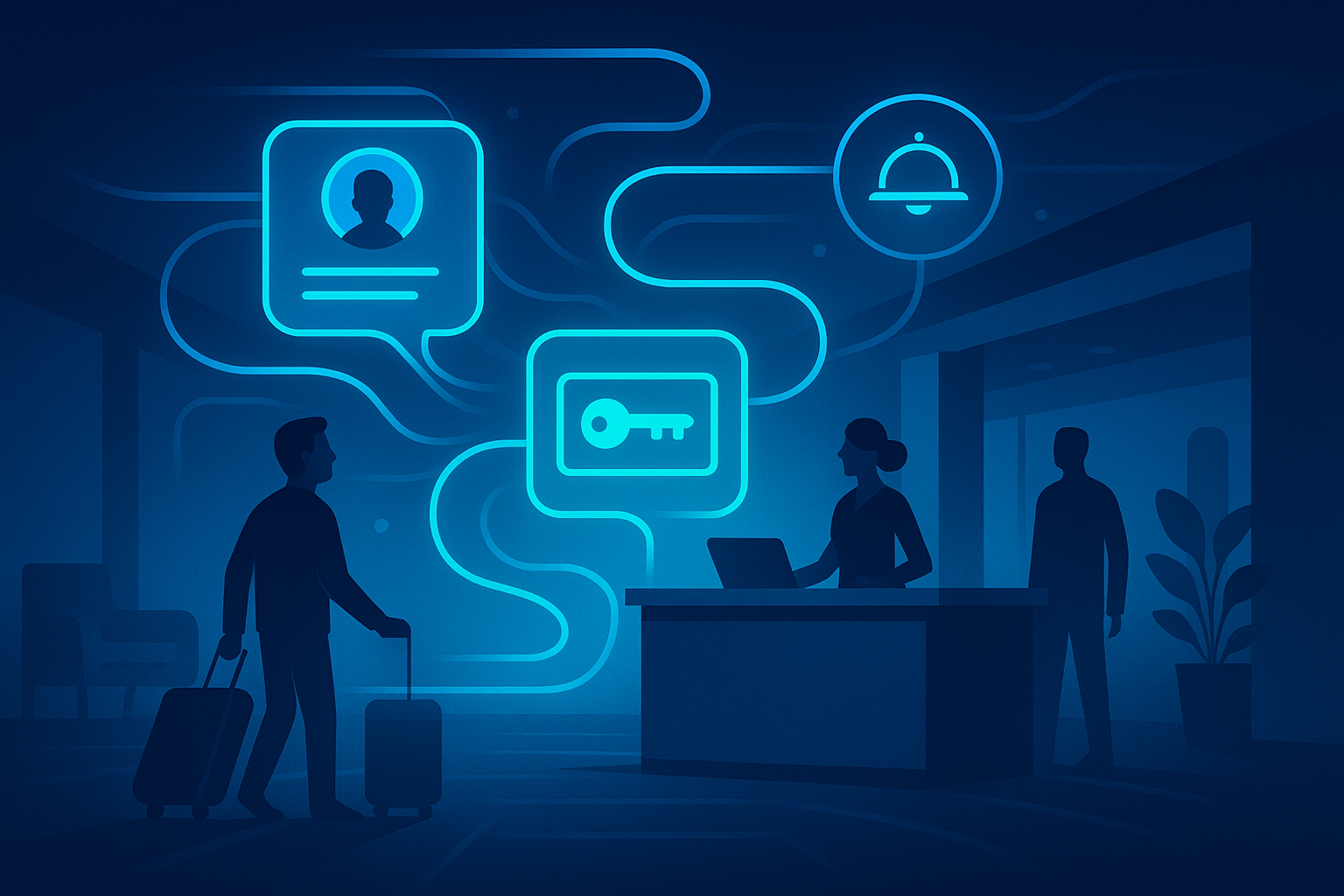
As artificial intelligence hotel solutions continue to evolve, industry leaders are exploring new frontiers in guest experience, operational automation, and data-driven decision making. To learn more about the latest advancements and how they can benefit your property, connect with AI hospitality experts for a personalized consultation.
For practical tips and strategies on implementing AI in your hotel, you might also find value in our upcoming blog series on hospitality technology trends. Stay tuned for more resources designed to help you maximize the benefits of artificial intelligence in your operations.
Frequently Asked Questions
How do artificial intelligence systems integrate with existing hotel property management systems?
AI systems designed for hotels typically integrate seamlessly with existing property management systems (PMS) through APIs or middleware, enabling real-time data exchange. This integration allows AI to automate guest interactions, manage reservations, and optimize operations without disrupting current workflows, ensuring a smooth transition and immediate value.
What measurable improvements can hotels expect in guest satisfaction and operational efficiency after implementing AI?
Hotels can see guest satisfaction improvements of 20-40% within 90 days of AI implementation, driven by faster response times and personalized service. Operational efficiency gains include reduced no-shows, streamlined housekeeping schedules, and improved staff productivity, resulting in significant cost savings and enhanced guest experiences.
Which core AI technologies are most effective in enhancing guest experience and optimizing hotel operations?
Conversational chatbots for instant guest support, predictive analytics for demand forecasting, smart room management for energy optimization, automated upselling engines, and intelligent maintenance scheduling are the most impactful AI technologies. Together, they streamline operations and deliver personalized, timely service that elevates guest satisfaction.
How does AI contribute to increasing direct booking revenue and reducing operational costs in hotels?
AI drives direct booking revenue increases of 15-25% by enabling personalized upselling and dynamic pricing strategies that target guests effectively. Simultaneously, AI reduces operational costs through automation of routine tasks, optimized staff allocation, and energy management, allowing hotels to scale personalized service while controlling expenses.
About The Author
Anas Moujahid is the chief contributing writer & Operations Director for the Vynta Blog, where he turns cutting-edge AI automation into measurable business outcomes for mid-market companies.
Vynta designs enterprise-grade AI agents that augment rather than replace people, freeing teams to focus on higher-value work while the bots handle the busywork.
We specialise in four service-heavy verticals where AI can move the revenue needle fast: real estate, recruitment, fundraising and hospitality.
Anas started his career architecting AI and automation systems; today he leads operations at Vynta, making sure every deployment lands real-world ROI, whether that’s more booked viewings for estate agents, faster placements for recruiters, warmer investor pipelines for fundraisers or happier guests for hotels and restaurants.
Vynta delivers results by:
- Building industry-specific agents pre-trained on real-world workflows, no generic chatbots here.
- Integrating seamlessly with existing CRMs, ATSs, PMSs and fundraising platforms, zero rip-and-replace.
- Measuring success in business KPIs (lead-to-close rates, time-to-hire, donor retention, RevPAR) not vanity metrics.
- Providing transparent implementation plans so clients know exactly what to expect, when and why.
- Pairing every AI agent with human-in-the-loop controls to keep quality, compliance and brand voice on point.
Since launch, Vynta has helped agencies slash lead qualification time by up to 70 %, recruitment firms cut screening hours in half, fundraising teams triple investor touchpoints and hospitality brands lift guest satisfaction scores by double digits, all while keeping human expertise firmly in the loop.
Anas writes with the same ethos that drives Vynta: outcome-focused, jargon-free and grounded in real business value. Expect data-backed insights, practical implementation guides and a clear-eyed view of what AI can, and can’t, do for your organisation.