

ai concierge hotels
Beyond the Bellhop: What an AI Concierge Actually Is for Hotels
AI concierge systems handle guest inquiries, provide personalized recommendations, and deliver service around the clock. These systems integrate with property management platforms to answer questions about amenities, local attractions, room service, and booking changes, routing complex requests to staff when needed.
Defining the AI Concierge in a Hospitality Context
An AI concierge is advanced automation technology built for hospitality. Unlike basic chatbots for hotels, these systems understand context, remember guest preferences, and complete multi-step requests. They process natural-language questions about dining reservations, spa appointments, transportation, and local recommendations while maintaining helpful conversation flow.
Modern hotels deploy these systems across mobile apps, in-room tablets, voice assistants, and messaging platforms. The technology combines natural language processing with hotel-specific databases to deliver accurate responses about property amenities, local events, weather, and service availability.
AI vs. Human Concierge: Partnership, Not Replacement
Human concierges excel at complex problem-solving, emotional intelligence, and personal relationships. AI handles routine inquiries, processes standard requests, and provides availability information outside business hours. This partnership lets staff focus on high-value interactions while AI manages repetitive tasks like directions and basic service info.
The most successful implementations create smooth handoffs between digital and human assistance. When AI encounters complex requests or detects frustration, it escalates to staff with relevant context and guest history.
Core Technologies Powering Hotel AI Concierges
Three foundational technologies drive AI concierge functionality:
- Natural language processing interprets guest requests conversationally
- Machine learning algorithms improve response accuracy over time
- Integration APIs connect with property management systems for real-time data
Cloud-based architecture supports reliability and scalability while maintaining hospitality data security standards. Voice recognition lets guests interact naturally through smart speakers or mobile devices, while text interfaces provide visual confirmation of requests.
Measurable Impact: How AI Concierges Drive Revenue and Guest Satisfaction
Boosting Ancillary Revenue Through AI Upselling
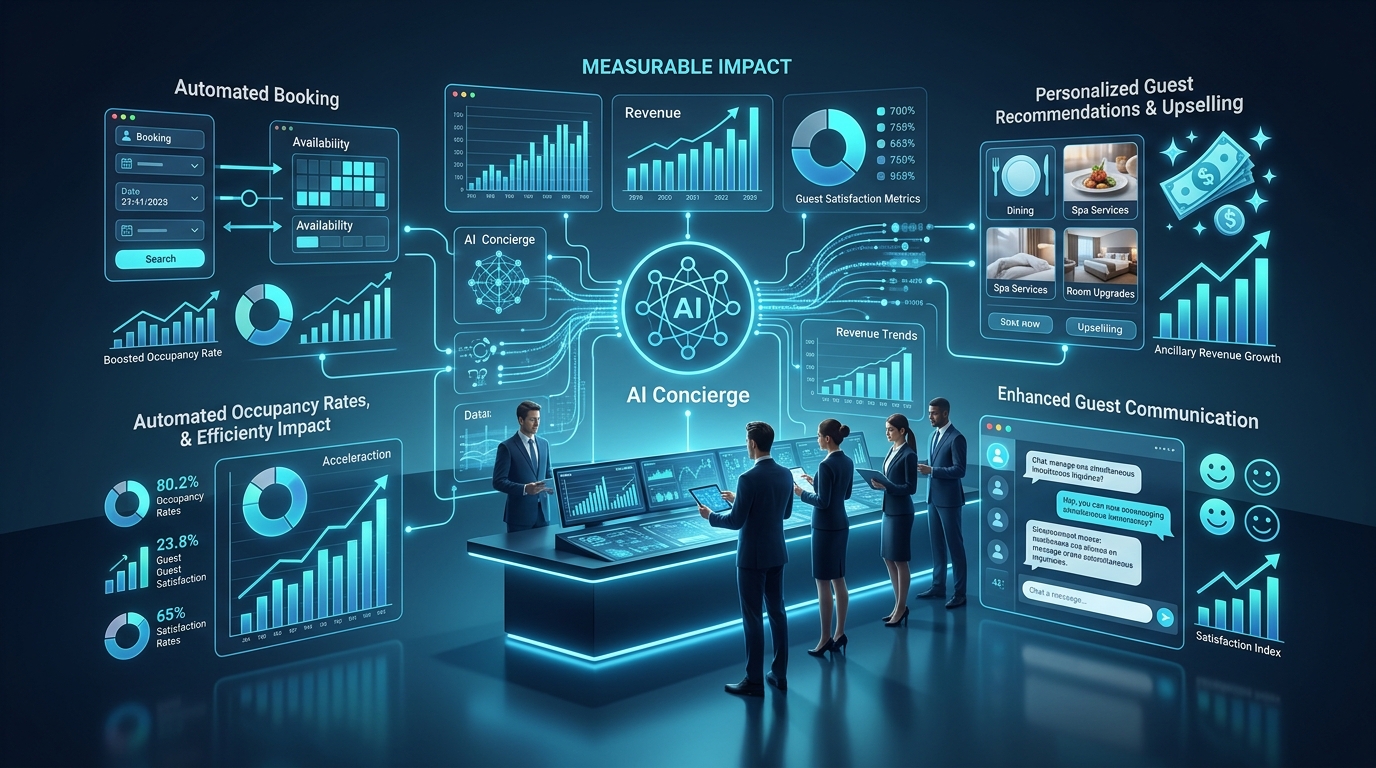
Smart AI concierges generate additional revenue through targeted upselling and cross-selling. These systems analyze guest profiles, booking patterns, and preferences to recommend room upgrades, spa services, dining experiences, and local activities at optimal moments. Unlike static promotional emails, AI suggestions reflect individual guest behavior and spending history.
Revenue optimization includes dynamic recommendations based on amenity availability. AI tracks service availability and suggests alternatives when primary choices are booked, converting potential disappointment into additional sales. Properties report 15%-25% increases in ancillary revenue when AI actively promotes services through personalized interactions.
Reducing Operational Costs
Automated guest service reduces staff pressure during peak periods and limits overtime for extended coverage. AI handles routine questions about check-in procedures, Wi-Fi passwords, amenity hours, and directions. This lets front-desk teams focus on complex guest needs rather than repetitive information requests.
Call volumes drop significantly when guests access answers through digital channels. Many properties see 40%-60% fewer basic inquiry calls, translating to lower telecommunications costs and improved staff productivity during busy periods.
Building Guest Loyalty Through Consistency
AI systems deliver consistent service quality regardless of staff availability or experience level. Guests receive steady access to property information and assistance, reducing variability that affects satisfaction scores.
AI maintains preferences across multiple stays, including saved requests and recurring service patterns. This includes preferred restaurants and typical transportation needs. Individualized attention, once limited to VIP programs, extends to more guests through automated personalization.
Why Hotels Need AI: Addressing Skepticism with Real Value
Understanding the Hesitation
Many hotel operators question AI implementation because vendors focus on technology features rather than business outcomes. When presentations emphasize machine learning and natural language processing without connecting to occupancy rates, guest satisfaction, or operational efficiency, the value proposition feels abstract.
The disconnect comes from treating AI as replacement technology rather than operational support. Properties that struggle with adoption approach it only as cost-cutting, missing guest experience and revenue opportunities.
AI Concierge as Strategic Partner
Strategic hotels treat these systems as intelligence tools that inform decisions. They track inquiry patterns, identify service gaps, and surface demand trends that staff might miss during high-volume periods. Well-configured AI provides service design insights, response-time monitoring, and targeted operational improvements.
Modern AI concierges proactively engage guests with relevant offers, anticipate needs based on arrival patterns, and create additional touchpoints throughout the stay.
From Inquiries to Business Intelligence
Every guest interaction generates actionable data. AI analyzes conversation patterns to identify frequently requested services that may justify new offerings, popular local attractions for potential partnerships, and common complaint themes requiring operational attention.
Guest preference mapping enables predictive service delivery. Systems learn that business travelers often request early breakfast while families ask about nearby activities, helping properties tailor communication timing and content by guest segment.
Practical Implementation Guide
Secure and Effective AI Deployment
Successful AI deployment requires attention to data privacy, system security, and ethical guest interaction protocols. Properties should establish clear data retention policies, implement encryption for guest communications, and offer opt-out paths for guests preferring staff assistance.
Effective implementation begins with well-defined use cases rather than attempting end-to-end automation immediately. Most teams start with high-volume, low-complexity inquiries like amenity information and directions, then expand into service in hotels coordination and personalized recommendations.
Integration Requirements
Integration challenges often determine success or failure. AI concierges need access to property management systems, point-of-sale platforms, and reservation databases to provide accurate information and complete requests.
Properties should budget for API development, data synchronization, and staff training on new workflows. Integration timelines typically span three to six months, depending on existing infrastructure and customization requirements.
Training and Transition Strategy
Staff training covers AI capabilities, escalation triggers, and service quality maintenance during rollout. Team members need clear protocols for handling AI handoffs, reviewing conversation history, and providing continuity when situations require human judgment.
Successful properties often run gradual rollouts that allow staff adjustment and guest feedback collection before broader deployment. This approach identifies workflow gaps and system limits while building confidence in the technology partnership. For comprehensive AI automation services, working with experienced providers streamlines the transition process.
Frequently Asked Questions
How does an AI concierge system differ from a basic hotel chatbot?
An AI concierge goes beyond basic chatbots by understanding context, remembering guest preferences, and completing multi-step service requests. These systems process natural-language inquiries for dining, spa, or transportation, maintaining a helpful conversation flow. At Vynta AI, our bespoke agents are designed for luxury hospitality, offering deep integration and personalized interactions.
What types of guest requests can an AI concierge manage in a hotel?
AI concierges can manage a wide array of guest inquiries, from providing quick answers about amenities and local attractions to processing dining reservations and spa appointments. They handle routine tasks like directions, hours of operation, and basic service information around the clock. This allows human staff to focus on more complex guest needs and relationship building.
How do AI concierges work alongside human hotel staff?
AI concierges partner with human staff, taking on routine inquiries and standard requests to free up human concierges for complex problem-solving and personal guest relationships. When an AI system encounters a complex request or detects guest frustration, it can seamlessly escalate the conversation to staff with relevant context. This collaboration ensures guests always receive appropriate care, including VIPs who can be routed directly to human assistance.
Can AI concierge systems truly personalize the guest experience?
Absolutely. AI concierge systems remember guest preferences and analyze profiles to offer personalized recommendations for room upgrades, spa services, and local activities. This individualized attention helps hotels deliver consistent service quality and can even maintain preferences across multiple stays. Vynta AI agents are fully customizable to brand tone and can provide channel-specific personalization across platforms like WhatsApp and Instagram.
How do AI concierges contribute to a hotel's financial outcomes?
AI concierges significantly impact financial outcomes by boosting ancillary revenue through personalized upsells and cross-sells, often seeing 15%-25% increases. They also reduce operational costs by automating routine inquiries, which can decrease basic inquiry calls by 40%-60%. Our Vynta AI Agents can increase booking conversion by 50% and reduce customer inquiry abandonment by 60%, directly supporting revenue growth.
What technologies power modern AI concierge systems in hospitality?
Modern AI concierge systems are driven by natural language processing to interpret guest requests and machine learning algorithms that continuously improve response accuracy. Integration APIs connect these systems with property management and CRM platforms for real-time data access. This allows for comprehensive assistance, whether guests interact via voice recognition or text-based interfaces.
Can AI concierges truly improve guest loyalty and satisfaction?
Yes, AI concierges deliver consistent service quality and personalized interactions, which are key drivers of guest loyalty. Properties using these systems often report 20%-30% improvements in guest satisfaction scores and an 18% increase in repeat bookings. By providing fast, accurate responses and remembering guest preferences across stays, AI fosters a positive and memorable experience.