
AI agents vs traditional chatbots for nightclubs?
Beyond the Basics: Understanding AI Agents vs. Traditional Chatbots for Nightclubs
When evaluating AI agents vs traditional chatbots for nightclubs?, the distinction goes far beyond simple automation. Traditional chatbots operate on predefined scripts and decision trees, responding to specific keywords with predetermined answers. They handle basic FAQ responses but break down when conversations deviate from programmed paths.
What is a Traditional Chatbot?
Traditional chatbots follow rule-based logic trees, matching user inputs to scripted responses. A nightclub chatbot might handle “What time do you open?” or “What is the cover charge?” but fails when guests ask complex questions about group packages or special event availability.
What is an AI Agent?
AI agents are autonomous systems that understand context, reason through problems, and take independent actions to achieve specific goals. Unlike chatbots that simply respond, AI agents actively work toward outcomes such as maximizing table bookings or increasing per-guest spending through strategic upselling.
The Core Distinction: Autonomy and Goal Achievement
The fundamental difference is autonomy. While traditional chatbots wait for prompts and deliver static responses, AI agents proactively identify opportunities, analyze guest preferences, and execute multi-step processes. An AI agent doesn’t just answer booking inquiries. It optimizes table assignments, suggests premium packages, and coordinates with reservation systems automatically.
Key Insight
Traditional chatbots are reactive tools that answer questions. AI agents are proactive revenue drivers that solve problems and achieve business objectives with appropriate human oversight for VIP and complex queries.
Underlying Technologies: Logic Trees vs. Generative AI and Reasoning
Traditional chatbots rely on if-then logic structures and keyword matching. AI agents use large language models, natural language understanding, and reasoning capabilities to interpret intent, maintain conversation context, and make intelligent decisions based on business rules and guest data.
This technological foundation allows AI agents to handle the complex, dynamic environment of nightclub operations, where guest needs vary dramatically and revenue opportunities emerge in real-time conversations. The question of AI agents vs traditional chatbots for nightclubs? centers on whether venues need simple information delivery or sophisticated revenue optimization tools.
Operational Challenges in Nightclubs: Where Chatbots Fall Short
The Limits of Rule-Based Responses
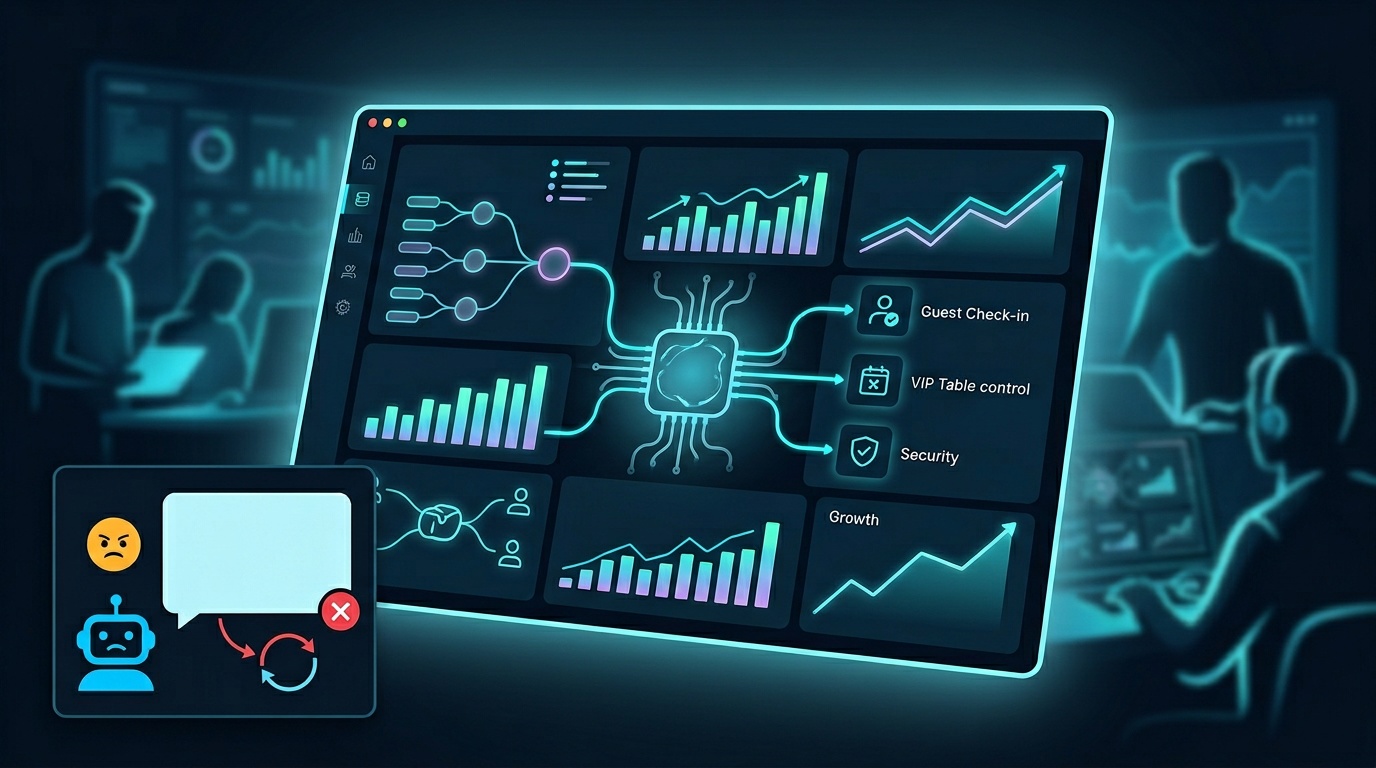
Traditional chatbots break down when nightclub guests ask questions outside their programmed scripts. A guest inquiring about “bottle service for a bachelor party of 15 with dietary restrictions” receives generic responses or gets transferred to human staff. These systems can’t process multi-layered requests that combine group size, event type, and special requirements into actionable booking recommendations.
Handling Complex and Nuanced Guest Inquiries
Nightclub operations involve complex variables: table locations, music preferences, dress codes, age restrictions, and dynamic pricing. When guests ask about VIP experiences or compare package options, traditional chatbots deliver static information rather than personalized recommendations. This creates friction in the booking process and forces staff to handle inquiries that could drive revenue with more advanced automation, much like the challenges faced by chatbots for hotels.
Missed Opportunities in Dynamic Environments
Peak nightclub revenue comes from real-time upselling and strategic table management. Traditional chatbots can’t recognize when a guest booking a standard table might upgrade to VIP based on inquiry patterns or previous visit history. They miss opportunities to suggest bottle packages, premium seating, or special event tickets that could increase per-guest spending.
Revenue Impact
Nightclubs using traditional chatbots typically see lower conversion rates on premium bookings than venues using AI-powered systems that actively guide guests toward higher-value options.
The Inability to Proactively Drive Revenue
The most significant limitation of traditional chatbots is their reactive nature. They can’t initiate conversations with past guests about upcoming events, send personalized offers based on spending history, or coordinate with reservation systems to optimize table assignments for maximum revenue. This passive approach leaves money on the table in an industry where proactive guest engagement correlates with profitability.
These operational gaps show why the comparison of AI agents vs traditional chatbots for nightclubs? often favors more sophisticated automation that understands business context and actively works toward revenue goals.
The Agentic Advantage: How AI Agents Transform Nightclub Operations
Automating Complex Reservation Management and Group Bookings
AI agents transform nightclub booking processes by managing multi-variable reservations autonomously. When a guest requests tables for a corporate event with 40 people, dietary restrictions, and budget constraints, AI agents coordinate table configurations, check availability across multiple dates, and present optimized packages instantly. These systems integrate with POS and reservation platforms to prevent overbooking while maximizing floor utilization.
Personalized Guest Engagement and Upselling Automation
Advanced AI agents analyze guest conversation patterns, previous visit data, and spending history to deliver targeted upselling opportunities. A returning guest who previously ordered premium vodka receives personalized bottle-service recommendations, while first-time visitors get curated introductory options. This contextual approach increases conversion rates by presenting relevant choices at the right moment in the booking conversation.
Dynamic Table Pricing and VIP Package Optimization
AI agents adjust pricing recommendations based on demand patterns, event popularity, and real-time booking velocity. During peak periods, they suggest premium seating options while offering targeted incentives for slower nights. This approach increases revenue per table while maintaining competitive positioning against other venues.
Revenue Impact
Nightclubs implementing AI agents often see 25-40% higher average booking values through intelligent upselling and improved table utilization during off-peak hours.
Proactive Event Promotion and Real-Time Offer Delivery
Unlike traditional systems that wait for inquiries, AI agents initiate conversations with past guests about upcoming events, send personalized invitations based on music preferences, and deliver time-sensitive offers to drive bookings. This proactive engagement creates new revenue from existing guest relationships while reducing marketing costs.
The comparison of AI agents vs traditional chatbots for nightclubs? shows how autonomous systems drive measurable business outcomes through intelligent automation that understands hospitality context and guest behavior patterns.
Measuring Success: The Tangible ROI of AI Agents in Hospitality
Boosting Booking Conversion Rates
AI agents convert inquiries to confirmed reservations at 35-50% higher rates than traditional chatbots. By understanding guest intent, addressing objections proactively, and presenting compelling package options, these systems close deals that might otherwise require human intervention or be lost entirely.
Increasing Average Guest Spend Through Smart Upselling
Strategic upselling through AI agents generates measurable revenue increases. Venues typically report 20-30% higher per-guest spending when AI systems identify and present relevant premium options. The technology recognizes patterns that indicate willingness to upgrade, timing suggestions to improve acceptance rates.
Reducing Operational Costs and Staff Workload
AI agents handle 70-80% of routine booking inquiries, allowing staff to focus on complex guest needs and in-venue experiences. This operational efficiency reduces labor pressure while improving service quality during peak periods, cutting operational costs by up to 30%.
Improving Guest Satisfaction Scores and Loyalty
Personalized service supported by AI agents creates better guest experiences, leading to stronger satisfaction and repeat bookings. Venues using intelligent automation report 15-25% improvement in retention rates and more positive online reviews due to consistent, high-quality interactions.
When evaluating AI agents vs traditional chatbots for nightclubs?, the evidence supports AI agents as strategic revenue drivers that deliver measurable returns through intelligent automation, personalized guest engagement, and operational optimization that traditional systems simply can’t match.
Frequently Asked Questions
What's the main difference between an AI agent and a traditional chatbot for a nightclub?
Traditional chatbots are reactive tools that answer questions based on predefined scripts and decision trees. AI agents are proactive revenue drivers that understand context, reason through problems, and achieve business objectives like maximizing table bookings. This fundamental difference lies in their autonomy and goal-driven approach.
How do traditional chatbots typically fall short in nightclub operations?
Traditional chatbots struggle with complex, multi-layered guest inquiries, such as those involving group packages or specific event requirements. They are limited by rule-based responses, leading to generic answers and missed opportunities for personalized recommendations or upselling. This often forces human staff to step in for routine tasks.
How can AI agents help nightclubs with complex bookings or group inquiries?
AI agents transform complex booking processes by managing multi-variable reservations autonomously. They can coordinate table configurations, check availability across dates, and present optimized packages quickly. Vynta AI Agents integrate with CRMs like SevenRooms to synchronize guest data and reservations automatically.
Can AI agents actually help increase revenue for a nightclub?
Absolutely. AI agents are designed to be proactive revenue drivers. They identify upselling opportunities, suggest premium packages based on guest preferences, and optimize table assignments. Vynta AI Agents can increase average guest spend by up to 25% through brand-safe upselling tailored to guest profiles.
What kind of technology powers AI agents compared to chatbots?
Traditional chatbots rely on if-then logic structures and keyword matching. AI agents, conversely, use large language models, natural language understanding, and reasoning capabilities. This allows them to interpret intent, maintain conversation context, and make intelligent decisions based on business rules and guest data.
How do AI agents personalize guest interactions in a nightclub setting?
Advanced AI agents analyze guest conversation patterns, previous visit data, and spending history. This enables them to deliver targeted upselling opportunities and personalized recommendations. Vynta AI Agents support multilingual capabilities and channel-specific personalization, tailoring responses appropriately across various platforms.
What operational benefits can a nightclub expect from implementing AI agents?
Nightclubs can expect significant operational improvements, including automated complex reservation management and personalized guest engagement. This leads to reduced customer inquiry abandonment and increased booking conversion. Vynta AI Agents can reduce operational costs by 30% while ensuring VIP guests always receive human care via escalation.