
hotel guest experience ai
The ROI of AI: Scaling Hospitality Revenue Through Smarter Guest Experiences
Hotel guest experience AI delivers measurable business outcomes by automating routine tasks, personalizing interactions, and optimizing operations. Properties see 15-25% increases in direct bookings, a 30% reduction in response times, and significant cost savings through intelligent automation of guest services, reservation management, and personalized recommendations.
Beyond the Hype: Defining AI in Hospitality for Measurable Outcomes
Artificial intelligence in hospitality isn’t about flashy robots or futuristic concepts. It’s about intelligent systems that understand guest preferences, automate repetitive tasks, and deliver personalized experiences at scale. Modern hotel guest experience AI operates through conversational interfaces, predictive analytics, and automated workflows that handle everything from booking inquiries to concierge services.
Real AI implementation focuses on three core areas: guest communication automation, personalized service delivery, and operational optimization. These systems learn from guest interactions, booking patterns, and service requests to create seamless experiences that feel natural and helpful. No more robotic responses or disconnected service.
Quantifying the Impact: How AI Drives Revenue and Cuts Costs
Revenue Impact Metrics
Properties implementing comprehensive hotel guest experience AI solutions report average revenue increases of 18% within the first year, driven by improved guest satisfaction scores, increased direct bookings, and optimized pricing strategies based on real-time demand analysis.
Here’s where the numbers get interesting. Cost reduction comes from operational efficiency gains – AI can handle up to 80% of routine guest inquiries, freeing staff for high-value interactions. Labor costs decrease by 20-30% for front desk operations, while guest satisfaction scores improve due to faster response times and consistent service quality.
Vynta AI’s Approach: Enterprise AI Agents for Tangible Business Results
Our Vynta AI Agents for Hospitality integrate seamlessly with existing property management systems, handling guest communications across multiple channels while maintaining brand voice and service standards. Unlike generic chatbots, these agents understand hospitality-specific workflows, room inventory management, and guest service protocols.
The system learns from each interaction, building comprehensive guest profiles that make personalized service delivery possible. This approach transforms hotel guest experience AI from a cost center into a revenue driver through improved guest retention and increased ancillary sales. Real results, not just tech for tech’s sake.
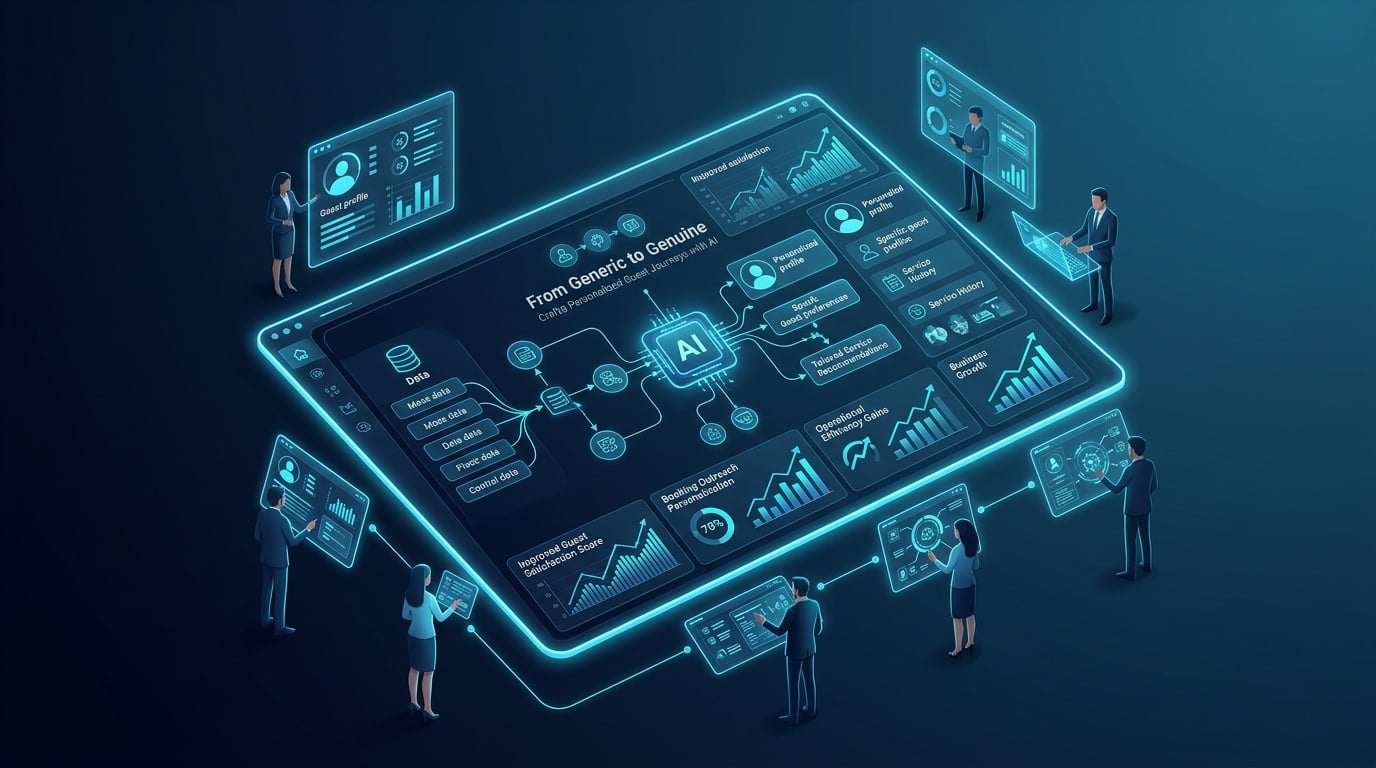
From Generic to Genuine: Crafting Personalized Guest Journeys with AI
Understanding Today’s Guest: Expectations for Tailored Service
Modern travelers expect personalized experiences that recognize their preferences, history, and needs. They want recommendations based on past stays, dietary requirements remembered across visits, and communication in their preferred style and timing. Generic mass messaging and one-size-fits-all service approaches create disconnected experiences that drive guests to competitors.
Today’s guests research extensively before booking and compare experiences across multiple touchpoints. They expect seamless interactions whether contacting properties via phone, email, messaging apps, or in person. This omnichannel expectation requires consistent, intelligent responses that maintain context across communication channels. No guest wants to repeat their story five times.
AI-Powered Personalization: Recommendations, Offers, and Communication
Hotel guest experience AI analyzes guest data to create individualized service approaches. The system tracks preferences like room temperature settings, pillow types, dining restrictions, and activity interests to automatically customize future stays. This goes beyond basic demographics to understand behavioral patterns and service preferences that matter to each guest.
Personalization in Action
AI systems can automatically adjust room amenities, suggest relevant local experiences, and time communications based on guest preferences. A business traveler might receive early-morning fitness center information, while families receive kid-friendly restaurant recommendations and pool hours.
Dynamic pricing and offer optimization make sure guests receive relevant promotions at the right time. Instead of blanket discount emails, AI determines which guests respond to spa packages versus dining credits, and when those guests are most likely to book additional services. Smart targeting beats spray-and-pray marketing every time.
Anticipating Needs: How AI Predicts and Responds to Guest Preferences
Predictive analytics identify guest needs before guests state them explicitly. By analyzing booking patterns, service requests, and interaction history, hotel guest experience AI anticipates requirements like extra towels for pool-goers, late checkout requests for leisure travelers, or transportation arrangements for business guests with early flights.
Proactive service delivery creates memorable experiences. AI identifies optimal moments for upselling, predicts potential service issues, and suggests interventions that prevent problems. This approach transforms reactive customer service into anticipatory hospitality that exceeds expectations. Think concierge-level service at scale.
Avoiding “Malicious Compliance”: Ensuring AI Feels Human-Centric
Effective AI implementation maintains natural conversation flow while providing accurate, helpful responses. The system should understand context, handle complex requests gracefully, and escalate appropriately to human staff when situations require empathy or creative problem-solving.
Human-centric design means AI responses feel conversational rather than robotic, acknowledge guest emotions, and provide solutions rather than just information. This approach builds trust and satisfaction while maintaining operational efficiency. Nobody wants to feel like they’re talking to a script.
Streamlining Operations: AI’s Role in Improving Efficiency and Staff Support
Automating the Mundane: AI for Reservation Management and Inquiries
Intelligent automation handles repetitive tasks that consume valuable staff time. Hotel guest experience AI processes booking modifications, availability inquiries, and standard service requests without human intervention. These systems manage room assignments, process cancellations, and coordinate special requests while maintaining accurate inventory across channels.
Automated inquiry responses provide instant answers to common questions about amenities, policies, and local attractions. The technology supports multiple languages, handles booking confirmations, and manages waitlist notifications. This immediate responsiveness improves guest satisfaction while reducing staff workload during peak periods. Your team can breathe again during check-in rush.
Empowering Your Team: How AI Frees Staff for High-Value Interactions
When AI handles routine communications, staff members can focus on complex problem-solving and relationship building. Front desk teams spend more time on guest welcome experiences, concierge services, and personalized recommendations rather than answering the same five questions about WiFi passwords and breakfast hours.
Staff Efficiency Gains
Properties report a 40% reduction in time spent on routine inquiries, allowing staff to dedicate more attention to revenue-generating activities like upselling, guest relationship management, and creating memorable experiences that drive positive reviews and repeat bookings.
Data-Driven Decisions: AI for Operational Insights and Optimization
Analytics platforms identify patterns in guest behavior, service requests, and operational bottlenecks. Hotel guest experience AI tracks response times, service quality metrics, and guest satisfaction trends to optimize staffing schedules and resource allocation based on actual demand, not guesswork.
Revenue optimization occurs through dynamic pricing recommendations, demand forecasting, and inventory management. The system analyzes booking patterns, seasonal trends, and local events to suggest optimal rates and availability strategies that maximize occupancy and revenue per available room. Data beats intuition when it comes to pricing strategy.
Seamless Integration: Implementing AI Without Disrupting Workflows
Modern AI systems integrate with existing property management software, customer relationship platforms, and communication tools. Implementation requires minimal workflow changes while providing immediate operational benefits through automated task handling and intelligent routing of complex inquiries to the appropriate staff members.
Training requirements focus on AI collaboration rather than system replacement. Staff learn to work alongside intelligent agents, reviewing escalated cases and applying human judgment to nuanced situations that require empathy and creative solutions. For properties looking to improve their scenarios of customer service, AI provides the foundation for consistent, high-quality interactions across all touchpoints.
The Human-AI Partnership: Supporting Your Team for Superior Service
AI as a Co-Pilot, Not a Replacement
I’ve seen too many properties worry that AI will replace their staff. Successful hospitality AI implementation amplifies human capabilities rather than replacing staff members. Technology handles information processing, routine communications, and data analysis while humans provide emotional intelligence, creative problem-solving, and the personalized attention that creates memorable guest experiences.
Staff members become service orchestrators, using AI-generated insights to deliver exceptional hospitality. The partnership allows teams to anticipate guest needs, personalize interactions, and resolve issues more efficiently while maintaining the human touch that distinguishes superior service. It’s about making your best people even better.
Identifying Opportunities for Human-AI Collaboration in Guest Service
Optimal collaboration occurs when AI provides context and recommendations while humans make decisions and deliver service. Hotel guest experience AI analyzes guest history and preferences, then suggests personalized approaches that staff can customize based on real-time interactions and emotional cues.
Complex situations benefit from AI data processing combined with human judgment. When guests have special requests or service recovery needs, AI provides relevant background information and solution options while staff apply empathy and creativity to exceed expectations. This approach works particularly well when combined with proven chatbots for hotels that handle initial inquiries before escalating to human staff when needed.
Building Guest Loyalty Through an Augmented Human Touch
Loyalty develops through consistent, personalized service that remembers guest preferences and anticipates needs. AI gives staff instant access to comprehensive guest profiles, providing conversation starters, service preferences, and historical context that creates seamless, personalized interactions across visits.
Emotional connection remains distinctly human while AI provides the information foundation for meaningful relationships. Staff can focus on creating positive memories and addressing individual needs rather than searching for basic information or handling routine requests. This enhanced service in hotels creates the differentiated experiences that drive guest loyalty and positive reviews. Real relationships, powered by smart technology.
Frequently Asked Questions
What tangible business outcomes can hotels expect from implementing AI for guest experience?
Hotels see measurable returns, including 15-25% increases in direct bookings and an average revenue increase of 18% within the first year. AI also drives significant cost savings by automating routine tasks, leading to a 30% reduction in response times and improved guest satisfaction. This transforms hotel guest experience AI into a revenue driver.
How does AI personalize the guest journey in hotels?
Hotel guest experience AI analyzes guest data, including past stays and preferences, to create individualized service approaches. It tailors recommendations for local experiences, adjusts room amenities, and optimizes offers based on behavioral patterns. This ensures guests receive relevant promotions and services at the right time, creating seamless interactions.
Can hotel guest experience AI really reduce operational costs?
Absolutely. AI handles up to 80% of routine guest inquiries, significantly reducing labor costs for front desk operations by 20-30%. This automation frees staff to focus on high-value interactions and complex guest needs. Vynta AI Agents specifically can reduce operational costs by 30%.
How does AI support hotel staff rather than replace them?
AI automates repetitive tasks like reservation management and inquiry handling, freeing human staff for more meaningful guest interactions. This allows staff to focus on delivering personalized service and handling complex situations that require human empathy. Vynta AI Agents ensure VIP guests always receive human care via escalation rules set by the client.
What distinguishes Vynta AI Agents from other AI solutions in hospitality?
Vynta AI Agents are bespoke AI solutions designed specifically for luxury hospitality venues, integrating seamlessly with existing property management systems. Unlike generic chatbots, our agents understand hospitality-specific workflows and manage guest communications across multiple channels while maintaining brand voice. They can increase booking conversion by 50% and reduce customer inquiry abandonment by 60%.
How does hotel guest experience AI anticipate guest needs before they even ask?
Through predictive analytics, hotel guest experience AI analyzes booking patterns, service requests, and interaction history. This allows the system to anticipate requirements, such as extra towels for pool-goers or late checkout requests for leisure travelers. Proactive service delivery creates memorable experiences and prevents potential issues.
Is hotel guest experience AI truly human-centric, or does it feel robotic?
Effective AI implementation focuses on human-centric design, ensuring responses feel conversational and natural, not robotic. The system understands context, handles complex requests gracefully, and escalates to human staff when empathy or creative problem-solving is needed. Vynta AI Agents mimic human-like response timing with natural pauses and delays, operating within client-defined hours.