

Compare agentic systems for improving agent efficiency.
Beyond Basic Automation: Understanding Agentic Systems for Business Efficiency
When business owners compare agentic systems for improving agent efficiency, they often confuse these sophisticated platforms with simple chatbots or basic automation tools. This misunderstanding costs companies measurable opportunities for revenue growth and operational optimization.
What Exactly Are Agentic Systems?
Agentic systems represent autonomous AI platforms that reason, plan, and execute complex business workflows with human oversight. Unlike traditional automation that follows rigid scripts, these systems adapt their approach based on context, learn from interactions, and make intelligent decisions that drive business outcomes. They combine perception, memory, reasoning, and action capabilities to function as digital team members rather than simple tools.
The Revenue Impact of True Autonomy
While a chatbot might answer “What’s the price?” with a static response, an agentic system qualifies the prospect, matches them with relevant properties, schedules viewings, and follows up with personalized recommendations. This distinction directly impacts conversion rates and revenue generation. Often determining whether businesses see 10% productivity gains or 300% pipeline growth.
Key Insight: The efficiency gap between basic AI and agentic systems often determines whether businesses see 10% productivity gains or 300% pipeline growth. The architecture matters more than the technology.
Why Efficiency in AI Agents Matters for Your Bottom Line
Agent efficiency translates directly to business metrics: response time, conversion rates, and revenue per employee. Agentic Systems for Real Estate demonstrate this impact by converting property inquiries into viewings and sales through instant engagement, intelligent qualification, and personalized follow-up. When systems respond to inquiries in under 60 seconds while qualifying prospects and scheduling appointments simultaneously, the qualified pipeline increases by 3x with conversion rates reaching 85%. This efficiency allows agents to focus on high-value activities like closing deals rather than administrative tasks.
The Engine of Efficiency: Key Components of High-Performing Agentic Systems

Understanding what drives efficiency in autonomous AI platforms requires examining their core functional architecture. When organizations compare agentic systems for improving agent efficiency, they must evaluate four components that determine real-world performance: perception and reasoning capabilities, memory and learning functions, planning and execution processes, and tool integration depth.
Perception & Reasoning: The Agent’s “Senses” and “Brain”
Perception modules process multiple data streams simultaneously. From customer communications across WhatsApp, SMS, and email to property databases and market conditions. The reasoning engine analyzes this information to understand context, intent, and opportunity. Advanced systems interpret not just what prospects say, but what they mean, identifying qualified leads through conversation patterns and behavioral signals that human agents might miss during high-volume periods.
Memory & Learning: Building on Experience for Smarter Actions
Sophisticated memory architectures store interaction histories, preference patterns, and outcome correlations to improve future performance. Learning algorithms identify which property recommendations generate viewings, which follow-up timing produces responses, and which qualification questions predict successful closings. This accumulated knowledge allows systems to refine their approach continuously, adapting strategies based on market feedback and client behavior patterns.
Performance Insight: Systems with advanced memory capabilities show 40% better matching accuracy over time, as they learn prospect preferences and market dynamics specific to each business environment.
Planning & Action: Orchestrating Tasks for Desired Outcomes
Planning modules coordinate multi-step workflows that span days or weeks, managing prospect nurturing sequences, appointment scheduling, and follow-up campaigns. Action capabilities execute these plans through automated communications, calendar management, and data updates across business systems. The most effective platforms orchestrate these activities while maintaining personalization and timing that feels natural to prospects and clients.
Tool Integration & Orchestration: The Power of Connectivity
Integration depth determines whether systems function as isolated tools or comprehensive business solutions. Advanced platforms connect with CRM systems, property databases, marketing automation tools, and communication channels to create unified workflows. These sophisticated systems exemplify this connectivity by automating 80% of administrative tasks while maintaining data consistency across all business systems, allowing agents to focus on relationship building and deal closing activities.
Comparing Agentic Systems: A Framework for Measuring Real Business Impact
Effective evaluation of autonomous AI platforms requires metrics that directly correlate with revenue generation and operational efficiency. Business owners must move beyond feature comparisons to assess systems based on measurable outcomes that impact their specific industry challenges and growth objectives.
Beyond Task Completion: Metrics That Drive ROI
Response time, conversion rates, and revenue per agent represent the fundamental metrics that determine system value. In real estate, systems that respond to inquiries within 60 seconds while simultaneously qualifying prospects and scheduling viewings demonstrate superior efficiency compared to platforms that simply acknowledge receipt. Recruitment agencies benefit from systems that identify candidate fit through conversation analysis, while fundraising organizations need platforms that personalize donor outreach based on giving history and engagement patterns. Hospitality businesses require systems that anticipate guest needs and coordinate service delivery across departments.
| Efficiency Metric | Traditional Automation | Advanced Agentic Systems | Business Impact |
|---|---|---|---|
| Response Time | 5-30 minutes | Under 60 seconds | 3x qualified pipeline growth |
| Task Automation | 30-40% | 80%+ | 20+ hours saved weekly |
| Conversion Rate | 15-25% | 85% | $100k+ additional revenue per agent |
| Client Retention | Standard rates | 85% improvement | 27% satisfaction increase |
Single Agent vs. Multi-Agent Systems: Which Architecture Delivers Peak Performance?
Single-agent architectures excel in focused applications where one system handles the complete customer journey from initial contact through conversion. Multi-agent systems distribute specialized functions across multiple AI entities that collaborate on complex workflows. The choice depends on business complexity and integration requirements. Companies with straightforward processes often achieve better results with single-agent solutions that maintain conversation continuity, while organizations with multiple departments benefit from specialized agents that coordinate activities while maintaining domain expertise.
The “Juice Isn’t Worth the Squeeze”: Evaluating Agentic Systems Against Your Business Goals
Implementation complexity and ongoing maintenance costs must align with projected returns. Systems requiring extensive technical resources or lengthy training periods may not suit mid-market businesses seeking near-term productivity gains. The most valuable platforms deliver measurable improvements within 30-60 days while requiring minimal IT infrastructure changes. Organizations should prioritize solutions that integrate smoothly with existing workflows rather than forcing business process redesigns around new technology capabilities.
Overcoming AI Adoption Hurdles: Selecting and Implementing Agentic Systems for Measurable Gains
Successful deployment of autonomous AI platforms requires addressing common concerns about transparency, control, and human-AI collaboration while ensuring systems deliver industry-specific value that justifies investment costs and organizational changes.
Addressing Common Concerns: Transparency, Control, and Human-AI Collaboration
Business owners frequently worry about losing control over customer interactions or creating impersonal experiences. Modern agentic systems provide detailed activity logs, decision explanations, and override capabilities that maintain human oversight while automating routine tasks. The goal supports human capabilities rather than replacing relationship-building skills. Agents retain control over strategic decisions while systems handle data processing, appointment coordination, and initial prospect qualification activities.
The Vynta AI Advantage: Industry-Specific Solutions for Tangible Results
Generic automation platforms lack the specialized knowledge required for industry-specific workflows and compliance requirements. Vynta AI develops custom AI agents and automation solutions that understand real estate regulations, recruitment best practices, fundraising donor psychology, and hospitality service standards. This specialization allows faster implementation and better results compared to general-purpose platforms that require extensive customization.
Implementation Reality: Industry-specific systems typically achieve full productivity within 30 days, while generic platforms often require 3-6 months of customization before delivering meaningful business value.
Your Roadmap to Agentic Efficiency: A Strategic Partnership Approach
Effective implementation begins with discovery sessions that identify specific bottlenecks and optimization opportunities within existing business processes. Strategic partners provide ongoing support, system refinements, and performance optimization based on real usage data and changing business requirements. This collaborative approach ensures systems evolve with business needs rather than becoming static tools that require replacement as companies grow.
The Future of Automation: Actionable Insights for Future-Proofing Your Business
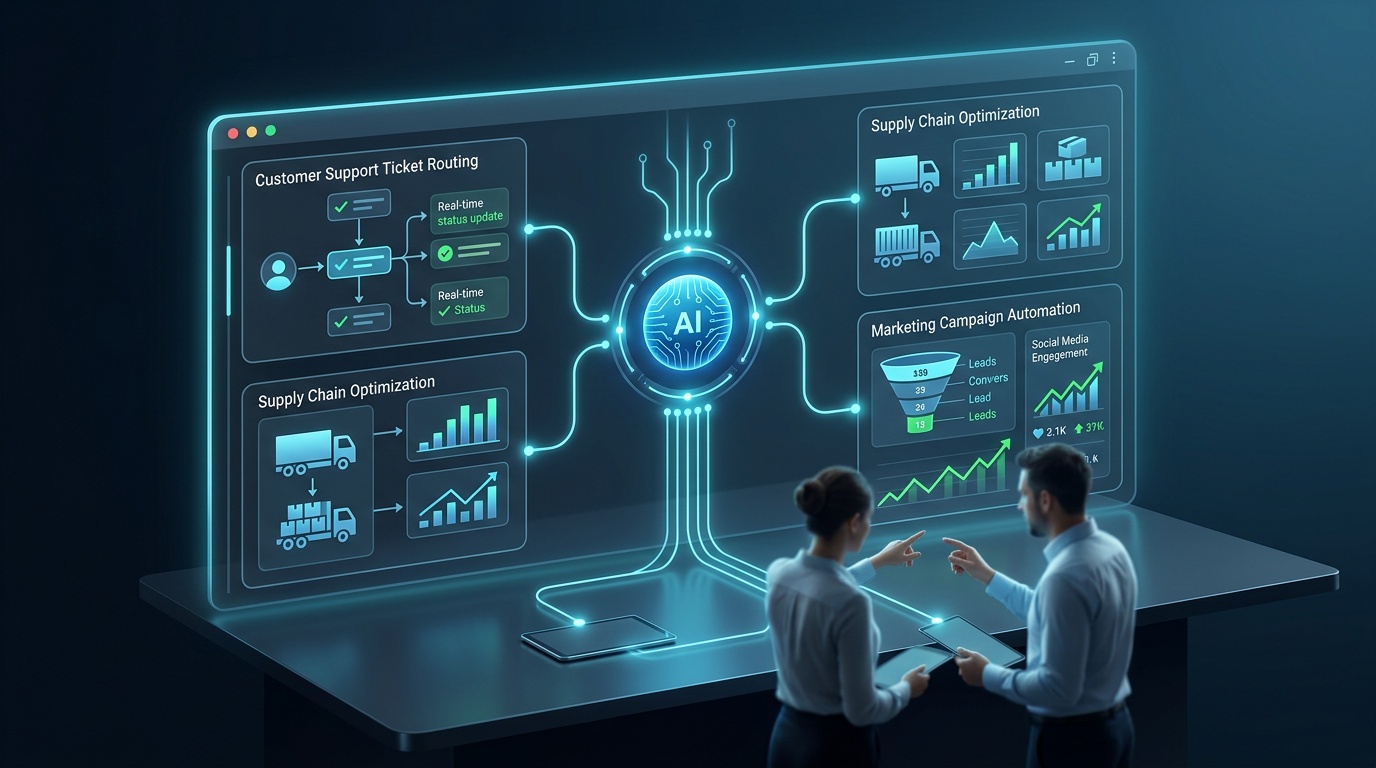
Organizations that compare agentic systems for improving agent efficiency today position themselves for competitive advantages as AI capabilities continue advancing rapidly across business functions and customer interaction channels.
Anticipating Evolving Agent Capabilities
Next-generation systems will integrate predictive analytics, advanced natural language processing, and cross-platform orchestration that spans multiple business departments. Early adopters gain experience with AI workflows while competitors struggle with basic automation, creating sustainable competitive moats in customer service quality and operational efficiency.
The Strategic Advantage of Proactive Agentic System Adoption
Companies implementing advanced automation today build organizational knowledge and process optimization that compounds over time. Teams develop AI collaboration skills, refine workflows, and establish data collection practices that support increasingly sophisticated capabilities as technology evolves.
Future Perspective: Businesses that master agentic systems now will seamlessly integrate emerging AI capabilities, while late adopters face steeper learning curves and higher implementation costs in increasingly competitive markets.
Partnering for Continuous Improvement and Competitive Edge
Long-term success requires partners committed to ongoing innovation and system evolution rather than one-time software installations. Strategic relationships ensure access to emerging capabilities, industry best practices, and performance optimization techniques that maintain competitive positioning as market conditions change and customer expectations evolve.
Frequently Asked Questions
What is the difference between agent and agentic systems?
Traditional AI agents typically follow rigid scripts, providing predetermined responses to specific prompts. Agentic systems, by contrast, are autonomous AI platforms that reason, plan, and execute complex business workflows. They adapt their approach based on context, learn from interactions, and make intelligent decisions to drive business outcomes.
What components define an effective agentic system?
Effective agentic systems are defined by four core components: perception and reasoning capabilities, memory and learning functions, planning and execution processes, and deep tool integration. These elements allow systems to understand context, learn from experience, orchestrate multi-step workflows, and connect with existing business tools. Evaluating these components helps businesses compare agentic systems for real-world performance.
What are the different types of agentic systems?
While not categorized into rigid ‘types,’ agentic systems are often specialized by industry or business function to address specific challenges. For example, some focus on real estate lead qualification, while others, like Vynta AI Agents, are tailored for luxury hospitality to manage guest inquiries and bookings. The key is their ability to adapt and execute complex workflows within their defined domain.
How could agentic AI improve efficiency?
Agentic AI improves efficiency by automating complex, multi-step workflows that traditionally consume significant human time. This leads to faster response times, higher conversion rates, and increased revenue per employee. By handling tasks like intelligent prospect qualification and personalized follow-ups, agentic systems free human teams to focus on high-value activities.
Is ChatGPT an agent or LLM?
ChatGPT is fundamentally a Large Language Model (LLM), a powerful component for understanding and generating human-like text. An agentic system, by contrast, is an autonomous architecture that uses LLMs for reasoning and perception, but also integrates memory, planning, and action capabilities. This allows agentic systems to execute multi-step business strategies, rather than just responding to prompts.