

Top AI automation for hospitality waste reduction?
The Bottom Line: How AI Automation Delivers Measurable Waste Reduction in Hospitality
The Top AI automation for hospitality waste reduction? combines predictive analytics, real-time monitoring, and smart resource management to cut operational costs by 30% while reducing food waste by up to 40%. Modern AI systems forecast inventory needs and optimize energy consumption, delivering ROI through reduced disposal costs and improved efficiency.
Beyond Sustainability: AI’s Direct Impact on Profitability
AI automation turns waste reduction from a cost center into a profit driver. Smart systems analyze consumption patterns, guest behavior, and seasonal trends to minimize over-ordering, reduce spoilage, and allocate resources more effectively. Properties using advanced AI report average savings of $50,000-$200,000 annually through reduced waste disposal fees, lower procurement costs, and improved operational efficiency.
Vynta AI’s Approach: Enterprise AI Agents for Holistic Waste Management
Vynta AI Agents for Hospitality integrate with existing property management systems to support waste-reduction automation. These custom AI agents, designed for luxury hospitality venues, monitor guest preferences, predict demand fluctuations, and coordinate with kitchen operations to minimize food waste while maintaining service quality. The system operates continuously, analyzing data streams from multiple sources to identify waste-reduction opportunities in real time.
Key Insight: Properties using AI waste-reduction systems typically see a 25-35% reduction in total waste output within six months, with food waste decreasing by up to 40% through improved forecasting accuracy.
The ROI of Smarter Operations: Quantifying Waste Reduction Gains
AI automation delivers measurable returns through multiple channels: reduced purchasing costs, lower disposal fees, decreased labor dedicated to waste management, and improved inventory turnover. Mid-size hotels report average monthly savings of $8,000-$15,000, while larger resorts see reductions exceeding $30,000 monthly. Beyond cost savings, guest experience improvements create additional revenue opportunities through better service delivery and resource allocation.
Smart Kitchens, Smarter Operations: AI for Food Waste and Inventory Management
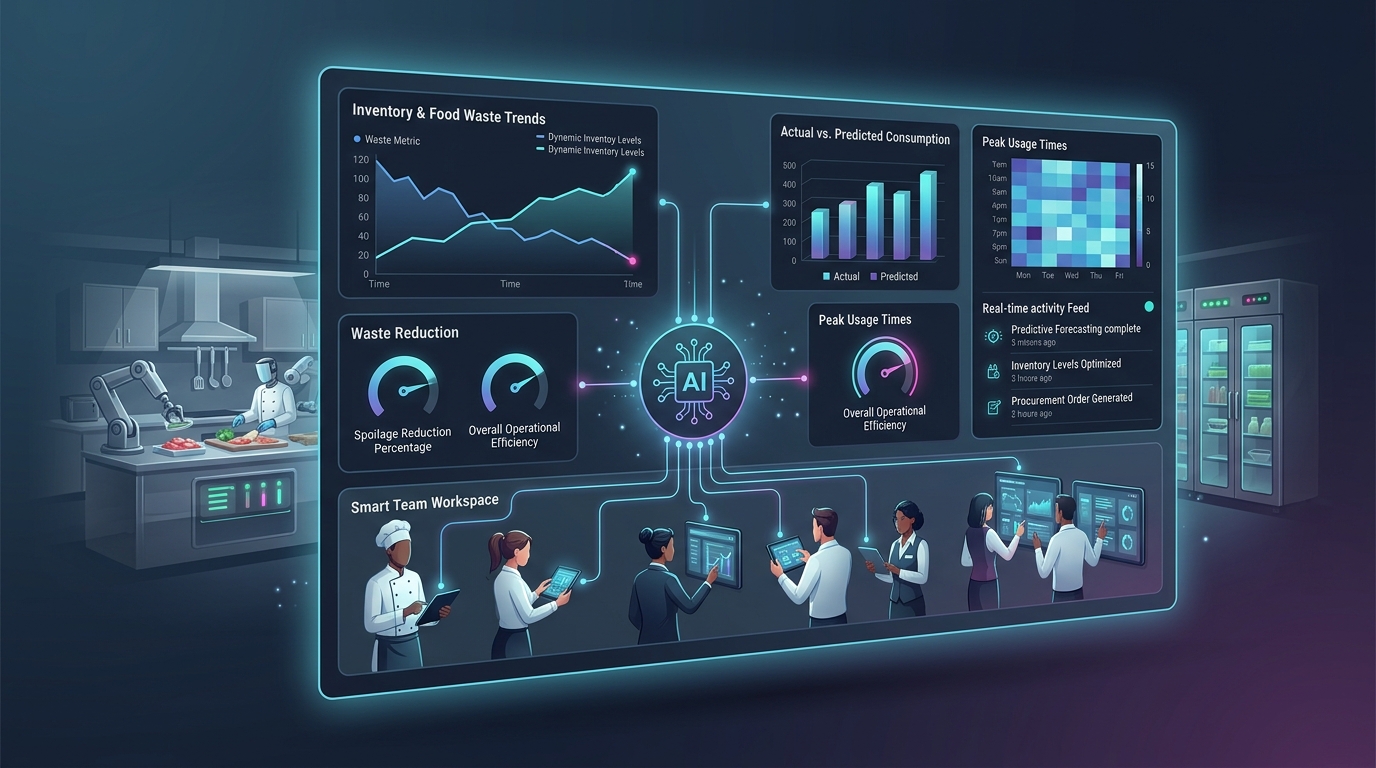
Predictive Forecasting: Minimizing Over-Ordering and Spoilage
Machine learning models analyze historical consumption data, weather patterns, local events, and booking trends to predict food requirements 7-14 days in advance. This forecasting reduces over-ordering by 30-45% while maintaining appropriate inventory levels. Hotels report fewer expired products, with some properties reducing spoilage-related losses by up to 80% through accurate demand prediction.
AI-Powered Inventory Management: Real-Time Tracking and Usage Analysis
Smart inventory systems monitor stock levels, expiration dates, and usage patterns continuously, automatically adjusting orders based on consumption velocity and seasonal variation. RFID sensors and computer vision track ingredient movement from storage to preparation, identifying waste points and improving stock rotation. These systems flag slow-moving items for promotional pricing or menu adjustments before spoilage occurs.
Kitchen Production: Reducing Scrappage Through Better Timing
AI analyzes kitchen workflows to improve portion control, prep scheduling, and production timing. Smart systems coordinate between front-of-house reservations and back-of-house preparation, adjusting cooking schedules based on actual guest arrivals and ordering patterns. This synchronization reduces overproduction waste by 25-40% while maintaining food quality and service speed.
Kitchen Efficiency Metrics: Properties using AI kitchen automation report a 35% reduction in food costs, a 40% decrease in prep waste, and a 20% improvement in inventory turnover rates within the first quarter.
Beyond Food: AI’s Role in Reducing Energy, Water, and Operational Waste
Smart Energy Management: HVAC and Lighting Efficiency
Smart building systems reduce energy consumption by learning occupancy patterns, weather conditions, and guest preferences. AI automatically adjusts heating, cooling, and lighting based on room occupancy, reducing energy waste by 20-35% without compromising comfort. These systems pre-cool or pre-heat spaces based on reservation schedules and historical usage data, avoiding unnecessary energy use in unoccupied areas.
Water Conservation: Automated Monitoring and Leak Prevention
Advanced sensors detect leaks, monitor consumption patterns, and control water usage across kitchens, laundry facilities, and guest rooms. AI systems identify anomalies in water usage, automatically shutting off supplies when leaks are detected and scheduling maintenance before costly water damage occurs. Smart irrigation systems adjust watering schedules based on weather forecasts and soil moisture levels, reducing outdoor water consumption by up to 50%.
Operations Management: Cutting Material and Disposal Waste
AI automation improves housekeeping schedules, laundry operations, and maintenance workflows to reduce material waste. Smart systems track amenity usage patterns, automatically adjusting supplies based on occupancy forecasts and guest profiles. Predictive maintenance models identify equipment issues before failures occur, reducing emergency repairs and extending asset life cycles by 25-30%.
Operational Impact: Hotels using AI waste reduction see a 40% decrease in disposal costs, a 30% reduction in supply waste, and a 50% improvement in maintenance efficiency through predictive automation.
Getting Started with AI Waste Reduction: Practical Steps and Adoption Strategies
Assessing Your Waste Streams: Where AI Creates the Biggest Impact
Start with a waste audit that identifies high-volume, high-cost categories. Food waste usually offers the fastest ROI, followed by energy management and supply chain inefficiencies. Prioritize areas with existing data sources, such as POS systems and utility meters, to shorten setup timelines.
Choosing the Right AI Partner: Beyond Point Solutions
Select partners that offer integrated platforms rather than standalone tools. The most effective waste reduction systems connect multiple operational platforms, supporting end-to-end improvements rather than isolated fixes. Evaluate vendors on hospitality-specific expertise, integration capabilities, and ROI evidence from similar properties.
Integrating AI into Daily Operations: Human-AI Collaboration
Successful rollouts require staff training and change-management support. AI systems should support human decision-making rather than replace staff entirely. Establish clear escalation procedures for complex situations while allowing AI to handle routine tasks automatically. Teams adapt faster when they understand how AI makes their jobs easier, not obsolete.
Measuring Success: KPIs That Matter for Waste Reduction
Track waste-reduction percentages, cost savings per room, and operational efficiency improvements monthly. Monitor food cost percentages, energy consumption per occupied room, and disposal fees relative to revenue. Properties should see measurable movement within 60-90 days of deployment.
Benefits of AI Waste Reduction
- 30-40% reduction in total waste output
- $50,000-$200,000 in annual cost savings
- Real-time monitoring and adjustment
- Improved sustainability credentials
Implementation Considerations
- Initial setup and integration costs
- Staff training requirements
- Data quality dependencies
- Technology learning curve
Frequently Asked Questions
How does AI automation help hospitality businesses reduce waste?
AI automation for hospitality waste reduction uses predictive analytics, real-time monitoring, and intelligent resource management to significantly cut waste. It optimizes everything from inventory forecasting to energy consumption, delivering clear ROI. This approach transforms waste reduction from a cost center into a direct profit driver for businesses.
What specific types of waste can AI automation address in hotels and resorts?
AI automation addresses a wide array of waste types across hospitality operations. This includes minimizing food waste through precise forecasting and inventory management, optimizing energy use in HVAC and lighting systems, and conserving water through leak detection and smart irrigation. It also streamlines operations to cut down on material and disposal waste.
Can AI automation really save money for hospitality operations?
Absolutely, AI automation delivers measurable financial returns for hospitality businesses. Properties often see average annual savings of $50,000-$200,000 by reducing purchasing costs, lowering disposal fees, and improving operational efficiency. This turns waste reduction into a direct profit driver.
How does Vynta AI approach waste reduction for luxury venues?
At Vynta AI, our Enterprise AI Agents for Hospitality are bespoke solutions designed for luxury venues such as restaurants, premium bars, nightclubs, and beach clubs. These agents integrate with existing property management systems, monitoring guest preferences and predicting demand fluctuations to minimize food waste while maintaining service quality. Our focus is on optimizing the guest experience while delivering significant operational waste reductions through intelligent demand prediction and resource allocation.
What role does AI play in optimizing kitchen operations and food inventory?
AI is transformative for kitchen operations and food inventory. Machine learning models predict food requirements 7-14 days ahead, reducing over-ordering by 30-45% and spoilage by up to 80%. Smart inventory systems track stock levels and usage in real-time, while AI also optimizes prep and production schedules to minimize scrappage and overproduction.
Beyond food, how does AI contribute to reducing other operational waste?
Beyond food, AI automation extends to intelligent energy management, optimizing HVAC and lighting based on occupancy and weather, reducing energy waste by 20-35%. It also conserves water through advanced leak detection and smart irrigation, cutting outdoor water waste by up to 50%. Furthermore, AI streamlines operations like housekeeping and maintenance, cutting material and disposal waste and extending asset lifecycles.
What kind of results can hospitality properties expect from implementing AI for waste reduction?
Properties implementing comprehensive AI waste reduction systems typically see a 25-35% reduction in total waste output within the first six months. Specifically, food waste can decrease by up to 40% through improved forecasting accuracy. Overall, businesses often report a 35% reduction in food costs, a 40% decrease in prep waste, and a 40% decrease in disposal costs.