
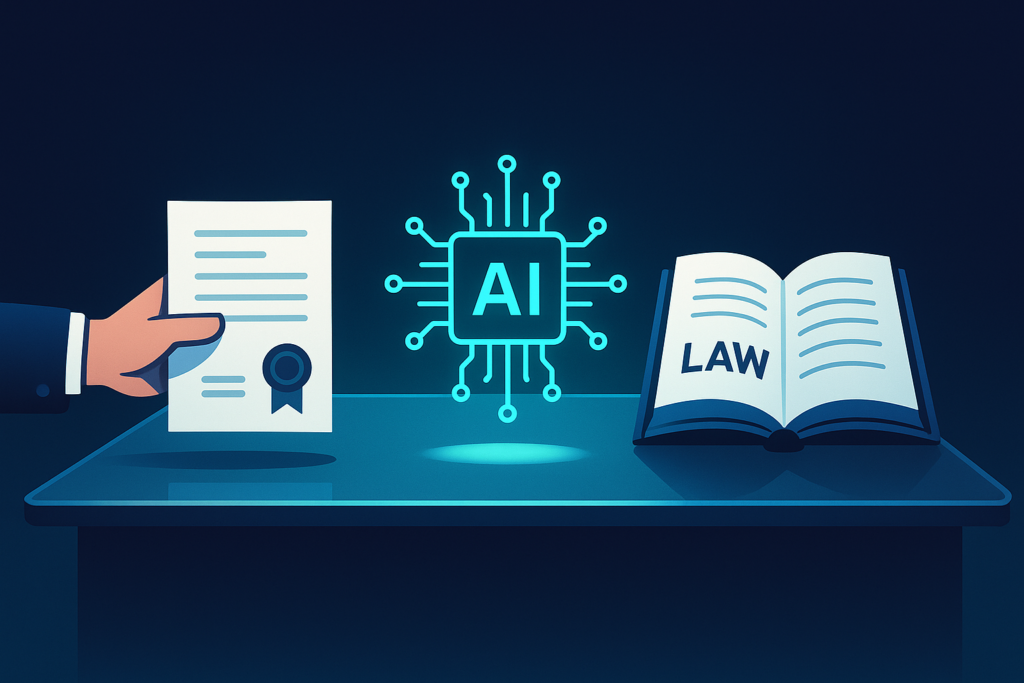
Key Takeaways
- The concept of an agent now includes human representatives, legal authorities, and AI systems.
- Agents play diverse roles across industries such as real estate, recruitment, fundraising, and hospitality.
- For mid-market SMEs, understanding different types of agents is crucial for efficient scaling.
- AI agents can operate autonomously, such as qualifying leads outside of regular business hours.
- Recognizing agent distinctions helps businesses avoid overwhelming manual processes.
Table of Contents
- Decoding the Agent: Core Definitions and Real-World Roles
- Key Characteristics of an Agent: From Autonomy to Authority
- Types of Agents Explained—Legal, Human, and AI
- Human Agent vs. AI Agent vs. Hybrid Agent: The New Model for Mid-Market SMEs
- Agent Authority & Liability: Legal, Regulatory, and Compliance Foundations
- How to Appoint, Manage, and Evaluate Agents: Step-by-Step for Business Owners
- Managing Human and AI Agents: Implementation and Oversight
- Best Practices, Pitfalls, and Troubleshooting for Agent-Driven Operations
- Measuring Agent Performance: Metrics That Matter for ROI and Outcomes in 2025
Who or What Is an Agent? Understanding Agents Across Business, Law & AI
In today’s business landscape, the question “Who or what is an agent?” has evolved far beyond traditional human representatives. From real estate brokers closing deals to AI systems qualifying leads at 3 AM, agents now span human expertise, legal authority, and autonomous technology. For mid-market SMEs in real estate, recruitment, fundraising, and hospitality, understanding these distinctions isn’t academic—it’s the difference between scaling efficiently and drowning in manual processes.
Modern agents operate across three distinct domains: legal entities with fiduciary responsibilities, business professionals driving revenue outcomes, and AI systems executing complex workflows autonomously. Each type carries unique capabilities, limitations, and compliance requirements that directly impact your bottom line.
An agent is any person, entity, or system authorized to act on behalf of another (the principal) to achieve specific business outcomes. This includes human professionals (real estate agents, recruiters), legal representatives (registered agents), and AI systems (automated lead qualification, candidate screening). The key characteristics are authority, autonomy within defined parameters, and accountability for results.
Decoding the Agent: Core Definitions and Real-World Roles
An agent fundamentally operates under three core principles: authority granted by a principal, autonomy to make decisions within defined parameters, and accountability for outcomes. In legal contexts, this creates a fiduciary relationship where the agent must act in the principal’s best interests. Business contexts expand this to include performance-based relationships focused on measurable results like conversion rates, placement success, or revenue generation.
In AI contexts, agents are autonomous software systems that perceive their environment, make decisions based on programmed goals, and take actions to achieve specific outcomes. Unlike traditional automation that follows rigid scripts, AI agents adapt their approach based on data patterns and feedback loops. For example, Vynta AI’s lead qualification agents learn from successful conversions to improve future prospect scoring, achieving 70% auto-qualification rates compared to 30-40% with rule-based systems.
| Agent Type | Primary Function | Authority Source | Key Advantage |
|---|---|---|---|
| Legal Agent | Represent principal in official matters | Written appointment, statutory authority | Binding legal actions |
| Business Agent | Generate revenue, manage relationships | Employment contract, commission structure | Industry expertise, relationship building |
| AI Agent | Process data, execute workflows | System configuration, API permissions | 24/7 availability, consistent performance |
The critical distinction lies in decision-making scope. Human agents excel at complex negotiations and relationship nuances—a luxury hotel concierge reading guest preferences or a recruiter sensing cultural fit during interviews. AI agents dominate in pattern recognition and consistent execution—screening hundreds of resumes for keyword matches or responding to property inquiries within minutes regardless of time zone.
Common misconceptions persist that agents must be human or that AI systems lack real agency. Modern business reality proves otherwise. Vynta AI’s hospitality agents autonomously manage reservation confirmations, upsell opportunities, and guest service requests, making decisions that directly impact revenue without human intervention. The key is understanding when each agent type delivers optimal results for your specific business challenges.
Key Characteristics of an Agent: From Autonomy to Authority
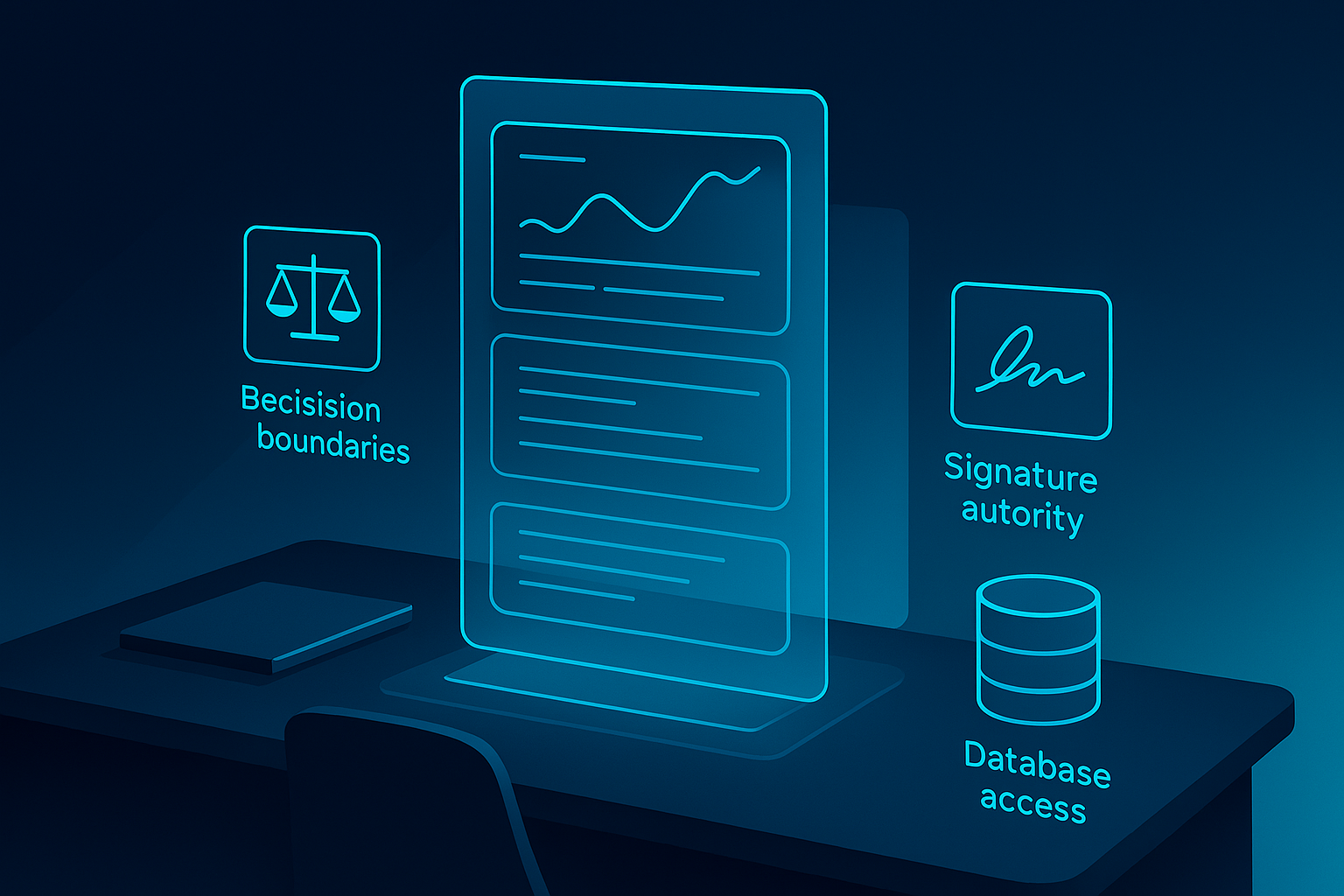
Authority defines an agent’s decision-making boundaries and legal standing. In real estate, this might include price negotiation limits, contract signing authority, and disclosure obligations. For AI agents, authority translates to system permissions—which databases to access, what actions to trigger automatically, and when to escalate to human oversight. Clear authority prevents both unauthorized actions and missed opportunities when agents hesitate within their legitimate scope.
Autonomy measures how independently an agent operates within their authority. Human agents bring contextual judgment—a fundraising professional recognizing when a donor needs more cultivation versus immediate ask. AI agents provide consistent execution—processing every lead through the same qualification criteria without fatigue or bias. The optimal autonomy level depends on task complexity and risk tolerance.
3-Step Agent Classification Method:
1. Analyze Variability: High variability = human judgment needed
2. Review Decision Data: Consistent patterns = AI automation potential
3. Audit Scalability: Volume constraints = AI augmentation required
Goal alignment ensures agents optimize for business outcomes rather than activity metrics. Effective agents focus on conversion rates over call volume, placement quality over resume quantity, donor retention over initial contact numbers. Vynta AI’s recruitment agents prioritize candidate-role fit scores, reducing time-to-hire by 45% while improving placement success rates through better initial screening.
Learning capability separates adaptive agents from rule-based automation. Learning agents improve performance through feedback loops—analyzing successful outcomes to refine future decisions. A hospitality AI agent might discover that guests booking weekend stays respond better to restaurant recommendations than spa upsells, automatically adjusting its approach. This continuous improvement drives compound returns on agent investments over time.
Types of Agents Explained—Legal, Human, and AI
General agents possess broad authority across multiple transactions and decisions within a specific domain. A property management company acts as a general agent for landlords, handling tenant relations, maintenance, rent collection, and lease negotiations. This comprehensive authority enables efficient property operations but requires strong oversight and clear boundaries to prevent overreach or compliance issues.
Special agents are appointed for specific tasks or transactions. In real estate, a listing agent is a special agent authorized solely to market and sell a particular property. In recruitment, a headhunter may be engaged to fill a single executive role. AI agents can also be configured as special agents—tasked with automating a defined workflow such as initial lead qualification or donor outreach for a specific campaign.
Sub-agents operate under the authority of a primary agent, often handling delegated responsibilities. For example, a real estate team may have junior agents qualifying leads before passing them to senior agents for closing. In AI, sub-agents might handle data enrichment or appointment scheduling, feeding results to a primary agent responsible for final decision-making.
Understanding the distinctions between general, special, and sub-agents is essential for effective delegation, risk management, and compliance. For mid-market SMEs, leveraging the right mix of agent types—human and AI—enables scalable, outcome-driven operations across real estate, recruitment, fundraising, and hospitality.
Human Agent vs. AI Agent vs. Hybrid Agent: The New Model for Mid-Market SMEs
Mid-market SMEs face a critical decision: rely on human agents, embrace AI automation, or deploy a hybrid model that combines both. Each approach delivers distinct advantages depending on your industry vertical and operational complexity. Understanding who or what is an agent in your specific context determines which model drives the highest ROI.
| Criteria | Human Agent | AI Agent | Hybrid Agent |
|---|---|---|---|
| Speed | Variable, depends on availability | Instant response 24/7 | Instant initial response, human escalation |
| Consistency | Varies by individual performance | 100% consistent messaging | Consistent baseline, human judgment |
| Cost | High ongoing salary/commission | Low after initial setup | Moderate, optimized allocation |
| Personalization | High emotional intelligence | Data-driven personalization | Best of both approaches |
| Scalability | Limited by headcount | Unlimited simultaneous interactions | Scales with AI, enhanced by humans |
In real estate, Vynta AI’s hybrid model auto-qualifies 70% of leads while human agents focus on high-value prospects and closing negotiations. Recruitment firms use AI for initial CV screening and interview scheduling, allowing human recruiters to concentrate on candidate relationships and employer branding. Fundraising organizations deploy AI for systematic donor outreach and follow-up, while human development officers handle major gift conversations and board relations.
Hospitality operations benefit significantly from the hybrid approach. AI handles routine guest inquiries, booking confirmations, and upselling opportunities, while human staff manages VIP guests, complex requests, and service recovery situations. This model increases booking response rates by 48% while maintaining the personal touch that defines hospitality excellence.
Deploy hybrid agents using two proven models: parallel processing where AI and humans handle different task categories simultaneously, or escalation sequencing where AI manages initial interactions and seamlessly transfers complex cases to human agents. Track average response time, handoff success rates, and customer satisfaction scores to optimize the balance between automation efficiency and human expertise.
Agent Authority & Liability: Legal, Regulatory, and Compliance Foundations

Agent authority forms the legal backbone of any agency relationship, whether human or AI-powered. Understanding who or what is an agent requires grasping the distinction between actual authority (explicitly granted) and apparent authority (reasonably perceived by third parties). Documentation, digital consent protocols, and clear scope definitions protect both principals and agents from liability exposure.
In Texas real estate, registered agents must maintain physical addresses and comply with TREC regulations, demonstrating how legal frameworks govern traditional agency relationships. AI agents operate under similar principles but require algorithmic accountability measures. Vynta AI implements compliance dashboards, real-time override capabilities, and audit trails to ensure AI actions remain within authorized parameters while meeting industry-specific regulations.
| Scenario | Agent Action | Compliance Risk | Best Practice |
|---|---|---|---|
| Real Estate Lead Response | AI qualifies prospects, schedules showings | Fair housing violations | Bias-free algorithms, regular audits |
| Recruitment Screening | AI filters candidates, sends rejections | Discrimination claims | EEOC-compliant criteria, human review |
| Fundraising Outreach | AI personalizes donor communications | Privacy regulation breaches | Consent management, data encryption |
| Hospitality Upselling | AI recommends premium services | Misleading pricing claims | Transparent pricing, clear terms |
Mitigate unauthorized agent actions through three critical steps: conduct pre-deployment compliance audits to identify potential regulatory conflicts, establish regular review cycles with legal counsel familiar with your industry vertical, and implement role-based permission systems that prevent agents from exceeding defined authority. AI agents require additional safeguards including algorithmic bias testing, decision explainability features, and human oversight protocols for high-stakes interactions.
Companies and software systems can legally act as agents under specific circumstances, but require proper documentation of authority, clear principal-agent relationships, and compliance with relevant state and federal regulations. The key question isn’t whether technology can serve as an agent, but whether proper legal frameworks and accountability measures are established to support that relationship while protecting all parties involved.
How to Appoint, Manage, and Evaluate Agents: Step-by-Step for Business Owners
Successful agent deployment requires systematic appointment, ongoing management, and performance evaluation processes tailored to your industry vertical. Whether appointing human representatives or configuring AI automation, clear role definition, documented authority, and measurable KPIs form the foundation of effective agency relationships. For a deeper dive into optimizing your agent strategy, see our services overview.
Managing Human and AI Agents: Implementation and Oversight
5-Step Agent Appointment Checklist
- Define Role Scope: Document specific tasks, decision limits, and success metrics
- Grant Written Authority: Legal documentation or system configuration with clear boundaries
- Capture Consent: Signed agreements or digital acceptance of terms and responsibilities
- Set Performance KPIs: Measurable outcomes tied to business objectives
- Schedule Review Cycles: Weekly post-deployment, then monthly ongoing evaluation
Digital agent configuration requires integration with existing business systems—CRM platforms for real estate, ATS systems for recruitment, donor management tools for fundraising, and property management systems for hospitality. Vynta AI’s implementation process includes sandbox testing environments where agents operate under supervision before full deployment, ensuring seamless integration with your established workflows.
Maria, managing her boutique hotel, configured her AI concierge to handle booking confirmations, upselling spa services, and collecting guest feedback. The system integrates with her property management system to access real-time availability and pricing, while escalating complex requests to human staff. Her NPS scores increased 15 points within one quarter, with upsell rates improving 22% through consistent, personalized guest interactions.
Evaluate agent effectiveness through monthly outcome reviews tracking conversion rates, response speeds, and complaint resolution. Real-time dashboards provide transparency into AI decision-making processes, including override tracking when human intervention occurs. Initial weekly reviews post-deployment identify optimization opportunities, transitioning to monthly evaluations once performance stabilizes and meets established benchmarks.
Best Practices, Pitfalls, and Troubleshooting for Agent-Driven Operations
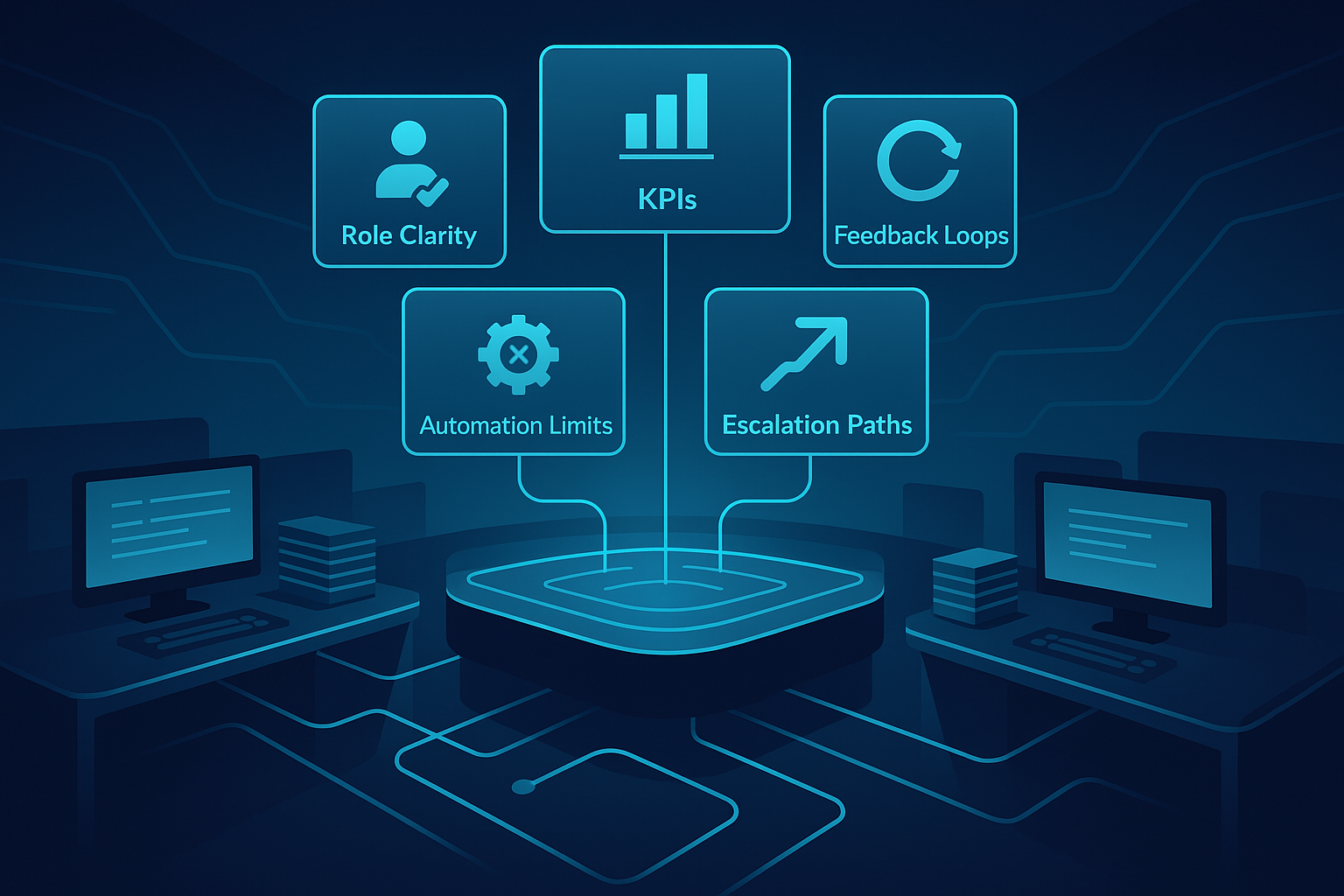
Successful agent deployment hinges on five fundamental practices: role clarity with specific KPIs, bidirectional feedback systems, realistic automation boundaries, transparent escalation paths, and comprehensive documentation. These principles apply whether managing human representatives or AI systems, ensuring accountability and measurable outcomes across all business verticals.
Common pitfalls include unclear authority boundaries leading to duplicated efforts or missed opportunities, inadequate training resulting in poor customer experiences, and insufficient monitoring creating compliance risks. In recruitment, vague screening criteria cause qualified candidates to slip through automated filters. Real estate agents without clear lead qualification parameters waste time on unqualified prospects. Fundraising teams lacking systematic follow-up protocols miss donor engagement opportunities.
| Problem | Root Cause | Quick Fix | Prevention |
|---|---|---|---|
| Low conversion rates | Poor qualification criteria | Re-calibrate workflow with recent data | Monthly performance reviews |
| Robotic AI interactions | Generic response templates | Add industry-specific prompts | Regular tone and messaging audits |
| Failed handovers | Missing escalation triggers | Install 3-minute response alerts | Test escalation paths weekly |
| Compliance violations | Inadequate oversight | Immediate audit and correction | Automated compliance monitoring |
Troubleshoot low performance by analyzing decision patterns and customer feedback. When AI agents sound too mechanical, review knowledge sources and add conversational elements specific to your industry. For hospitality, this means incorporating local recommendations and personalized service language. In fundraising, it requires donor-appropriate communication styles and stewardship terminology. For more on the evolving legal landscape of AI agents, see this analysis of risky agents without intentions.
Address handover failures between AI and human agents through alert systems that trigger when response times exceed three minutes. Vynta AI clients improved their escalation success rates by implementing automated notifications and maintaining human agents on standby during peak interaction periods, ensuring seamless transitions that preserve customer experience quality.
Measuring Agent Performance: Metrics That Matter for ROI and Outcomes in 2025
Effective agent performance measurement focuses on business outcomes rather than activity metrics. Lead conversion rates, time-to-hire, donor retention percentages, and guest satisfaction scores provide concrete evidence of agent effectiveness. Understanding who or what is an agent in your organization means tracking how well they deliver measurable results that impact your bottom line.
| Vertical | Core Metric | Pre-AI Benchmark | Post-AI Uplift | Industry Average |
|---|---|---|---|---|
| Real Estate | Lead conversion rate | 8-12% | 25-30% increase | 15-18% with AI |
| Recruitment | Time-to-hire (days) | 45-60 | 45-60% reduction | 25-35 days with AI |
| Fundraising | Donor engagement rate | 15-20% | 28% improvement | 22-25% with AI |
| Hospitality | Booking response rate | 35-45% | 48% increase | 50-60% with AI |
For real estate agencies, tracking lead conversion rates before and after AI agent deployment reveals direct ROI. Recruitment firms should monitor time-to-hire and placement quality, while fundraising organizations benefit from measuring donor engagement and retention. Hospitality managers can quantify improvements in booking response rates and guest satisfaction scores. Vynta AI clients consistently report double-digit improvements across these metrics, demonstrating the tangible business value of strategic agent deployment.
Frequently Asked Questions
What are the main differences between human agents, legal agents, and AI agents in business operations?
Human agents are professionals who represent and interact on behalf of a business, relying on expertise and personal judgment. Legal agents hold fiduciary authority and are responsible for compliance and acting in the principal’s best interest under regulatory frameworks. AI agents operate autonomously within defined parameters to execute specific tasks like lead qualification or candidate screening, augmenting human efforts with speed and scalability.
How can mid-market SMEs effectively integrate AI agents to improve lead qualification and reduce manual workload?
Mid-market SMEs can deploy AI agents to handle routine, time-consuming tasks such as initial lead qualification outside business hours, freeing human agents to focus on high-value interactions. Successful integration involves selecting industry-specific AI solutions that complement existing workflows, ensuring transparency in AI decision-making and providing oversight to maintain quality and consistency.
What legal and compliance considerations should businesses keep in mind when appointing and managing different types of agents?
Businesses must ensure that human and legal agents have clearly defined authority and responsibilities aligned with regulatory requirements, including fiduciary duties where applicable. For AI agents, compliance involves data privacy, transparency in automated decisions, and maintaining accountability through human oversight to mitigate risks associated with autonomous operations.
What metrics should businesses use to measure the performance and ROI of human and AI agents?
Key metrics include conversion rates for leads or candidates, time-to-hire or deal closure, customer or guest satisfaction scores, and operational efficiency indicators such as reduced manual workload or no-show rates. Tracking these outcomes enables businesses to quantify the impact of both human and AI agents on revenue growth and cost optimization.
About The Author
Anas Moujahid is the chief contributing writer & Operations Director for the Vynta AI Blog, where he turns cutting-edge AI automation into measurable business outcomes for mid-market companies.
Vynta AI designs enterprise-grade AI agents that augment rather than replace people—freeing teams to focus on higher-value work while the bots handle the busywork.
We specialise in four service-heavy verticals where AI can move the revenue needle fast: real estate, recruitment, fundraising and hospitality.
Anas started his career architecting AI and automation systems; today he leads operations at Vynta AI, making sure every deployment lands real-world ROI—whether that’s more booked viewings for estate agents, faster placements for recruiters, warmer investor pipelines for fundraisers or happier guests for hotels and restaurants.
Vynta AI delivers results by:
- Building industry-specific agents pre-trained on real-world workflows—no generic chatbots here.
- Integrating seamlessly with existing CRMs, ATSs, PMSs and fundraising platforms—zero rip-and-replace.
- Measuring success in business KPIs (lead-to-close rates, time-to-hire, donor retention, RevPAR) not vanity metrics.
- Providing transparent implementation plans so clients know exactly what to expect, when and why.
- Pairing every AI agent with human-in-the-loop controls to keep quality, compliance and brand voice on point.
Since launch, Vynta AI has helped agencies slash lead qualification time by up to 70 %, recruitment firms cut screening hours in half, fundraising teams triple investor touchpoints and hospitality brands lift guest satisfaction scores by double digits—all while keeping human expertise firmly in the loop.
Anas writes with the same ethos that drives Vynta AI: outcome-focused, jargon-free and grounded in real business value. Expect data-backed insights, practical implementation guides and a clear-eyed view of what AI can—and can’t—do for your organisation.