
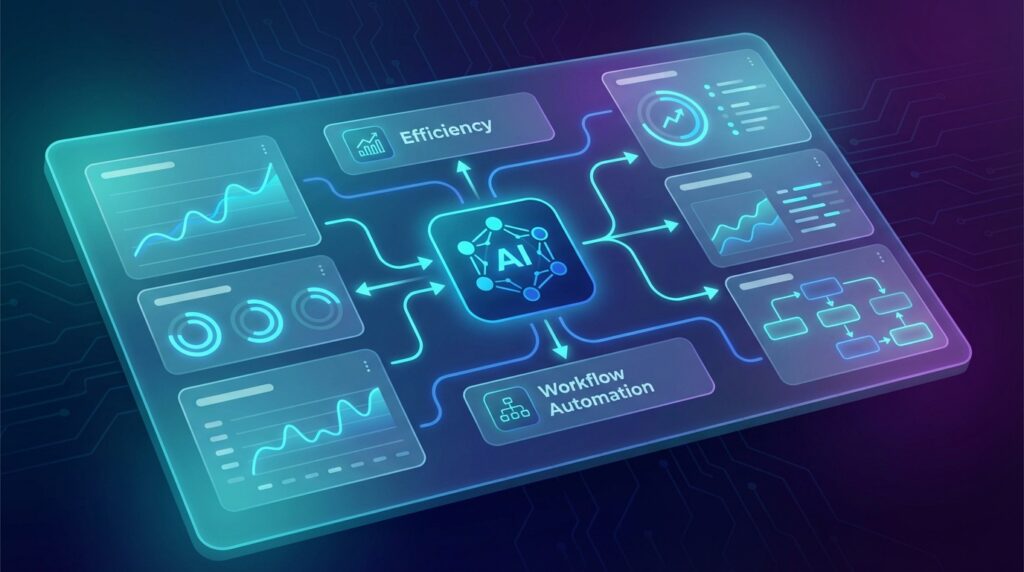
what is enterprise resource planning system
What Is an Enterprise Resource Planning System?
An enterprise resource planning (ERP) system integrates core business processes–finance, inventory, human resources, customer management–into a single platform with a unified database. Unlike QuickBooks or standalone accounting tools that handle transactions in isolation, ERP gives you real-time visibility across every department.
Here’s what that means for mid-market companies: when your real estate agent marks a property “under contract,” your marketing dashboard, commission calculator, and client portal all update instantly. No manual exports. No version conflicts. No asking which spreadsheet is current.
Why ERP Goes Beyond Bookkeeping
The question what is enterprise resource planning system usually surfaces when businesses hit a growth ceiling. You’ve outgrown QuickBooks. Your team wastes hours reconciling data between disconnected tools. Prospects fall through cracks because sales doesn’t know what operations promised.
ERP solves this by centralizing data from sales, procurement, manufacturing, HR, and finance. Each department accesses the same current information. A recruitment firm tracking 200 candidates through four interview stages? ERP automatically notifies account managers when someone hits the final round and generates commission reports without spreadsheet reconciliation.
For real estate agencies juggling property listings and client relationships, or hospitality businesses synchronizing reservations with guest preferences, ERP creates operational cohesion that directly impacts revenue.
The Growth Paradox ERP Solves
Adding clients shouldn’t require proportional staff increases. But most mid-market companies face exactly that constraint–manual processes that don’t scale.
ERP automates workflow handoffs between departments. When a hospitality manager books a guest, the system updates room inventory, triggers housekeeping schedules, adjusts revenue forecasts, and records payment details across interconnected modules. All without someone manually emailing five departments.
I’ve seen recruitment agencies cut time-to-hire by 40% after implementing ERP simply by eliminating redundant data entry between their ATS and payroll systems. That efficiency frees teams to focus on relationship-building activities that actually drive conversions.
How ERP Systems Work to Unify Business Operations
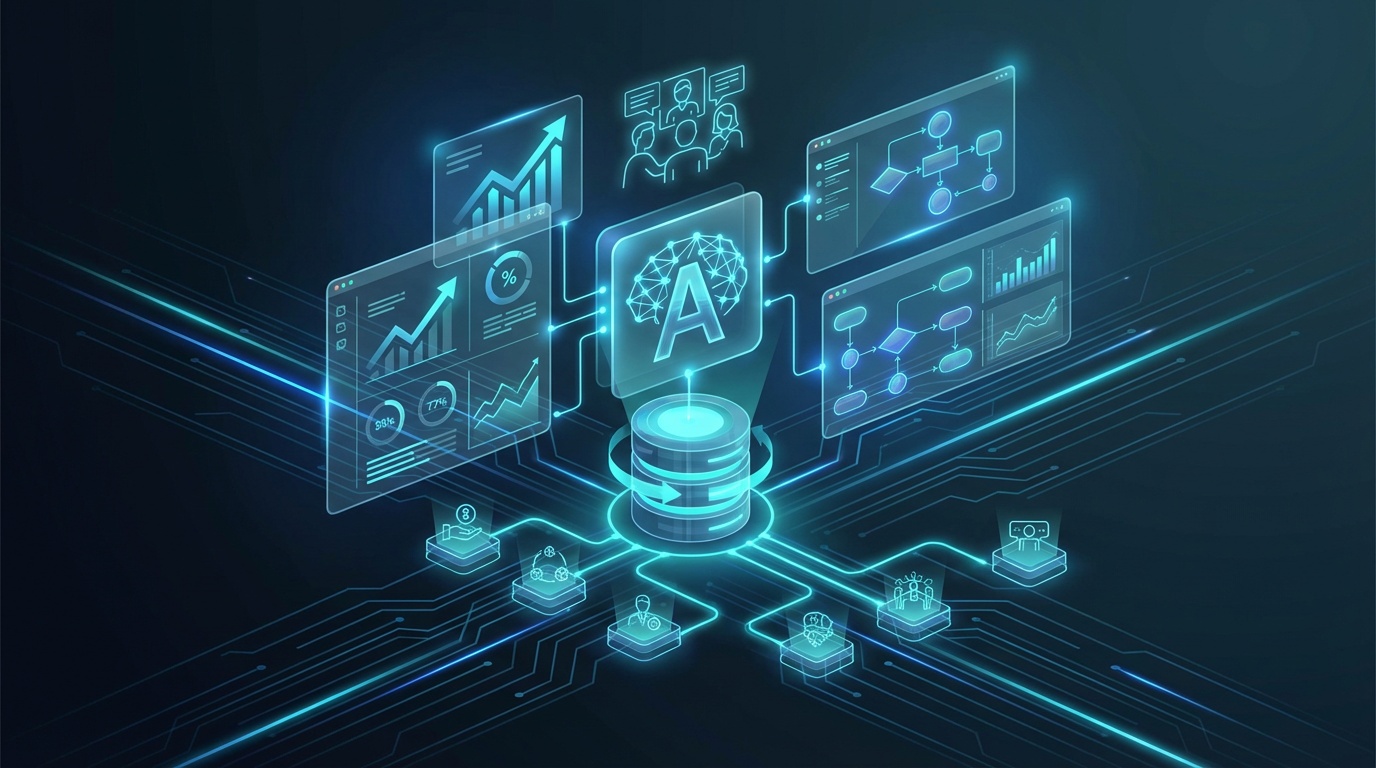
One Database, Zero Data Lag
ERP architecture centers on a single relational database where all modules read and write information simultaneously. This removes the lag common in batch processing or nightly synchronization between disconnected tools.
What is ERP in accounting terms? It’s the general ledger, accounts payable and receivable, and financial reporting–plus purchase orders, warehouse operations, employee records, and customer interactions, all linked. When inventory drops below reorder thresholds, procurement receives automatic purchase requisitions. When candidates meet screening criteria in recruitment workflows, interview invitations generate without manual intervention.
Real-time visibility means managers make decisions based on current conditions, not yesterday’s exports. That’s especially valuable in hospitality where room availability and pricing demand immediate accuracy.
Core Modules and How They Connect
What is ERP and how does it work across departments? Think of modules as specialized tools that share a common foundation:
- Financial Management: General ledger, budgeting, accounts payable/receivable
- Human Capital Management: Payroll, benefits, performance tracking
- Supply Chain Management: Procurement, inventory, logistics
- Customer Relationship Management: Sales pipeline, service tickets, marketing campaigns
A fundraising organization might use finance modules to track donation allocations, HR modules to coordinate volunteers, and CRM modules to nurture investor relationships through personalized outreach sequences. These modules share data structures, so a single contact record populates across sales, support, and finance without redundant entry.
automation-across-departments”>Where AI Agents Extend ERP Capability
ERP excels at organizing and routing data. But it still relies on people to interpret inbound inquiries, qualify prospects, and personalize communications.
That’s where Agentic Systems for Real Estate complement ERP by adding AI-driven qualification and follow-up. Our AI agents integrate with existing CRM modules to automate routine tasks while maintaining data consistency across platforms. I’ve watched real estate teams save 15+ hours per week per agent and increase close rates by 23% through consistent, trackable engagement that ERP alone can’t deliver.
The combination matters: ERP provides the operational backbone, AI agents handle the repetitive interactions that consume human bandwidth.
Types of ERP Systems for Modern Businesses
Deployment Models: On-Premise, Cloud, and Hybrid
What are some ERP systems deployment models? Three options dominate:
On-premise ERP runs on company-owned servers within your facilities. You control infrastructure and data security completely, but you’ll pay substantial upfront capital costs and need dedicated IT staff for maintenance.
Cloud ERP operates on vendor-hosted servers you access via browser. Capital expenses shift to predictable subscription fees. Hardware maintenance becomes someone else’s problem. Remote work gets easier.
Hybrid deployments combine both–keep sensitive financial data on-premise while using cloud modules for functions like CRM or HR that benefit from mobile access.
Mid-market SMEs typically favor cloud or hybrid because they reduce IT overhead. You’re not hiring infrastructure teams; you’re buying outcomes.
Two-Tier ERP for Geographic Growth
Two-tier architecture addresses a common mid-market challenge: corporate headquarters runs comprehensive ERP, while regional offices use lighter, more affordable solutions that synchronize essential data upward.
A real estate franchise might maintain property listings and local transactions in branch-level systems while consolidating financial reporting and brand standards through corporate ERP. This balances operational autonomy with strategic oversight–you avoid enterprise licensing costs for smaller locations while maintaining data integrity across the organization.
Two-tier strategies often fit growth plans that include geographic expansion or acquisitions of smaller firms with established systems.
Industry-Specific Considerations
What are examples of ERP systems suited to real estate, recruitment, fundraising, and hospitality?
Cloud-based platforms with modular pricing let SMEs activate only the functions they need. You’re not paying for manufacturing modules when you run a recruitment firm.
Real estate agencies benefit from strong CRM integration for managing listings, client relationships, and commission tracking. Recruitment firms need ERP that connects applicant tracking with payroll and client billing. Fundraising organizations require donor management modules that integrate with financial reporting to show stewardship and campaign ROI. Hospitality businesses prioritize reservation systems that synchronize with inventory management, housekeeping schedules, and guest preference databases.
The key is avoiding feature bloat and cost commonly found in enterprise packages built for large manufacturers.
ERP in Action: Industry Examples and Real-World ROI
Real Estate: Lead Management and CRM
Real estate agencies using ERP connect property listings with lead capture forms, automatically routing inquiries to available agents based on territory or specialization. When a prospect submits interest in a commercial property, the system logs contact details, assigns the lead, triggers initial outreach sequences, and schedules follow-up reminders.
Agentic Systems for Real Estate add AI-driven qualification that responds in under 60 seconds across WhatsApp, SMS, email, and website chat, then passes qualified leads into ERP workflows with richer context. This integration can increase qualified pipeline by 35% and improve conversion rates by 23% through faster engagement than ERP typically provides by itself.
Recruitment: HR and ATS Integration
Recruitment firms connect applicant tracking systems to ERP modules that handle client contracts, candidate payroll, and placement commissions. When a candidate accepts an offer, ERP generates onboarding tasks, initiates background checks, calculates recruiter compensation, and invoices the client based on agreed fee structures.
This automation reduces time-to-hire and eliminates billing discrepancies from manual spreadsheet tracking. Integration also provides visibility into recruiter productivity metrics, helping managers identify training needs and allocate resources across client accounts. Discover how Agentic Systems for Recruitment automate candidate follow-up and streamline hiring workflows.
Fundraising: Investor Tracking and Pipeline Management
Fundraising organizations use ERP to manage donor pipelines from initial outreach through commitment and stewardship. The system tracks communication history, donation amounts, campaign attribution, and engagement signals that support personalized cultivation strategies.
Automated reporting shows campaign ROI and donor retention, supporting data-driven decisions about resource allocation. Organizations adopting ERP for investor relations often see 40% faster proposal turnaround and 28% stronger donor retention through consistent follow-up. Our AI-Powered Fundraising Platform adds intelligent outreach and tracking capabilities on top of ERP infrastructure.
Hospitality: Reservations and Guest Experience
Hospitality businesses synchronize reservation systems with room inventory, housekeeping schedules, and guest preference databases through ERP. When guests book premium suites, the system adjusts availability calendars, notifies housekeeping of preparation requirements, and triggers upsell offers for spa services or dining reservations based on past behavior.
This coordination can increase revenue per guest by 18% and improve satisfaction scores by 31% through consistent service across teams. ERP also reduces no-shows through automated reminder sequences and supports dynamic pricing based on real-time occupancy data. Vynta AI Agents for Hospitality provide these automation benefits integrated with ERP.
Future-Proof Your ERP with AI Automation
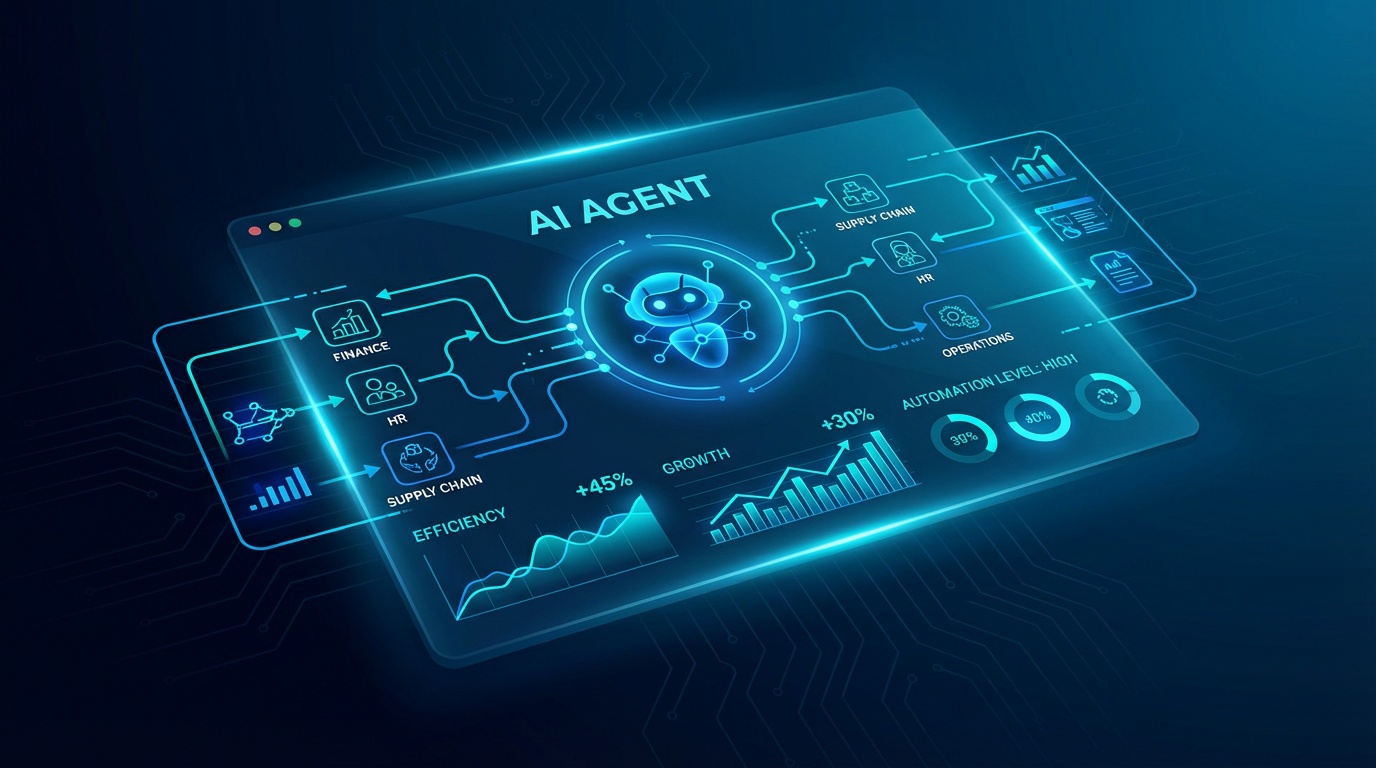
AI Agents Expand ERP Capabilities Without Adding Headcount
Traditional ERP systems organize and route data brilliantly. They fall short at interpreting inbound inquiries, qualifying prospects, and personalizing communications–tasks that consume massive staff hours.
AI agents add decision support on top of existing ERP infrastructure. They analyze incoming leads against qualification criteria stored in ERP databases, engage prospects through conversational interfaces, and update records with context that improves downstream workflows.
For mid-market SMEs, this increases operational capacity without proportional hiring costs. You scale throughput, not headcount.
Vynta AI Solutions for Sales, Marketing, and Operations
At Vynta AI, we focus on AI automation for real estate, recruitment, fundraising, and hospitality–industries where relationship quality drives revenue outcomes.
Our Agentic Systems for Real Estate integrate with ERP platforms to capture property inquiries across WhatsApp, SMS, email, and website chat, then qualify leads through structured conversation before routing them to agents with complete context.
This approach raises agent productivity by 40%+ by automating the repetitive tasks that keep professionals from negotiations and client advisory.
Implementation Steps and Common Challenges
Successful AI and ERP integration begins with process mapping to identify workflows where automation delivers measurable ROI. Discovery work assesses current systems, data quality, and team readiness before defining integration points between AI agents and ERP modules.
Common challenges we address:
- Data standardization: Legacy systems rarely speak the same language
- Staff training: New workflows require clear documentation and support
- Change management resistance: Teams accustomed to manual processes need to see value quickly
Phased rollouts reduce risk by proving value in contained pilot programs before wider deployment. I’ve learned that technical success means nothing if you can’t achieve adoption. Clear communication about capabilities, limitations, and expected timelines builds stakeholder confidence and keeps technology investments aligned with business objectives.
Strategic Insight: ERP provides the operational backbone for mid-market growth. AI agents turn that backbone into a competitive advantage by scaling throughput without proportional cost increases. Teams that integrate both deliver responsive, personalized service while maintaining consistent data and process control.
Frequently Asked Questions
What do you mean by an ERP system?
As Operations Director at Vynta AI, I see an ERP system as the central nervous system for a mid-market company. It integrates core business processes like finance, HR, inventory, and customer management into one unified platform with a single database. This centralization creates a single source of truth for data, enabling real-time visibility across all departments.
What is an example of an ERP system's application?
While I don’t endorse specific vendors, an ERP system is best understood by its practical application. For a real estate agency, an ERP would manage property listings, client relationships, and commission calculations all within one system. For a recruitment firm, it could track candidate applications from initial contact through placement, automating notifications and reporting across stages.
What are the key components of an ERP system?
From an operational perspective, the key components, or modules, of an ERP system typically include financial management, human capital management, supply chain management, and customer relationship management. These modules work together, sharing data to streamline processes like payroll, inventory tracking, sales pipelines, and financial reporting.
How does an ERP system differ from basic accounting tools?
A basic accounting tool like QuickBooks primarily manages financial transactions. An ERP system, however, goes far beyond bookkeeping by integrating accounting with other functions such as inventory, HR, and customer interactions. This integration means data flows automatically across departments, eliminating manual data transfer and providing a holistic view of operations.
What types of ERP deployment models are available for businesses?
Businesses can choose from several ERP deployment models: on-premise, cloud, or hybrid. On-premise systems run on your own servers, while cloud ERP is hosted by a vendor and accessed via the internet. Hybrid models combine both, allowing for flexibility, and mid-market SMEs often find cloud or hybrid options beneficial for reducing IT overhead.
Why are ERP systems important for mid-market companies?
For mid-market companies, ERP systems are essential for scalable operations without proportionally increasing administrative overhead. By automating workflow handoffs and centralizing data, ERP reduces errors and frees teams from manual tasks. This operational efficiency allows businesses to focus on growth and client relationships, driving measurable outcomes.
How do ERP systems help unify business operations?
ERP systems unify business operations through a central database where all departments access and update information in real-time. This eliminates data silos and ensures everyone works with the most current information. Additionally, ERP automates workflows across departments, triggering actions based on predefined rules, which streamlines processes and improves decision-making.