

what is a power user
Understanding the Power User: Business Impact Over Technical Skills
A power user maximizes software capabilities to achieve measurable business outcomes. They operate between standard users who perform basic tasks and administrators who manage system security, mastering advanced features within their permission boundaries to drive revenue growth and operational efficiency.
Modern Power Users Focus on Productivity, Not Permissions
The question “what is a power user” has shifted from Windows permission levels to business productivity. Today’s power users automate repetitive tasks, build custom workflows, and extract actionable insights from existing systems. They create measurable value by using software features most employees never explore.
From Windows Permissions to Business Automation
While “what is a power user in windows” traditionally meant elevated OS permissions, modern power users master CRM automation, advanced Excel modeling, and AI tool integration. In Windows 11, they combine OS shortcuts with productivity apps to create competitive advantages through speed and accuracy.
Why Power Users Drive Revenue Growth
Organizations with strong power-user capabilities process leads faster, close deals quicker, and serve customers better. These individuals spot workflow bottlenecks, implement solutions using existing tools, and train teams on optimization techniques that directly impact the bottom line.
Power User vs. Administrator vs. Standard User: Clear Role Definitions
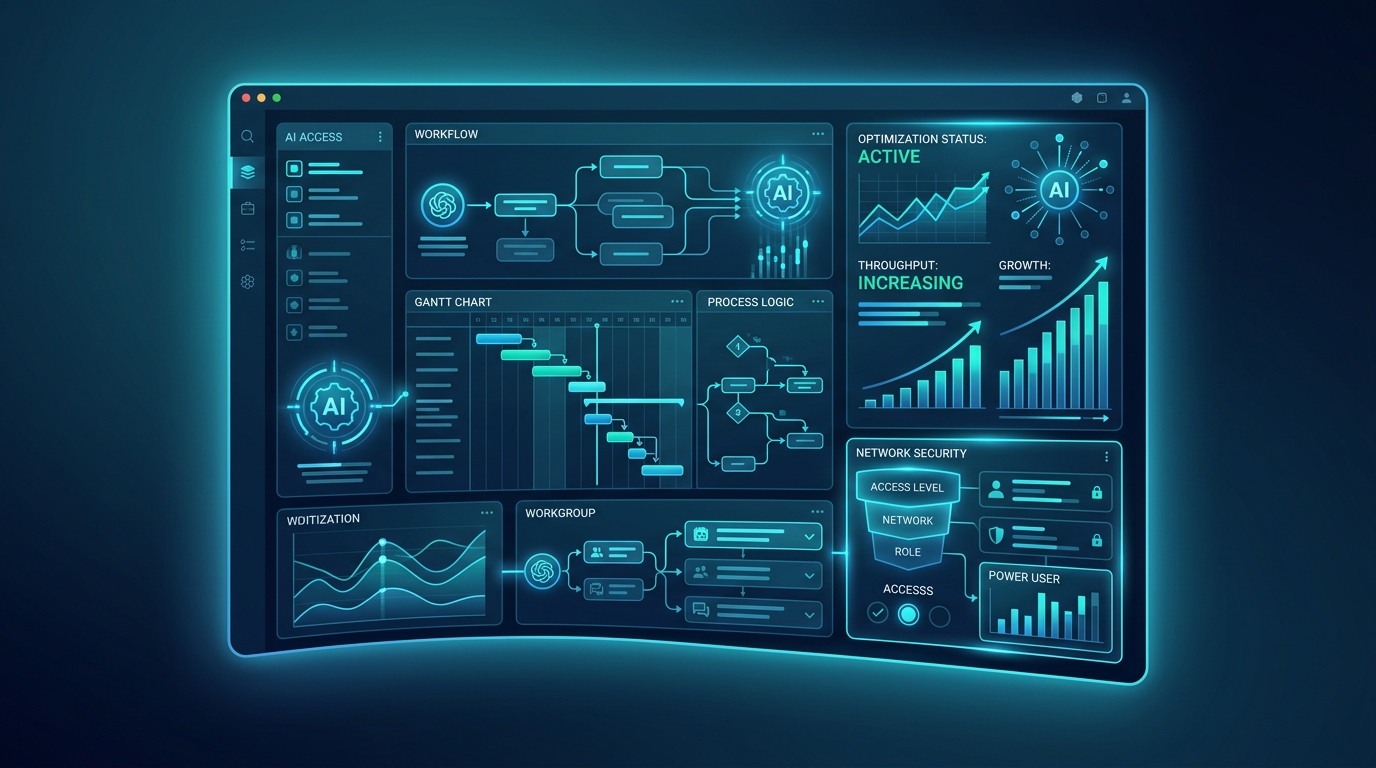
Key Insight: Clear role definitions reduce security risks while maximizing productivity. Power users need advanced features without system-wide control.
Permission Levels That Drive Results
The power user vs administrator difference centers on scope and accountability. Administrators control security policies and system-wide settings. Power users access advanced application features but cannot change core configurations or manage other users’ accounts.
Administrator Focus: Security and Stability
Administrators prioritize system integrity, compliance, and user access management. Their decisions affect entire organizations rather than optimizing individual workflows.
The Power User Sweet Spot: Maximum Output, Defined Boundaries
Power users build complex formulas, create automated workflows, and develop templates that speed team performance. They push tools to practical limits while staying within security parameters, often reducing IT support requests through self-service expertise.
Building Power User Capabilities Across Industry Verticals
Advanced Features That Generate ROI
Effective power users customize interfaces for efficiency, create shortcuts that save hours weekly, and build reusable templates. A power-user PowerPoint approach includes branded templates and automated slide layouts. In CRM systems, they configure custom fields, automation rules, and reporting dashboards that convert raw data into revenue opportunities.
Converting Data into Strategic Decisions
Power users extract business intelligence through advanced filtering, cross-referencing multiple data sources, and building predictive models using built-in analytics. They identify patterns in customer behavior and sales cycles that inform strategic decisions without requiring expensive business intelligence tools.
The Power User Mindset: Automation-First Thinking
What separates power users from casual operators? They ask, “How can this tool eliminate a manual process?” This automation-first mindset drives continuous learning and strategic experimentation, creating streamlined workflows that scale with business growth.
Industry-Specific Power User Applications
In real estate, power users create lead-scoring algorithms and property-matching workflows within existing CRMs. Recruitment teams build candidate pipeline dashboards and automated screening processes. Fundraising professionals develop donor segmentation and automated engagement tracking. Hospitality managers configure guest preference databases and service workflows that deliver personalized experiences at scale.
AI Agents: Democratizing Power User Outcomes
Key Insight: AI automation makes advanced workflows accessible to standard users, delivering power-user results without extensive training.
Making Advanced Capabilities Accessible
AI agents reduce the learning curve for complex software tasks. Instead of mastering every feature, users rely on intelligent automation that executes multi-step processes based on business rules and defined outcomes.
How Vynta AI Delivers Power User Results Through Automation
At Vynta AI, we build specialized AI agents for luxury hospitality venues including restaurants, premium bars, nightclubs, and beach clubs. These agents handle guest inquiries, booking requests, and operational questions while maintaining escalation protocols for VIP guests. Teams achieve power-user efficiency without learning complex software configurations.
Measurable Business Impact: Response Speed and Revenue Growth
Properly implemented AI agents improve response times, reduce missed inquiries, and support brand-appropriate upselling. Staff focus on relationship building and service delivery while automated systems handle routine tasks, escalating complex situations to human experts when necessary.
Outcomes Over Technical Mastery
Traditional power-user development required months of software training. AI-driven workflows shift focus from learning software complexity to achieving business results, maintaining human oversight for approvals, exceptions, and high-stakes customer interactions.
Power Users as Strategic Business Assets
Power Users Reduce Support Costs
The term “power user” sometimes implies demanding clients or employees who request excessive customization. This misconception confuses advanced capability with unreasonable expectations. Strong power users actually reduce IT support loads by solving problems independently and documenting solutions for colleagues.
Turning Software Costs into Revenue Drivers
Organizations benefit from employees who maximize software investments. Power users identify underused features, create best practice documentation, and mentor teammates on productivity improvements. They convert software licenses from overhead expenses into performance multipliers through strategic utilization.
Key Insight: Teams with internal power-user champions adopt new tools faster and extract more value from existing system investments.
Building a Power User Culture
Organizations can develop power-user capabilities through targeted training, internal knowledge sharing, and recognition for documented process improvements. Success requires clear guidelines on automation scope, approval processes, and template maintenance responsibilities.
The Future of Power Users in AI-Driven Business
Understanding what is a power user becomes more important as AI transforms work processes. The next generation of power users will combine human judgment with intelligent automation, defining business rules, maintaining data quality, and providing operational context that guides AI decision-making.
Many power users will transition from “feature experts” to “AI workflow owners” who establish guardrails, monitor performance metrics, and refine automated processes based on business outcomes. This shift broadens access to advanced capabilities without compromising security or requiring administrative permissions.
The most successful organizations will identify power-user potential across departments and provide tools that amplify individual productivity. In this model, AI supports human expertise while maintaining service quality standards, with people remaining accountable for decisions requiring context, empathy, and brand judgment.
Frequently Asked Questions
What does being a power user mean?
A power user is someone who fully utilizes software capabilities to achieve superior business outcomes. They go beyond basic functions, mastering advanced features within their permissions to speed processes, automate tasks, and produce actionable insights. This focus on productivity directly contributes to measurable results across operations, sales, and customer engagement.
What is the difference between a power user and a regular user?
The key difference lies in how they use software. A regular user performs basic tasks, while a power user delves into advanced features to optimize workflows and generate business value. Power users actively seek ways to automate, analyze, and customize tools to achieve better outcomes, making software a strategic asset.
What are examples of power users?
Power users can be found across many business functions. Examples include a sales professional configuring custom CRM fields and automation rules, or a marketing specialist optimizing automation campaigns. In hospitality, a power user might configure guest preference records and service workflows to support personalized experiences at scale.
What are the main types of user accounts in software?
In business software, we typically distinguish three main user types for efficiency and security. Standard users perform basic functions, while power users master advanced application features to drive productivity and business outcomes. Administrators, on the other hand, manage system-wide settings, security policies, and user access.
How do power users contribute to business growth?
Power users are critical for business growth because they maximize the value of existing software investments. They identify workflow bottlenecks, implement creative solutions using advanced features, and often train colleagues on optimization techniques. This leads to faster processes, fewer errors, and measurable business value from standard tools.
Can AI help more people become power users?
Absolutely, AI automation can significantly broaden access to power-user outcomes. AI agents can reduce the learning curve for complex tasks, guiding users through advanced steps based on defined inputs and business goals. This allows more team members to achieve sophisticated results without needing to master every software feature manually.
How does Vynta AI support power-user level execution in hospitality?
Vynta AI Agents are bespoke AI solutions designed for luxury hospitality venues, helping teams achieve power-user level execution. Our agents handle guest inquiries and booking requests consistently, integrating with CRMs like SevenRooms to synchronize data. They can increase booking conversion by 50% and reduce operational costs by 30%, while ensuring VIP guests receive human care via escalation rules.