
what are outbound sales
What Outbound Sales Means for Your Business
What are outbound sales? They’re a proactive sales approach where your team initiates contact with potential customers rather than waiting for inbound inquiries. Your reps identify prospects, reach out through calls, emails, or social channels, and guide them through a structured pipeline toward a closed deal.
Outbound Sales Defined
Outbound sales puts your team in control of revenue generation. Instead of relying on marketing to attract leads, outbound reps build targeted prospect lists, craft personalized outreach, and drive conversations that convert. For mid-market SMEs, that translates to predictable pipeline growth that doesn’t depend on algorithm changes or ad spend fluctuations.
Outbound vs. Inbound: Key Differences
| Factor | Outbound Sales | Inbound Sales |
|---|---|---|
| Who initiates contact | Your sales team | The prospect |
| Speed to pipeline | Fast, controllable | Dependent on content volume |
| Lead intent level | Built through outreach | Prequalified by interest |
| Scalability | Scales with team or automation | Scales with content investment |
| Best fit | Targeted B2B and B2C niche markets | High-volume, broad audiences |
Inbound and outbound sales examples often coexist in mature organizations, but outbound gives you targeting precision that inbound simply can’t match. A real estate agency pursuing luxury buyers, or a recruitment firm filling senior roles, can’t afford to wait for organic traffic to deliver qualified prospects.
Why Mid-Market SMEs Need Outbound Now
Mid-market firms sit in a difficult position: too large to rely on referrals alone, too lean to sustain enterprise-scale marketing budgets. An outbound sales strategy closes that gap directly. With the right process and tools, a team of five outbound reps can generate pipeline that previously required a full marketing department. The B2C outbound sales meaning extends well beyond cold calls–it now includes automated email sequences, LinkedIn outreach, and AI-assisted follow-up, all of which bring enterprise-grade prospecting within reach of smaller teams.
The Outbound Sales Process Step by Step
Step 1: Build Your Target List
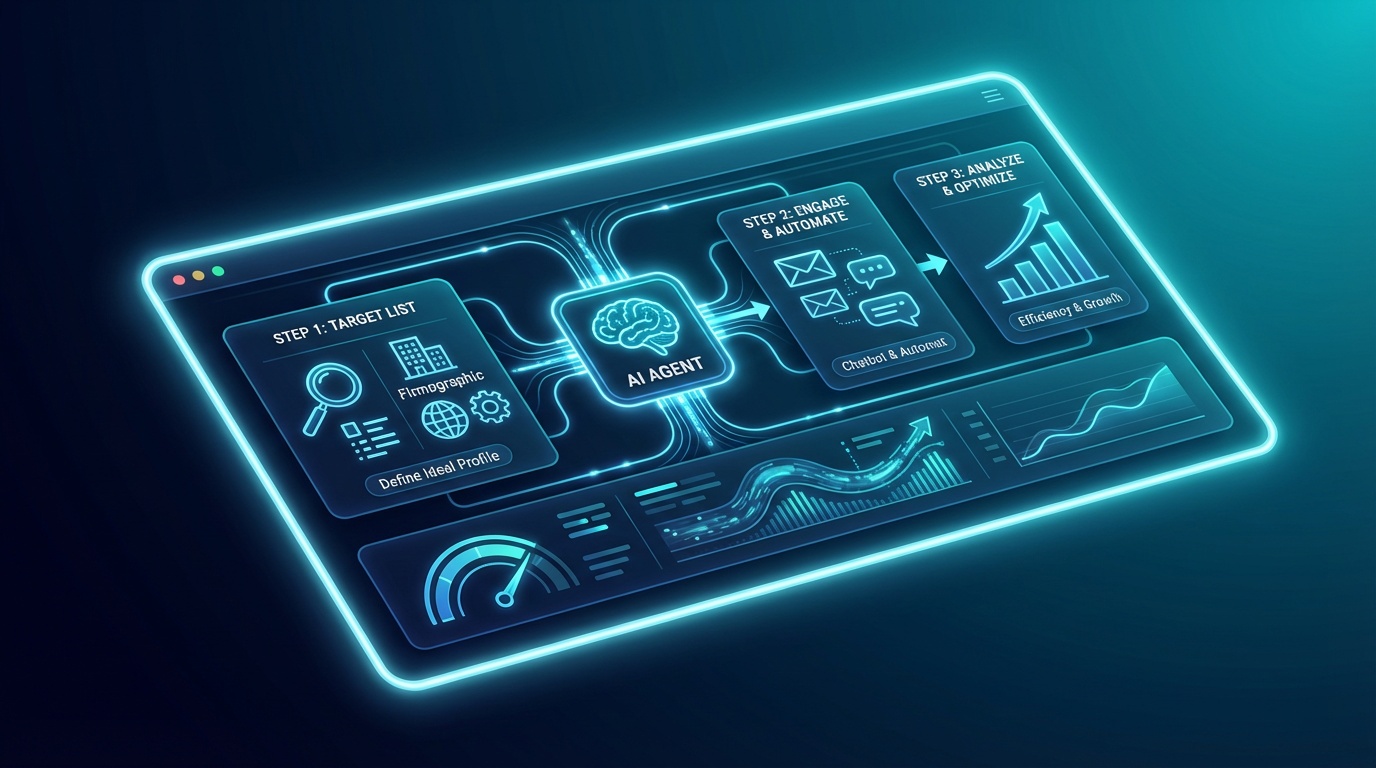
Effective outbound starts with precision targeting. Define your ideal customer profile using firmographic data: company size, industry, revenue range, and decision-maker title. For a recruitment firm, that means sourcing hiring managers at companies with active headcount growth. For a boutique hotel, it means identifying corporate travel coordinators within a 200-mile radius. A focused list of 500 qualified prospects outperforms a generic list of 5,000 every time.
Step 2: Craft Multichannel Outreach
Single-channel outreach underperforms. Combine cold email, LinkedIn messaging, and phone calls in a structured sequence–a proven cadence runs across eight to twelve touchpoints over three weeks. Personalization is the real differentiator here: reference a prospect’s recent funding round, property portfolio expansion, or seasonal occupancy data. Generic messaging gets ignored; context-aware outreach books meetings.
Step 3: Qualify and Close Deals
Discovery calls separate real opportunities from polite conversations. Use a structured qualification framework to assess budget, authority, need, and timeline before committing senior sales time. Reps who qualify rigorously close faster and waste fewer cycles on prospects who were never ready to buy. Once qualified, move prospects through a defined pipeline with clear stage criteria and follow-up triggers.
Key Metrics to Track Success
Metrics That Signal a Healthy Outbound Engine
- Meeting conversion rate: replies that become booked calls (target 15-25%)
- Opportunity-to-close rate: qualified deals that reach a signed agreement
- Cost per opportunity: total outbound spend divided by pipeline generated
- Sequence reply rate: engagement across your multitouch cadence
Warning Signs Your Process Needs Adjustment
- High email open rates but near-zero replies can indicate weak messaging
- Meetings booked but deals stalling can signal poor qualification
- Rising cost per opportunity without pipeline growth can suggest list quality issues
- High rep activity volume with flat revenue points to process gaps, not effort gaps
Tracking these metrics weekly creates a feedback loop for continuous improvement. In performance terms, outbound sales means measuring pipeline velocity, not just activity counts.
Outbound Sales in Action Across Industries
Real Estate: Automate Lead Qualification
Real estate agencies lose revenue to slow follow-up. When a buyer inquiry arrives at 9 p.m., the agency that responds first often wins the relationship. AI-powered outbound sequences can send personalized property-match emails within minutes of a trigger event, then escalate warm responses to a human agent automatically. Agencies using this approach report qualification cycles cut by 40%, freeing agents to focus on viewings and negotiations. See how Agentic Systems for Real Estate deliver this automation in practice.
Recruitment: Speed Up Candidate Outreach
Recruitment firms compete on speed. The best candidates are off the market within ten days. An outbound sales strategy built on automated LinkedIn outreach and personalized email sequences lets a five-person team contact 300 qualified candidates weekly without sacrificing message quality. Recruiters reclaim time for interviews and client relationships–which is where placements actually happen. See how Agentic Systems for Recruitment support this process end to end.
Fundraising: Target Investor Matches
Investor outreach demands precision over volume. Sending generic pitch decks to mismatched investors wastes relationship capital. A structured outbound process maps investor thesis, check size, and portfolio focus before the first message is sent. Organizations that systematize this approach report shorter paths to a first meeting–and arrive at those meetings with investors who are already contextually aligned. Vynta’s AI-Powered Fundraising Platform automates this matching before outreach begins.
Hospitality: Boost Guest Upsell Opportunities
A boutique hotel with 80 rooms can generate meaningful incremental revenue through pre-arrival outbound outreach. Automated sequences sent 48 hours before check-in–offering room upgrades, spa bookings, and dining reservations–have shown conversion rates in the 18-22% range when personalized to guest history. That’s revenue requiring no additional marketing spend and no additional headcount.
In hospitality, outbound sales consists of proactive touchpoints that turn a confirmed reservation into a higher-value guest relationship before arrival. Vynta AI Agents for Hospitality provide the tools to automate these personalized sequences at scale.
Scale Outbound Sales with AI Automation
How AI Handles Repetitive Tasks
The bottleneck in most outbound programs isn’t strategy–it’s execution capacity. AI automation removes that ceiling by handling list enrichment, sequence personalization, follow-up timing, and CRM logging, cutting the manual burden on your team significantly. Your reps shift from administrative work to the conversations that close deals. This isn’t replacement; it’s reallocation of human effort toward its highest-value application. See what AI Automation Services can do for your outbound operation.
Real Results from Vynta AI Deployments
| Vertical | Manual Outbound | AI-Augmented Outbound |
|---|---|---|
| Real Estate | 2-hour lead response time | Sub-5-minute automated follow-up |
| Recruitment | 80 candidate contacts per week | 300+ contacts with equal message quality |
| Fundraising | Manual investor research per pitch | Automated thesis matching before outreach |
| Hospitality | Reactive upsell at check-in | Automated pre-arrival sequences with strong conversion performance |
Overcoming Common Implementation Hurdles
Adoption concerns in traditional service industries are legitimate. Teams worry about losing the personal touch that defines their brand–and that’s a fair concern. The answer is configuration, not compromise. Vynta AI agents operate within brand voice guidelines, escalate complex conversations to human reps, and flag responses that require relationship judgment. Implementation runs through discovery, strategy, and configuration phases, typically spanning four to six weeks and covering data integration, sequence setup, and team training. The output is a system your reps trust, not one they work around.
Next Steps to Build Your Outbound Engine
Audit Your Current Process
Start by mapping where pipeline breaks down today. Are prospects going cold after the first email? Are reps spending more than 30% of their week on list building? Identifying the specific failure point tells you exactly where to apply process changes or automation first–and keeps you from fixing the wrong thing.
Select Tools That Fit Your Team
Match tools to team size and vertical requirements. A five-person recruitment firm needs candidate-sourcing integrations and ATS connectivity. A boutique hotel needs reservation-system triggers and guest-history access. Generic automation tools miss these requirements; industry-specific solutions deliver from day one.
Measure and Adjust for Growth
Set a 90-day review cycle. Track meeting conversion rate, cost per opportunity, and pipeline velocity against your baseline. Without measurement, outbound sales becomes expensive activity. With it, outbound becomes a predictable growth engine. Vynta AI provides reporting dashboards built for each vertical, so your team sees the metrics that matter to your specific business–not a generic analytics feed.
Frequently Asked Questions
What is the meaning of outbound sales?
From my perspective at Vynta AI, outbound sales is about taking control of your revenue generation. It’s a proactive strategy where your sales team directly initiates contact with potential customers, rather than waiting for them to come to you. This approach allows mid-market SMEs to build predictable pipeline growth, independent of external marketing factors.
How does outbound sales differ from inbound sales?
The core difference lies in who starts the conversation. With outbound sales, your team actively reaches out to targeted prospects, giving you fast, controllable pipeline growth. In contrast, inbound sales relies on prospects finding you through content, meaning the speed to pipeline is dependent on their engagement.
Can you give an example of outbound sales in action?
Certainly. Consider a recruitment firm seeking to fill senior roles; they cannot wait for candidates to apply. Instead, they use outbound strategies like automated LinkedIn outreach and personalized email sequences to directly contact qualified individuals. This precision targeting ensures they connect with the right talent quickly.
Is outbound sales just cold calling?
Not at all; modern outbound sales extends far beyond traditional cold calling. Today, it includes sophisticated multichannel outreach using automated email sequences, LinkedIn messaging, and AI-assisted follow-up. This allows even smaller teams to conduct enterprise-grade prospecting efficiently.
Why is outbound sales particularly important for mid-market SMEs?
Mid-market SMEs often face a unique challenge: they are too large for referrals alone but too lean for massive marketing budgets. Outbound sales closes this gap by providing a direct, targeted way to generate pipeline growth. It offers predictable revenue generation without relying on fluctuating ad spend or algorithm changes, which is critical for sustainable business transformation.