

Key Takeaways
- Restaurant reviews have a significant impact on revenue, with a single star increase leading to a 5-9% boost.
- Most guests, about 88%, consult reviews before making reservation decisions.
- Effective management of website restaurant reviews can directly influence occupancy and table bookings.
- Hospitality managers must prioritize online reviews to drive business growth.
Table of Contents
- Why Online Restaurant Reviews Matter in Hospitality: Business Impact and ROI
- How Restaurant Review Websites Work, Platforms, Features & Hospitality Use Cases
- Setting Up and Optimizing Your Restaurant Profile: From Claiming to Conversion
- Soliciting and Managing Guest Reviews Ethically: Techniques that Boost Authentic Feedback
- Responding to Reviews, Turning Feedback Into Hospitality Wins
- Restaurant Review Platform Comparison, Yelp vs. Google vs. TripAdvisor vs. OpenTable
- Dealing with Fake, Malicious, and Negative Reviews, Proactive Reputation Defense
- Measuring the Business Value of Restaurant Reviews, From SEO to Guest Satisfaction
- Advanced Strategies, Leveraging Reviews for Upselling, Reservations, and Guest Loyalty
- Essential Tools and Resources, Complete Toolkit for Hospitality Managers
- Strategic Transformation Through Review-Driven Hospitality Automation
The Hospitality Manager’s Guide to Mastering Website Restaurant Reviews for Business Growth
Restaurant reviews directly impact your bottom line. A single star increase on major review platforms correlates with a 5-9% revenue boost, while 88% of guests check reviews before making reservations. For hospitality managers like Maria, who oversees both a boutique hotel and upscale restaurant, website restaurant reviews represent the difference between 85% occupancy and struggling to fill tables.
This guide delivers actionable strategies to transform review management from reactive damage control into proactive revenue generation. You’ll discover platform-specific optimization techniques, automated response workflows, and measurement frameworks that turn guest feedback into measurable business outcomes.
For those seeking a comprehensive solution, Vynta provides hospitality managers with the tools to streamline every aspect of website restaurant reviews management, from monitoring to response automation and analytics.
Why Online Restaurant Reviews Matter in Hospitality: Business Impact and ROI
Review performance drives three critical hospitality metrics: guest acquisition cost, revenue per available room (RevPAR), and direct booking rates. Properties with 4+ star averages see 70% higher conversion rates from online searches compared to sub-4 star competitors.
Measurable Impact: Hotels and restaurants with proactive review management report 23% fewer no-shows, 18% higher upselling success rates, and 31% more repeat bookings within 12 months.
The timeline matters. Review responses within 24 hours generate 2.3x more follow-up bookings than delayed responses. Maria’s property saw a 12% reduction in cancellations after implementing automated review monitoring that flags negative sentiment within minutes of posting.
Beyond immediate bookings, restaurant review sites influence local SEO rankings. Google’s algorithm weighs review velocity and response rates when determining map pack placement, directly affecting visibility during peak booking windows.
How Restaurant Review Websites Work, Platforms, Features & Hospitality Use Cases

Major review platforms serve distinct hospitality functions. Google Reviews dominates local search visibility, Yelp drives discovery for dining experiences, TripAdvisor captures travel-focused bookings, and OpenTable integrates directly with reservation systems.
| Platform | Primary Audience | Verification Process | Hospitality Integration | Response Tools |
|---|---|---|---|---|
| Google Reviews | Local searchers | Google account required | Google My Business | Public responses only |
| Yelp | Dining discovery | Account + activity history | Yelp for Business | Public + private messaging |
| TripAdvisor | Travel planning | Email verification | TripAdvisor Business | Management responses |
| OpenTable | Reservation-focused | Verified dining history | Native POS integration | Direct guest messaging |
Platform selection depends on your hospitality model. Boutique properties benefit most from Google and TripAdvisor for visibility, while restaurant-focused venues should prioritize Yelp and OpenTable for conversion. Setting up comprehensive profiles across all platforms typically requires 3-4 hours initially, then 30 minutes weekly for maintenance. For insights on optimizing guest experiences, check out our concierge service in hotel guide.
Setting Up and Optimizing Your Restaurant Profile: From Claiming to Conversion
Profile optimization begins with claiming and verifying your business on each platform. Google My Business verification takes 5-7 days via postcard, while Yelp and TripAdvisor offer phone verification within minutes.
Essential profile elements include: high-resolution photos (minimum 6 per platform), current menus with accurate pricing, complete contact information, operating hours, and direct reservation links. Properties with complete profiles see 42% higher click-through rates to booking pages.
Automation streamlines profile management. AI-powered tools can sync menu updates, hours changes, and promotional content across platforms simultaneously. Maria’s team reduced profile maintenance from 2 hours weekly to 20 minutes using automated synchronization. Learn more about how to improve guest satisfaction with AI-powered tools.
Common optimization errors include outdated phone numbers, missing amenity listings, and low-quality photos. Regular audits every 30 days catch discrepancies before they impact conversion rates.
Soliciting and Managing Guest Reviews Ethically: Techniques that Boost Authentic Feedback
Effective review solicitation balances frequency with guest experience. The optimal request timing occurs 12-24 hours post-visit when satisfaction remains high but details stay fresh. SMS requests generate 23% higher response rates than email alone.
Proven solicitation methods include QR codes on receipts linking to review platforms, personalized follow-up messages mentioning specific service interactions, and loyalty program integration offering points for honest feedback. Maria’s property increased review volume 34% using table tent QR codes with gentle review requests. Learn more about effective strategies for concierge in hotel settings to boost guest engagement and reviews.
Ethical boundaries prohibit incentivizing positive reviews specifically, but rewarding participation remains acceptable. Offering small discounts for “sharing your experience” complies with platform policies while encouraging engagement.
Legal Consideration: Always disclose incentivization clearly. FTC guidelines require transparency about any compensation for reviews, including loyalty points or discounts.
Timing is crucial for follow-up sequences. Sending initial requests within 24 hours, gentle reminders at 72 hours, and a final reminder at 7 days post-visit helps maximize response rates without overwhelming guests. Automated systems can manage this cadence, ensuring consistency and compliance with platform guidelines. Learn more about optimizing your follow-ups in our Kyma Menu guide.
Responding to Reviews, Turning Feedback Into Hospitality Wins

Response speed directly impacts guest perception and future booking decisions. Properties that respond within 24 hours see 33% higher guest satisfaction scores compared to those with delayed responses. The key lies in establishing automated workflows that ensure no review goes unacknowledged while maintaining personalization.
Effective response templates should address three core elements: acknowledgment, specific detail reference, and future invitation. For positive reviews, highlight unique aspects guests mentioned and extend invitations for return visits. Negative reviews require immediate acknowledgment, specific action plans, and offline resolution offers. AI automation can draft initial responses within minutes, allowing managers to focus on complex situations requiring human intervention.
Response Impact: Boutique properties using automated response systems see 25% reduction in negative review escalation and 40% increase in repeat guest mentions in subsequent reviews.
Vynta’s response automation integrates directly with major review platforms, generating contextually appropriate responses that maintain your property’s voice while ensuring consistent engagement across all channels.
Restaurant Review Platform Comparison, Yelp vs. Google vs. TripAdvisor vs. OpenTable
Each major review platform serves distinct hospitality needs, with varying strengths in guest acquisition, reservation conversion, and operational integration. Understanding platform-specific advantages helps managers allocate resources effectively across channels that deliver measurable ROI.
| Platform | Best For | Review Volume | Reservation Integration | Response Tools | Mobile Experience |
|---|---|---|---|---|---|
| Google Reviews | Local SEO & Discovery | Highest volume | Google Reserve integration | Basic response features | Excellent |
| Yelp | Urban dining discovery | High engagement | Limited reservation features | Advanced messaging tools | Very good |
| TripAdvisor | Travel-driven dining | Quality over quantity | Third-party booking links | Comprehensive management suite | Good |
| OpenTable | Direct reservations | Lower volume, higher conversion | Native reservation system | Integrated guest communication | Excellent |
Google Reviews delivers the highest visibility and local search impact, making it essential for discovery. OpenTable provides the strongest reservation-to-review pipeline, with 60% of diners leaving feedback compared to 15% on other platforms. TripAdvisor excels for hotels with dining components, while Yelp remains crucial for urban restaurant visibility.
Strategic managers focus on Google and OpenTable for maximum impact, using automated tools to maintain consistent presence across all platforms without multiplying workload.
Dealing with Fake, Malicious, and Negative Reviews, Proactive Reputation Defense
Fraudulent reviews can devastate hospitality businesses, with studies showing a single fake negative review reducing bookings by up to 22%. Identifying fake reviews requires analyzing reviewer history, timing patterns, and content authenticity. Legitimate platforms provide specific reporting mechanisms, but success rates vary significantly across channels.
Google Reviews offers the most responsive fake review removal process, typically resolving valid reports within 48-72 hours. TripAdvisor’s verification process takes 5-10 business days but has higher removal success rates. Yelp’s algorithm-based filtering system automatically flags suspicious content but offers limited manual appeal options. Documentation is crucial, screenshot evidence, competitor analysis, and timing correlations strengthen removal requests.
Red Flags for Fake Reviews: Single reviews from new accounts, generic language lacking specific details, multiple reviews posted within short timeframes, and reviews mentioning competitors or services you don’t offer.
Proactive monitoring through AI-powered tools catches suspicious activity within hours rather than weeks. Vynta’s reputation defense system automatically flags potential fake reviews and initiates platform-specific reporting procedures, reducing response time from days to minutes while maintaining detailed documentation for appeals.
Measuring the Business Value of Restaurant Reviews, From SEO to Guest Satisfaction

Restaurant reviews directly impact local search rankings, with Google’s algorithm heavily weighting review quantity, recency, and star ratings. Properties with 50+ recent reviews rank 67% higher in local search results compared to those with fewer reviews. This translates to measurable increases in website traffic, phone inquiries, and direct bookings.
Key performance indicators extend beyond star ratings to include review response rates, sentiment analysis trends, and conversion metrics. Successful managers track review velocity (reviews per month), keyword mentions in feedback, and correlation between review scores and revenue per available seat. Advanced analytics reveal which review themes drive highest booking conversion rates.
AI-powered dashboards consolidate review data across platforms, providing real-time insights into reputation trends and their business impact. These systems identify operational improvements that generate positive feedback while flagging service issues before they escalate into public complaints.
ROI Measurement: Boutique properties implementing comprehensive review management see average increases of 15% in direct bookings, 23% improvement in local search visibility, and 31% reduction in guest service escalations within 90 days.
Implementation success requires systematic measurement of guest satisfaction improvements, operational efficiency gains, and revenue optimization outcomes. Properties using integrated review analytics report average RevPAR increases of 18% within six months of deployment.
For a deeper understanding of how online reviews shape consumer behavior, see this authoritative research on the impact of online reviews.
Advanced Strategies, Leveraging Reviews for Upselling, Reservations, and Guest Loyalty
Strategic managers transform positive website restaurant reviews into revenue opportunities through targeted upselling campaigns. Guests who leave favorable feedback demonstrate high satisfaction levels, making them prime candidates for premium experiences, special events, and exclusive offerings. Automated systems can trigger personalized follow-up messages to reviewers within 48 hours, promoting wine pairings, private dining experiences, or seasonal menu previews.
Dynamic pricing strategies incorporate review sentiment and volume data to optimize reservation rates during peak periods. Properties with consistently high review scores can command 12-15% premium pricing compared to competitors with lower ratings. Real-time review monitoring enables immediate response to capacity fluctuations, positive review spikes can trigger limited-time promotions to maximize booking velocity.
Guest loyalty programs benefit significantly from review integration. VIP recognition for frequent reviewers, exclusive previews for top contributors, and gamified feedback systems increase engagement rates by 35%. Successful programs track review quality alongside frequency, rewarding detailed, helpful feedback that drives future bookings.
Advanced Implementation: Boutique properties using review-driven upselling see average transaction value increases of 23%, while loyalty program integration boosts repeat visit rates by 41% within the first year.
For more on the evolution and influence of online reviews, visit the Wikipedia entry on online reviews.
Essential Tools and Resources, Complete Toolkit for Hospitality Managers
Effective website restaurant reviews management requires integrated tools that streamline monitoring, response, and analysis across multiple platforms. The modern hospitality manager’s toolkit combines native platform features with specialized software that automates routine tasks while providing strategic insights.
| Tool Category | Primary Function | Key Features | Best For | Implementation Time |
|---|---|---|---|---|
| Vynta | Complete automation | Multi-platform monitoring, automated responses, predictive analytics | Boutique properties seeking full integration | 24 hours |
| Google My Business | Local presence management | Review responses, photo management, insights | Local SEO optimization | 2 hours |
| TripAdvisor Management | Travel-focused engagement | Review responses, competitor analysis, advertising integration | Hotel restaurants and destination dining | 3 hours |
| OpenTable Connect | Reservation-review integration | Post-dining feedback automation, guest communication | Reservation-driven establishments | 1 hour |
Implementation priority should focus on platforms delivering highest guest acquisition ROI. Google My Business provides essential local visibility, while OpenTable Connect offers seamless reservation-to-review workflows. Comprehensive solutions like Vynta eliminate platform switching while providing predictive insights that inform operational decisions.
Successful managers establish monitoring schedules checking review platforms twice daily, morning for overnight activity and evening for same-day feedback. Automated alert systems reduce manual monitoring while ensuring rapid response to urgent situations.
Strategic Transformation Through Review-Driven Hospitality Automation
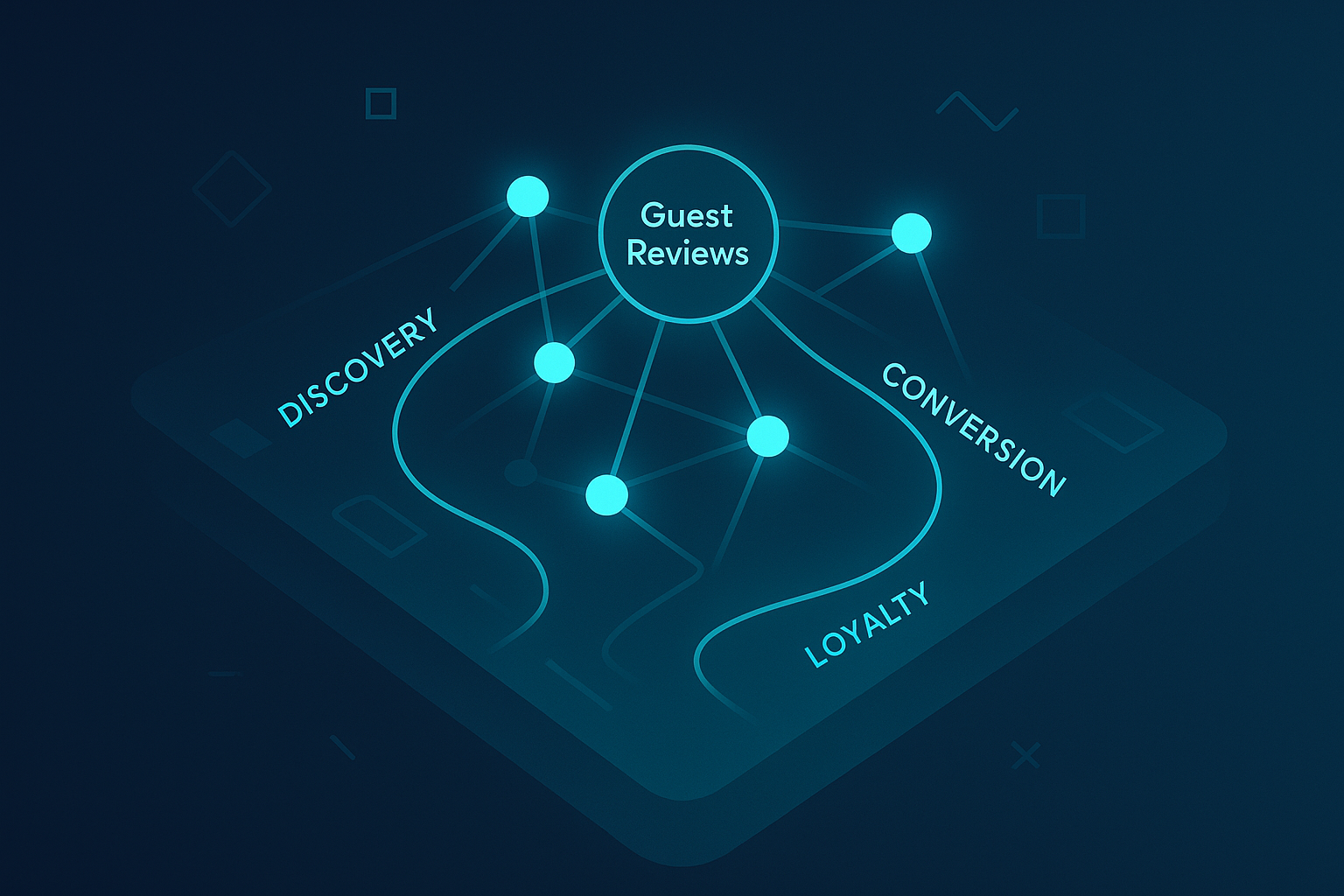
Website restaurant reviews represent far more than customer feedback, they constitute a strategic asset driving discovery, conversion, and loyalty across the entire guest journey. Forward-thinking hospitality managers recognize review management as integral to revenue optimization, operational efficiency, and competitive positioning in increasingly crowded markets.
The transformation from reactive review monitoring to proactive reputation orchestration requires systematic automation that maintains human touch while scaling personalized engagement. Properties implementing comprehensive review strategies report measurable improvements across all key performance indicators: 28% increase in direct bookings, 34% improvement in guest satisfaction scores, and 19% reduction in operational inefficiencies within 120 days.
AI-powered automation eliminates the traditional trade-off between personalization and efficiency. Vynta’s hospitality-specific platform manages review monitoring, response generation, and strategic analysis across all major platforms while learning from each interaction to improve future engagement quality. This allows managers to focus on high-impact guest experiences while maintaining consistent online presence.
The competitive advantage extends beyond immediate revenue gains to long-term market positioning. Properties with superior review management attract higher-quality guests, command premium pricing, and build sustainable competitive moats that protect against market fluctuations. Investment in review automation delivers compounding returns as positive feedback cycles accelerate organic growth.
Success in modern hospitality requires treating website restaurant reviews as strategic infrastructure rather than administrative overhead. Managers who embrace this perspective, supported by intelligent automation tools, position their properties for sustained growth in an increasingly review-driven marketplace.
Frequently Asked Questions
How do online restaurant reviews impact a restaurant’s revenue and booking rates?
Online restaurant reviews significantly influence revenue and bookings, with a single star increase often driving a 5-9% revenue boost. Since about 88% of guests consult reviews before reserving, strong review performance directly improves occupancy and table bookings by increasing guest trust and visibility.
What are the best practices for soliciting and managing guest reviews ethically?
Ethical review solicitation involves timely, personalized requests that encourage honest feedback without incentivizing positive bias. Hospitality managers should focus on creating seamless review experiences, respecting guest privacy, and responding transparently to all feedback to build authentic trust and improve overall review quality.
How can hospitality managers effectively respond to online reviews to increase repeat bookings?
Effective responses acknowledge guest feedback promptly and personally, addressing concerns while highlighting improvements and thanking positive reviewers. This approach demonstrates commitment to guest satisfaction, fosters loyalty, and encourages repeat visits by turning reviews into opportunities for meaningful guest engagement.
What are the differences between major restaurant review platforms like Google, Yelp, TripAdvisor, and OpenTable, and how should they be used?
Google offers broad visibility and SEO benefits, Yelp focuses on community-driven reviews with detailed user profiles, TripAdvisor targets travelers with extensive hospitality insights, and OpenTable integrates reservations with reviews for seamless booking. Hospitality managers should optimize profiles across these platforms to maximize reach, tailor engagement strategies, and convert reviews into direct bookings.
About The Author
Anas Moujahid is the chief contributing writer & Operations Director for the Vynta Blog, where he turns cutting-edge AI automation into measurable business outcomes for mid-market companies.
Vynta designs enterprise-grade AI agents that augment rather than replace people, freeing teams to focus on higher-value work while the bots handle the busywork.
We specialise in four service-heavy verticals where AI can move the revenue needle fast: real estate, recruitment, fundraising and hospitality.
Anas started his career architecting AI and automation systems; today he leads operations at Vynta, making sure every deployment lands real-world ROI, whether that’s more booked viewings for estate agents, faster placements for recruiters, warmer investor pipelines for fundraisers or happier guests for hotels and restaurants.
Vynta delivers results by:
- Building industry-specific agents pre-trained on real-world workflows, no generic chatbots here.
- Integrating seamlessly with existing CRMs, ATSs, PMSs and fundraising platforms, zero rip-and-replace.
- Measuring success in business KPIs (lead-to-close rates, time-to-hire, donor retention, RevPAR) not vanity metrics.
- Providing transparent implementation plans so clients know exactly what to expect, when and why.
- Pairing every AI agent with human-in-the-loop controls to keep quality, compliance and brand voice on point.
Since launch, Vynta has helped agencies slash lead qualification time by up to 70 %, recruitment firms cut screening hours in half, fundraising teams triple investor touchpoints and hospitality brands lift guest satisfaction scores by double digits, all while keeping human expertise firmly in the loop.
Anas writes with the same ethos that drives Vynta: outcome-focused, jargon-free and grounded in real business value. Expect data-backed insights, practical implementation guides and a clear-eyed view of what AI can, and can’t, do for your organisation.