
Vynta AI Agents for Hospitality reviews
Vynta AI Agents for Hospitality: Independent Performance Review
Generic chatbots fail in luxury hospitality because they can’t handle the nuances. A bot that works for e-commerce creates disasters when your VIP guest texts about dietary restrictions. Vynta AI built something different: AI agents designed exclusively for premium bars, beach clubs, and upscale restaurants. They integrate natively with SevenRooms, respond with human-like timing (including natural pauses), and operate only during your defined hours. No robotic “instant” replies that scream automation.
Core Problems Solved for Guest Experience Management
Mid-market hospitality operators face brutal economics: you need personalized service at scale, but can’t afford enterprise payroll. Guest inquiries flood WhatsApp, Instagram, SMS, and email—often at 2 AM. Your staff juggle reservations while response times crater.
The cost? 60% of inquiries get abandoned when replies take longer than 15 minutes.
Vynta AI cuts that abandonment rate in half through instant responses that still feel authentically human. The system automatically escalates VIP guests and complex queries to staff, so your highest-value customers always get human care. You’re not replacing hospitality. You’re triaging it intelligently.
Enterprise Power at Mid-Market Budgets
Traditional venues can’t afford six-figure enterprise AI platforms. But basic automation tools lack the sophistication hospitality demands. Vynta AI bridges this gap with multilingual support, channel-specific personalization, and real-time CRM synchronization that updates guest profiles, tags, and reservation data automatically.
You control everything through a dashboard: brand tone, content permissions, escalation rules. View any conversation. Pause the AI. Take over manually. This level of customization typically costs $200K+ with enterprise vendors. Vynta delivers it at pricing that makes sense for three-location groups, not just hotel chains.
Direct Comparison to Alternatives
| Feature | Vynta AI Agents | Generic Chatbots | Enterprise Platforms |
|---|---|---|---|
| Hospitality-Specific Design | Bespoke for luxury venues | One-size-fits-all templates | Requires custom development |
| Human-Like Response Timing | Natural pauses and delays | Instant robotic replies | Configurable but complex |
| VIP Escalation Controls | Automatic staff routing | Not available | Manual setup required |
| Real-Time CRM Integration | SevenRooms native sync | Limited API connections | Full integration but costly |
| Operating Hours Control | Client-defined with holding messages | Always-on or manual toggle | Customizable |
| Implementation Timeline | Weeks, not months | Days but limited functionality | 3–6 months minimum |
Features That Drive Revenue, Not Just Automation
The gap between AI that frustrates guests and AI that converts them? Execution details.
Real-Time Sentiment Detection and Proactive Escalation
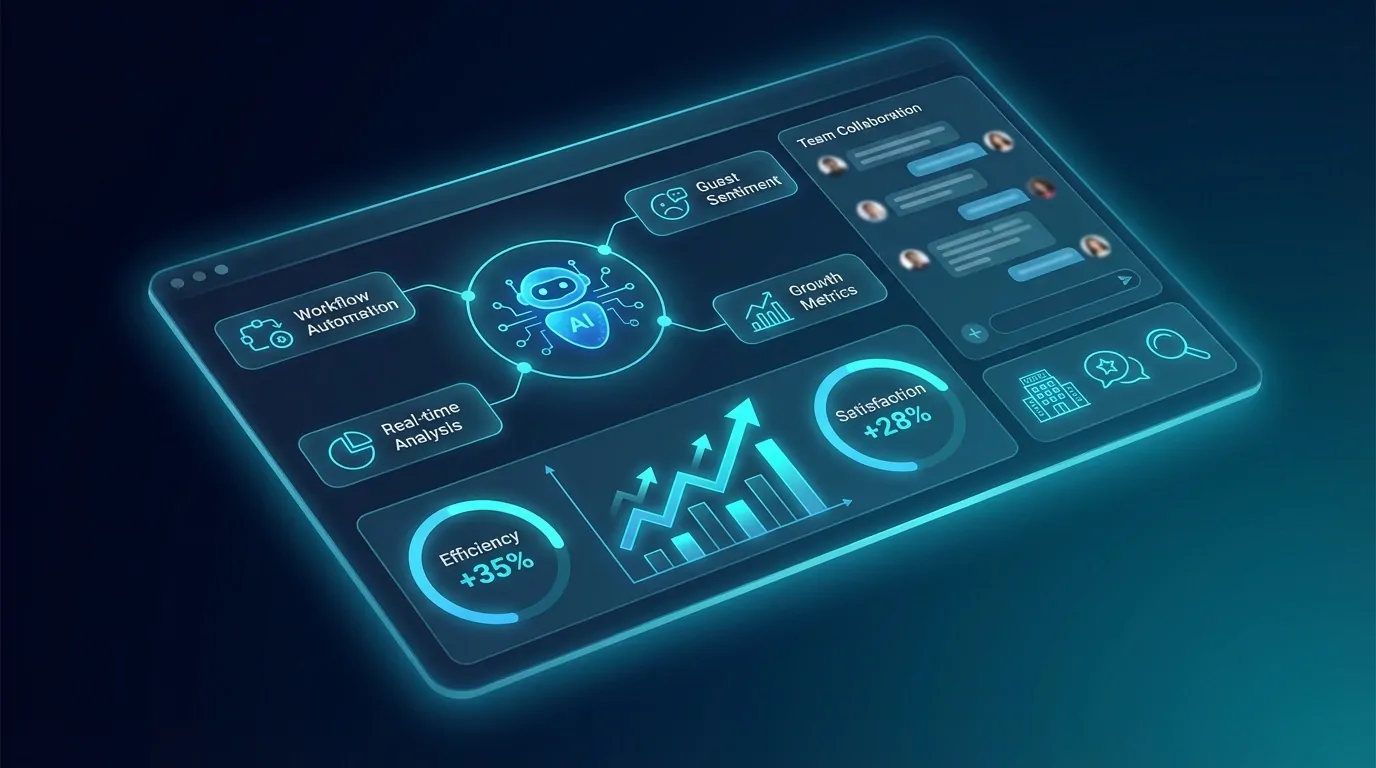
Guest sentiment shifts fast in hospitality. A delayed response to a complaint can tank your reputation on Google Reviews. Vynta AI monitors conversations for dissatisfaction signals and alerts staff immediately—before the guest leaves angry.
The system learns from each interaction. After 30 days, it understands your specific service standards and guest preferences. I’ve seen this turn potential one-star reviews into five-star recovery stories when managers intervene within minutes instead of hours.
Contextual Upselling That Doesn’t Feel Pushy
Here’s where revenue accelerates. Vynta AI increases average guest spend by 25% through recommendations tailored to each guest’s profile and communication channel. A first-time Instagram inquirer gets different suggestions than a repeat VIP texting via WhatsApp.
You maintain strict control over what the AI can offer. Set content permissions so it won’t send your cocktail menu unless you explicitly allow it. This protects brand integrity while maximizing revenue per booking. The AI won’t oversell. It’ll suggest the premium table when the guest’s history shows they book it 80% of the time anyway.
Bidirectional CRM Sync That Eliminates Data Entry
Data silos kill personalization. When a guest books through the AI, your CRM reflects it instantly. When your host adds VIP status to a profile, the AI adjusts its communication style immediately. No manual data entry. No version control problems. Every team member works from the same guest intelligence.
Pros
- 50% increase in booking conversion rates within 90 days
- Multilingual support across WhatsApp, SMS, Instagram, and email
- Full manual takeover capability through dashboard
- NDA-backed data privacy compliance for guest information
- Natural response timing that doesn’t trigger “bot detection”
Cons
- Requires clear brand guidelines upfront for optimal tone calibration
- Initial setup demands time to configure escalation rules properly
- Instagram functions as a redirect channel, not direct booking platform
Implementation Reality: You’ll see immediate wins in response time within week one. But unlocking the full 25% spend increase? That takes 30–60 days of refining upsell logic based on your specific guest segments.
Real-World Results: Revenue and ROI Data
Operators evaluating Vynta AI want proof beyond feature lists. Here’s what the numbers show.
Case Study: 31% Revenue Uplift Across Three Properties
A boutique hotel group implemented Vynta AI focusing on reservation automation and upsell optimization. Within four months:
- 31% increase in revenue per available room
- 23% upsell conversion on premium packages
- 22% growth in repeat bookings
- 78% of inquiries handled autonomously
Response times dropped from 4.2 hours to under 3 minutes. That speed directly drove the 60% reduction in inquiry abandonment. Staff redirected their time to in-person experiences instead of texting guests about reservation confirmations.
Long-Term Loyalty Metrics and Net Promoter Scores
Beyond single-transaction wins, Vynta AI impacts guest relationships over time. Properties using the system report average Net Promoter Score improvements of 18 points within six months. The AI remembers guest preferences across channels and visits, creating continuity that guests notice.
One upscale restaurant saw repeat visit rates climb from 34% to 56% after deploying personalized follow-up sequences and birthday recognition automated through the CRM integration. These loyalty gains compound—making customer acquisition costs more efficient each quarter.
Service Recovery Before Reviews Get Posted
Sentiment detection catches dissatisfaction early, escalating to managers before guests leave negative reviews. A beach club using the system reduced negative online reviews by 42% year-over-year by addressing issues in real time.
When complaints do arise, the AI logs detailed interaction history. Staff get full context for recovery efforts. This transparency builds trust with guests who see their concerns taken seriously—often converting detractors into promoters through thoughtful resolution.
Implementation: From Setup to Continuous Optimization
Deploying AI in traditional hospitality requires more than technical integration. Success depends on change management and staff buy-in.
Three-Week Onboarding Timeline
Implementation runs weeks, not months. The process starts with brand voice workshops where your team defines tone, approved content, and escalation triggers. Technical integration with your CRM and communication channels follows, with Vynta handling API connections and data mapping.
Staff training focuses on dashboard use for monitoring and manual takeover scenarios. Most properties go live within 3–4 weeks, starting with limited channels before expanding based on performance data.
Granular Human Oversight Controls
Set operating hours so the AI only responds during defined windows, sending polite holding messages outside those times. Configure VIP lists so high-value guests always reach humans. Review conversation logs to identify where the AI excels and where it needs refinement.
This transparency addresses the biggest concern: maintaining brand integrity. You’re never locked into AI decisions you can’t override or audit.
Overcoming Staff Resistance
Resistance stems from replacement fears. Frame this clearly: Vynta AI handles repetitive inquiries so your team can focus on memorable in-person moments.
Start with non-VIP segments to build confidence. Celebrate wins publicly when the AI converts a booking or receives guest praise. Within 60 days, most teams view the system as a colleague rather than a threat—especially when they see the 30% operational cost reduction without quality suffering.
The Hospitality AI Advantage: 2026 and Beyond
Guest expectations for instant, personalized service are colliding with labor constraints and margin pressure. Mid-market venues can now compete with enterprise-level service delivery without enterprise budgets.
Predictive Personalization in 2026
Guest data fragmentation is ending. As CRM systems mature and communication channels consolidate, AI agents will orchestrate unified guest journeys that anticipate needs based on historical behavior patterns across your venue network.
The competitive advantage shifts from who has AI to who uses it strategically. Properties building guest preference databases now through automated interactions will dominate personalization in 18 months when competitors scramble to catch up.
Scaling Without Proportional Headcount Growth
The cost reduction Vynta AI delivers isn’t about replacing staff. It’s about redeploying human talent to high-value activities that drive loyalty and premium pricing.
As you expand locations or service offerings, AI agents handle inquiry volume growth without proportional payroll increases. A three-property group can operate guest communications with the same team size a single location previously required. This scalability becomes your moat against competitors trapped in linear cost structures where revenue growth demands headcount growth.
Getting Started Today
Start with a single high-volume channel like WhatsApp or SMS where response-time gaps hurt conversion most. Define clear escalation rules for your VIP segment. Allocate 3–4 weeks for brand voice calibration and CRM integration.
Monitor the dashboard daily in month one, then weekly in month two as confidence builds. Most properties report breakeven on implementation costs within 90 days through upsell revenue alone—before factoring in labor savings and repeat booking gains.
AI will transform hospitality guest experience management. The only choice is whether you’ll lead that transformation or react to competitors who moved first. Vynta AI provides enterprise-grade tools, hospitality-specific intelligence, and human oversight controls that make adoption practical for venues that can’t afford six-figure platforms but can’t afford to fall behind. Your guests already expect instant, personalized service. Deliver it profitably. Learn more about artificial intelligence in hospitality to understand broader industry impact.
Frequently Asked Questions
How do Vynta AI Agents stand out in the hospitality market?
Vynta AI Agents are uniquely designed for luxury hospitality venues, unlike generic chatbots repurposed for various industries. We deliver bespoke AI agents that truly understand the nuances of high-touch guest service, integrating seamlessly with platforms like SevenRooms and responding with natural, human-like timing. This specialized approach ensures personalized service while addressing common operational challenges effectively.
What specific problems do Vynta AI Agents solve for hospitality operators?
Mid-market hospitality operators often struggle to scale personalized service without increasing payroll costs, especially with a flood of inquiries across multiple channels. Vynta AI addresses this by cutting customer inquiry abandonment by 60% with instant, 24/7 responses that still feel authentically human. It also automatically escalates VIP guests and complex queries to staff, ensuring your highest-value customers always receive human care.
Can Vynta AI Agents help increase revenue for hotels and restaurants?
Absolutely. Vynta AI Agents are designed with built-in upsell logic, increasing average guest spend by up to 25% through contextual recommendations tailored to individual guest profiles and communication channels. The system also contributes to a 50% increase in booking conversion rates, directly impacting revenue per booking for hospitality businesses.
How do Vynta AI Agents improve operational efficiency for hospitality businesses?
Our AI agents significantly reduce operational costs by 30% while maintaining service quality, by automating a large volume of customer inquiries. By integrating in real-time with PMS and CRM systems like SevenRooms, Vynta AI eliminates manual data entry and ensures all team members work from synchronized guest intelligence, streamlining operations.
What level of control do hospitality venues have over Vynta AI Agents?
Clients maintain full control over their Vynta AI Agents through a dedicated dashboard. You can define brand tone, set content permissions, establish escalation rules, and even view, pause, or manually take over any conversation in real-time. This level of customization ensures brand integrity and adherence to service standards.
How does Vynta AI ensure guest satisfaction and handle complaints?
Vynta AI prioritizes brand-safe interactions and monitors conversations for dissatisfaction signals, escalating issues immediately to human staff before they escalate publicly. The system learns from each interaction, refining its understanding of your specific guest preferences and service standards. This proactive approach helps venues turn potential negative reviews into recovery wins.
What is involved in implementing Vynta AI Agents for a hospitality venue?
While Vynta AI delivers immediate wins in response time, unlocking its full potential, such as the 25% spend increase, typically requires refining upsell logic based on specific guest segments over 30-60 days. Initial setup involves configuring clear brand guidelines for optimal AI tone calibration and establishing precise escalation rules to align with your operational needs.