
Vynta AI Agents for Hospitality guide
What Vynta AI Agents Actually Do for Hospitality Operations
Vynta AI agents handle guest communication, reservation management, and personalized service delivery without replacing your team. We’ve designed these bespoke AI agents specifically for luxury hospitality venues: restaurants, premium bars, nightclubs, and beach clubs. Unlike generic chatbots, they operate within hours you define, respond with human-like timing (including natural pauses), and escalate VIP guests or complex queries directly to your staff.
Automating Guest Communication Across All Channels
The system handles inquiries across WhatsApp, SMS, email, and Instagram with channel-specific personalization. On Instagram, it redirects guests to appropriate links rather than attempting direct bookings. Multilingual support means international guests get responses in their preferred language. You maintain complete control through a dashboard where you can view, pause, or manually take over any conversation in real time.
Managing Reservations and Reducing No-Shows
Real-time CRM integration with platforms like SevenRooms synchronizes guest data, reservations, tags, and updates automatically. The AI increases booking conversion by up to 50% and reduces customer inquiry abandonment by up to 60% through instant responses during your operating hours. Outside those hours, it sends polite holding messages rather than leaving guests waiting or responding robotically at 3 a.m.
Personalizing Guest Interactions Without Replacing Your Team
Strict escalation rules ensure VIP guests always receive human care. You customize brand tone, business rules, and content controls so the AI never sends unapproved materials–like drink menus–unless you explicitly allow it. Your team focuses on high-value relationships while AI handles routine inquiries with the same attention to detail.
Core Capability: Vynta AI agents aren’t autonomous systems running without oversight. They’re bespoke tools that amplify your team’s capacity while maintaining the personal touch that defines hospitality excellence.
Measurable ROI: What Mid-Market Hospitality Businesses Actually Achieve
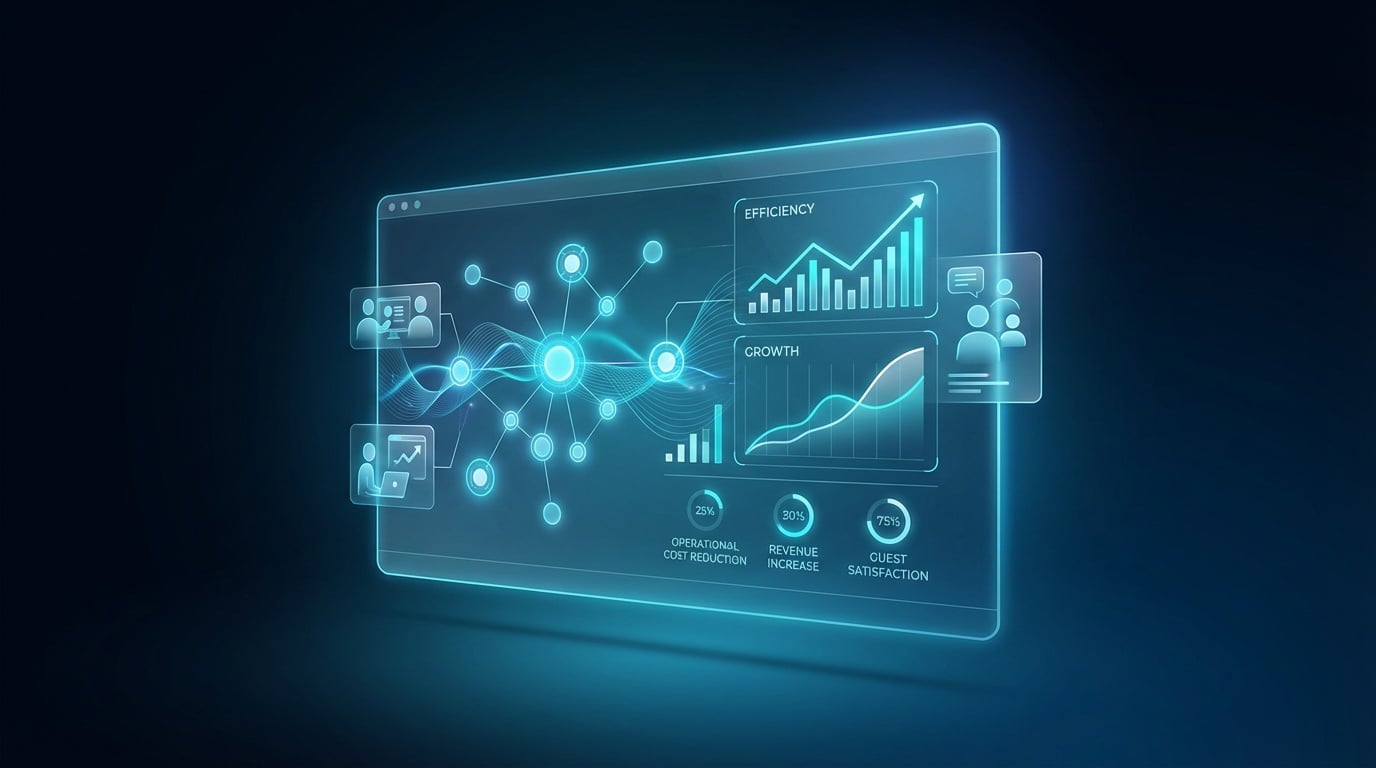
Mid-market hospitality venues using AI agents report three primary financial outcomes: operational cost reduction, revenue growth through intelligent upselling, and improved guest retention metrics. These are measurable results from venues managing similar guest volumes and service expectations.
Operational Cost Reduction and Staff Efficiency Gains
Operational costs decrease by up to 30% when AI handles routine inquiries, reservation confirmations, and basic guest questions. Your staff redirects time toward in-person service, complex problem-solving, and relationship building with high-value guests. The system operates only during hours you specify, reducing after-hours labor costs while maintaining guest responsiveness.
Revenue Growth Through Smart Upselling
Average guest spend increases by up to 25% through brand-safe upselling tailored to guest profiles. The AI references CRM data to suggest appropriate upgrades, special experiences, or premium options based on past preferences and spending patterns. This personalization happens at scale without requiring staff to remember every guest’s history manually.
Guest Satisfaction and Retention Improvements
Higher booking conversion and lower inquiry abandonment directly impact revenue. Guests receive immediate, accurate responses during decision-making moments. When they arrive, your team already has context from AI-managed conversations, creating seamless experiences that drive repeat visits and positive reviews. Learn more about Artificial intelligence in hospitality.
| Metric | Before AI Implementation | With Vynta AI Agents |
|---|---|---|
| Booking Conversion Rate | Baseline | Up to 50% improvement |
| Inquiry Abandonment | Baseline | Up to 60% reduction |
| Average Guest Spend | Baseline | Up to 25% increase |
| Operational Costs | Baseline | Up to 30% reduction |
Implementation Reality: What Success Actually Requires
Successful AI implementation in hospitality demands more than software installation. Vynta AI signs NDAs and follows strict data privacy protocols to protect your brand and guest data. The partnership model delivers results because configuration, integration, and ongoing improvement require hospitality expertise combined with technical knowledge.
Custom Configuration vs. Off-the-Shelf Templates
Your AI agent receives bespoke configuration matching your brand voice, service standards, and operational rules. This isn’t a template with your logo added. Content controls prevent the system from sharing information you haven’t approved. Response timing mirrors your staff’s natural communication patterns, not robotic instant replies.
Integration with Your Existing Systems
Real-time CRM integration accesses current guest data, reservation status, and preference tags without manual data entry. The system updates your CRM automatically as conversations progress, maintaining a single source of truth across all guest touchpoints. To explore broader AI automation options beyond hospitality, see our AI Automation Services.
Ongoing Partnership and Continuous Improvement
This partnership includes monitoring, optimization, and adaptation as your business evolves. Your dashboard provides conversation oversight, performance metrics, and manual intervention options. The AI improves response quality over time based on escalations and staff feedback.
How Vynta AI Agents Improve Guest Experience at Scale
Scaling personalized service without sacrificing quality is hospitality’s central challenge. AI agents address that tension by handling volume while preserving the human touch that drives guest loyalty. The system remembers preferences, anticipates needs, and maintains consistent service standards across interactions.
Multilingual Support and Human-Like Response Timing
International guests receive responses in their preferred language without staff needing multilingual capabilities. Response timing includes natural pauses that mirror human conversation patterns, avoiding the robotic immediacy that signals automation. Guests feel heard and valued rather than processed by a machine. This preserves the emotional connection that separates memorable experiences from transactional ones. For tips on training your team to complement AI, check our guide on Staff Customer Service Training.
CRM Integration and Preference Personalization
The AI recognizes whether a guest prefers window seating, has dietary restrictions, or celebrates anniversaries at your venue. This context informs each interaction, from initial inquiry to post-visit follow-up. Your staff receives conversation history before guests arrive, supporting handoffs that feel like continuous relationships rather than disconnected touchpoints.
VIP Escalation Rules That Protect High-Value Relationships
Strict escalation protocols ensure your most valuable guests connect with human staff. You define which guests, inquiry types, or situations trigger immediate human intervention. The AI recognizes these scenarios and routes conversations appropriately, protecting relationships that require personal attention while handling routine matters that don’t.
Guest Experience Benefit: Personalization at scale means every guest receives attention that feels individual and thoughtful, regardless of inquiry volume or time of day.
When to Choose Vynta AI Agents vs. Single-Purpose Tools
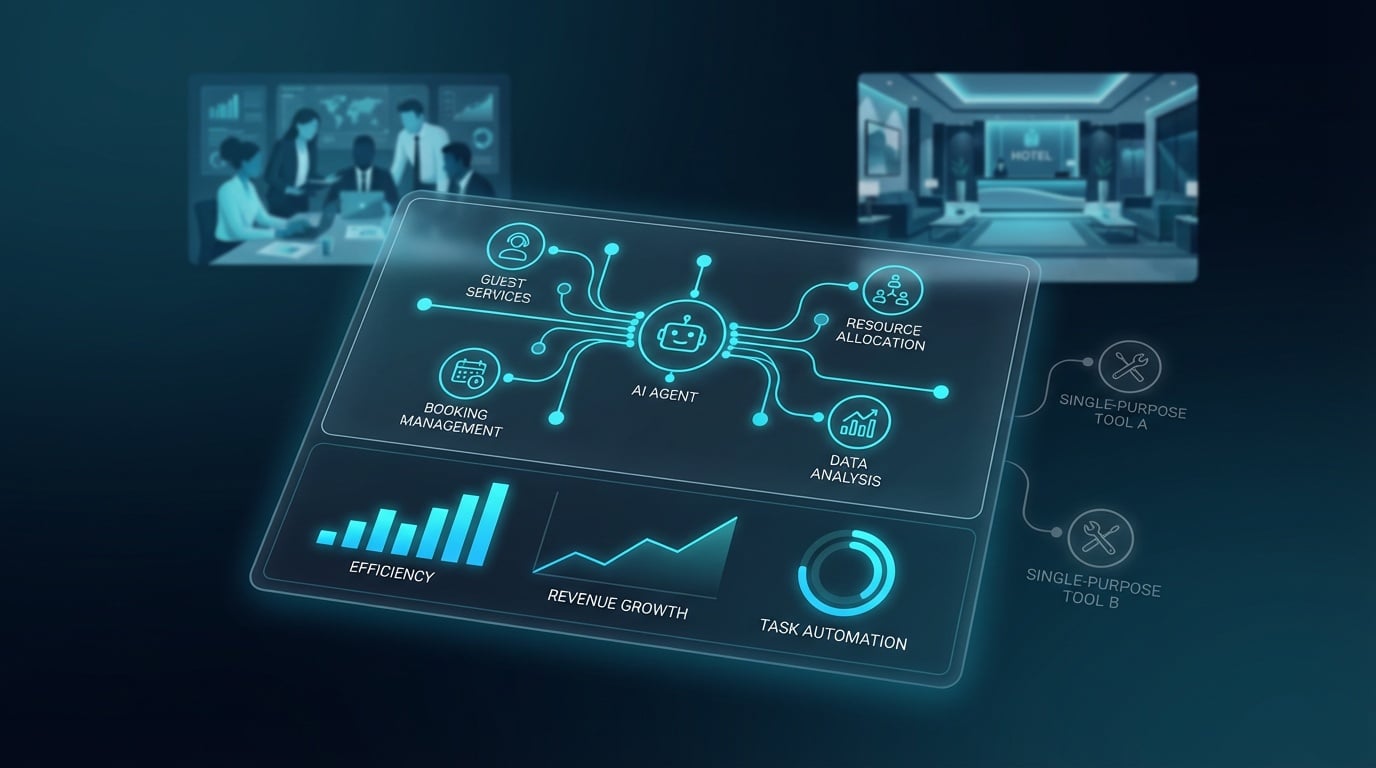
Evaluating AI automation requires understanding where your business loses revenue or wastes resources. Single-purpose tools address isolated problems like reservation management or email marketing. Connected automation supports the entire guest journey–from first inquiry through post-visit engagement–while maintaining context across touchpoints.
Evaluating Your Current Bottlenecks
Identify where guests abandon the booking process, where staff spends time on repetitive questions, or where personalization breaks down due to volume. If bookings get lost because inquiries go unanswered during busy service periods, if staff can’t remember returning guests’ preferences, or if upselling happens inconsistently, connected AI automation addresses systemic issues rather than patching individual symptoms. For inspiration on marketing tactics that integrate with AI automation, see our post on Restaurant Marketing Strategy.
The Connected Automation Advantage Across Guest Journey
A guest who inquires via Instagram, books through WhatsApp, and confirms via email experiences continuity. The AI maintains conversation context across channels and updates your CRM automatically. When that guest arrives, your staff has relevant history without asking repetitive questions. This continuity drives satisfaction and repeat visits in ways disconnected tools can’t match. For insights about AI and automation in hospitality, see this AI and automation in hospitality event overview.
Getting Started with Your First Hospitality AI Agent
Implementation begins with defining your operating hours, escalation rules, and brand voice guidelines. Vynta AI configures the system to your specifications, integrates with your existing CRM, and sets content controls that protect your brand. The dashboard provides oversight and manual intervention options, ensuring you maintain control while AI handles volume. Success requires partnership rather than a software purchase, with ongoing optimization based on performance data and staff feedback.
Decision Framework: Choose connected AI automation when guest experience consistency, booking conversion rates, and staff efficiency all require improvement simultaneously. Single-purpose tools work when one specific process needs optimization.
Ready to Transform Your Guest Experience? Schedule a consultation to discuss how Vynta AI Agents can address your specific operational challenges and revenue goals. We’ll review your current systems, identify automation opportunities, and outline a customized implementation plan.
Strategic Considerations for Long-Term Hospitality AI Success
Sustained AI success requires viewing it as an evolving partnership rather than a fixed technology purchase. Your venue’s needs change with seasonal demand, menu updates, special events, and market conditions. The AI system adapts through continuous feedback loops between performance data and human expertise.
Building Staff Confidence in AI Collaboration
Team members often fear AI will eliminate their roles. In reality, staff satisfaction increases when repetitive inquiries no longer consume their time. Train your team to view the dashboard as a collaboration tool, not surveillance. When staff manually take over conversations or provide feedback on AI responses, they’re teaching the system to better represent your brand voice. This active participation builds ownership rather than resistance.
Data Privacy as Competitive Advantage
Vynta AI’s NDA commitments and strict data privacy protocols protect guest information. As data regulations tighten globally, venues with compliant AI systems reduce legal risk while maintaining guest trust. Your CRM data isn’t used to train generic models and doesn’t appear in other businesses’ systems. This security becomes a selling point for privacy-conscious guests, particularly high-net-worth individuals who value discretion.
Preparing for AI-Native Guest Expectations
Younger demographics increasingly expect fast, personalized digital interactions. Venues without strong response capabilities lose bookings to competitors that meet these expectations. AI adoption positions your business ahead of the curve, building operational infrastructure that’ll likely become standard within three years. Early implementation means refined systems and trained staff while competitors are still catching up.
Long-Term Perspective: AI adoption in hospitality mirrors reservation system adoption twenty years ago. Early adopters gained market share that laggards struggled to recover. The question isn’t whether to implement AI, but whether your venue will lead its market.
Measuring Success Beyond Initial Metrics
First-year ROI typically focuses on cost reduction and booking conversion. Year two reveals deeper impacts: guest lifetime value increases, staff turnover decreases, and your brand reputation for responsiveness strengthens. Track how often guests mention smooth communication in reviews. Monitor whether VIP retention improves because your team has more time for relationship cultivation. These secondary metrics often outperform primary financial returns.
Scaling Across Multiple Venues or Concepts
Multi-location operators benefit from centralized AI management with location-specific customization. A restaurant group maintains consistent brand voice while adapting responses to each venue’s menu, hours, and local market. The system learns across locations, improving faster than isolated implementations. Operational insights from one property inform optimizations across an entire portfolio. This future outlook is further explored in industry insights such as the future of hospitality AI innovation by Deloitte.
Final Recommendations for Hospitality Decision-Makers
Start implementation during slower seasons when staff has capacity to participate in configuration and training. This timing allows refinement before high-demand periods test the system under pressure. Define clear escalation rules from day one, erring toward human intervention initially, then expanding AI autonomy as confidence builds.
Prioritize CRM integration quality over speed. Accurate data synchronization prevents guest experience failures that undermine trust in automation. Incomplete integration creates more problems than it solves, forcing staff to manually reconcile conflicting information across systems.
Establish monthly review cycles where staff and management analyze AI performance data together. Identify conversation patterns that require human expertise, content gaps the AI can’t address, and opportunities for expanded automation. This collaborative review process maintains alignment between technology capabilities and service standards.
The system succeeds when leadership commits to partnership rather than purchase. Ongoing optimization determines whether AI becomes a transformative asset or underused software. Venues achieving strong ROI treat their AI agent as a team member that requires training, feedback, and continuous improvement–not a plug-and-play solution that requires no maintenance.
Budget for annual system evolution alongside initial implementation costs. Guest expectations, communication channels, and hospitality trends change constantly. Your AI system must adapt through regular updates, new feature integration, and expanded capabilities. This investment protects against obsolescence while compounding returns as the system becomes more sophisticated.
Competitive advantage in hospitality comes from delivering exceptional experiences consistently at scale. AI agents provide the operational foundation to pursue both objectives simultaneously. Your team focuses on moments that require human judgment, creativity, and emotional intelligence while AI handles volume with consistent attention to detail. This division of labor represents the future of hospitality operations, where technology amplifies rather than replaces human excellence.
Frequently Asked Questions
What exactly are Vynta AI Agents for hospitality venues?
As Operations Director at Vynta AI, I see these agents as bespoke tools designed for luxury hospitality venues like restaurants, premium bars, and clubs. They guide guest communication, reservation management, and service delivery, working alongside your team. Our AI agents operate within your defined hours and respond with human-like timing, including natural pauses.
How do Vynta AI Agents handle guest communication across different channels?
Our Vynta AI agents automate inquiries across WhatsApp, SMS, email, and Instagram, providing channel-specific personalization. They offer multilingual support for international guests and allow your team complete control through a real-time dashboard. This frees your staff to focus on high-value interactions.
Can Vynta AI Agents help reduce no-shows and improve booking conversion?
Absolutely. Vynta AI agents integrate with your CRM, synchronizing guest data and reservations to increase booking conversion by up to 50%. They also reduce customer inquiry abandonment by up to 60% with instant responses during operating hours. Outside these hours, polite holding messages are sent, ensuring guests are always acknowledged.
How do Vynta AI Agents personalize guest experiences without replacing staff?
Vynta AI agents are configured to your brand tone and business rules, ensuring personalized interactions. They reference CRM data for smart upselling, suggesting tailored upgrades or experiences based on guest profiles. This allows your team to focus on building relationships while the AI handles routine inquiries with precision.
What kind of financial benefits can hospitality businesses expect from using Vynta AI Agents?
Businesses adopting Vynta AI agents typically see significant financial outcomes. These include operational cost reductions of up to 30%, revenue growth of up to 25% through intelligent upselling, and improved guest retention metrics. Our agents help your staff redirect time to high-value service, contributing to these measurable gains.
Are Vynta AI Agents off-the-shelf solutions, or are they customized for each venue?
Vynta AI agents are far from generic chatbots; they receive bespoke configuration tailored to your venue’s brand voice, service standards, and operational rules. We ensure content controls prevent unapproved materials from being shared, and response timing mirrors natural human communication patterns. This ensures a truly personalized and controlled experience.
How do Vynta AI Agents maintain data privacy and brand consistency?
Data privacy is paramount; Vynta AI signs NDAs and follows strict protocols to protect your brand and guest information. For brand consistency, you customize the AI’s tone, business rules, and content controls. This ensures the AI always communicates in your approved voice and never sends unapproved materials, maintaining your venue’s integrity.