
Top providers of AI agents for upsells in premium bars.
Why Premium Bars Are Missing Revenue With Manual Upselling
The revenue gap in high-end hospitality
Your bar is three-deep with guests ordering craft cocktails. Your bartenders are moving fast, mixing drinks, taking orders. They’re not thinking about whether the Manhattan drinker would appreciate a premium rye upgrade or if the couple at the end needs a dessert wine suggestion.
That’s where the money leaks. Premium bars leave 18–25% of potential revenue on the table from missed pairing suggestions alone. A guest ordering a $16 cocktail might happily add a $12 small plate or upgrade to a $22 premium spirit, but only if prompted at the right moment. AI agents analyze guest preferences and order patterns in real time, surfacing these opportunities when they’re most likely to convert.
Where traditional upselling fails at scale
Training new bartenders on your full premium menu takes weeks. Then they leave. Hospitality turnover averages 73% annually, which means you’re constantly rebuilding institutional knowledge. Your best bartender remembers that a regular prefers Japanese whisky and suggests new arrivals. But that same attention vanishes on Friday nights when volume triples.
Traditional upselling scripts feel robotic in luxury environments where guests expect personalized service. You can’t scale that personalization manually across all shifts and all guests without dramatically increasing headcount.
How AI agents close the opportunity window
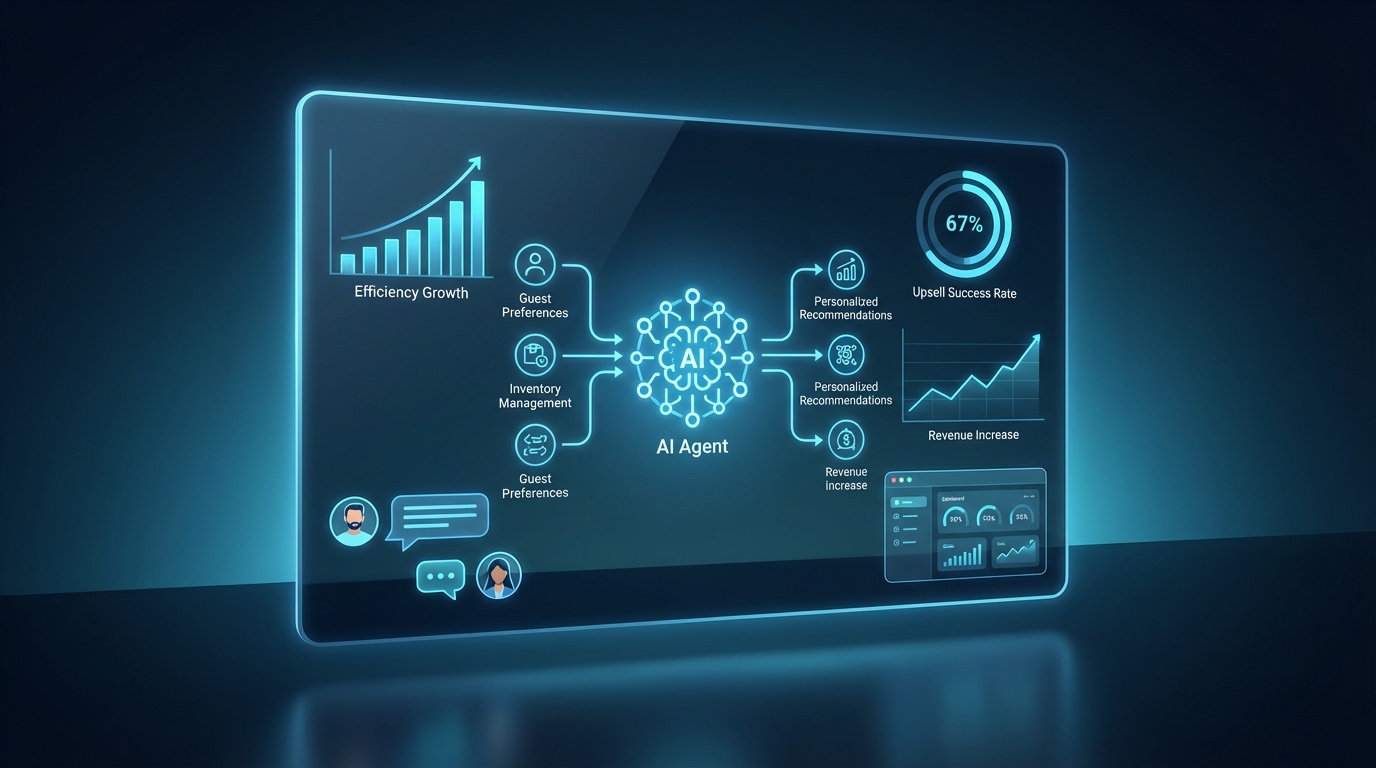
AI agents monitor every transaction and guest interaction, identifying upsell windows humans miss during busy service. When a guest orders their second cocktail, the system knows to suggest a flight or bottle service. When someone orders a particular spirit, it recommends complementary food pairings based on what similar guests enjoyed.
Revenue Reality Check: A 200-seat premium bar serving 800 guests weekly can capture an additional $3,200–$5,400 monthly by converting just 15% more guests to premium options. AI agents deliver 22–35% upsell conversion rates versus 8–12% with manual approaches.
The technology surfaces suggestions on POS screens or staff tablets without interrupting service flow. Bartenders maintain full control over guest interactions while having instant access to personalized recommendations they couldn’t possibly remember for every patron.
Top AI Agent Providers for Bar and Premium Hospitality Upselling
What separates enterprise-grade agents from generic tools
Enterprise platforms offer sophisticated machine learning but require six-figure budgets and dedicated IT teams. Generic chatbots lack hospitality-specific training and produce awkward suggestions that hurt premium positioning. Industry-specialized systems occupy the middle ground: built for mid-market operations without enterprise complexity.
Look for hospitality-trained models that understand bar terminology, guest psychology, and the nuances of premium service. The system should integrate with your existing POS rather than requiring infrastructure replacement. Speed matters—recommendations must surface within 2–3 seconds or they’re useless during live service.
Key providers and their hospitality specialization
Several companies serve the premium bar segment with varying approaches.
Toast and Square offer basic upsell prompts within their POS systems. Good for simple “would you like to add X” scenarios, but they lack personalization. Salesforce and HubSpot provide general CRM automation that requires heavy customization for bar-specific workflows.
SevenRooms offers reservation and guest preference tracking with limited real-time upselling capabilities. Upserve (now Lightspeed) provides analytics-driven suggestions but requires manual interpretation and staff action.
Vynta AI’s approach to bar-specific automation
At Vynta AI, we built our hospitality agents for mid-market premium bars that need enterprise-grade outcomes without enterprise budgets or timelines. Our system learns your menu, analyzes guest behavior patterns, and delivers contextual upsell suggestions directly to staff during service.
The AI knows when a guest ordering a Manhattan may appreciate a premium rye upgrade versus when they’re price-sensitive. It understands context.
Implementation takes 2–3 weeks versus 3–6 months for enterprise platforms. We integrate with major POS systems (Toast, Square, Clover, Lightspeed) and train our models on your menu and guest data. The system improves continuously, learning which suggestions convert and which fall flat with your clientele.
Comparing implementation timelines and ROI metrics
Mid-market bars need fast deployment and clear ROI. Generic automation tools go live quickly but deliver limited revenue impact. Enterprise platforms promise advanced capabilities but take months to configure and require ongoing technical support you don’t have in-house.
Industry-specialized providers like Vynta AI agents for hospitality typically achieve positive ROI within 60–90 days. Our hospitality clients see average check increases of 12–18% and upsell conversion rates improving from 10% baseline to 28–35% within the first quarter. Implementation requires minimal staff training because suggestions fit naturally into existing workflows.
How AI Agents Generate Measurable Revenue Increases in Premium Bars
Real-world metrics: average check size, upsell conversion rates
Premium bars using AI agents report average check increases of $8–$14 per guest. For venues serving 800–1,000 guests weekly, that translates to $25,000–$45,000 in additional monthly revenue. These systems achieve 28–35% upsell conversion rates versus the 8–12% baseline with manual prompting.
Upsell conversion rates vary by suggestion type. Food pairings convert at 18–24% when timed correctly. Spirit upgrades see 32–38% acceptance when aligned to guest preferences. The key metric is revenue per suggestion: successful implementations generate $4.20–$6.80 in additional revenue for every AI-generated recommendation, compared to $1.40–$2.10 for generic manual prompts.
Personalization at scale without the headcount burden
AI agents analyze hundreds of data points per guest: previous orders, time of visit, party size, ordering pace, response to past suggestions. When a regular who typically orders gin cocktails arrives on a Tuesday evening, the system recognizes their preference pattern and suggests your new botanical gin before the bartender remembers they’re a regular.
This same attention extends to first-time guests through behavioral analysis of similar customer segments.
Your team can deliver personalized service to 200 guests per night without memorizing preferences for thousands of customers. The AI tracks that couples ordering appetizers convert to dessert 47% of the time when prompted after their second round. It knows business groups respond well to bottle service suggestions but rarely accept individual cocktail upgrades. This intelligence scales across every shift without adding labor cost.
Voice and conversational AI for in-bar interactions
Modern AI agents integrate with staff communication systems, delivering suggestions through POS terminals, handheld tablets, or discreet audio prompts via staff earpieces. Bartenders receive real-time recommendations like “Guest 3 ordered the Old Fashioned; suggest the 15-year bourbon upgrade” without breaking conversation flow or constantly checking screens.
Some systems support guest-facing applications where patrons browse updated menus on tablets, receiving personalized suggestions based on stated preferences. A guest indicating they enjoy smoky flavors sees curated recommendations for mezcal cocktails and peated Scotch options. The AI handles product knowledge while staff focus on hospitality and execution.
Integration with POS and guest data systems
Effective AI agents connect directly to your existing technology stack. Integration with Toast, Square, Lightspeed, or Clover POS systems typically takes 3–7 days and allows the AI to access real-time transaction data, menu information, and inventory levels. The system avoids suggesting out-of-stock items or recommendations that conflict with current promotions.
Integration Reality: Successful implementations sync with reservation systems (OpenTable, Resy), loyalty platforms, and guest preference databases. This creates a complete view of each guest, enabling the AI to recognize that the couple at table 12 celebrated their anniversary here last year and may appreciate a champagne suggestion with dessert.
Data flows both ways: the AI receives guest and transaction information while feeding performance analytics back to your management dashboard. You track which suggestions convert, which bartenders achieve the highest upsell rates, and which menu items benefit most from AI-driven promotion. This intelligence informs menu engineering and staff training priorities.
Implementing AI Upselling Without Compromising the Premium Experience
Balancing automation with the personal touch that defines high-end service
Premium bar guests pay for attentive, intuitive service that feels personalized rather than scripted. AI should inform staff suggestions, not replace human judgment. Your bartender receives a prompt that “Guest 2 might enjoy the Japanese whisky flight based on their Yamazaki order,” then decides whether, when, and how to present that option based on the guest’s mood and engagement.
Successful implementation means AI handles data analysis and pattern recognition while humans own the relationship. The technology identifies that a guest’s ordering pace suggests they’re settling in for the evening, making them receptive to a premium bottle suggestion. Your bartender uses that insight to start a conversation about rare spirits, sharing stories and building rapport.
When AI should step back and let humans take over
Configure your AI agents with clear boundaries. Guests showing price sensitivity, ordering quickly to leave, or showing disinterest in earlier suggestions should be removed from upsell targeting for that visit. The system should recognize when a guest declines two suggestions and stop prompting staff with additional recommendations that may feel pushy.
Special occasions require human intuition. When your bartender notices a couple celebrating an engagement, they can override AI suggestions to deliver an experience that fits the moment. The best systems allow staff to flag guests as “VIP: manual service only” or “Price-sensitive: hold upsells.”
Best practices for frequency, timing, and offer relevance
Limit upsell attempts to 1–2 per guest per visit, focusing on the highest-probability conversions. Timing matters more than volume. Suggest food pairings when guests receive their first cocktail, spirit upgrades when they order their second drink, and premium bottles when groups are settling in for longer visits. Space suggestions 15–20 minutes apart to avoid overwhelming guests.
Relevance drives conversion. A guest ordering a $14 cocktail might accept a $19 premium variant but will likely reject a $35 jump. Configure your system to suggest upgrades within 30–50% of current spend levels. Match recommendations to demonstrated preferences: don’t suggest tequila flights to guests who’ve only ordered whiskey.
Staff adoption and training considerations
Bartenders resist technology that complicates workflow or makes them feel micromanaged. Position AI agents as tools that make their jobs easier and increase tip income through higher checks. A 15% average check increase translates into higher gratuities—immediate incentive for staff to use the system.
Training takes 1–2 hours: show staff how to access suggestions, override recommendations when appropriate, and share feedback on what converts. Drive adoption by tracking individual upsell rates and recognizing top performers.
Your Roadmap: From Evaluation to Measurable ROI
Defining success metrics before implementation
Establish baseline measurements before deploying AI agents: current average check size, upsell conversion rates by category, and revenue per guest across different dayparts. Track these metrics for 2–4 weeks to identify patterns and set realistic improvement targets. A premium bar averaging $42 per guest with 10% upsell conversion provides clear benchmarks for measuring AI impact.
Define success beyond revenue. Monitor guest satisfaction scores, staff adoption rates, and operational efficiency gains. Set targets like “increase average check by 12–15% while maintaining a 4.5+ guest satisfaction rating” to ensure AI improves the experience rather than just extracting more money.
The timeline from selection to live deployment
Provider evaluation takes 1–2 weeks: schedule demos with 2–3 specialized vendors, review their hospitality experience, and verify POS compatibility. Implementation with industry-specialized providers typically requires 2–3 weeks for technical integration, menu configuration, and initial model training. Add one week for staff training and a soft launch before full rollout.
Expect meaningful results within 60 days. The first month focuses on system learning and staff adoption, with conversion rates improving as the AI refines recommendations based on your guest base. Month two often shows 8–12% check increases, reaching 15–18% by month three as both technology and team tune performance.
Quick wins and ongoing optimization
Target high-conversion opportunities first: premium spirit upgrades, food pairings with signature cocktails, and bottle service for groups of four or more. These categories often show early results because guest receptivity is naturally higher. Build momentum with wins before expanding to more nuanced suggestions like dessert cocktails or rare spirits.
Monthly optimization reviews identify what’s working and what needs adjustment. Analyze which suggestions convert best, which staff members achieve the highest upsell rates, and which guest segments respond most positively. Refine parameters based on this intelligence, adjusting recommendation thresholds, timing rules, and offer relevance criteria.
Why mid-market bars succeed where DIY approaches fail
Building in-house AI capabilities requires data science expertise, ongoing model training, and technical infrastructure that mid-market bars rarely have. Specialized providers succeed because they’ve already solved core problems: language understanding for hospitality contexts, integration with legacy POS systems, and training signals from real guest interactions across venues.
DIY approaches often break at integration. Your bar runs on Toast or Square, manages reservations through Resy or OpenTable, and tracks customer preferences in spreadsheets or a basic CRM. Connecting these systems requires API expertise and ongoing maintenance.
Enterprise providers offer pre-built integrations, but their minimum contracts start around $50,000 annually. Vynta AI’s automation services bridge this gap with industry-specific connectors designed for mid-market hospitality operations, delivering enterprise-grade capabilities at accessible price points.
The timeline advantage matters too. Building internal AI takes 12–18 months before you see results. Partnering with specialized providers gets you live in 4–6 weeks. That gap represents tens of thousands in captured revenue you’d otherwise miss while debugging models.
Making Your Selection Decision
Match provider to venue profile
Enterprise platforms like IBM Watson or Salesforce Einstein work for hotel groups with dedicated IT teams and six-figure budgets. They offer customization depth that standalone premium bars don’t need. Generic chatbot builders like ManyChat or Drift lack hospitality-specific intelligence around drink pairings, occasion recognition, and premium product positioning.
Mid-market bars need providers who understand your operational reality: limited technical staff, tight margins despite premium pricing, and the requirement that technology feels invisible to guests. Vynta AI was built for this segment, with preconfigured workflows that work out of the box while still reflecting your brand voice and product mix.
Prioritize revenue metrics over features
Evaluate providers based on what they deliver to your bottom line, not feature lists. Ask for benchmarks: average increase in check size, upsell acceptance rates, and time to positive ROI. Reputable providers share anonymized performance data from comparable venues.
Be cautious with providers that focus only on cost savings rather than revenue generation. AI agents for premium bars should drive incremental sales, not just reduce labor. The goal is augmentation: your bartenders focus on craft and connection while AI handles systematic upselling across transactions.
Test conversational quality before committing
Request live demos with your menu and guest scenarios. Poor conversational AI sounds robotic or makes inappropriate suggestions that hurt your brand. Quality agents understand context: they won’t push cocktails to someone ordering coffee at 2 p.m., or suggest entry-level spirits when the guest just ordered a $40 pour.
The best providers let you adjust tone and aggressiveness. Premium bars need subtle, polished prompts that feel like helpful guidance from a knowledgeable bartender, not pushy sales tactics.
Where Hospitality AI Heads Next
Predictive personalization at the individual level
Current AI agents react to what guests order. The next generation predicts preferences before orders happen, using historical data, weather, local events, and even social media signals. Imagine your system knowing a regular’s favorite whiskey is low in stock and proactively suggesting a comparable alternative, or recognizing a guest celebrating an anniversary and cueing your staff to offer champagne.
This requires sophisticated data infrastructure that most mid-market bars lack today, but providers are building these capabilities into their platforms. Within two years, predictive personalization will become table stakes for competitive premium bars.
Voice AI for tableside interactions
Text-based systems dominate today, but voice interfaces are maturing rapidly. Future implementations may include discreet tableside devices where guests can ask questions about your whiskey selection or wine list, receiving expert-level guidance without waiting for staff attention during peak hours.
The technology exists now but needs refinement to handle noisy bar environments and diverse accents reliably. Specialized providers are already testing voice capabilities in controlled settings. Expect mainstream availability by late 2026.
Your Next Step
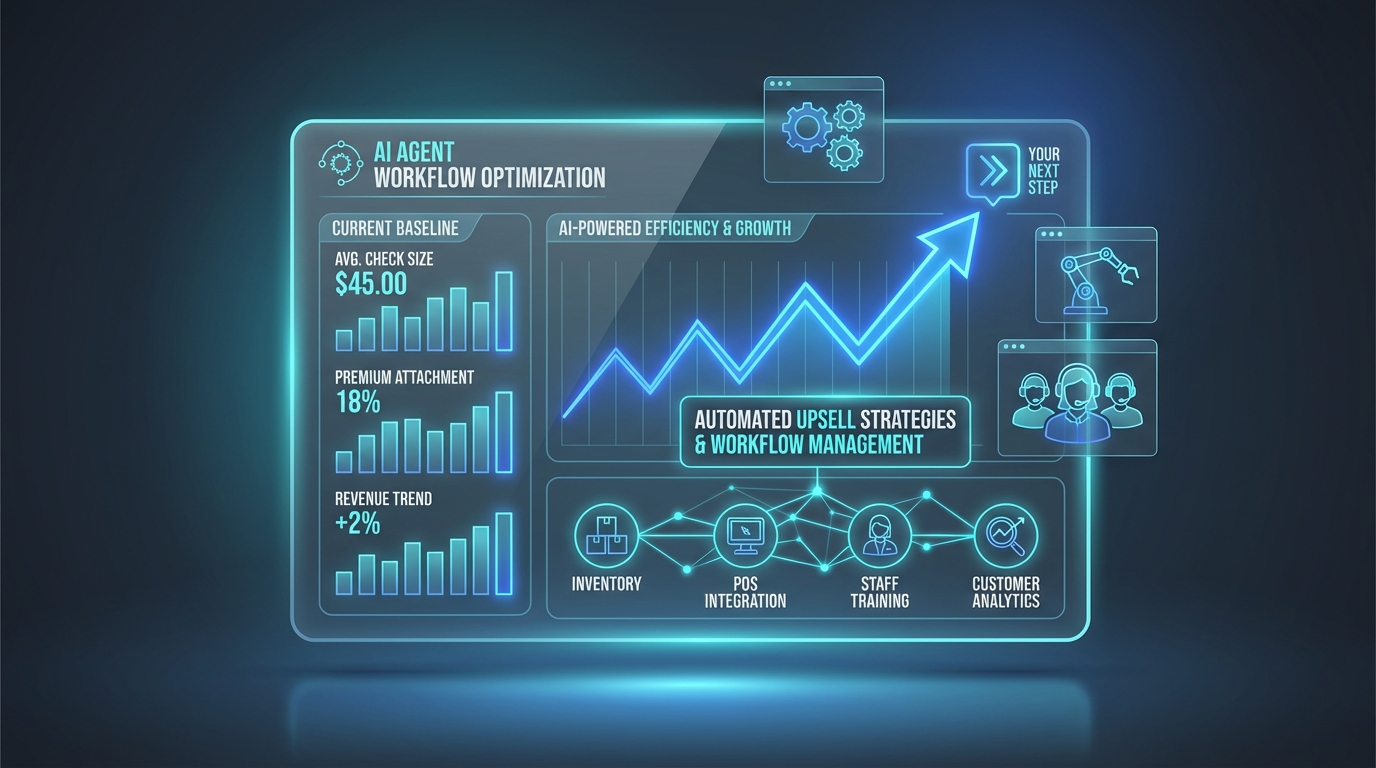
Start with a clear baseline measurement of your current performance: average check size, attachment rates for premium spirits and cocktails, and revenue per guest hour. These metrics let you measure AI impact objectively.
For most mid-market premium bars, specialized providers like Vynta AI hospitality agents offer the best balance of capability, implementation speed, and cost. You get hospitality-specific intelligence without enterprise complexity or generic-tool limitations.
Request a pilot program focused on one high-value upsell category, like premium spirit upgrades or dessert wine pairings. Measure results over 30 days, then expand to additional categories once you’ve proven ROI.
The bars winning in 2026 treat AI as a strategic revenue tool, not a cost-cutting experiment. They partner with providers who understand hospitality nuances and measure success in dollars added to each guest check. That approach turns AI from a technology initiative into a competitive advantage that compounds month after month.
Frequently Asked Questions
What kinds of AI agent providers are available for premium bars?
For premium bars, AI agent providers generally fall into categories like basic POS upsell prompts, general CRM automation, and specialized hospitality AI systems. Generic tools offer simple suggestions, while enterprise platforms are complex and costly. Specialized providers, like Vynta AI, focus on industry-specific needs for mid-market operations.
What should premium bars look for in an AI agent for upsells?
Premium bars should seek hospitality-trained AI models that understand bar terminology, guest psychology, and the nuances of premium service. Integration with existing POS systems is essential, and recommendations must surface quickly, within 2-3 seconds, to be effective during live service. This ensures personalized suggestions fit naturally into service flow.
How do specialized AI agents, like Vynta AI, differ from general AI tools for bars?
Specialized hospitality AI agents are built specifically for the bar environment, understanding menu items and guest behavior patterns unique to the industry. Unlike generic tools that may offer awkward suggestions, these systems provide contextual upsell recommendations directly to staff. They integrate seamlessly with existing bar operations and continuously improve over time.
Why do premium bars need AI agents to maximize upsell revenue?
Premium bars often miss upsell opportunities during peak hours when staff prioritize speed over maximizing check size. AI agents solve this by identifying guest preferences and order patterns in real time, suggesting premium options at the exact moment guests are most receptive. This closes the revenue gap from missed pairing suggestions.
What can premium bars expect regarding AI agent deployment and financial returns?
For industry-specialized AI agents, deployment typically takes 2-3 weeks, not months. Mid-market bars can expect positive ROI within 60-90 days, with average check increases of 12-18% and upsell conversion rates improving from 10% to 28-35% in the first quarter. This delivers measurable business outcomes quickly.
Do AI agents replace bartenders or work with them in premium bars?
AI agents work alongside your bar team, surfacing personalized suggestions on POS screens or staff tablets without interrupting service flow. Bartenders maintain full control over guest interactions, using instant access to recommendations they couldn’t possibly remember for every patron. This frees staff to focus on guest experience and service quality.