
Top AI agent platforms for restaurant guest experiences.
Top AI Agent Platforms for Restaurant Guest Experiences
Modern restaurants face a perfect storm: rising labor costs, persistent no-shows, and guests who expect personalized service at scale. AI agent platforms solve these challenges by automating reservations, personalizing upselling, and freeing staff to focus on hospitality that drives revenue.
Platforms Transforming Restaurant Operations
Vynta AI: Enterprise-Grade Guest Journey Optimization
Best for: Mid-market restaurants seeking comprehensive automation across reservations, upselling, and guest communications without adding headcount.
Vynta AI builds bespoke AI agents specifically for luxury hospitality venues–restaurants, premium bars, nightclubs, and beach clubs. The platform integrates in real time with CRMs like SevenRooms, synchronizing guest data, reservations, tags, and updates automatically. Unlike generic platforms requiring months of configuration, Vynta’s agents work out of the box with hospitality workflows already built in.
We’ve seen these agents handle 200+ reservation inquiries during peak hours while maintaining brand voice across WhatsApp, SMS, Instagram, and email. The multilingual capabilities mean your team doesn’t need to staff for language coverage. Results include 60% reduction in abandoned inquiries, up to 25% increase in average guest spend through contextual upselling, and 30% operational cost reduction.
Dineo: Voice AI for Reservations and No-Show Reduction
Best for: High-volume restaurants prioritizing phone reservation automation and no-show prevention.
Dineo specializes in voice-first interactions, handling incoming reservation calls with natural conversation flow. The platform integrates with major reservation systems and executes automated confirmation sequences.
Pros
- Natural voice interactions reduce caller frustration
- Automated confirmation sequences cut no-shows significantly
- Quick deployment with existing phone systems
Cons
- Limited upselling capabilities compared to multi-channel platforms
- Requires separate solutions for chat and email guest communication
Hostie AI: Front Desk Automation with POS Integration
Best for: Restaurants with complex POS requirements needing tight integration with existing technology stacks.
Hostie AI focuses on front-desk operations, connecting reservation management directly to POS systems for table assignment and order tracking.
Pros
- Deep POS integration streamlines operations
- Real-time table status updates improve seating efficiency
Cons
- Primarily focused on operational efficiency rather than revenue optimization
- Limited personalization features for the guest experience
Slang AI: Customizable Voice Agents for Peak-Hour Demands
Best for: Restaurants experiencing high call volumes during peak hours that need flexible voice automation.
Slang AI offers customizable voice agents that adapt to restaurant-specific terminology and menu items, handling overflow calls when staff are occupied.
Voiceflow: Multi-Channel Agents for Order and Feedback Management
Best for: Tech-savvy restaurants comfortable building custom automation workflows across multiple communication channels.
Voiceflow provides a development platform for creating custom voice and chat agents, offering flexibility for restaurants with technical resources to design specialized workflows.
Salesforce AI Agents: Data-Driven Personalization and Staffing Optimization
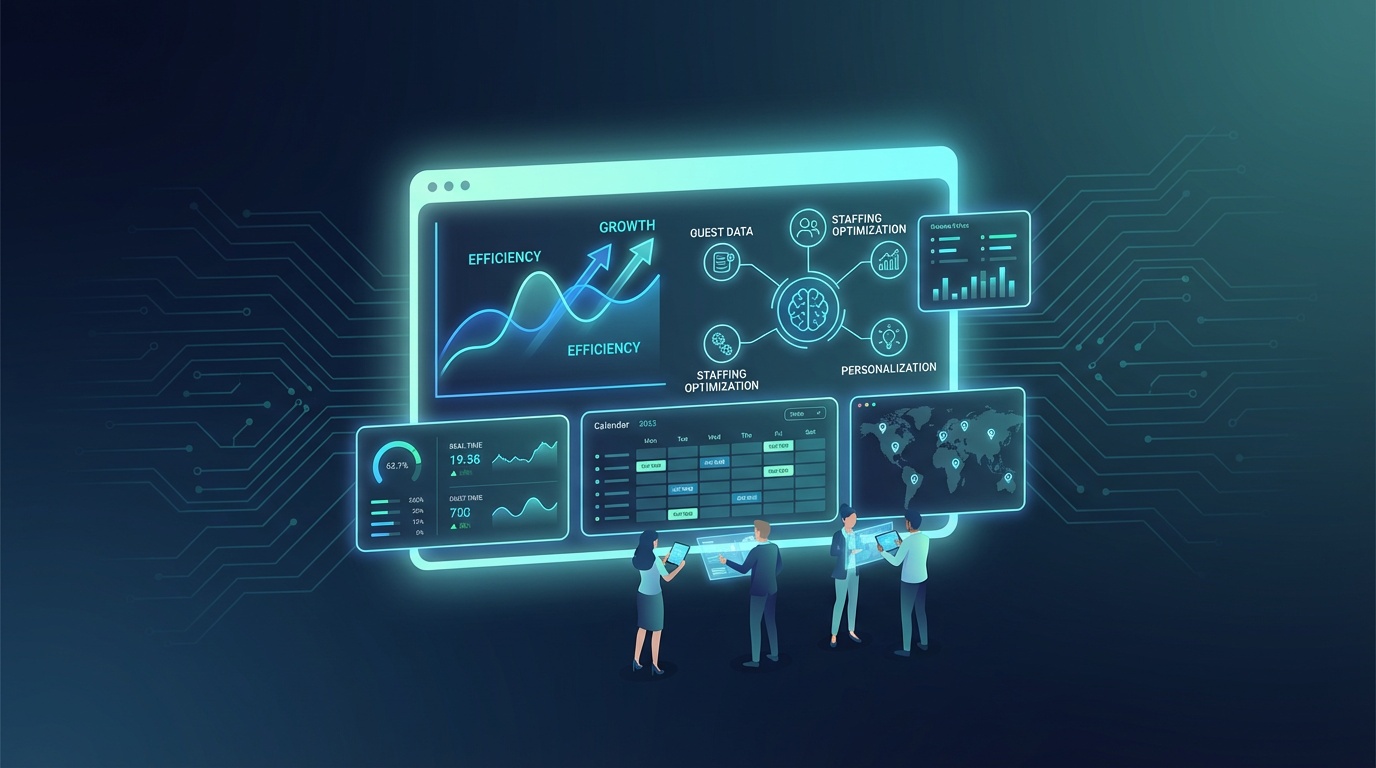
Salesforce integrates AI agents into its CRM platform, analyzing guest data across multiple touchpoints. The system tracks preferences, order history, and feedback to personalize communications and predict staffing needs based on historical patterns.
Best for: Multi-location restaurant groups with existing Salesforce infrastructure seeking unified guest data management.
Pros
- Guest lifetime value tracking across all locations
- Predictive analytics for labor scheduling optimization
- Cross-location data consolidation for chain operations
Cons
- Requires significant CRM implementation investment
- Complex configuration demands dedicated IT resources
- Pricing scales rapidly with data volume and user count
Features That Actually Move Revenue Metrics
Voice AI vs. Chat Agents: Match the Channel to Your Guest Base
Voice agents handle phone reservations and inquiries without human intervention, processing natural language to confirm bookings and answer menu questions. Chat agents operate through messaging apps and websites, managing text-based communication when guests prefer asynchronous interaction.
Here’s what we’ve observed: restaurants serving older demographics or handling 50+ calls daily benefit most from voice AI. Fast-casual concepts with guests under 40 see stronger adoption through chat interfaces. Don’t pick one or the other. The optimal approach combines both, routing guests to their preferred communication method while maintaining consistent service quality.
POS and Reservation System Integrations That Actually Work
Direct integration with point-of-sale systems gives AI agents access to real-time menu availability, pricing, and special requests without manual data entry. Connection to reservation platforms like OpenTable or Resy synchronizes booking data instantly, preventing double bookings and maintaining accurate table management.
These integrations eliminate the need for staff to switch between multiple systems during peak hours. Result? Fewer order errors and faster table turnover. Top platforms connect through standard APIs, minimizing custom development requirements.
Real-Time Analytics for Waitlist and Inventory Control
AI platforms track waitlist metrics–average wait times, party sizes, no-show rates–to optimize table assignments. Inventory monitoring alerts managers when popular items approach depletion, enabling proactive menu adjustments before disappointing guests.
Analytics dashboards surface patterns in guest behavior. Which upsell prompts generate the highest acceptance rates? Which time slots experience the most cancellations? This data informs staffing decisions and marketing campaigns to maximize revenue per available seat hour.
Use Cases Generating Measurable Returns
Automated Reservations That Cut No-Shows
AI agents send automated confirmation messages via SMS and email, then follow up with reminders 24 hours before the reservation. Guests can confirm, modify, or cancel through simple text responses without calling the restaurant. This recovered $12,000 in lost revenue monthly for one mid-sized establishment we work with–that’s 40 no-shows prevented per month at $300 average party spend.
Contextual Upselling That Guests Actually Accept
When guests call to book, voice agents suggest add-ons based on party size and occasion. Anniversary dinners? Wine pairings. Large groups? Appetizer platters. Chat agents embed dessert promotions in order confirmation messages with one-click acceptance that flows directly to the kitchen.
These contextual recommendations convert at 3-4x higher rates than generic promotions because they align with guest intent. Restaurants implementing AI-driven upselling report 18-25% average check increases without additional labor costs.
Freeing Staff During Peak Hours
AI agents handle routine inquiries about hours, parking, and dietary accommodations. This frees hosts to focus on greeting arriving guests and managing table flow. During Friday and Saturday dinner rushes, automation prevents phone lines from going unanswered while maintaining service quality for in-person diners.
Operational Impact: Restaurants using AI agents report 15-20 hour weekly reductions in front-of-house administrative tasks, allowing staff reallocation to revenue-generating activities like tableside service and relationship building.
ROI and Implementation Reality Check
What to Actually Expect: Revenue Per Guest and Time Savings
Restaurants implementing AI agents for guest experiences see 18-25% increases in revenue per guest through automated upselling and reduced no-shows. Front-of-house staff reclaim 15-20 hours weekly from phone management, reallocating that time to table service and relationship building.
No-show reduction alone generates $8,000-$15,000 monthly recovered revenue for mid-market establishments, while automated reservation confirmations eliminate the labor cost of manual follow-up calls. These gains compound over time as AI agents learn guest preferences and refine recommendation accuracy.
Setup Process with Your Existing Systems
Implementation begins with API connections to your reservation platform and POS system–typically completed within 2-4 weeks. Platforms like Hostie AI and Slang AI provide pre-built integrations for major systems including Toast, Square, and OpenTable, minimizing custom development.
Next, configure conversation flows based on your menu structure, peak hours, and common guest inquiries. Most platforms offer templates for reservation confirmations, waitlist management, and dietary accommodations that require minimal customization. Final testing involves parallel operation with existing processes before full transition.
Getting Buy-In from Your Team
Position AI agents as tools that eliminate tedious tasks rather than replacements for human interaction. Train front-of-house teams to manage exceptions the AI escalates–complex special requests, VIP guest handling–reinforcing their expertise in high-value interactions.
Start with a single use case like reservation confirmations before expanding to upselling and feedback collection. This phased approach builds staff confidence and demonstrates measurable wins that reduce skepticism. Be transparent about how automation creates capacity for better service, not job cuts.
| Platform | Setup Timeframe | Primary Integration | ROI Realization Period |
|---|---|---|---|
| Dineo | 2-3 weeks | Phone systems, SMS | 30-45 days |
| Hostie AI | 3-4 weeks | POS, reservation platforms | 45-60 days |
| Slang AI | 2-4 weeks | Phone, messaging apps | 30-60 days |
| Voiceflow | 4-6 weeks | Multi-channel custom builds | 60-90 days |
| Vynta AI | 2-3 weeks | Full guest journey systems | 30-45 days |
Why Vynta AI Works for Mid-Market Restaurants
Built Specifically for Hospitality–Not Retrofitted
Unlike generic chatbot platforms, Vynta AI delivers agents built specifically for luxury hospitality venues. The platform automates the complete guest journey–initial inquiry through post-visit feedback collection. Hospitality workflows including reservation management, dietary accommodation handling, and occasion-based upselling come pre-configured.
The platform integrates in real time with CRMs like SevenRooms, synchronizing guest data, reservations, tags, and updates automatically without requiring dedicated IT resources. Vynta supports multilingual capabilities and channel-specific personalization, tailoring responses appropriately across WhatsApp, SMS, Instagram, and email. This turnkey approach makes enterprise-grade AI accessible to mid-market restaurants that lack internal technical teams.
Cross-Industry Expertise Applied to Guest Experience
Vynta AI’s experience spans hospitality, real estate, recruitment, and fundraising, bringing cross-industry best practices to guest experience automation. This vertical expertise translates to faster implementation, more accurate conversation flows, and measurable outcomes including 60% reduction in abandoned inquiries and up to 25% increases in average guest spend through brand-safe upselling.
The analytics dashboard surfaces actionable insights specific to restaurant operations–optimal upsell timing, high-conversion menu pairings, staffing efficiency metrics. These business intelligence capabilities extend beyond basic automation to drive strategic decision-making. Vynta AI agents respond instantly to inquiries and mimic human-like response timing with natural pauses and delays.
Scale Revenue Without Scaling Headcount
Vynta AI positions itself as a strategic partner focused on sustained revenue expansion rather than a technology vendor selling software licenses. The platform scales with your operation, handling increased reservation volume and expanded service offerings without proportional labor cost increases. Operational costs drop by 30% using Vynta AI Agents, while VIP guests always receive human care via escalation.
This approach aligns AI capabilities with human expertise, automating routine interactions while preserving the personal touch that defines hospitality excellence. You set strict escalation rules for VIPs or complex queries to be routed to human staff, and can manually view, pause, and take over live conversations through a dashboard. As your restaurant grows, Vynta’s agents adapt to new menu items, seasonal promotions, and evolving guest preferences. Vynta operates only during hours you set and signs NDAs while complying with strict data privacy protocols to protect brand and guest data.
Strategic Advantage: Vynta AI combines hospitality-specific automation with cross-vertical expertise, delivering measurable guest satisfaction gains and revenue growth without the complexity of enterprise platforms or the limitations of generic chatbots.
Frequently Asked Questions
What challenges do AI agent platforms solve for restaurants?
AI agent platforms address rising labor costs, persistent no-shows, and guest expectations for personalized service. They automate tasks like reservations and upselling, allowing staff to focus on hospitality that drives revenue. This automation improves operational efficiency and guest satisfaction.
How does Vynta AI assist restaurants in improving guest experiences?
Vynta AI provides bespoke AI agents specifically for luxury hospitality venues, integrating in real time with CRMs like SevenRooms. It handles peak-hour reservation surges, executes brand-safe upselling tailored to guest profiles, and reduces customer inquiry abandonment by 60%. This approach optimizes every guest touchpoint while maintaining a personal touch.
Can AI agents help reduce no-shows and manage reservations?
Absolutely, AI agents are very effective at managing reservations and preventing no-shows. Platforms like Dineo specialize in voice-first interactions for incoming calls and automated confirmation sequences. This significantly cuts down on no-shows and streamlines booking processes for high-volume restaurants.
How do AI agent platforms personalize guest interactions?
AI agents personalize interactions by using guest data from CRMs and reservation systems. They offer tailored recommendations for upselling, communicate across preferred channels like WhatsApp or SMS, and adapt to guest profiles. This ensures a consistent, personalized service from initial inquiry through post-visit feedback.
What is the difference between voice AI and chat agents for restaurant communication?
Voice AI agents handle phone reservations and inquiries using natural language, ideal for older demographics or high call volumes. Chat agents work through messaging apps and websites, managing text-based communication preferred by younger clientele. The optimal approach combines both channels to suit diverse guest preferences.
Do AI agent platforms integrate with existing restaurant systems like POS?
Yes, top AI agent platforms integrate directly with point-of-sale (POS) and reservation systems. This allows AI agents to access real-time menu availability, pricing, and booking data without manual data entry. Such integration prevents errors, accelerates table turnover, and frees staff to focus on guests.