

Top agentic systems for high-volume lead handling?
In today’s competitive business climate, managing a high volume of incoming leads efficiently is no longer a luxury. It’s a necessity for sustained growth. For organizations across real estate, recruitment, fundraising, and hospitality, the initial engagement with a potential client or customer is often the most critical step. However, traditional methods struggle to keep pace, leading to missed opportunities, slow response times, and a significant drain on valuable human resources. This is where the transformative power of agentic systems comes into play, offering a sophisticated approach to automate and optimize lead handling at scale. These intelligent systems move beyond basic automation to act with a degree of autonomy, making decisions and taking actions that drive tangible business outcomes.
Key Takeaways
- Agentic systems provide autonomous decision-making that goes beyond basic automation, enabling faster and more intelligent lead handling at scale.
- High-volume lead management in industries like real estate, recruitment, and hospitality demands a shift from manual processes to automated systems that minimize missed opportunities and slow response times.
- Organizations that adopt these systems can redirect human resources from repetitive lead handling tasks to higher-value strategic activities that drive growth.
- Effective agentic systems act on leads in real time, using data-driven actions to improve conversion rates and reduce the operational burden on sales and marketing teams.
The question isn’t just about adopting AI, but about implementing the right kind of AI. Agentic systems specifically designed to tackle challenges like high-volume lead qualification. These systems are engineered to understand context, perform complex tasks, and integrate seamlessly into existing workflows, ensuring that every promising lead receives prompt, personalized attention. As Operations Director at Vynta AI, I’ve seen firsthand how deploying these specialized agents can dramatically improve pipeline quality and sales velocity. Let’s explore what makes these systems so effective and how they are reshaping the approach to lead management.
What Agentic Systems Do for High-Volume Lead Handling
From Lead Intake to Qualified Pipeline: How Agentic Systems Work
Agentic systems represent a significant evolution from traditional automation tools. Unlike scripts that follow rigid, pre-defined paths, agentic systems are designed with a degree of autonomy and intelligence. They can understand unstructured data, adapt to new information, and execute multi-step processes that mimic human decision-making. For high-volume lead handling, this means an agent can receive an inquiry from any channel. Be it a website form, an email, a social media message, or a phone call. And immediately begin the qualification process without human intervention. They can analyze the lead’s intent, gather necessary information through conversational AI, and cross-reference details against existing customer data or external sources.
The core function is to transform raw inbound interest into a pre-qualified opportunity ready for a human sales representative. This involves not just gathering contact details but understanding the lead’s specific needs, budget, timeline, and urgency. An agentic system can then enrich the lead’s profile, identify potential matches with available products or services, and even schedule follow-up actions or initial meetings. This capability is particularly impactful in sectors like real estate, where timely engagement with property inquiries can mean the difference between a closed deal and a lost prospect. By automating these initial, often repetitive, yet critical steps, agentic systems ensure that only the most viable leads enter the sales pipeline, saving considerable time for sales teams.
Definition: Agentic systems in lead handling are AI-powered entities capable of autonomous task execution, contextual understanding, and adaptive decision-making. They process leads from initial contact through qualification, aiming to deliver high-intent prospects to sales teams efficiently and accurately.
Key Capabilities That Matter for Lead Handling at Scale
When evaluating agentic systems for high-volume lead handling, several key capabilities are paramount. Firstly, comprehensive multi-channel ingestion is essential. A system must be able to capture leads from diverse sources like website forms, email, SMS, social media, and voice calls, ensuring no opportunity slips through the cracks. Secondly, sophisticated natural language understanding (NLU) is critical for accurately interpreting lead inquiries, regardless of how they are phrased. This allows the AI to grasp intent, extract relevant details, and respond contextually.
Thirdly, intelligent qualification and scoring are indispensable. Agentic systems can be configured with specific criteria to evaluate lead quality, assigning scores based on factors like budget, timeline, pain points, and fit with service offerings. This ensures that human agents focus their efforts on leads with the highest probability of conversion. Furthermore, seamless integration with CRM and other sales tools is non-negotiable for maintaining data integrity and providing a unified view of the prospect. Finally, the ability to orchestrate follow-up actions, schedule appointments, and provide personalized communication at scale is what truly differentiates agentic systems. These capabilities collectively enable organizations to manage a significantly higher lead volume with greater accuracy and speed than traditional automation or manual processes alone.
Key Capabilities for Scalable Lead Handling
Benefits
- Multi-Channel Lead Capture: Ingests inquiries from website forms, email, SMS, social media, and voice.
- Advanced NLU: Accurately interprets diverse lead inquiries and intent.
- Intelligent Qualification & Scoring: Assesses lead quality based on configurable criteria.
- CRM & Tool Integration: Ensures data consistency and workflow continuity.
- Automated Follow-up & Scheduling: Orchestrates next steps, appointment setting, and personalized engagement.
- Personalized Communication: Delivers tailored messages based on lead profile and intent.
- Scalability: Handles significant increases in lead volume without proportional resource growth.
- Speed-to-Lead: Dramatically reduces response times, increasing contact rates.
Considerations
- Implementation Complexity: Requires careful configuration and integration.
- Data Quality Dependency: Performance relies on accurate input data.
- Need for Human Oversight: Complex or sensitive cases may require human agent intervention.
- Verification Gaps: Without specific focus, can pass through bot or junk leads if not designed for verification gating.
- Limited Phone Follow-up: Many systems struggle with true outbound voice engagement.
- Shadow Workflow Risks: Can automate misaligned processes if not carefully managed.
Top Agentic Platforms for Lead Handling: A Feature Comparison

How General Enterprise Platforms Perform on Lead-Handling Tasks
Many enterprise-grade AI platforms offer broad capabilities that can be adapted for lead handling. Solutions like Kore.ai and Moveworks, for instance, are designed for extensive automation across various business functions, including customer service, IT support, and HR. They excel at understanding natural language, integrating with enterprise systems, and automating repetitive tasks. When applied to lead management, these platforms can automate initial responses, route inquiries, and even manage basic data entry into CRM systems. Their strength lies in their flexibility and ability to integrate into complex IT environments, supporting a wide range of workflows.
However, these generalist platforms often require significant customization to perform specialized lead-handling functions effectively. While they can process an email or chat message, their ability to deeply understand nuanced sales qualification criteria, conduct complex verification steps, or orchestrate multi-touch follow-up sequences across different channels might be limited without extensive development. The focus is often on internal process automation or customer support, rather than the specific, high-velocity, revenue-generating demands of sales lead qualification. This can lead to a gap between what the platform can do out-of-the-box and what a sales team actually needs to convert prospects efficiently. The primary keyword here is identifying Top agentic systems for high-volume lead handling? requires looking beyond general capabilities to specialized features.
What the Leading Enterprise Platforms Get Wrong for Sales Teams
While powerful, many leading enterprise AI platforms, such as Moveworks or Kore.ai, often fall short when it comes to the specific demands of high-volume sales lead handling. A common oversight is the lack of sophisticated, integrated phone follow-up capabilities. While they can manage email and chat, the ability to initiate and conduct voice calls for immediate engagement. A critical factor that can dramatically increase contact rates by 60-90 seconds, as noted in industry research. Is frequently absent or poorly implemented. This is a significant drawback, as many high-intent leads stall in email threads and require a direct, human-like voice interaction to advance.
Another critical area where general platforms falter is in treating verification as a cleanup step rather than a gating mechanism. Many systems are designed to filter out junk *after* the fact, but with up to 40% of leads being bot or junk before verification, this approach is inefficient and costly. Specialized agentic systems understand the need to verify lead legitimacy early, acting as a gatekeeper to prevent unqualified contacts from cluttering the pipeline. Furthermore, the concept of “shadow workflows”. Where automated processes don’t align with actual team procedures. Is often unaddressed. Generic platforms may automate existing, inefficient processes faster, leading to faster failures. Platforms like Gumloop or CrewAI offer more focused approaches but may still lack the end-to-end orchestration and industry-specific intelligence required. For instance, Agentic Systems for Real Estate are built with deep domain understanding to avoid these pitfalls, focusing on outcomes like converting property inquiries into viewings and sales through instant engagement and intelligent qualification, rather than just general task automation.
| Capability | General Enterprise Platforms (e.g., Kore.ai, Moveworks) | Specialized Lead Agents (e.g., Vynta AI) | Focused Automation Tools (e.g., Gumloop, CrewAI) |
|---|---|---|---|
| Core Strength | Broad process automation, IT/HR/CS support, enterprise integration. | Revenue generation, sales pipeline acceleration, industry-specific lead conversion. | Task automation, workflow orchestration, developer-focused AI agents. |
| Lead Qualification Depth | Basic to moderate; requires significant customization for sales context. | Deep, context-aware, and industry-specific qualification criteria. | Varies; often requires custom scripting for sales nuances. |
| Phone Follow-up | Limited or non-existent; primarily text-based. | Integrated, human-like voice engagement capabilities. | Rarely a core feature, often requires external integration. |
| Verification as Gate | Typically focuses on cleanup, not proactive gating. | Designed to verify leads early, preventing junk from entering the pipeline. | May offer filtering, but not always as a primary gating strategy. |
| Shadow Workflow Mitigation | Low; can automate misaligned processes if not carefully managed. | High; designed to align with and optimize actual sales processes. | Moderate; depends heavily on user configuration. |
| Industry Specificity | Generic; requires adaptation for specific verticals. | High; built for specific verticals (e.g., Real Estate, Recruitment, Fundraising, Hospitality). | Low to moderate; generally vertical-agnostic. |
| Measurable Business Outcomes | Focus on efficiency, cost reduction, employee productivity. | Focus on revenue growth, conversion rates, pipeline expansion, ROI. | Focus on task completion, automation rates. |
Three Failure Points That Break Agentic Lead Pipelines (And How to Fix Them)
Implementing agentic systems for lead handling promises efficiency and scale, but the path is often fraught with common pitfalls. Without careful consideration and strategic design, these powerful tools can paradoxically accelerate failures rather than drive success. Understanding these critical breakdown points is the first step toward building a resilient and effective automated lead management process. We must move beyond the initial excitement of AI adoption to address the practical realities that determine real-world outcomes. Identifying and rectifying these issues ensures that your investment in agentic technology delivers the measurable business results Vynta AI is committed to.
Shadow Workflows: The Hidden Process Alignment Problem
One of the most insidious problems in agentic lead handling is the emergence of “shadow workflows.” These are automated processes that execute tasks precisely as programmed, but do not align with the actual, effective, or preferred methods your human sales team uses. Agentic systems are designed to follow instructions, and if those instructions are based on outdated, inefficient, or misinterpreted internal processes, the AI will simply automate those flawed procedures at high speed. This leads to faster failures, wasted resources, and a growing disconnect between automated actions and desired outcomes. For instance, an agent might be programmed to disqualify leads based on a criterion that sales reps have long since abandoned or never truly used in practice. This misalignment means the system is not augmenting your team but rather creating a parallel, broken process.
Addressing shadow workflows requires deep visibility into actual sales operations and consistent communication between AI implementation teams and frontline staff. It’s not enough to simply document existing processes; one must observe, analyze, and confirm how tasks are *actually* performed. Regular audits of the agent’s decision-making and actions are essential. When deploying solutions like Agentic Systems for Real Estate, Vynta AI prioritizes understanding our clients’ nuanced operational realities. We work to map these genuine workflows, ensuring the AI agent operates in lockstep with your team, automating best practices rather than perpetuating inefficiencies. This requires a commitment to continuous refinement and a feedback loop that informs the AI’s ongoing learning and adaptation, preventing the creation of detrimental shadow processes.
Tip: Regularly review your agent’s decision logs and compare them against actual human sales team actions. Use this data to refine AI logic and update process documentation, ensuring alignment and preventing the automation of inefficient “shadow workflows.”
Junk Leads and the Case for Verification as a Gate (Not Cleanup)
A staggering reality in high-volume lead generation is the prevalence of unqualified or outright fake leads. Customer research indicates that up to 40% of incoming leads can be bot-generated, spam, or from individuals with no genuine intent to purchase. Many agentic systems are designed with a “cleanup” mentality, attempting to filter out junk leads after they’ve already entered the pipeline. This approach is fundamentally flawed. It means your sales team, or even a less sophisticated AI, has already spent time and resources engaging with contacts who will never convert. This significantly dilutes productivity and skews performance metrics.
The more strategic and effective approach is to treat verification as a critical gating mechanism, not a post-processing cleanup task. An intelligent agent should be designed to verify lead legitimacy early in the process. This involves checking email validity, confirming phone numbers, or even posing qualifying questions that bots struggle to answer authentically. By implementing verification as a gate, you ensure that only genuinely qualified and validated leads proceed to your sales team. This drastically reduces the volume of wasted effort and allows your human resources to focus exclusively on prospects with a high probability of conversion. For organizations in sectors like real estate, where each lead represents a significant potential transaction, this distinction is paramount. Systems that prioritize verification upfront, such as those found in specialized offerings, are far more effective at building a clean, actionable pipeline.
The Phone Follow-Up Gap: Why Email Threads Stall High-Intent Leads
In the quest for automated lead handling, many systems excel at managing digital channels like email and chat but falter when it comes to direct voice engagement. This creates a significant “phone follow-up gap.” High-intent leads, especially those with complex needs or significant purchase decisions, often stall in email threads. They may not respond quickly to digital messages or may require a more personal, immediate interaction to move forward. Research consistently shows that reducing speed-to-lead for phone follow-up to under 60-90 seconds dramatically increases contact rates and conversion potential. Relying solely on email and chat automation means missing out on these critical opportunities to connect with motivated prospects.
A truly effective agentic system for high-volume lead handling must orchestrate multi-channel engagement, including proactive voice outreach. This doesn’t necessarily mean a human agent has to make every call; advanced AI can be programmed to initiate calls, conduct initial parts of a conversation, or schedule callbacks for human agents at optimal times. The key is to break through the clutter of digital communication and engage leads through the channel most likely to elicit a response from high-value prospects. This requires sophisticated AI capable of managing phone interactions or seamlessly handing off to human agents with full context. For example, when evaluating Agentic Systems for Real Estate, look for their capability to not just manage digital inquiries but also to facilitate timely, direct follow-up that maximizes conversion potential. The ability to bridge this phone follow-up gap is a non-negotiable for systems aiming to deliver top agentic systems for high-volume lead handling?
FAQ: What is the impact of a phone follow-up gap on lead conversion?
Answer: Relying solely on digital channels means missing opportunities with high-intent leads who respond better to voice communication. This gap can lead to significantly lower contact rates and lost deals, as prospects may disengage before a human agent can connect.
A Decision Framework for Choosing Your Agentic Lead System
Selecting the right agentic system for high-volume lead handling is a strategic decision that requires careful evaluation. It’s not simply about adopting the latest AI technology, but about finding a solution that genuinely aligns with your organization’s specific operational needs, sales processes, and growth objectives. A structured approach ensures you invest in a system that delivers measurable business outcomes and avoids common pitfalls. This framework guides you through the essential steps to assess your requirements and identify the agentic solution best positioned to accelerate your lead qualification and conversion cycles.
Step 1: Assess Your Lead Volume and Process Maturity
The first step in choosing an agentic system is to gain a clear understanding of your current lead generation environment. Quantify your average daily, weekly, and monthly lead volume across all channels. Identify peak periods and anticipate future growth. Simultaneously, evaluate your existing lead management processes. Are they well-documented, consistently followed, and optimized for efficiency? Or are there inefficiencies, bottlenecks, or dependencies on manual tasks? Understanding your lead volume helps determine the required scalability of an agentic system, while assessing process maturity reveals where automation can have the most immediate impact and where foundational improvements might be needed before AI deployment. This foundational insight is critical for identifying Top agentic systems for high-volume lead handling? that fit your operational scale.
Step 2: Map Your Verification and Follow-Up Workflow
Next, meticulously map out your current lead verification and follow-up procedures. How are leads currently qualified? What criteria are used? How is lead legitimacy verified, and at what stage? Equally important, detail your follow-up sequences. What channels are used (email, phone, SMS)? What are the typical response times? Are there specific cadence strategies? Pay close attention to where high-intent leads tend to stall. For instance, if many promising leads disengage in email threads, you need a system that can bridge this gap with effective phone follow-up. Recognizing that up to 40% of leads can be bot or junk before verification, a system that treats verification as a gate rather than a cleanup task will be significantly more efficient. This detailed mapping highlights non-negotiable features for your chosen AI solution.
Step 3: Evaluate Platforms Against Lead-Specific Criteria
With your requirements clearly defined, you can now evaluate potential agentic systems. Look beyond generic automation capabilities and focus on features directly impacting lead handling. Key criteria include: true multi-channel communication support (including voice), sophisticated natural language understanding for accurate intent detection, robust CRM integration for seamless data flow, and intelligent qualification logic that aligns with your sales process. Crucially, assess the system’s ability to perform proactive verification as a primary gate, not just a post-processing cleanup. Systems designed for specific industries, like Agentic Systems for Real Estate, often demonstrate a deeper understanding of these nuances. Consider how well the platform orchestrates multi-channel follow-up and its capacity to reduce speed-to-lead, especially through phone engagement, which is often a differentiator for high-value prospects.
Step 4: Run a Pilot Targeting Your Highest-Volume Channel
Before committing to a full-scale deployment, conduct a pilot program. Select your highest-volume lead channel (e.g., website inquiries, a specific ad campaign) and implement the agentic system for that segment. This allows you to test the system’s performance in a real-world scenario with controlled variables. Measure key metrics such as lead qualification accuracy, response time, contact rates, and the percentage of verified, high-intent leads passed to your sales team. Gather feedback from your sales representatives on the quality of leads and the system’s interaction. This pilot phase is invaluable for identifying any remaining process alignment issues or areas where the agent’s configuration can be further optimized, ensuring you are on the path to selecting truly effective Top agentic systems for high-volume lead handling?.
Projected growth: _______%
Auto-scaling features: [Yes/No]
Target speed-to-lead: < 60 sec
Phone outreach capability: [Yes/No]
Required data sync: [List]
API availability: [Yes/No]
Critical follow-up steps: [List]
Shadow workflow mitigation: [Yes/No]
What a Properly Configured Agentic System Looks Like in Action
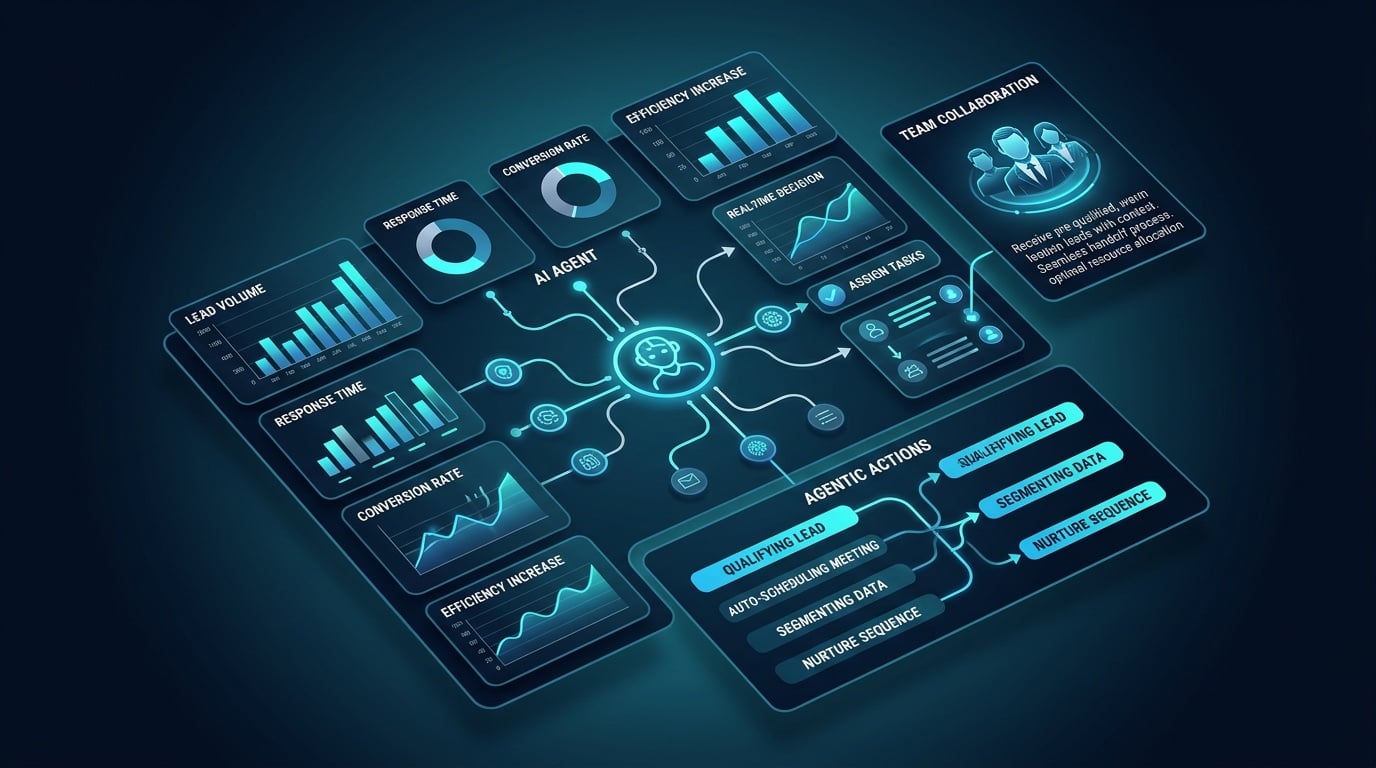
The true value of agentic systems for high-volume lead handling is best understood through concrete examples that illustrate their transformative impact. Moving beyond theoretical benefits, a well-implemented system demonstrably reshapes operational efficiency and revenue generation. It’s about transforming the initial engagement process from a resource drain into a predictable, high-performance engine for pipeline growth. When configured correctly, these systems don’t just automate tasks; they fundamentally optimize how your business connects with potential customers, leading to tangible, measurable improvements across the board.
Before: Manual Lead Qualification with 40% Junk Rate
Consider a mid-market real estate agency previously relying on manual processes for lead qualification. Inquiries from their website, online portals, and advertisements were routed to a small team of agents. This team spent considerable time sifting through emails and forms, often encountering a high volume of bot-generated or irrelevant inquiries. Research shows up to 40% can be junk before verification. This manual effort meant that genuine leads received delayed responses, often outside the critical first few minutes. The team struggled to keep pace during peak periods, leading to frustration, missed opportunities, and a significant portion of their valuable time being spent on unqualified contacts rather than engaging with serious buyers or sellers. The result was a lower conversion rate and increased cost per acquired client.
After: Automated Verification and Multi-Channel Follow-Up
By implementing an agentic system, this same real estate agency transformed its lead handling. The system now instantly captures inquiries from all digital channels. It immediately initiates a verification process, acting as a gatekeeper to filter out bot traffic and unqualified contacts before they reach human agents. For verified leads, the agent orchestrates personalized, multi-channel follow-up. This includes immediate AI-driven conversational responses, automated SMS confirmations, and crucially, initiating timed phone outreach or scheduling callbacks for sales agents within minutes of the initial inquiry. This ensures that high-intent leads receive prompt, human-like engagement across their preferred channels, dramatically improving the speed-to-lead metric. The system’s ability to manage these complex, multi-step interactions autonomously frees up sales agents to focus solely on high-quality prospects.
Metrics: With an optimized agentic system, response time to inquiries is reduced to under 60 seconds. This leads to a qualified pipeline increase of up to 3x and a conversion rate improvement to 85% for engaged leads.
Measurable Outcomes: 3x Lead Conversion and 60% Time Savings
The impact of this transition is profound and quantifiable. The agency experienced a 3x increase in their qualified lead pipeline, meaning three times more genuine prospects moved forward in the sales process. Agent productivity was maximized, with the AI automating approximately 80% of initial lead handling tasks, saving the sales team over 20 hours per week. This reclaimed time allowed agents to conduct more personalized follow-ups and property viewings, directly contributing to over 30% more deals closed. Furthermore, the enhanced client experience, driven by rapid and relevant engagement, improved client satisfaction metrics. For organizations looking for Top agentic systems for high-volume lead handling?, this case illustrates that the focus must be on such direct, outcome-oriented results.
Quantifiable Gains with Agentic Lead Systems
- Pipeline Growth: Up to 3x increase in qualified leads.
- Agent Productivity: Over 20 hours saved per week per agent.
- Deal Closure: More than 30% increase in closed deals.
- Response Time: Under 60 seconds for initial inquiry engagement.
- Conversion Rate: Up to 85% conversion for engaged, verified leads.
- Junk Lead Reduction: Significant decrease in wasted effort due to early verification gating.
References
Frequently Asked Questions
What are the top agentic systems for high-volume lead handling?
Top agentic systems for high-volume lead handling are AI-powered platforms that autonomously qualify, score, and route leads from multiple channels. These systems use natural language understanding and CRM integration to process inquiries instantly, ensuring sales teams focus only on high-intent prospects. Examples include specialized agents built for real estate, recruitment, and hospitality sectors.
Which AI is best for lead generation?
The best AI for lead generation is an agentic system that combines multi-channel capture, intelligent qualification, and automated follow-up. These systems go beyond basic chatbots by understanding context, enriching lead profiles, and scheduling meetings without human intervention. For high-volume environments, look for platforms with strong NLU and CRM integration to maximize conversion rates.
What are the key capabilities of agentic systems for lead handling?
Key capabilities of agentic systems for lead handling include multi-channel lead capture from web forms, email, SMS, and social media, plus advanced natural language understanding to interpret intent. They also offer intelligent qualification and scoring based on budget and timeline, seamless CRM integration, and automated scheduling of follow-up actions. These features enable scalable, personalized engagement at high volume.
How do agentic systems improve lead qualification?
Agentic systems improve lead qualification by analyzing unstructured data from initial inquiries to assess intent, budget, and urgency. They use configurable scoring criteria to rank leads and enrich profiles with external data, then route only the most promising prospects to sales teams. This automation reduces manual effort and ensures consistent, objective evaluation of every lead.
What are the benefits of using agentic systems for lead management?
Benefits of using agentic systems for lead management include dramatically faster response times, higher contact rates, and the ability to handle large volumes without proportional resource growth. They also improve pipeline quality by filtering out low-intent leads and providing personalized engagement at scale. This leads to increased sales velocity and better use of human agent time.
What should you consider when implementing agentic systems for lead handling?
When implementing agentic systems for lead handling, consider the complexity of configuration and integration with existing CRM and sales tools. Data quality is critical because system performance depends on accurate input. Also plan for human oversight on complex or sensitive cases, as agentic systems are designed to assist agents, not replace them entirely.