
software for data integration
Understanding Software for Data Integration: More Than Just Connecting Systems
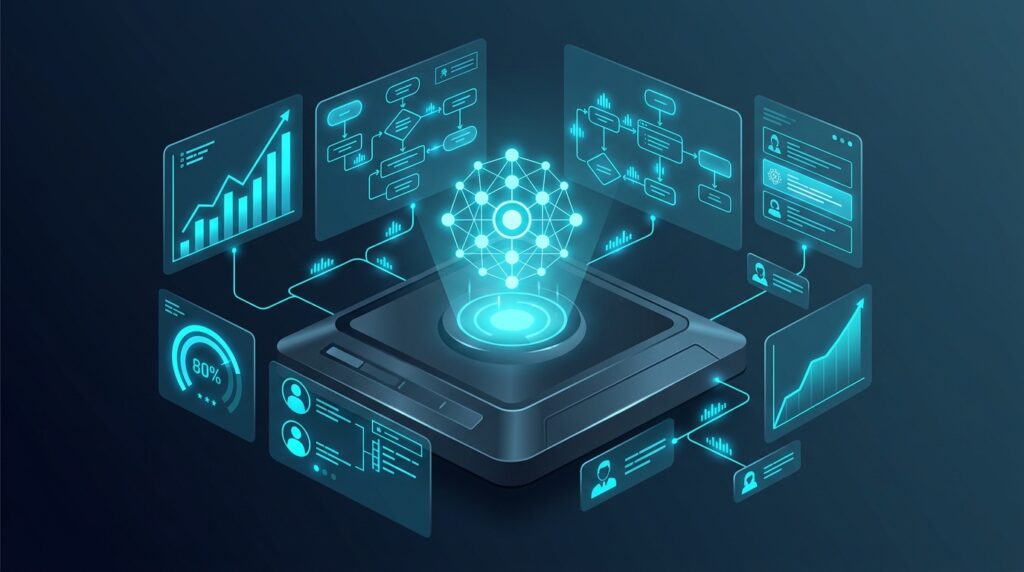
Software for data integration unifies disconnected business systems into a single, actionable data flow. It eliminates manual data transfers, reduces errors, and gives decision-makers a complete operational picture rather than fragmented snapshots from isolated tools.
What is Data Integration, Really?
Data integration is the process of combining data from multiple sources into a unified, consistent view that supports business operations and decision-making. It’s not simply connecting two applications with a basic sync. True integration transforms, validates, and routes data so every system speaks the same language at the right moment.
Why Data Integration Is the Unsung Hero of Business Growth
Most mid-market SMEs underestimate how much revenue leaks through disconnected systems. A recruitment firm losing candidate data between its ATS and CRM, or a boutique hotel whose reservation platform never updates its marketing list, both suffer the same root problem: data that exists but can’t be used. Fixing that connection directly improves conversion rates, placement speed, and guest retention.
How Integration Fuels Smarter Decisions
Integrated data transforms reactive management into proactive strategy. When a hospitality manager sees reservation trends, guest preferences, and upsell history in one view, every staffing and pricing decision sharpens. The same applies across real estate, recruitment, and fundraising: unified data surfaces the signals that isolated systems bury.
Think of it like a hospital switching from paper charts to a shared electronic record. The patient hasn’t changed. The information hasn’t changed. But suddenly every clinician is working from the same picture, and care quality jumps. That’s exactly what integration does for your business data.
The Essential Features of Effective Data Integration Software
Connecting Diverse Data Sources: From CRMs to Operational Tools
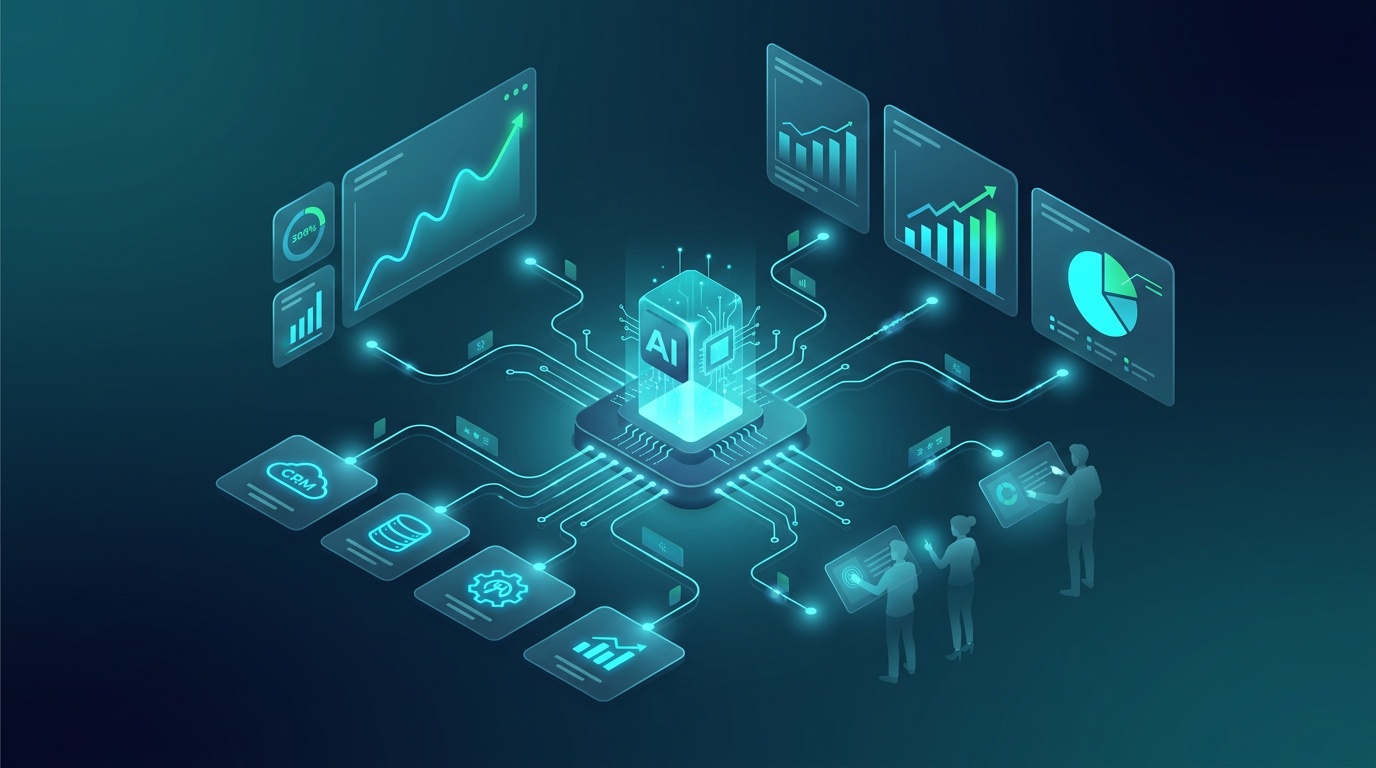
Effective software for data integration must connect natively with the tools your teams already use: CRMs, marketing automation platforms, ATS systems, reservation engines, and financial software. Pre-built connectors cut implementation time significantly. More importantly, they keep data flowing without custom engineering that breaks every time a source system updates its API.
Data Transformation and Cleansing: Ensuring Accuracy and Reliability
Raw data pulled from multiple sources is rarely consistent. Field names differ, date formats conflict, and duplicate records multiply. Quality integration software transforms data in transit–standardizing formats and flagging anomalies before they corrupt downstream reports. Clean data is the foundation on which every business decision rests. Garbage in, garbage out isn’t a cliché; it’s a revenue problem.
Real-Time vs. Batch Processing: Choosing the Right Speed for Your Needs
Real-Time Processing
- Immediate data availability across systems
- Faster response to leads, guests, and candidates
- Supports live dashboards and dynamic pricing
Batch Processing
- Lower infrastructure cost for non-urgent workflows
- Better suited to large historical data transfers
- Simpler to manage for smaller operations
Neither approach is universally superior. A hospitality business managing live reservations needs real-time sync. A fundraising organization reconciling monthly donor records may find batch processing more cost-effective. The right platform supports both modes so your architecture matches your operational tempo.
Scalability and Performance: Growing with Your Business
Mid-market SMEs frequently outgrow their initial integration setup. A solution handling 10,000 records today must process 500,000 tomorrow without requiring a full rebuild. Prioritize platforms with elastic capacity, clear performance benchmarks, and pricing models that scale proportionally–not ones that penalize growth with steep tier jumps.
Security and Compliance: Protecting Sensitive Business Information
Data moving between systems is data at risk. Strong integration software encrypts data in transit and at rest, enforces role-based access controls, and maintains audit logs that satisfy GDPR, CCPA, and industry-specific compliance requirements. For recruitment firms handling candidate personal data or fundraising organizations managing investor financials, these protections aren’t optional features. They’re non-negotiable operational requirements.
Industry-Specific Data Integration: Solving Real-World Business Challenges
Real Estate: Unifying Lead Data, Property Listings, and CRM for Faster Closings
A real estate agency managing leads across portal feeds, email campaigns, and walk-in inquiries loses deals when those sources never talk to each other. Software for data integration consolidates every lead touchpoint into the CRM automatically, attaches property interest history, and triggers follow-up sequences without manual entry. Agents spend time closing, not copying data between spreadsheets.
When listing data updates in real time across marketing platforms and client-facing portals simultaneously, price changes and availability reach buyers before competitors can act. That speed directly shortens the sales cycle.
Explore how Agentic Systems for Real Estate streamline operations with integrated data solutions designed for faster closings.
Recruitment: Bridging ATS, Candidate Databases, and HR Systems for Smarter Hiring
Recruitment firms operate across multiple data environments: job boards feed the ATS, the ATS feeds the CRM, and the CRM should inform outreach sequencing. When these systems remain disconnected, recruiters manually reconcile candidate status, miss follow-up windows, and present duplicate submissions to clients. Integrated data eliminates that friction–giving consultants a single candidate record that reflects every interaction across every platform.
Discover how Agentic Systems for Recruitment strengthen candidate management through connected data flows.
Fundraising: Connecting Donor Management, Outreach Tools, and Financial Systems for Capital Growth
Capital-raising organizations manage relationships across donor databases, email platforms, meeting schedulers, and financial reporting tools. When those systems share no common data layer, outreach becomes generic and follow-up inconsistent. The AI-Powered Fundraising Platform addresses this directly by unifying donor engagement history, communication cadences, and pipeline status into one actionable view–enabling teams to prioritize high-intent prospects based on behavioral signals rather than guesswork.
Hospitality: Integrating Reservation Systems, Guest Profiles, and Marketing Platforms for Superior Experiences
Consider Maria’s boutique hotel. She collects guest data at every touchpoint: booking preferences, dining requests, past stay history, post-visit survey responses. Without integration, that data lives in four separate systems and informs none of them. When reservation data, guest profiles, and marketing automation share a unified data layer, the front desk greets returning guests with relevant preferences already loaded, and marketing sends personalized offers based on actual behavior rather than broad demographic assumptions.
Upsell conversion rates improve measurably when offers reflect what individual guests have previously accepted. Integration makes that personalization operationally feasible at scale–without adding headcount.
Learn how Vynta AI Agents for Hospitality unify data sources and improve the guest experience end to end.
Beyond Basic Connectors: What Top-Tier Data Integration Delivers
AI-Powered Data Quality and Anomaly Detection: Proactive Problem Solving
Basic integration tools move data. Advanced platforms analyze it in motion. AI-powered quality layers detect anomalies automatically: a donor record with an implausible transaction amount, a candidate profile with conflicting employment dates, a reservation entry that contradicts room availability. Catching these errors before they reach reporting preserves decision quality without requiring manual audits at every step.
Automated Workflow Orchestration: From Data Ingestion to Business Action
Top-tier software for data integration doesn’t stop at synchronizing records. It triggers downstream workflows based on data conditions. A new high-value lead entering the CRM automatically initiates a qualification sequence. A guest checking out with a high satisfaction score enters a loyalty re-engagement campaign. These automations convert data movement into business action–no human intervention required at each handoff.
Predictive Insights from Integrated Data: Anticipating What Comes Next
When data from multiple operational systems accumulates over time in a unified structure, pattern recognition becomes possible. Hospitality managers can forecast occupancy dips three weeks ahead based on booking velocity trends. Recruitment directors can identify candidate drop-off patterns tied to specific job categories. Integrated historical data transforms operational reporting into forward-looking intelligence that actually changes what you do on Monday morning.
The Human-AI Collaboration Advantage: Augmenting Your Team’s Data Capability
The most effective integration implementations don’t automate human judgment. They remove the data friction that prevents humans from exercising judgment quickly. When a fundraising director can see complete donor engagement history in seconds rather than pulling reports from three systems, the quality of every conversation improves. AI handles the data assembly; humans apply the strategic thinking that closes relationships and drives revenue. That’s the division of labor that actually works.
Choosing the Right Data Integration Software for Your Mid-Market SME
Assessing Your Current Data Environment and Integration Needs
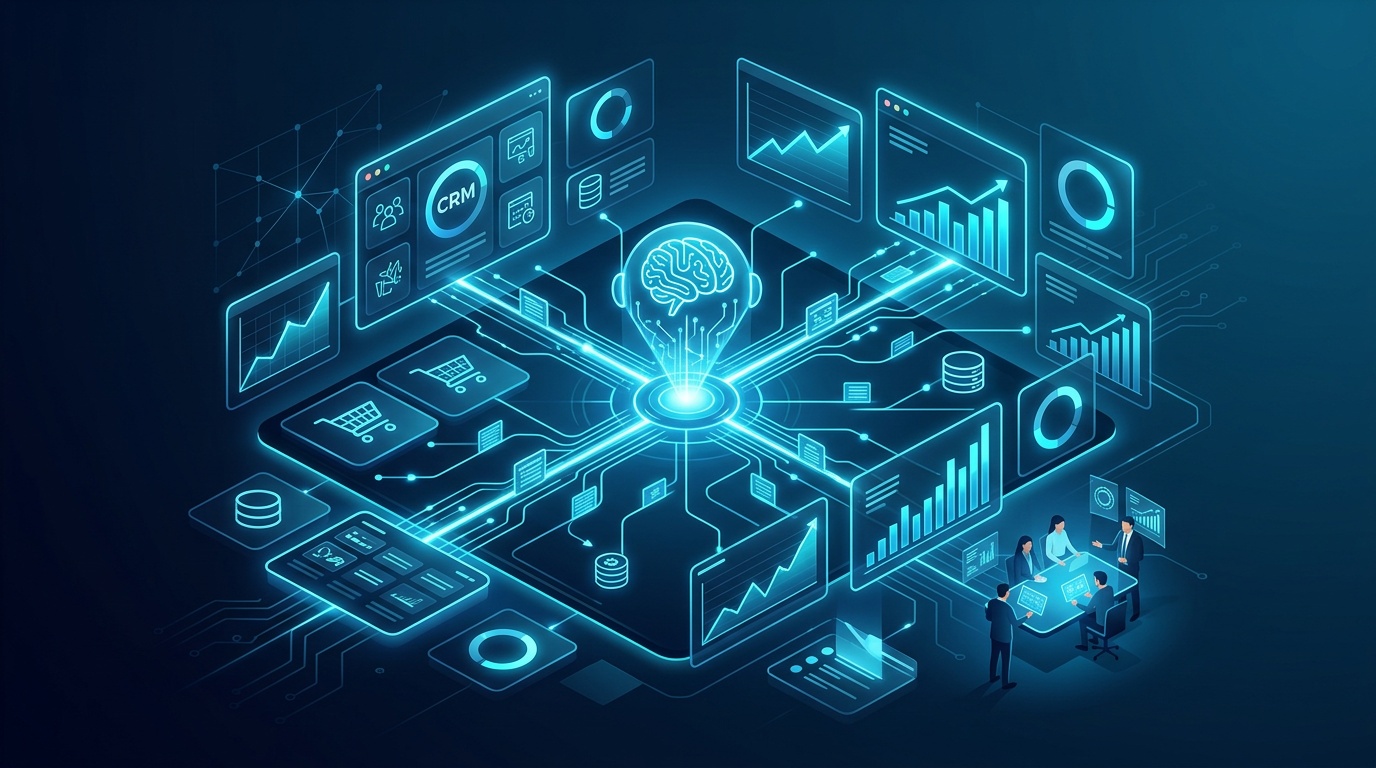
Start by mapping every system that holds business-critical data: your CRM, marketing tools, operational platforms, and financial software. Identify where data currently moves manually, where reporting requires pulling from multiple sources, and where decisions are delayed because information isn’t available in real time. That map defines your integration priority list before you evaluate a single vendor.
Build vs. Buy: Understanding the Real Cost of Each Path
Custom-built integrations look cheaper initially. They get expensive fast when source systems update and custom connectors break, demanding developer time for repairs. Dedicated software for data integration includes connector maintenance, compliance updates, and platform support within the subscription cost. For mid-market SMEs without internal engineering resources, the total cost of ownership consistently favors purpose-built solutions. I’ve watched businesses spend three times their integration budget patching brittle custom code that a commercial platform would have maintained automatically.
Key Questions to Ask Potential Vendors
Ask vendors which specific connectors ship pre-built for your industry systems. Ask how data quality errors are surfaced and resolved. Ask what the average implementation timeline looks like for a business your size, and request references from companies in your vertical. Vendors with genuine industry depth answer these questions with specifics. Those without depth answer with marketing copy. The difference is obvious within five minutes.
Implementation Considerations: Partnering for Success
Implementation quality determines whether integration delivers its promised value. A vendor who treats deployment as a transaction hands over documentation and exits. A strategic partner maps your workflows, configures transformation rules to match your data standards, and stays accountable for outcomes after go-live. For mid-market SMEs, that ongoing relationship is often the difference between a tool that transforms operations and one that sits underutilized at 20% of its capability.
Consider engaging AI Automation Services to ensure a smooth integration implementation that yields lasting results.
Your Data Integration Action Plan
Software for data integration isn’t a technical luxury. For mid-market SMEs in real estate, recruitment, fundraising, and hospitality, it’s the operational foundation on which competitive advantage is built. Disconnected systems cost revenue quietly and consistently. Unified data reverses that pattern.
Start With Your Highest-Cost Disconnection
Every business has one integration gap that costs more than all others combined. For a recruitment firm, it may be the manual reconciliation between the ATS and the CRM. For a boutique hotel, it may be reservation data that never reaches the marketing platform. Identify that single gap, quantify the time and revenue it consumes each week, and let that number drive your investment decision. The ROI case becomes self-evident when the cost of inaction is made concrete.
Where Data Integration Is Heading
The next evolution moves beyond synchronization toward autonomous data operations. AI layers won’t just detect anomalies–they’ll flag them for rapid resolution before downstream systems are affected. Workflow orchestration will become predictive, initiating sequences based on behavioral signals before a human would recognize the trigger. For fundraising organizations already using the AI-Powered Fundraising Platform, this means donor outreach will grow progressively more precise as integrated behavioral data accumulates over time.
Mid-market SMEs that build strong integration architecture now position themselves to adopt these advances without rebuilding from scratch. Treat data infrastructure as a strategic asset rather than an IT expense, and that advantage compounds as AI capabilities mature.
The Strategic Recommendation
Choose software for data integration that matches your industry’s specific data flows, scales without penalizing growth, and comes from a vendor genuinely committed to outcomes beyond deployment day. The businesses that get this right don’t just report better–they operate faster, respond smarter, and grow without proportionally expanding headcount.
Frequently Asked Questions
What exactly does data integration software do for a business?
As Operations Director at Vynta AI, I see data integration software as the engine that unifies your business systems. It takes fragmented data from different tools, transforms it, and creates a single, consistent view. This eliminates manual data transfers, reduces errors, and provides a complete operational picture for smarter actions.
How does disconnected data actually cost a business revenue?
Siloed data is a silent revenue killer for mid-market SMEs. When systems do not communicate, you lose opportunities, duplicate efforts, and delay responses, directly impacting conversion rates and client retention. It prevents you from seeing patterns that could inform smarter, revenue-generating strategies.
What are the key capabilities to look for in data integration tools?
When evaluating data integration tools, prioritize native connectors for your existing CRMs, marketing platforms, and operational software. Look for strong data transformation and cleansing features to ensure accuracy, and consider platforms that offer both real-time and batch processing to match your operational needs. Scalability and strong security are also non-negotiable for future growth and data protection.
Is real-time data integration always the best option for every business?
Not necessarily. While real-time processing offers immediate data availability, ideal for live dashboards or dynamic pricing, batch processing can be more cost-effective for non-urgent, large historical data transfers. The best approach depends on your specific operational tempo and data urgency. A good platform supports both to give you flexibility.
How does data integration software protect sensitive business information?
Protecting your data is paramount. Effective data integration software encrypts data both in transit and at rest, ensuring it is secure as it moves between systems. It also enforces role-based access controls and maintains audit logs, which are essential for meeting compliance requirements like GDPR or CCPA.
Can data integration truly transform how my teams make decisions?
Absolutely. By unifying data from all your systems, data integration shifts your business from reactive management to proactive strategy. When teams have a complete, consistent view of information, they can identify trends, understand client preferences, and make informed decisions that directly improve outcomes across sales, marketing, and operations.