

self service help desk
Understanding the Self-Service Help Desk: More Than Just an FAQ
A self service help desk empowers users to resolve common issues independently, without contacting support staff. Unlike static FAQ pages, modern portals combine knowledge bases, ticket submission systems, and AI-driven guidance to deliver personalized solutions.
Key Components of an Effective Self-Service Portal
Successful implementations include searchable knowledge bases, clear navigation pathways, status tracking for submitted tickets, and integrated chatbots that suggest relevant articles. These elements reduce resolution time and improve user satisfaction.
The Fundamental Need: Addressing Repetitive Support Demands
Organizations consistently receive identical inquiries across common scenarios of customer service, such as password resets, status checks, and policy questions. A well-designed self-service portal deflects these routine requests, freeing support teams to focus on complex issues that require human expertise.
The Business Case for Self-Service: Driving Efficiency and Empowering Your Team
Reducing Operational Costs: The ROI of Ticket Deflection
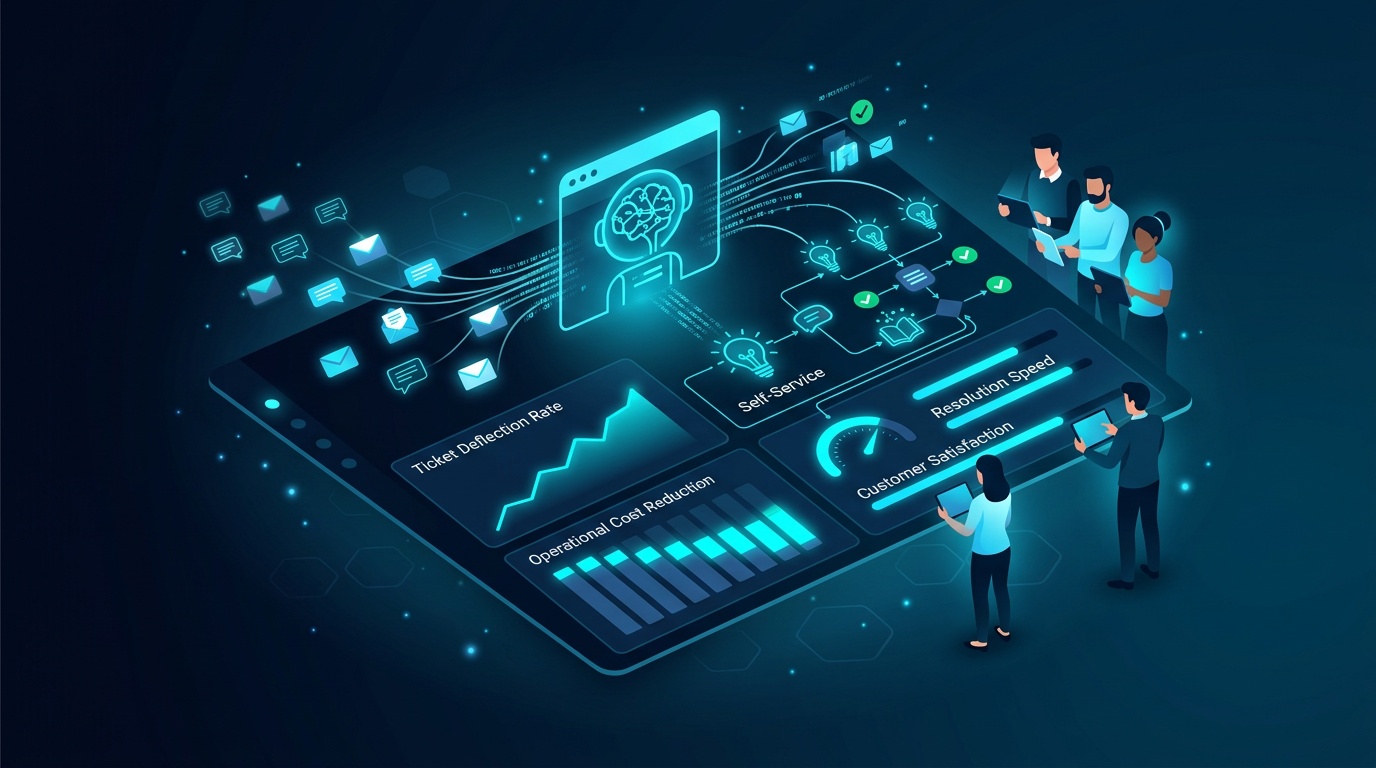
Each deflected ticket translates to direct cost savings. Support agents typically spend 15 to 30 minutes on routine inquiries. When users self-resolve issues, you reduce labor costs while improving response times for complex problems that need personalized attention.
Boosting Employee Productivity and Satisfaction Through Empowerment
Self-service portals eliminate wait times. Your team accesses answers immediately, reducing workflow interruptions. When employees can resolve their own requests outside business hours, productivity gains compound across the entire organization.
Achieving 24/7 Support Availability Without Expanding Headcount
Self-service infrastructure operates continuously without additional staffing. Users in different time zones or working outside standard hours get quick responses. No more bottlenecks waiting for support queues to reopen.
How Self-Service Forms the Foundation for Broader AI Automation
Self-service portals collect valuable interaction data. Common queries, resolution patterns, user frustration points. This intelligence can inform AI systems that improve response accuracy and support broader automation programs.
Evaluating Self-Service Solutions
Pros
- Reduced support costs and faster resolution
- Improved employee satisfaction and productivity
- Scalable operations without proportional headcount growth
- Valuable data collection for continuous improvement
Cons
- Initial implementation requires content development
- User adoption takes time and requires promotion
- Complex issues still require human intervention
- Regular knowledge base updates are necessary
Beyond IT: Applying Self-Service Principles Across Your Business
⚠️ BRAND MISMATCH ALERT: The following industry applications represent how self-service principles work, but Vynta AI doesn’t provide traditional help desk software. Instead, our AI agents can power these self-service capabilities within your existing systems across these four verticals.
Self-Service in Real Estate: Streamlining Lead Inquiries and Property Information
Real estate agencies deploy self-service portals to provide property details, schedule viewings, and answer neighborhood questions automatically. Prospective buyers access current listings, price changes, and availability information without agent intervention, accelerating lead qualification with agentic systems for real estate.
Recruitment’s Self-Service Advantage: Candidate FAQs and Application Status
Recruitment firms implement candidate portals powered by agentic systems for recruitment, where applicants can check application status, review position requirements, and access onboarding materials. This reduces administrative burden while keeping candidates engaged throughout the hiring pipeline.
Fundraising: Empowering Donors with Information and Campaign Updates
Fundraising organizations use self-service tools through an AI-powered fundraising platform to share campaign progress, impact reports, and tax documentation. Donors access giving history and recurring gift management independently, strengthening relationships through transparency.
Hospitality: Elevating Guest Experience Through Instant Information Access
Hospitality businesses provide self-service options for amenity information, reservation management, and service requests. Guests retrieve restaurant hours, spa bookings, and local recommendations through mobile portals powered by AI agents for hospitality, improving satisfaction while reducing front desk load.
Implementing a Smarter Self-Service Strategy: The AI Automation Advantage
Integrating AI-Powered Chatbots for Fast Resolution
Modern AI chatbots analyze query intent and surface relevant knowledge base articles before users submit tickets. These systems can handle multi-step transactions. Password resets, booking modifications, form submissions. Reducing human intervention significantly.
Intelligent Knowledge Base Suggestions: Proactive Problem Solving
AI-driven suggestion engines analyze user behavior patterns to recommend articles proactively. When users struggle with form completion or repeatedly navigate away, the system offers targeted assistance before frustration escalates.
Measuring Success: Key Metrics for Self-Service Portals
Track deflection rate (tickets prevented), first-contact resolution, user satisfaction scores, and knowledge base article helpfulness ratings. These metrics reveal portal effectiveness and identify improvement opportunities.
Vynta AI’s Role: Strategic AI Partnership for Scalable Support
At Vynta AI, we design AI agents that power self-service capabilities within your existing workflows. Our approach combines implementation support with automation that improves over time based on interaction patterns. We draw on cross-industry experience across real estate, recruitment, fundraising, and hospitality operations.
Building Your Path to Self-Service Success
Common Pitfalls to Avoid During Implementation
Organizations often underestimate content maintenance requirements when launching self-service portals. Outdated articles frustrate users and erode trust. Another common mistake? Building portals without clear escalation paths, leaving users stranded when self-resolution fails.
Many implementations miss mobile optimization, alienating users who expect seamless access across devices. Integration issues can also derail deployments. Portals operating separately from existing ticketing systems create data silos and inconsistent experiences.
Fostering User Adoption: Training and Communication Strategies
Technology alone doesn’t guarantee adoption. You need to communicate portal benefits clearly and demonstrate actual improvements in user experience. Training sessions work best when they focus on time savings and faster access to answers, not feature lists.
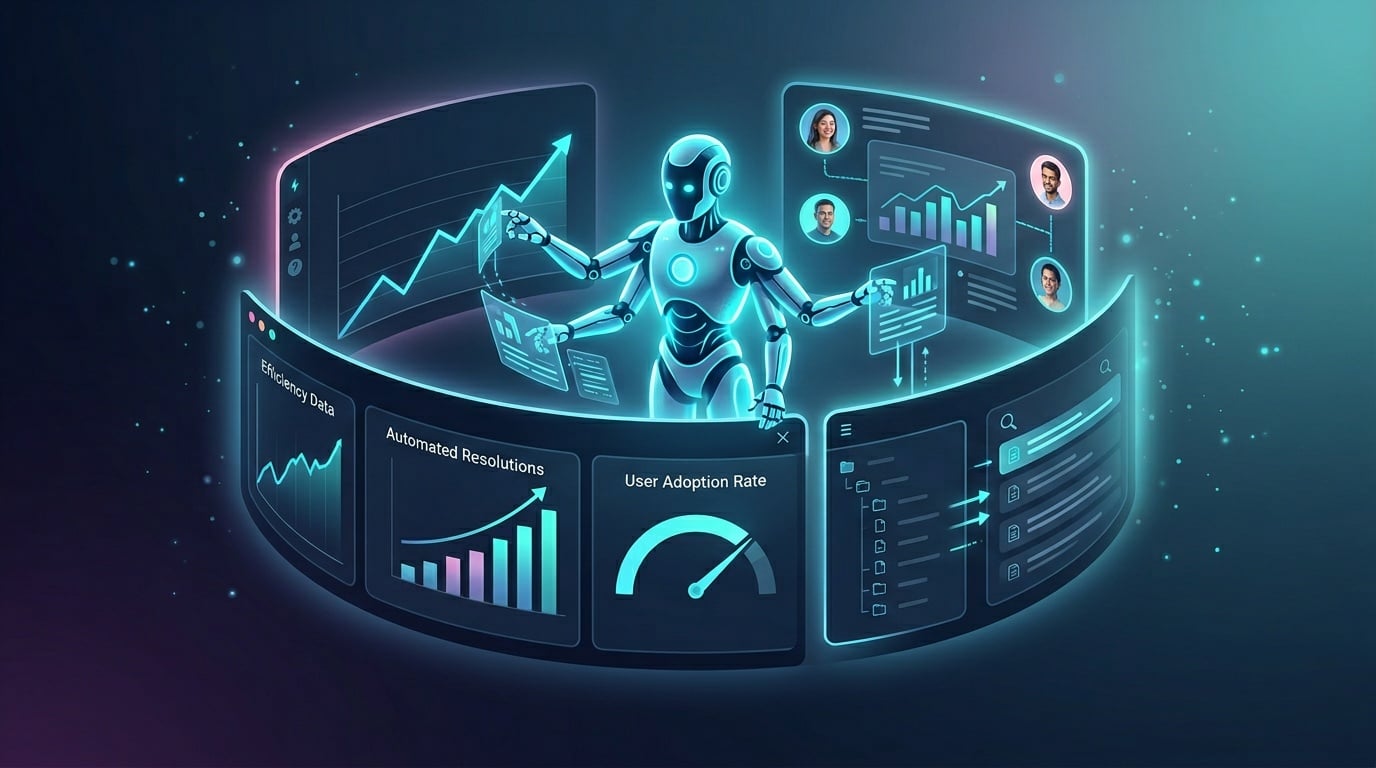
Embedded training within existing workflows accelerates acceptance. When users encounter the portal naturally during daily tasks, adoption increases. Usage analytics highlight adoption patterns and guide targeted interventions when engagement lags.
The Continuous Improvement Cycle for Self-Service Portals
Self-service optimization requires ongoing attention. Monthly reviews of search analytics reveal gaps in content coverage. When users search for terms with no results, create articles addressing those gaps.
User feedback mechanisms provide direct improvement signals. Rating systems on articles highlight content quality issues. Comment sections surface confusion points. These data sources support systematic improvements that compound portal effectiveness over time.
Key Insight: Organizations treating self-service portals as living systems. Continuously updated based on usage data. Achieve 60% higher user satisfaction scores than those treating deployment as a one-time project.
Self-Service Implementation Checklist
- Audit current support volume: Identify tickets suitable for self-resolution
- Map user journeys: Document entry points and common workflows
- Create content inventory: Catalog existing knowledge assets for reuse
- Establish escalation protocols: Define clear paths when self-service fails
- Design mobile-responsive interface: Ensure access across all devices
- Integrate with existing systems: Connect to ticketing and backend platforms
- Plan launch communication: Promote portal benefits to all user groups
- Set measurement framework: Define metrics for ongoing optimization
A well-designed self service help desk transforms support operations from reactive firefighting to proactive service delivery. The initial investment in content development and system integration yields compounding returns through reduced ticket volume, improved response times, and scalable operations.
The Strategic Verdict: Why Self-Service Transformation Cannot Wait
Organizations that delay self-service implementation face compounding disadvantages. Every month without a self service help desk represents accumulated support costs, employee frustration, and missed data collection opportunities that competitors are already capturing.
The Next Frontier: AI-Native Self-Service Evolution
The self-service portal of 2026 and beyond will look fundamentally different from today’s implementations. Conversational AI will increasingly replace static knowledge bases, delivering contextual answers through natural dialogue instead of keyword searches. Predictive systems will anticipate issues before users encounter them, drawing on behavioral patterns across organizations.
Frequently Asked Questions
What is self-service customer support?
Self-service customer support empowers users to resolve common issues independently, without direct assistance from support staff. It moves beyond simple FAQs, combining knowledge bases, ticket submission, and AI-driven guidance to deliver personalized solutions. This approach allows users to find answers and manage requests on their own terms.
What is a help desk service?
A help desk service traditionally provides support for user inquiries and technical issues. When integrated with self-service, it transforms into a system where routine requests like password resets or status checks are handled by users themselves. This frees up human support teams to focus on complex problems that truly require human expertise.
What are some examples of self-service?
Self-service principles apply across many industries. In real estate, it means portals for property details and viewing schedules. For recruitment, candidates can check application status and review job requirements. Hospitality guests use it for amenity information and reservation management, and fundraising donors can access campaign updates and giving history.
How does a self-service help desk provide 24/7 support?
A self-service help desk operates continuously, providing support availability around the clock without needing additional staff. Users in different time zones or working outside standard business hours can access immediate answers and resolve issues. This eliminates bottlenecks and ensures consistent access to information.
How does a self-service help desk reduce operational costs?
Self-service significantly reduces operational costs by deflecting routine inquiries from support agents. Each ticket users resolve independently saves the time an agent would spend, typically 15 to 30 minutes. This reduction in labor costs allows organizations to reallocate resources and improve response times for more complex issues.
How does AI improve self-service solutions?
AI dramatically improves self-service by powering intelligent chatbots and knowledge base suggestions. AI chatbots can analyze user intent, surface relevant articles, and even handle multi-step transactions, reducing human intervention. AI also collects valuable interaction data, which informs continuous improvements in response accuracy and broader automation programs.