

search for person by image
To search for person by image, you need facial recognition tools that go beyond standard reverse image search. While Google Images finds visually similar photos, specialized platforms like PimEyes use biometric analysis to identify faces across the web. These tools analyze facial geometry, matching distinctive features like eye spacing and jawline structure to locate other instances of the same person online.
Understanding “Search for Person by Image”: Beyond General Visual Discovery
What Exactly Does “Search for Person by Image” Mean?
When you search for person by image, you’re using facial recognition technology to identify individuals across digital platforms. This process involves uploading a photo containing a human face and receiving results showing other images of the same individual found online.
Unlike general visual search that matches objects or scenes, person identification focuses on biometric facial features. The system creates a mathematical fingerprint of facial landmarks, then searches for matching patterns in indexed web content.
How Does Reverse Image Search Work for Finding People?
Standard reverse image search engines compare pixel patterns and visual elements. When applied to human faces, these systems analyze geometric relationships between facial landmarks such as eye spacing, nose width, and jawline structure.
The algorithm creates a mathematical representation of these features, then searches for matching patterns in indexed web content. This specialized approach can identify individuals even when lighting, angles, or image quality differs from the original photo.
Top Tools for Finding Individuals with Photos

Why Google Images Falls Short for Person Identification
Google image search finds visually similar content but lacks dedicated facial recognition capabilities. The platform prioritizes matching entire images rather than isolating and analyzing faces. This means Google often returns photos with similar backgrounds, clothing, or compositions instead of the actual person you’re seeking.
Specialized Facial Recognition Engines: PimEyes and Alternatives
PimEyes maintains a large index of images and applies biometric analysis to find similar faces. Other options include social-media-specific searches and professional investigation platforms designed for law enforcement and security use.
Social media platforms like Facebook and LinkedIn offer limited options through internal search and profile discovery. Professional investigation services provide more comprehensive data access but often require specialized authorization.
Open-Source Intelligence (OSINT) Workflows
OSINT workflows combine multiple search engines to broaden identification scope across online sources. This approach can be more thorough than relying on a single platform.
| Tool Type | Database Size | Accuracy Level | Best Use Case |
|---|---|---|---|
| Google Images | Massive | Low for faces | General visual matching |
| PimEyes | Large | High | Public web facial search |
| Social Media Search | Platform-specific | Medium | Network-based identification |
| Professional OSINT | Comprehensive | Very high | Investigation purposes |
Legitimate Uses and Ethical Boundaries
Why People Search for Individuals by Photo
People use face search person by photo for legitimate purposes such as:
- Verifying online dating profiles
- Investigating potential fraud
- Conducting background research
- Reconnecting with old friends or relatives
- Fact-checking and source verification (journalists and researchers)
- Verifying identities before business partnerships
Protecting Your Digital Footprint
Defensive searching helps you understand your online presence by discovering where your photos appear across the internet. This practice can reveal unauthorized use of personal images, potential identity theft attempts, or privacy breaches.
Regular monitoring supports proactive reputation and privacy management. You might be surprised where your photos have ended up.
Privacy and Responsible Use
Responsible use includes seeking consent when appropriate and respecting privacy boundaries. Never use these tools for stalking, harassment, or unauthorized surveillance. Consider the impact on people whose information you uncover, and follow legal requirements in your jurisdiction.
How AI Powers Advanced Person Identification
The AI Advantage in Facial Recognition
Modern AI systems process thousands of facial data points simultaneously, creating detailed biometric maps. Machine learning models improve over time by learning from large datasets and handling variation in lighting, aging, and facial expressions.
In controlled settings, these models can match faces across long time spans, though results vary based on image quality and database coverage.
How Businesses Use Visual Search Technology
Organizations deploy facial recognition for security verification, identity checks, and fraud prevention. Applications include:
- Security access control and employee verification
- Customer identity validation during high-value transactions
- Fraud prevention in financial services
- Event security and access management
While facial recognition technology exists across many industries, businesses must carefully consider privacy laws, consent requirements, and ethical implications before implementation.
The Future of Visual Search Technology
Emerging approaches include near-real-time identification across video (where permitted), tighter integration with augmented reality, and cross-platform matching. Privacy-preserving techniques like encrypted processing can reduce exposure of sensitive biometric data.
On-device processing can reduce cloud dependency for certain use cases, keeping sensitive data local.
Maximizing Your Visual Search Efforts
Preparing Your Image for Optimal Results
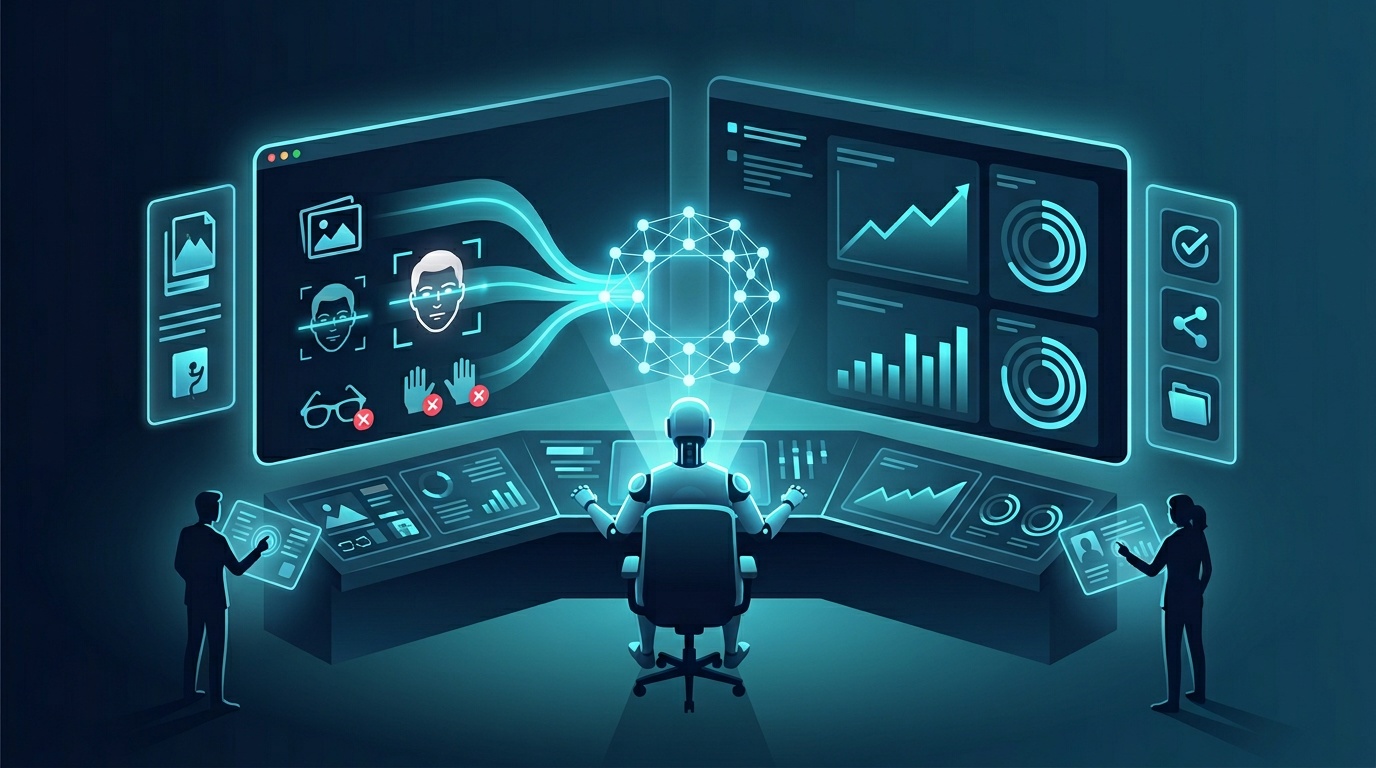
Use high-resolution photos with clear facial visibility and minimal obstructions. Front-facing images with good lighting typically perform better than profile shots or heavily shadowed photos.
Crop the image to focus on the face while preserving enough context for accurate feature detection. Remove sunglasses, hats, or other accessories that might obscure facial features.
Interpreting Search Results
Search results require careful review because facial recognition systems can produce false positives. Validate matches by:
- Checking multiple angles and photos
- Comparing distinctive features beyond basic facial structure
- Cross-checking with other identifying information
- Treating confidence scores as indicators, not proof
When Professional AI Solutions Make Sense
Organizations processing hundreds of identity verifications daily can benefit from systematic automation solutions. Professional implementation helps manage privacy compliance, consent workflows, and regulatory requirements.
However, facial recognition represents just one component of comprehensive identity verification systems.
Whether you’re conducting personal research or evaluating business identity workflows, understanding the strengths and limitations of facial recognition helps you make informed decisions. As technology advances, expectations around privacy, consent, and compliance continue rising alongside capabilities.
Frequently Asked Questions
How do facial recognition tools identify someone from a picture?
Facial recognition tools analyze biometric facial features, such as eye spacing, nose width, and jawline structure. They create a unique mathematical representation of these features, then search indexed web content for matching patterns. This specialized approach allows identification even with variations in lighting or angles.
Why isn’t Google Images effective for finding a specific person by photo?
Google Images excels at finding visually similar content, but it lacks dedicated facial recognition capabilities. It prioritizes matching entire images based on overall composition, not isolating and analyzing individual faces. This often returns photos with similar backgrounds or clothing, not the actual person you are seeking.
What are the best tools for searching for a person using an image?
For public-facing facial recognition, specialized engines like PimEyes are common options. Social media platforms offer limited internal search, while professional investigation services provide more comprehensive data access. Combining open-source intelligence (OSINT) workflows can also broaden your search scope across online sources.
What are legitimate reasons to search for a person by image?
People use face search for legitimate purposes such as verifying online dating profiles, investigating potential fraud, or reconnecting with old friends. Journalists and researchers also use these tools for fact-checking and source verification. It can also help you understand your own online presence defensively.
What privacy considerations should I keep in mind when using facial recognition search?
Responsible use includes seeking consent when appropriate and respecting privacy boundaries. You must never use these tools for stalking, harassment, or unauthorized surveillance. Always consider the impact on people whose information you uncover and follow legal requirements in your jurisdiction.
How does AI improve the accuracy of finding people by image?
Modern AI systems process many facial data points simultaneously, creating detailed biometric maps. Machine learning models learn from large datasets, improving over time to handle variations in lighting, aging, and facial expressions. This allows for higher accuracy and identification across different conditions.