
Key Takeaways
- A SaaS helpdesk is a cloud-based platform that centralizes customer support ticket management.
- It automates routine inquiries to improve efficiency in support operations.
- AI-powered automation can handle up to 70% of common customer requests.
- Complex issues are routed to human agents to ensure personalized support.
- The platform enables scaling support teams without increasing headcount.
Table of Contents
- Understanding SaaS Helpdesk Solutions for Business Growth
- Core Automation Capabilities That Transform Support Operations
- Scaling Support Without Expanding Teams
- Integration Ecosystem for Seamless Operations
- Performance Metrics and Optimization
- Implementation Strategy for Maximum ROI
- Advanced AI Features Transforming Support
- Multi-Channel Support Orchestration
- Knowledge Base Automation and Self-Service
- Cost Efficiency and Resource Optimization
- Security and Compliance Considerations
- Implementation Roadmap for Maximum Impact
- Measuring Success and Continuous Optimization
- Future Considerations and Strategic Advantages
Understanding SaaS Helpdesk Solutions for Business Growth
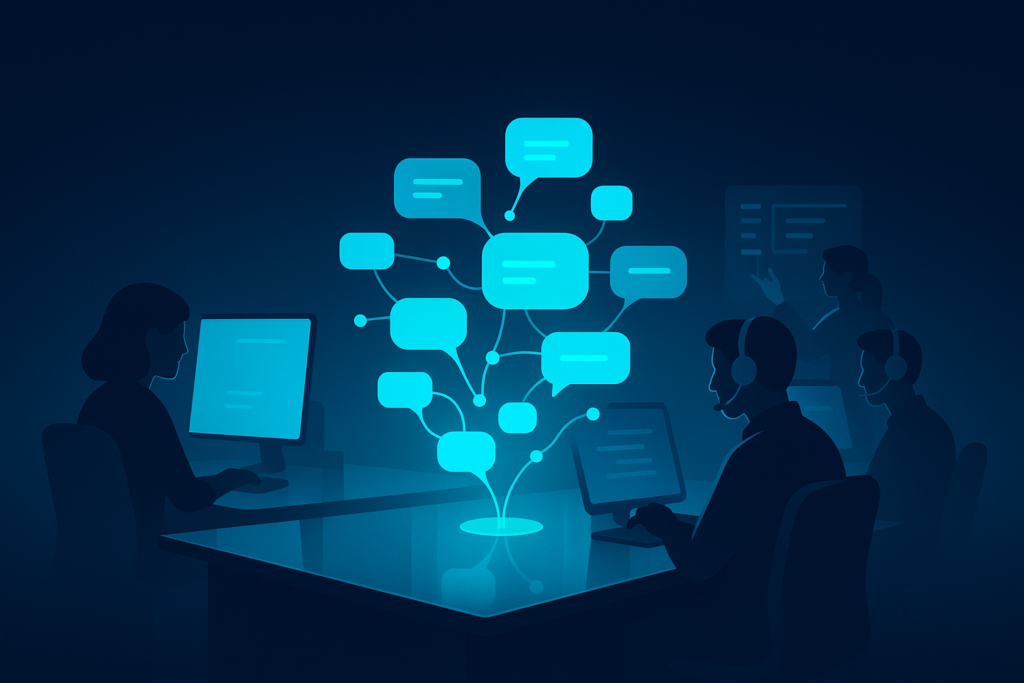
A SaaS helpdesk is a cloud-based customer support platform that centralizes ticket management, automates routine inquiries, and scales support operations without expanding headcount. Modern solutions integrate AI-powered automation to handle up to 70% of common requests while routing complex issues to human agents.
The shift from traditional support models to intelligent automation represents a fundamental transformation in how businesses manage customer relationships. Companies implementing AI-enhanced saas helpdesk systems report 40% faster resolution times and 60% reduction in support costs while maintaining higher customer satisfaction scores.
For organizations seeking to maximize efficiency and customer satisfaction, exploring specialized SaaS helpdesk services can provide a tailored approach to automation and support optimization.
Core Automation Capabilities That Transform Support Operations
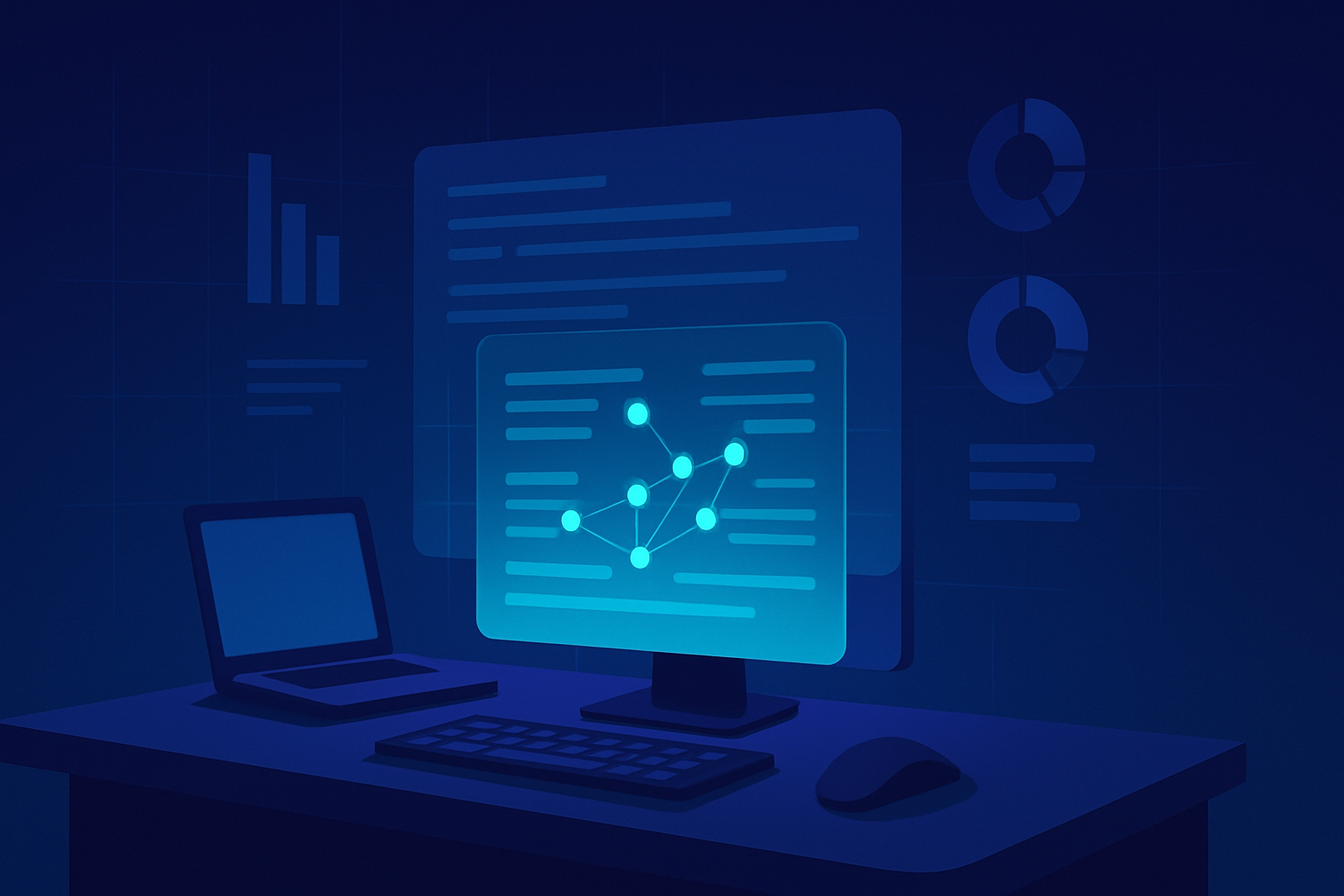
Modern helpdesk platforms leverage intelligent automation to handle repetitive tasks that typically consume 60-80% of support team bandwidth. Automated ticket routing analyzes incoming requests using natural language processing, instantly categorizing issues by urgency, department, and required expertise level.
Key Automation Impact: Organizations using AI-powered ticket classification see 45% reduction in response times and 35% improvement in first-contact resolution rates.
Smart escalation workflows ensure complex issues reach specialized agents while routine inquiries receive immediate automated responses. This dual-layer approach maximizes both efficiency and customer satisfaction by matching each request with the appropriate resource level.
Scaling Support Without Expanding Teams
Traditional support scaling requires linear headcount growth—a costly and unsustainable approach for growing businesses. AI-enhanced saas helpdesk solutions break this pattern by amplifying existing team capabilities through intelligent automation and predictive routing.
Automated knowledge base integration provides instant answers to common questions while machine learning algorithms identify patterns in customer inquiries. This enables proactive support by surfacing relevant solutions before customers need to submit tickets.
The result is exponential capacity growth without proportional cost increases. Teams handling 500 tickets monthly can manage 2,000+ tickets using the same personnel, while maintaining or improving response quality through consistent, data-driven processes.
To learn more about how SaaS helpdesk automation is transforming industries like real estate, see real estate solutions for customer support.
Integration Ecosystem for Seamless Operations
Enterprise-grade helpdesk platforms connect with existing business systems to create unified customer data flows. CRM integration ensures support agents access complete customer histories, purchase records, and previous interaction contexts before engaging with new tickets.
| Integration Type | Business Impact | Automation Benefit |
|---|---|---|
| CRM Systems | Complete customer context | Automatic priority assignment |
| Billing Platforms | Payment status visibility | Automated account verification |
| Product Databases | Technical specification access | Intelligent solution matching |
| Communication Tools | Multi-channel consistency | Unified response tracking |
API-driven architectures enable real-time data synchronization across platforms, ensuring support decisions are based on current, accurate information rather than outdated snapshots.
Performance Metrics and Optimization
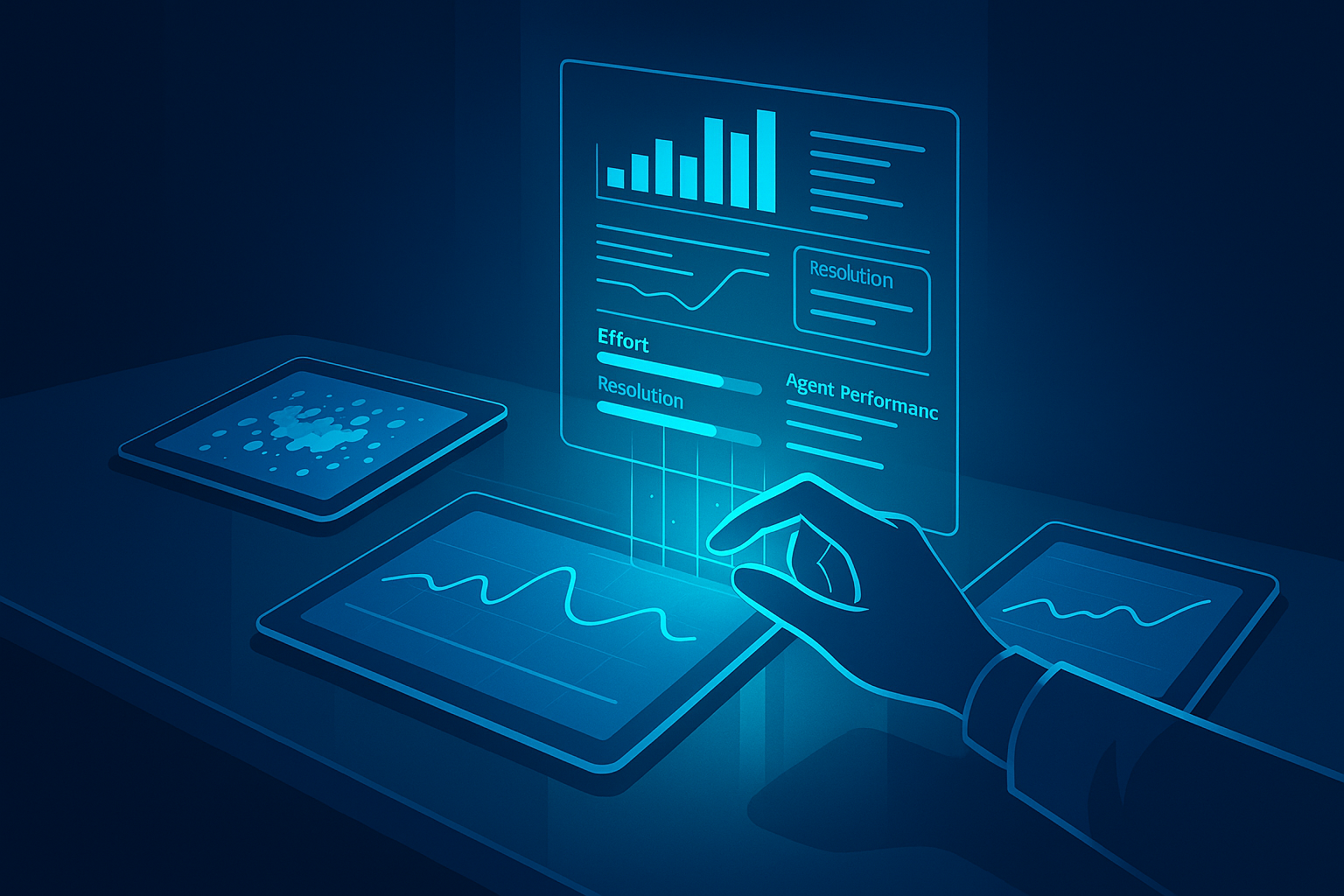
Data-driven support management relies on comprehensive analytics that go beyond basic response times. Advanced saas helpdesk platforms track customer effort scores, resolution patterns, and agent performance metrics to identify optimization opportunities.
Expert Insight: Focus on Customer Effort Score (CES) alongside traditional metrics. Reducing customer effort by one point typically correlates with 25% increase in customer retention.
Predictive analytics identify support volume patterns, enabling proactive staffing decisions and resource allocation. Machine learning algorithms analyze historical data to forecast peak periods, seasonal trends, and emerging issue categories before they impact service levels.
For a deeper understanding of the evolution of help desks, refer to this overview of help desk systems.
Implementation Strategy for Maximum ROI
Successful helpdesk automation requires strategic phasing rather than wholesale replacement of existing processes. Begin with high-volume, low-complexity inquiries where automation delivers immediate wins while building team confidence in new systems.
Establish baseline metrics before implementation to measure improvement accurately. Track ticket volume, resolution times, customer satisfaction scores, and agent productivity to quantify automation impact and identify areas for continued optimization.
The most effective implementations focus on augmenting human capabilities rather than replacing them entirely. AI handles routine tasks while human agents tackle complex problem-solving, relationship building, and strategic customer interactions that drive long-term value.
Advanced AI Features Transforming Support
Intelligent sentiment analysis monitors customer communications in real-time, automatically flagging frustrated customers for immediate escalation to senior agents. This proactive approach prevents minor issues from escalating into account cancellations or negative reviews that damage brand reputation.
Natural language processing enables sophisticated intent recognition that goes beyond keyword matching. Modern saas helpdesk platforms understand context, emotion, and urgency levels within customer messages, routing tickets based on actual meaning rather than surface-level categorization.
AI Performance Data: Companies using advanced sentiment analysis see 52% reduction in customer churn and 38% improvement in satisfaction scores within six months of implementation.
Predictive text suggestions help agents respond faster while maintaining consistency across team communications. Machine learning algorithms analyze successful resolution patterns to recommend optimal response strategies for similar issues.
To discover how AI is being leveraged in recruitment, explore AI-powered recruitment solutions for support teams.
Multi-Channel Support Orchestration
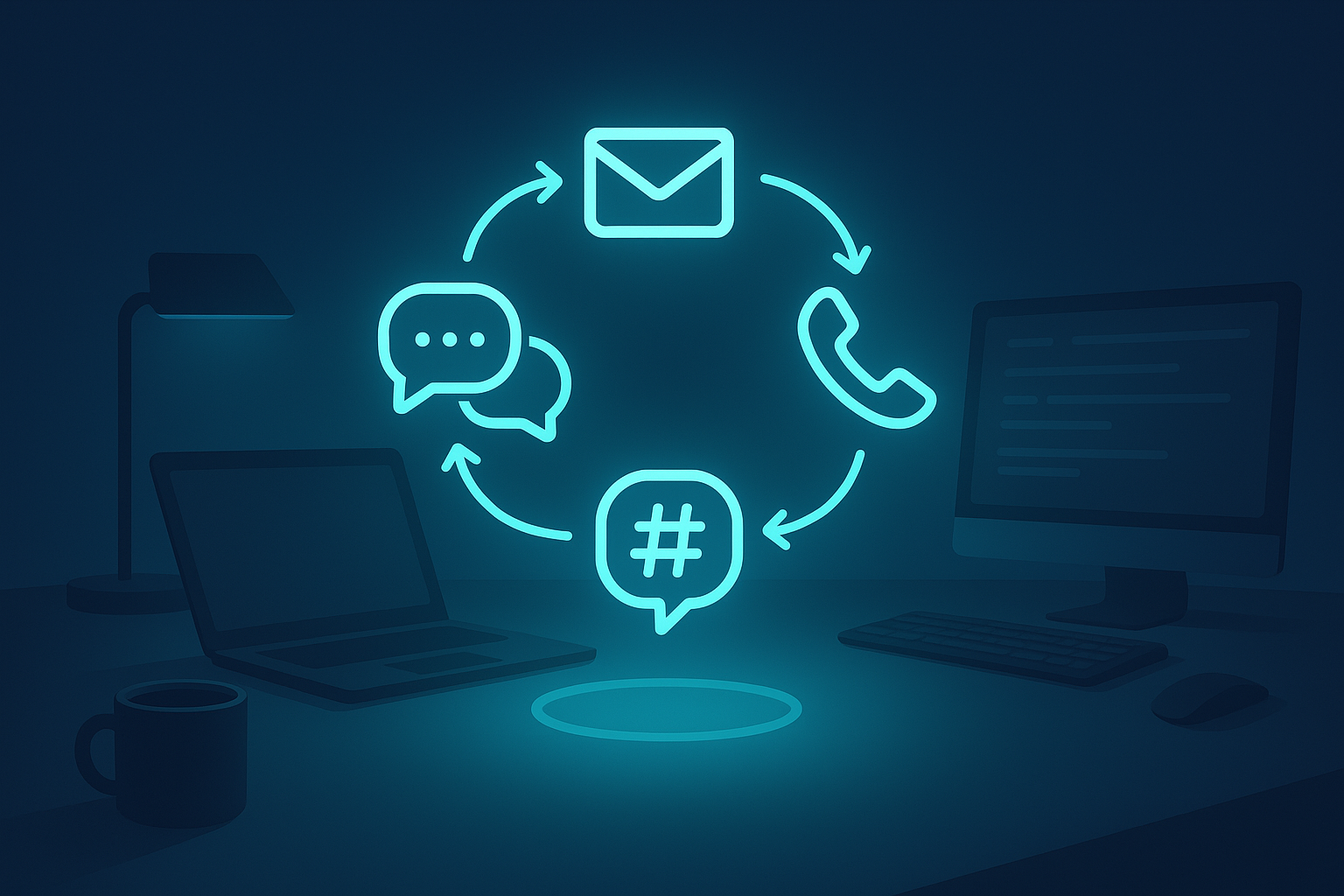
Customer expectations demand seamless experiences across email, chat, social media, and phone channels. Unified saas helpdesk platforms consolidate all communication streams into single customer timelines, eliminating the frustration of repeating information across different touchpoints.
Intelligent channel routing directs customers to optimal communication methods based on issue complexity and customer preferences. Simple questions flow to automated chat responses, while technical problems route to email for detailed documentation and follow-up tracking.
Context preservation across channels ensures agents understand complete interaction histories regardless of communication method. A customer starting with chat can seamlessly transition to phone support without losing previous conversation context or having to restart their explanation.
Knowledge Base Automation and Self-Service
Dynamic knowledge bases powered by AI automatically surface relevant articles based on ticket content analysis. When customers submit inquiries, intelligent systems instantly match questions with existing solutions, often resolving issues before human intervention becomes necessary.
Implementation Strategy: Start knowledge base automation with your top 20 most common inquiries. This typically covers 60-70% of incoming tickets and delivers immediate ROI while building system confidence.
Automated content updates ensure knowledge bases remain current with product changes and emerging issues. Machine learning identifies gaps in existing documentation by analyzing unresolved tickets, automatically flagging areas where new articles would reduce support volume.
Self-service portals equipped with intelligent search capabilities reduce ticket volume by 40-50% while improving customer satisfaction through immediate access to solutions. Customers prefer finding answers independently when systems make information easily discoverable and actionable.
Cost Efficiency and Resource Optimization
Traditional support models create linear cost relationships where business growth requires proportional team expansion. Modern saas helpdesk automation breaks this pattern by handling increased volume through intelligent systems rather than additional personnel.
| Support Model | Cost Structure | Scalability Factor |
|---|---|---|
| Traditional Manual | Linear growth with volume | 1:1 ratio |
| Basic Automation | Reduced variable costs | 2:1 efficiency gain |
| AI-Enhanced Platform | Fixed platform + optimized labor | 4:1 capacity multiplier |
Automated workforce planning uses historical data and business projections to optimize staffing levels across different time periods. This prevents both understaffing during peak periods and resource waste during slower intervals.
The compound effect of automation creates exponential value over time. Initial efficiency gains reinvest into more sophisticated automation capabilities, creating a continuous improvement cycle that drives long-term competitive advantage.
For an in-depth look at intelligent agents and their role in automation, see this resource on intelligent agents.
Security and Compliance Considerations

Enterprise-grade saas helpdesk platforms implement multi-layered security protocols that exceed traditional on-premise systems. End-to-end encryption protects customer data during transmission and storage, while role-based access controls ensure agents only access information relevant to their responsibilities.
Compliance automation helps organizations meet industry-specific requirements without manual oversight burden. GDPR, HIPAA, and SOC 2 compliance features automatically handle data retention policies, access logging, and audit trail generation required for regulatory adherence.
Automated backup and disaster recovery systems ensure business continuity even during system failures or security incidents. Cloud-based infrastructure provides redundancy and rapid recovery capabilities that surpass most internal IT departments’ disaster preparedness.
ROI Reality Check: Organizations implementing comprehensive saas helpdesk automation report average cost reductions of 45% within 18 months while simultaneously improving customer satisfaction scores by 35%.
Data breach prevention becomes increasingly critical as customer support teams handle sensitive information across multiple channels. Advanced saas helpdesk platforms provide automated threat detection that identifies unusual access patterns and suspicious activities before security compromises occur.
For more information about the company and its mission, visit the About page.
Implementation Roadmap for Maximum Impact
Successful saas helpdesk deployment requires strategic phasing rather than wholesale replacement of existing systems. Begin with ticket routing automation for your highest-volume, lowest-complexity inquiries to build team confidence while delivering immediate measurable results.
Phase two introduces AI-powered response suggestions and knowledge base automation once agents become comfortable with initial workflow changes. This gradual approach prevents resistance while allowing teams to experience automation benefits firsthand before more sophisticated features activate.
Change Management Strategy: Involve your best-performing agents in automation configuration. Their expertise ensures AI suggestions align with proven resolution strategies while creating internal champions for broader adoption.
Integration planning must account for existing CRM systems, communication platforms, and reporting tools. Modern platforms offer pre-built connectors for popular business applications, but custom integration requirements should be mapped during initial planning phases to prevent deployment delays.
Performance baseline establishment before implementation provides crucial measurement frameworks for demonstrating ROI. Track current resolution times, customer satisfaction scores, and agent productivity metrics to quantify improvement after automation deployment.
Measuring Success and Continuous Optimization
Effective saas helpdesk measurement extends beyond traditional metrics like ticket volume and response time. Advanced analytics reveal customer effort scores, resolution quality ratings, and agent satisfaction levels that indicate true system performance and areas for refinement.
Predictive analytics identify emerging issues before they impact customer satisfaction by analyzing ticket patterns, sentiment trends, and escalation frequencies. This proactive approach enables support teams to address systemic problems rather than repeatedly handling symptoms.
Continuous learning algorithms improve automation accuracy over time by analyzing successful resolution patterns and customer feedback. Systems become more sophisticated with usage, creating compound value that increases long-term competitive advantage and operational efficiency.
Regular optimization cycles should review automation rules, response templates, and routing logic to ensure systems evolve with changing business needs and customer expectations. Quarterly assessments prevent automation drift that can reduce effectiveness over time.
For further reading on AI-powered process improvement, check out fundraising automation solutions and how they can support operational growth.
Future Considerations and Strategic Advantages

Emerging technologies like conversational AI and predictive customer health scoring will transform support from reactive service to proactive relationship management. Organizations investing in comprehensive saas helpdesk platforms position themselves to adopt these capabilities as they mature.
Integration with business intelligence systems will enable support teams to influence product development, marketing strategies, and customer success initiatives through detailed customer interaction analysis. Support data becomes strategic business intelligence rather than operational overhead.
The competitive advantage of superior customer support continues growing as product differentiation becomes increasingly difficult in saturated markets. Companies that deliver exceptional support experiences through intelligent automation create sustainable competitive moats that protect market position and enable premium pricing strategies.
Investment in modern saas helpdesk automation represents strategic infrastructure development rather than simple cost reduction. Organizations building sophisticated support capabilities today establish foundations for long-term customer relationship excellence that drives sustainable business growth and market leadership.
Frequently Asked Questions
How does AI-powered automation in a SaaS helpdesk improve customer support efficiency?
AI-powered automation streamlines support by handling up to 70% of routine inquiries, freeing human agents to focus on complex issues. This reduces response times and increases first-contact resolution rates, resulting in faster, more efficient customer service.
In what ways can a SaaS helpdesk scale support operations without increasing headcount?
A SaaS helpdesk uses intelligent automation to manage high volumes of tickets and automate routine tasks, allowing support teams to handle more requests without adding staff. Automated ticket routing and smart escalation ensure resources are optimally allocated, enabling scalable support.
What are the key automation features that help reduce response times and improve resolution rates?
Key features include AI-driven ticket classification that categorizes and prioritizes requests instantly, automated responses for common issues, and smart escalation workflows that route complex cases to specialized agents. Together, these reduce response times by up to 45% and improve resolution rates by 35%.
How does the integration of a knowledge base and machine learning enable proactive customer support?
Integrating a knowledge base with machine learning allows the system to suggest relevant articles and solutions automatically, empowering customers to self-serve common issues. This proactive approach reduces support tickets and accelerates problem resolution, enhancing overall customer satisfaction.
About The Author
Anas Moujahid is the chief contributing writer & Operations Director for the Vynta AI Blog, where he turns cutting-edge AI automation into measurable business outcomes for mid-market companies.
Vynta AI designs enterprise-grade AI agents that augment rather than replace people—freeing teams to focus on higher-value work while the bots handle the busywork.
We specialise in four service-heavy verticals where AI can move the revenue needle fast: real estate, recruitment, fundraising and hospitality.
Anas started his career architecting AI and automation systems; today he leads operations at Vynta AI, making sure every deployment lands real-world ROI—whether that’s more booked viewings for estate agents, faster placements for recruiters, warmer investor pipelines for fundraisers or happier guests for hotels and restaurants.
Vynta AI delivers results by:
- Building industry-specific agents pre-trained on real-world workflows—no generic chatbots here.
- Integrating seamlessly with existing CRMs, ATSs, PMSs and fundraising platforms—zero rip-and-replace.
- Measuring success in business KPIs (lead-to-close rates, time-to-hire, donor retention, RevPAR) not vanity metrics.
- Providing transparent implementation plans so clients know exactly what to expect, when and why.
- Pairing every AI agent with human-in-the-loop controls to keep quality, compliance and brand voice on point.
Since launch, Vynta AI has helped agencies slash lead qualification time by up to 70 %, recruitment firms cut screening hours in half, fundraising teams triple investor touchpoints and hospitality brands lift guest satisfaction scores by double digits—all while keeping human expertise firmly in the loop.
Anas writes with the same ethos that drives Vynta AI: outcome-focused, jargon-free and grounded in real business value. Expect data-backed insights, practical implementation guides and a clear-eyed view of what AI can—and can’t—do for your organisation.