
How Restaurant Seating Software Transforms Hospitality Operations
Modern restaurant seating software delivers measurable business outcomes through intelligent automation. Venues typically see 10-20% increases in guest satisfaction scores, 15% improvements in revenue per available seat hour, and over 25% reductions in peak-hour walkaways. These metrics translate directly to bottom-line impact for hospitality operators.
Consider a boutique hotel restaurant managing 50+ Friday night reservations. Instead of juggling paper charts and phone calls, the host uses real-time digital floor plans to seat walk-ins within 2 minutes average wait time. The system automatically identifies optimal table matches based on party size, dining duration patterns, and guest preferences stored in integrated profiles.
This human-AI collaboration amplifies staff capabilities rather than replacing hospitality expertise. While algorithms handle table optimization calculations and reservation logistics, team members gain bandwidth for personalized guest interactions, upselling opportunities, and service recovery moments that define exceptional dining experiences.
Core Features of Modern Restaurant Seating Software
Real-Time Digital Floorplans and Table Status
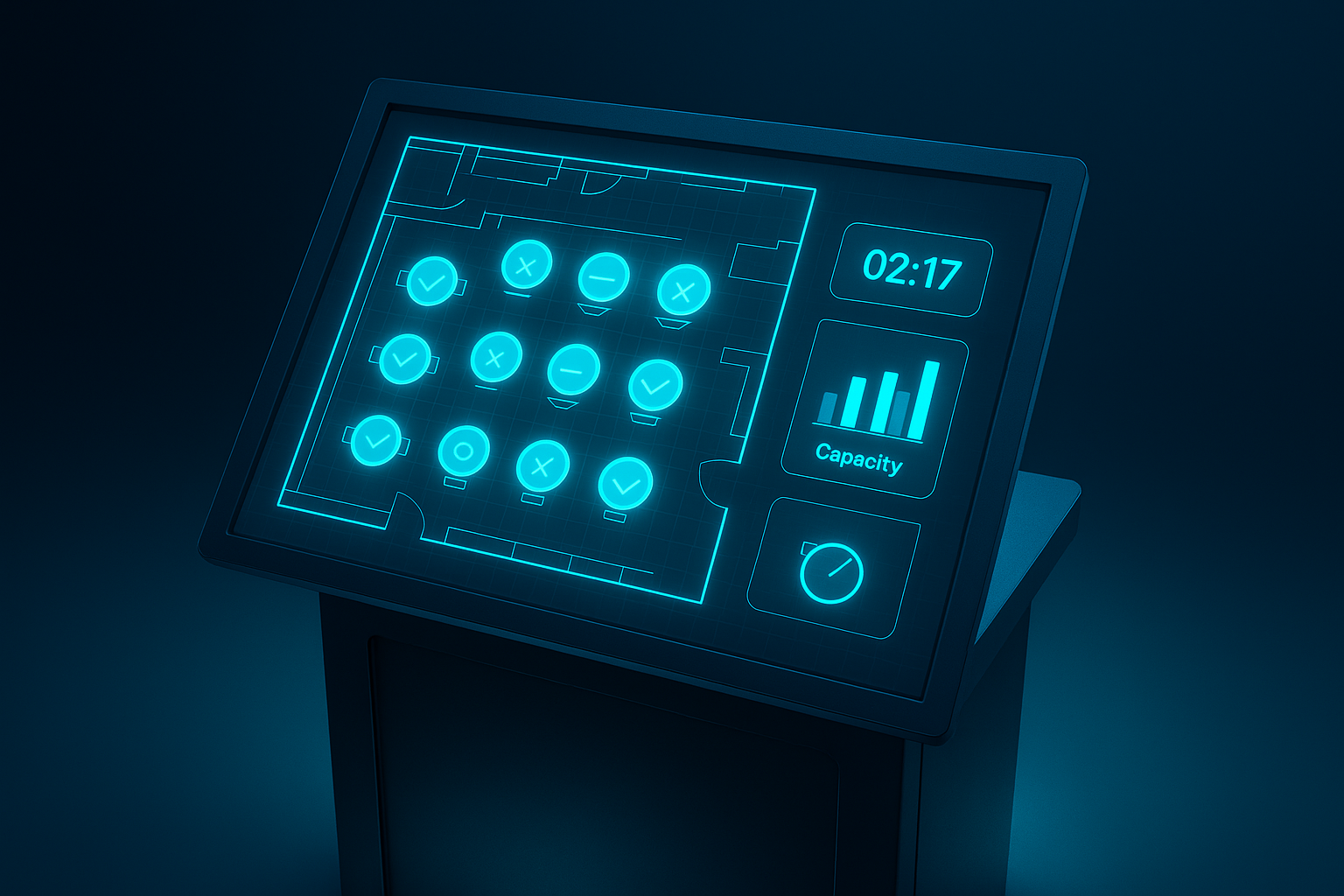
Visual floor management provides instant snapshots of table occupancy, service stages, and availability windows. Hosts can identify seating opportunities 40% faster than manual methods, while managers track turn times and capacity utilization across different dayparts. Color-coded table status eliminates guesswork during peak service periods.
Reservation, Walk-in, and Waitlist Management
Integrated reservation grids synchronize with major booking platforms while smart waitlist algorithms send automated SMS notifications with 90-second average response times. The system maintains comprehensive guest databases with dining history, preferences, and special occasions, enabling personalized service from the moment guests arrive.
Capacity Control and Table Optimization
Dynamic seating algorithms process hundreds of table allocation scenarios in real-time, considering party size, estimated dining duration, and table proximity preferences. During high-volume periods, the software automatically suggests optimal seating sequences to maximize covers while maintaining service quality standards.
Guest Data Profiles and Personalization Tools
POS-integrated guest profiles capture spending patterns, dietary restrictions, celebration dates, and service preferences. Staff receive contextual prompts for upselling opportunities, anniversary acknowledgments, and allergy alerts, creating memorable experiences that drive repeat visits and higher per-guest revenue.
Restaurant Seating Software vs. Manual and Generic Alternatives
| Feature | Specialized Software | Generic Tools | Manual Systems |
|---|---|---|---|
| Seating Speed | 2-minute average | 5-7 minutes | 8-12 minutes |
| Guest Data Capture | Comprehensive profiles | Basic contact info | Limited notes |
| Integration Capability | POS, PMS, marketing | Limited connections | None |
| Error Prevention | Automated validation | Basic checks | Human dependent |
During Friday peak hours, specialized table management systems process complex seating scenarios that would overwhelm manual coordination. When a party of eight arrives as a walk-in, the software instantly identifies combination seating options, estimates wait times based on current table progress, and automatically adds them to prioritized waitlists with SMS updates.
Industry-specific tools deliver superior ROI because they understand hospitality workflows. Generic reservation platforms lack table optimization algorithms, guest experience automation, and revenue management features that drive 20% fewer guest walk-aways and 18% higher return visit rates compared to basic booking systems.
Step-by-Step Guide to Setting Up Restaurant Seating Software
Preparation Phase: Begin with accurate floor plan mapping, assigning unique table codes, and identifying integration requirements with existing POS, property management, and marketing systems. Multi-location operators should establish consistent naming conventions and data structures across properties during this 2-3 day preparation window.
Configuration Process: Upload digital floor plans (typically 30 minutes), tag tables by size, view, and accessibility features, then import existing guest databases. Configure notification routing for SMS, email, and staff alerts, ensuring seamless communication flows between front-of-house teams and kitchen operations.
Staff Training Strategy: Conduct hands-on simulation sessions using realistic booking scenarios and peak-hour walkthroughs. Focus on common troubleshooting scenarios like double bookings or system lag. Most teams achieve full proficiency within 2-3 shifts when training includes practical walkthroughs.
Go-Live Preparation: Schedule implementation during off-peak hours and maintain backup paper systems for the first week. Communicate the transition to regular guests via email templates that emphasize enhanced service capabilities rather than system changes.
Optimizing Revenue and Guest Experience with Seating Software
Modern restaurant seating software transforms every guest interaction into a revenue opportunity through intelligent automation and data-driven insights. Real-time upsell prompts triggered by guest history—anniversaries, dietary preferences, or past spending patterns—enable servers to offer personalized recommendations that increase dessert sales by 12-15% and wine pairings by 18% on average.
Strategic Table Turn Management: Advanced algorithms optimize seating duration by analyzing historical data for different party sizes and meal types. This enables precise scheduling where brunch tables turn every 75 minutes, lunch seatings every 60 minutes, and dinner reservations allow 2-hour windows—maximizing covers without rushing guests.
Intelligent waitlist management captures walk-in revenue that traditional systems lose. Automated SMS updates with accurate wait times reduce perceived delays by 20% while allowing guests to explore nearby shops or bars, often returning with higher spending intentions. Properties report converting 35-40% more walk-ins during peak periods through strategic waitlist optimization.
Revenue Impact Example: A 50-seat restaurant implementing strategic seating optimization typically sees 8-12% revenue increases within 60 days through improved table turns, reduced no-shows, and enhanced upselling—translating to $15,000-25,000 additional monthly revenue.
Integration with POS, Reservation, and Property Systems
Seamless integration transforms disconnected hospitality systems into unified guest experience platforms. Leading restaurant seating software connects with major POS systems (Toast, Square, Lightspeed, Resy) within 2-4 hours through pre-built APIs, enabling real-time synchronization of guest spending, loyalty status, and reservation preferences that inform intelligent seating decisions.
Unified data streams eliminate operational friction while enhancing personalization capabilities. When guests arrive, staff instantly access complete profiles showing previous visits, spending patterns, special occasions, and dietary restrictions—enabling proactive service that drives satisfaction scores 15-20% higher than properties using fragmented systems.
Implementation Considerations: Most integrations require 3-7 days for mid-sized venues, with potential delays from API limitations or custom POS configurations. Success depends on clean data migration and staff training on unified workflows. Properties should budget 10-15 hours for initial setup and staff onboarding to maximize integration benefits.
Advanced Features—AI Automation & Analytics for Next-Level Hospitality
AI-powered table management systems process thousands of seating combinations in milliseconds, considering party size, server capacity, table preferences, and guest flow patterns to optimize every placement decision. This intelligent allocation reduces average wait times by 15-30% while maintaining service quality standards that drive guest satisfaction.
Predictive analytics transform reactive hospitality into proactive guest management. Machine learning algorithms analyze historical booking patterns, weather data, and local events to forecast demand with 85-90% accuracy, enabling optimal staffing decisions and inventory planning that reduce costs while improving service delivery.
Business Intelligence Applications: Advanced dashboards reveal hidden revenue opportunities through detailed analysis of table utilization, server performance, and guest spending patterns. Operators identify peak efficiency periods, optimize menu promotions, and adjust pricing strategies based on real-time demand data.
Real-world implementation shows measurable results: boutique restaurants report 11-15% monthly improvements in guest satisfaction scores alongside 8-12% revenue increases through AI-driven optimization strategies that enhance both operational efficiency and guest experience quality.
For a broader perspective on how restaurant management technology is evolving, see this overview of restaurant management.
Best Restaurant Seating Software Platforms of 2025
Vynta AI – Industry-Specific Hospitality Automation
Best for: Mid-market restaurants and hospitality groups seeking comprehensive AI automation with measurable ROI
Vynta AI delivers enterprise-grade restaurant seating software specifically designed for hospitality operations, combining intelligent table management with revenue optimization tools. The platform integrates seamlessly with existing POS systems while providing predictive analytics that drive 15-25% improvements in operational efficiency and guest satisfaction scores. Contact Vynta AI for a tailored demonstration of their restaurant seating software platform.
SevenRooms – Guest Relationship Platform
Best for: High-end restaurants prioritizing comprehensive guest data management
Pros:
- Extensive guest profiling and CRM capabilities
- Strong integration with marketing automation tools
- Detailed analytics and reporting features
Cons:
- Higher pricing structure for smaller operations
- Complex setup requiring technical expertise
- Limited customization for specific workflows
OpenTable – Comprehensive Reservation Management
Best for: Restaurants seeking broad market exposure through integrated booking platform
Pros:
- Built-in marketing reach through consumer booking platform
- Established brand recognition drives reservation volume
- Comprehensive network effects for discovery
Cons:
- Per-cover fees reduce profit margins
- Limited customization for unique operational needs
- Dependency on third-party platform for core operations
Eat App – Visual Table Management
Best for: Independent restaurants requiring intuitive visual interfaces
Pros:
- User-friendly drag-and-drop interface
- Competitive pricing for small venues
- Quick implementation timeline
Cons:
- Limited AI automation capabilities
- Basic analytics and reporting features
- Minimal integration options with hospitality systems
| Platform | AI Automation | Integration Depth | Analytics Quality | Implementation Speed |
|---|---|---|---|---|
| Vynta AI | Advanced predictive algorithms | Enterprise-grade POS/PMS sync | Business intelligence dashboards | 3-7 days with training |
| SevenRooms | Basic automation features | Strong CRM integrations | Comprehensive guest analytics | 2-3 weeks setup |
| OpenTable | Limited automation | Standard POS connections | Reservation-focused metrics | 1-2 weeks onboarding |
| Eat App | Minimal automation | Basic integrations only | Standard reporting | Same-day deployment |
Common Challenges & Practical Solutions in Seating Software Adoption
Integration complications represent the primary obstacle for hospitality operators implementing new restaurant seating software. API mismatches between legacy POS systems and modern platforms create data synchronization gaps that result in double bookings or incomplete guest profiles. Successful implementation requires pre-launch system testing with dummy reservations across all integrated platforms to identify and resolve connectivity issues.
Staff Resistance Solutions: Overcome adoption challenges through hands-on demonstration of efficiency gains rather than theoretical training sessions. Show servers how guest history access enables better recommendations and higher tips, while demonstrating to hosts how visual floor plans reduce seating confusion during peak periods.
Data accuracy issues emerge when multiple systems maintain separate guest databases without proper synchronization protocols. Implement automated alerts for sync failures, establish weekly data audits, and create standardized guest information entry procedures that ensure consistency across all touchpoints.
Continuous Optimization Strategy: Schedule monthly performance reviews analyzing table turn rates, guest satisfaction scores, and revenue per available seat hour. Use these insights to adjust floor plan configurations, refine reservation policies, and optimize staff scheduling for sustained improvement.
For further reading on technology adoption in hospitality, see this peer-reviewed study on digital transformation in restaurants.
Future of Restaurant Seating Technology
Emerging AI capabilities will transform table management systems into predictive hospitality platforms that anticipate guest needs before arrival. Machine learning algorithms analyzing weather patterns, local events, and historical behavior will enable dynamic pricing strategies and proactive capacity management that maximizes revenue while maintaining service quality standards.
Integration with IoT sensors and mobile technology will create seamless guest experiences where table preferences, dietary restrictions, and service timing automatically adjust based on real-time data. Smart tables equipped with ordering capabilities and payment processing will reduce service friction while providing detailed analytics on guest interaction patterns.
The convergence of seating software with broader hospitality automation platforms represents the next evolution in guest experience management. Properties investing in comprehensive AI-driven solutions today position themselves to capture competitive advantages as consumer expectations for personalized, efficient service continue rising across the hospitality industry.
Frequently Asked Questions
How does restaurant seating software improve table turnover rates and reduce guest wait times?
Restaurant seating software optimizes table allocation by matching party sizes with available tables in real time, reducing idle seating and speeding up guest flow. This automation typically increases table turnover rates by 15-20% and cuts guest wait times by up to 30%, enabling staff to focus on delivering exceptional service rather than managing seating logistics.
What are the core features of modern restaurant seating software that enhance hospitality operations?
Modern restaurant seating software includes real-time digital floor plans, automated waitlist management, and guest profile integration to personalize service. These features prevent double bookings, streamline reservation management, and provide actionable insights that help optimize table usage and improve overall guest satisfaction.
In what ways does restaurant seating software integrate with other systems like POS and reservation platforms?
Restaurant seating software seamlessly connects with POS and reservation systems to synchronize guest data, track orders, and update table status in real time. This integration ensures smooth communication across front-of-house operations, reduces errors, and enables upselling opportunities by providing staff with a holistic view of guest preferences and dining progress.
What challenges might restaurants face when adopting seating software, and how can they be addressed?
Common challenges include staff resistance to new technology, integration complexity, and initial setup time. These can be addressed through comprehensive training, choosing industry-specific solutions designed for hospitality workflows, and phased implementation that allows teams to adapt gradually while realizing measurable improvements in efficiency and guest experience.
About The Author
Anas Moujahid is the chief contributing writer & Operations Director for the Vynta AI Blog, where he turns cutting-edge AI automation into measurable business outcomes for mid-market companies.
Vynta AI designs enterprise-grade AI agents that augment rather than replace people—freeing teams to focus on higher-value work while the bots handle the busywork.
We specialise in four service-heavy verticals where AI can move the revenue needle fast: real estate, recruitment, fundraising and hospitality.
Anas started his career architecting AI and automation systems; today he leads operations at Vynta AI, making sure every deployment lands real-world ROI—whether that’s more booked viewings for estate agents, faster placements for recruiters, warmer investor pipelines for fundraisers or happier guests for hotels and restaurants.
Vynta AI delivers results by:
- Building industry-specific agents pre-trained on real-world workflows—no generic chatbots here.
- Integrating seamlessly with existing CRMs, ATSs, PMSs and fundraising platforms—zero rip-and-replace.
- Measuring success in business KPIs (lead-to-close rates, time-to-hire, donor retention, RevPAR) not vanity metrics.
- Providing transparent implementation plans so clients know exactly what to expect, when and why.
- Pairing every AI agent with human-in-the-loop controls to keep quality, compliance and brand voice on point.
Since launch, Vynta AI has helped agencies slash lead qualification time by up to 70 %, recruitment firms cut screening hours in half, fundraising teams triple investor touchpoints and hospitality brands lift guest satisfaction scores by double digits—all while keeping human expertise firmly in the loop.
Anas writes with the same ethos that drives Vynta AI: outcome-focused, jargon-free and grounded in real business value. Expect data-backed insights, practical implementation guides and a clear-eyed view of what AI can—and can’t—do for your organisation.