

Recruitment automation vs manual hiring comparison
Recruitment automation can pay off when it removes repetitive administration while recruiters retain control of decisions and relationships. Compare both approaches using time-to-hire, cost per qualified candidate, screening quality, interview attendance, candidate experience, and placement revenue. A hybrid process may suit agencies whose workflows combine high-volume administration with relationship-led recruitment.
Key Takeaways
- Recruitment automation can pay off when it removes repetitive administration while recruiters retain control of decisions and relationships.
- Compare both approaches using time-to-hire, cost per qualified candidate, screening quality, interview attendance, candidate experience, and placement revenue.
- A hybrid process may suit agencies whose workflows combine high-volume administration with relationship-led recruitment.
Manual hiring still earns its place in relationship-led recruitment. Senior, confidential, and specialist searches often depend on context that does not appear in a CV. A sound operating model assigns rules-based tasks to custom AI agents and integrated tools while keeping consultants responsible for advice, conversations, assessment, negotiation, and recommendations.
What is recruitment automation compared with manual hiring?
Vynta AI provides custom AI agent development, system integration, workflow automation, communication automation, performance intelligence, and implementation and support. Its recruitment service connects application collection, CV processing, candidate messages, interview scheduling, and reporting through an Applicant Tracking System (ATS) and related tools. In a manual process, recruiters complete these activities themselves. Custom automation suits predictable, high-volume work; recruiters interpret motivation, investigate exceptions, advise hiring managers, and manage sensitive conversations.
The comparison is a task-allocation decision, not a choice between software and people. An integrated workflow can collect applications, process CVs, match profiles against agreed criteria, and trigger follow-up actions before a recruiter reviews the shortlist. The consultant then has more time for work that affects trust and placement quality.
According to Agentic Systems for Recruitment, the system collects applications from CV Library, Indeed, Reed, TotalJobs, and LinkedIn, processes more than 100,000 CVs per day, and screens candidates in under 10 seconds. Its stated candidate-matching accuracy is 85%. It operates through existing ATS infrastructure rather than requiring a separate replacement.
What are the benefits of recruitment automation?
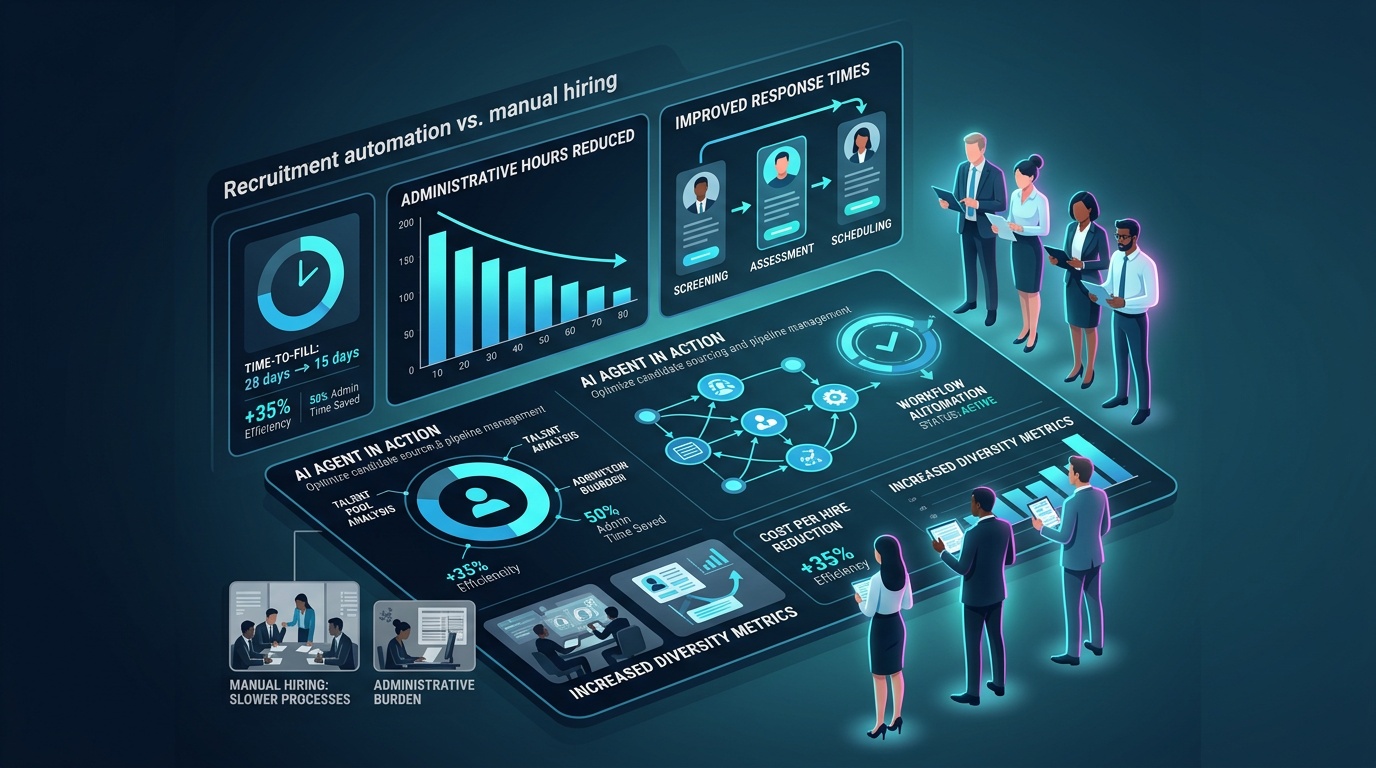
Recruitment automation can be useful when a team handles repeated, high-volume tasks. It can reduce administrative hours, improve response times, and give consultants more capacity for candidate conversations, hiring-manager communication, sourcing strategy, and business development. The financial return still depends on workflow design and placement outcomes.

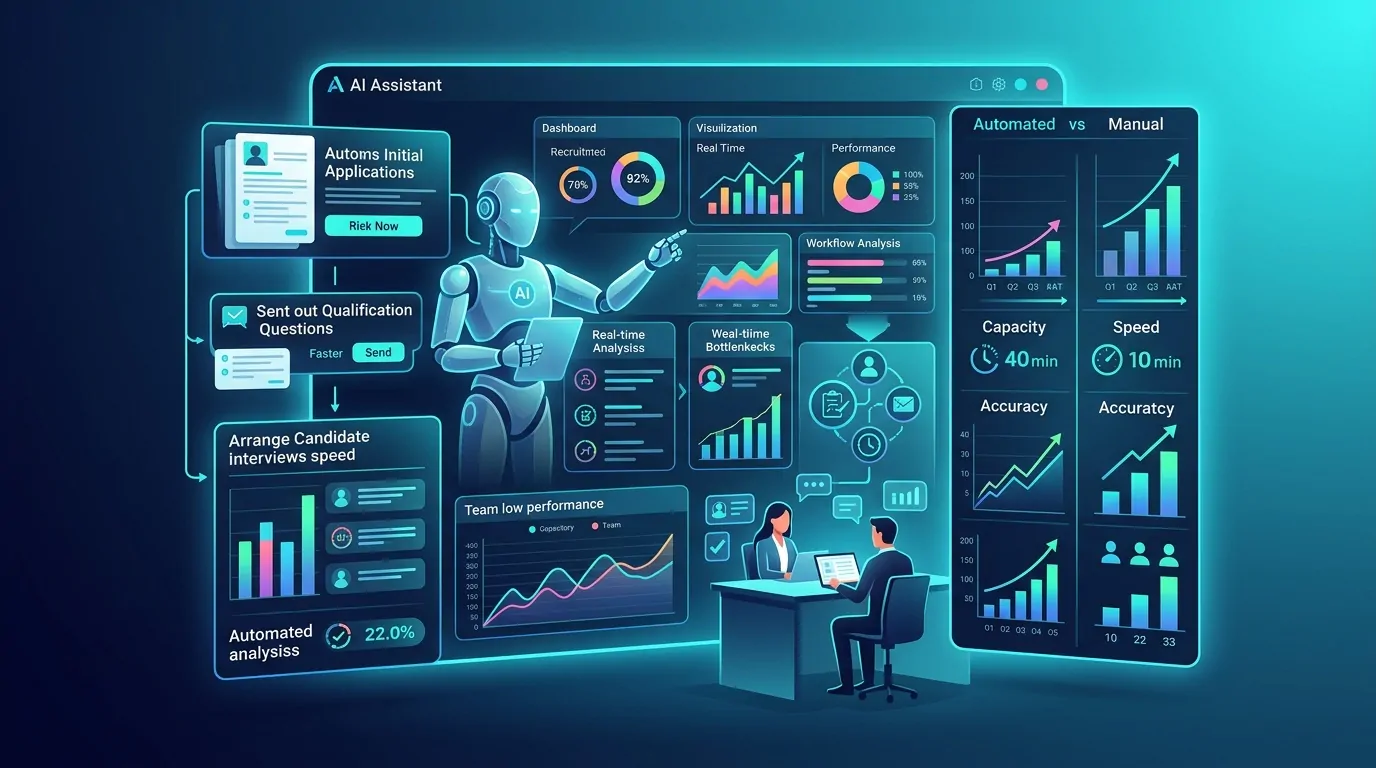

A connected workflow can review applications, send qualification questions, arrange interviews, issue reminders, and provide updates outside office hours. Recruiters can redirect that time to intake meetings, candidate preparation, sourcing strategy, and client development.
Track recruiter hours per placement, cost per qualified candidate, offer acceptance, interview attendance, and revenue per consultant. A low subscription price does not prove a lower hiring cost.
Where automation creates useful value
High-volume, recurring, and seasonal recruitment may be a strong fit. Suitable tasks include candidate sourcing, CV parsing, database reactivation, pre-screening, interview coordination, reminders, and candidate documentation. Agentic Systems for Recruitment can reduce administrative time across these stages.
The system also supports dormant ATS database reactivation and creates branded candidate profiles and go-to-market documents for client submissions. These outputs reduce documentation work while consultants retain responsibility for candidate judgment.
Standardized criteria can give applicants a more consistent process and faster communication. A ranking system is only a starting point. Recruiters still need to review unusual experience, discuss motivation, assess role fit, and manage stakeholder relationships.
How should you choose between recruitment automation and manual hiring?
Choose the operating model by reviewing hiring volume, role complexity, service expectations, and current process data. Establish a baseline for time-to-hire, applications per vacancy, recruiter hours per hire, cost per qualified candidate, interview attendance, offer acceptance, and placement revenue. Automate a task only when its capacity gain justifies implementation and oversight costs.
High-volume roles may suit automated intake, CV parsing, eligibility questions, candidate ranking, interview reminders, and database searches. Senior placements, confidential searches, specialist roles, and assessments involving complex motivation need direct consultant involvement.
Evaluate workflow fit before selecting technology
Integration should be a buying requirement. Confirm that the system connects with your ATS, job boards, email, calendar, messaging channels, and reporting tools. A disconnected product can create more data entry; a connected workflow gives the team one reliable operating record.
Test candidate matching with historical vacancies and anonymized CVs before a wider rollout. The system should keep an audit trail and let managers review screening criteria. Document review points so that biased criteria, inaccurate matches, and unusual candidate profiles reach a person.
Build a hybrid recruitment model
Start with one bottleneck and one success measure. Application collection, CV processing, interview coordination, and database reactivation are practical pilots. Compare each pilot with the manual baseline, then check whether saved hours lead to more candidate conversations, stronger client intake, better sourcing, or additional placements.
Recruitment comparison insights can help teams assess options against their vacancy mix and operating targets.
Build the business case around total operating cost, not subscription price alone. Include integration, training, maintenance, adoption, vacancy delays, overtime, and administrative labor. A controlled pilot should end with clear ownership, human-review rules, and measurable targets, including fair and explainable decisions.
References
Frequently Asked Questions
How much time does recruitment automation actually save?
The amount depends on application volume, role complexity, data quality, and the number of tasks connected to the workflow. The most meaningful measure is how saved hours are redirected toward candidate conversations, client service, sourcing strategy, and placements.
Is recruitment automation more expensive than manual hiring?
Automation introduces software, integration, implementation, and training costs. The financial question is whether those costs are offset by lower administrative labor, fewer delays, better recruiter capacity, and reduced dependence on external agency support.
Can automation replace human recruiters entirely?
No. Effective recruitment depends on professional judgment, trust, negotiation, and an understanding of motivations that may not appear in a resume. Automation supports repetitive operations while recruiters retain responsibility for candidate advice, hiring manager consultation, nuanced assessment, sensitive discussions, and final recommendations.
Which roles are best suited for automated hiring?
Automation may be effective for high-volume, recurring, seasonal, or clearly defined vacancies. Examples include customer support, warehouse operations, sales development, hospitality staffing, administration, and entry-level technical roles with documented requirements.
How do I implement a hybrid recruitment model?
Begin with one measurable bottleneck rather than automating the entire hiring operation at once. Application triage, interview scheduling, candidate reminders, or dormant database reactivation are practical starting points. Connect the workflow to the existing Applicant Tracking System, confirm consent and access controls, and document the conditions that require human review.
Set a regular review process for false positives, missed candidates, duplicate records, message quality, and hiring manager feedback. AI automation services can support recruiter accountability while giving automation clear boundaries, escalation paths, and measurable implementation targets.