
Recommended solutions for improving candidate engagement
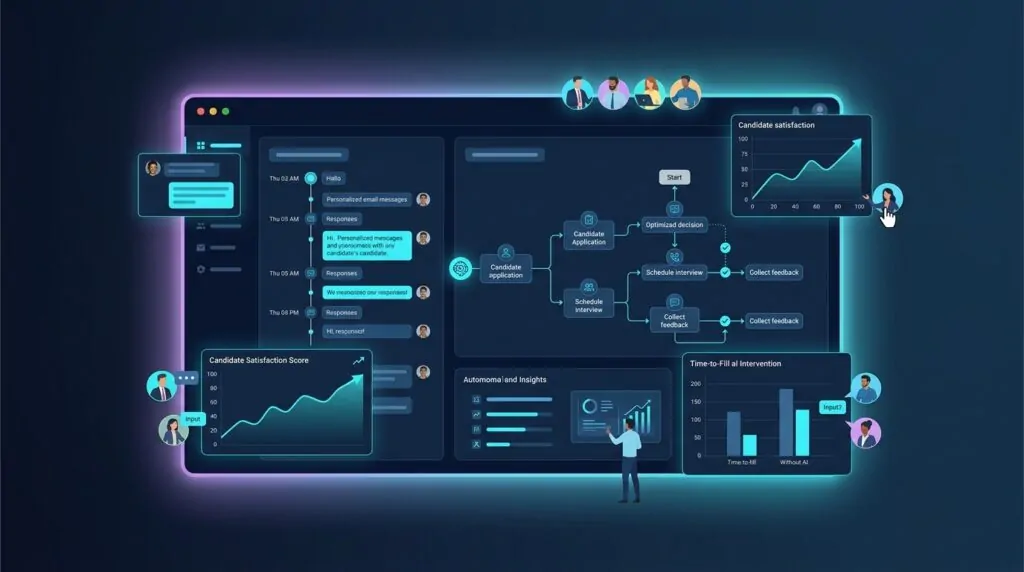
Recommended solutions for improving candidate engagement start with timely communication, relevant outreach, and a hiring process that respects the candidate’s time. For recruitment agencies and internal talent teams, success is measured by clear expectations, useful updates, and continued interest from application through offer discussion. Not by message volume.
Key Takeaways
- Candidate engagement is defined by the quality and timing of communication, not by the sheer volume of messages sent during the hiring journey.
- Setting clear expectations from the first interaction helps applicants understand each stage of the process and what comes next.
- Respecting a candidate’s time through streamlined scheduling and prompt responses builds trust that carries through to offer discussions.
- Relevant, personalized outreach keeps strong applicants interested and reduces drop-off between interview stages.
- Automating routine updates and reminders frees recruitment teams to focus on meaningful conversations with top talent.
AI agents can handle routine follow-ups, answer common questions, and identify stalled applications. Recruiters still lead conversations that require judgment, empathy, and knowledge of the role. That division of work helps teams improve response times without making the process feel impersonal.
What solutions improve candidate engagement?
Effective candidate engagement combines personalized communication, transparent process updates, responsive scheduling, useful job information, and consistent follow-up. A practical system connects the applicant tracking system (ATS), email, text messaging, scheduling, and reporting. AI can draft outreach, answer routine questions, identify stalled applications, and route sensitive conversations to a recruiter.
Candidate engagement covers every interaction from the first job advertisement through onboarding. It includes application confirmation, interview preparation, feedback, status notifications, rejection communication, and offer follow-up. Greenhouse reports that 70% of candidates identify poor communication as the biggest red flag in a hiring process, making response standards an operating requirement rather than a courtesy.
Good communication also sets honest expectations. Job descriptions should explain responsibilities, compensation where appropriate, work location, interview stages, and decision timing. Automated messages should disclose automation, offer a clear route to a person, and avoid generic language. Greenhouse reports that 87% of candidates believe employers should disclose AI use in hiring. Vynta AI agents for recruitment can connect with ATS platforms such as Greenhouse, Lever, and Ashby so recruiters retain control over evaluation and relationship management.
Operational standard: Every applicant should know that the application was received, what happens next, when an update is expected, and how to ask a question. Track these commitments as service levels, not informal intentions.
What are the business benefits?
Clear communication can affect hiring performance and the wider reputation of an organization. Candidates may later become employees, customers, referral sources, or future applicants. IBM reports that 53% of applicants with a positive candidate experience may become customers, while Guidant Global reports that 41% of candidates with a poor recruitment experience will take their business and loyalty elsewhere.
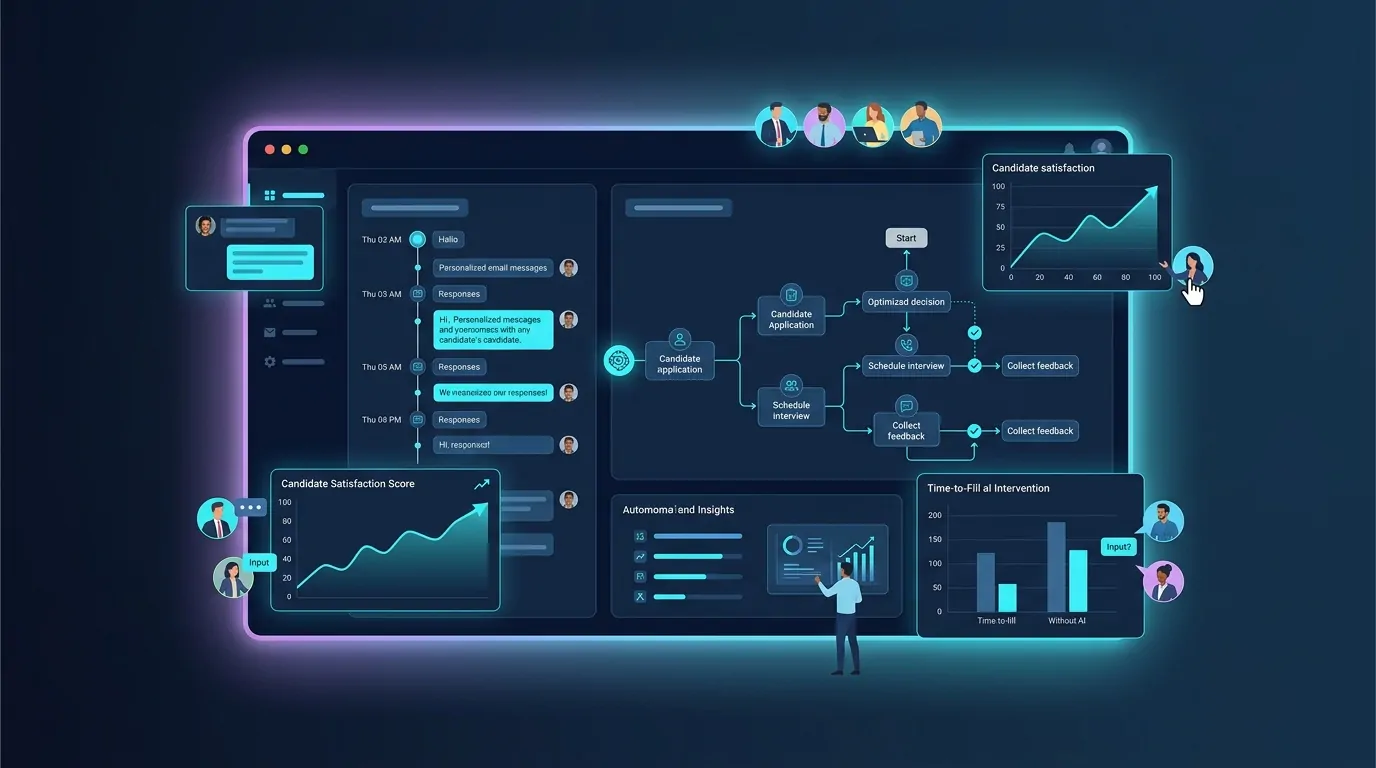
Consistent acknowledgments, reminders, and status updates reduce avoidable drop-off. Recruiters can then review response times, interview attendance, progression between stages, and offer acceptance to find process friction. A useful dashboard turns those signals into specific questions: Which roles lose applicants during screening? Which hiring managers delay feedback? Which channels attract candidates who complete the process?
Vynta AI has helped recruiters automate 80% of initial outreach while reducing ghosting by 40%. In one mid-market SME example, AI agents reduced candidate drop-off by 30% through timely reminders, personalized status messages, and escalation when applicants expressed uncertainty. These outcomes require accurate data, well-designed workflows, and human review; automation alone does not guarantee them.
Consistent rules can also support a fairer process. Applicants can receive accessible instructions, interview reminders, plain-language updates, and clear next steps. Recruiters should review response patterns for possible bias, correct inaccurate job information, and keep a person responsible for sensitive feedback, accommodation requests, and high-impact decisions.
Track first-response time, application completion, stage-specific drop-off, interview attendance, time in stage, candidate satisfaction, and offer acceptance. Segment results by role, source, location, hiring manager, and candidate stage. Social channels may support outreach. Greenhouse reports that 55% of companies prioritize social media for recruiting. But consent, candidate preference, and message relevance should determine the channel.
How should you choose a candidate engagement system?
Choose a system by starting with process problems, not software features. Map the journey from sourcing and application through screening, interviews, offer management, and onboarding. For each stage, define the expected response time, message owner, approval requirement, and escalation path. This shows whether candidates are waiting for confirmation, scheduling, feedback, or answers about compensation and role expectations.
ATS integration is a practical buying requirement. The system should connect with platforms such as Greenhouse, Lever, or Ashby while preserving candidate profiles, consent records, recruiter notes, interview stages, and communication history. Ask whether updates move in both directions, how duplicate records are handled, and whether recruiters can pause or edit an automated sequence. A reminder sent after an interview has been canceled can damage trust faster than a manual delay.
Assess the controls around automation. An AI agent can answer routine questions about process steps, location, interview format, and scheduling. It should route compensation disputes, accessibility requests, sensitive feedback, and possible discrimination concerns to a person. Candidates should know when an automated assistant is active and have a clear route to a recruiter. Review templates for specific role details, inclusive language, and realistic promises.
Reporting should connect communication activity to recruiting outcomes. Useful measures include first-response time, application completion, stage-by-stage drop-off, email and text response rates, interview attendance, rescheduling frequency, time in stage, candidate satisfaction, offer acceptance, and ghosting. Set a baseline before implementation, then review results at regular intervals. A healthy overall average can conceal a failing workflow, so segment the data by role, source, location, and hiring manager.
Buying checkpoint: Request a workflow demonstration using a realistic candidate record. Test application acknowledgment, interview scheduling, a status request, a reschedule, an opt-out, and escalation to a recruiter. Confirm what the candidate sees, what the recruiter receives, and what the ATS records at every step.
Implementation also requires attention to data security, access permissions, audit trails, consent management, and recruiter adoption. Assign ownership for templates, integrations, performance reviews, and maintenance. Start with one high-volume workflow, such as initial outreach or interview reminders, and expand after the team verifies response quality and business impact. The right system supports recruiter judgment while creating a consistent service standard. Vynta AI’s AI automation services can help teams design and implement these workflows.
References
Frequently Asked Questions
What are the most effective solutions for improving candidate engagement?
The strongest approach combines prompt application confirmation, personalized outreach, clear job information, mobile-friendly communication, interview scheduling, timely status updates, and respectful rejection messages. Set a response standard for each hiring stage, then measure whether candidates receive useful information within that timeframe. Communication should answer practical questions about responsibilities, compensation, location, interview format, and decision timing. A consistent process matters because Greenhouse reports that 70% of candidates view poor communication as the biggest hiring-process red flag.
How can AI automate candidate engagement without losing the human touch?
Use AI for repetitive, rules-based work: acknowledging applications, answering common process questions, sending reminders, suggesting relevant opportunities, and identifying stalled candidates. Keep recruiters involved in conversations about compensation, accommodations, rejection feedback, role fit, and unusual circumstances. Candidates should know when an AI assistant is active and have an easy route to a person. Greenhouse reports that 87% of candidates want employers to disclose AI use in hiring, so transparency should be part of the workflow rather than an afterthought.
What tools integrate with an ATS to improve communication?
Look for connections among the applicant tracking system, email, text messaging, calendar scheduling, career-site forms, video interviews, and reporting. Integrations with systems such as Greenhouse, Lever, and Ashby should synchronize candidate stage, consent, recruiter notes, interview changes, and communication history. Test both data movement and error handling. Duplicate profiles, outdated job status, or a missed opt-out can create poor experiences and compliance exposure.
What are the key metrics to track?
Track first-response time, application completion, stage-specific drop-off, message response rate, interview attendance, rescheduling, time in stage, candidate satisfaction, ghosting, offer acceptance, and source quality. Segment results by role, location, recruiter, hiring manager, and communication channel. A rising response rate does not necessarily indicate better engagement if qualified candidates still abandon applications. Pair activity data with recruiter review and candidate feedback to identify the process changes that improve progression.