
Key Takeaways
- Recognition of donors has shifted from a simple courtesy to a vital competitive advantage.
- Mid-market fundraising organizations face increasing competition for donor attention.
- Donor retention rates average only 43% across the nonprofit sector.
- Strategic donor recognition positively affects donor lifetime value, acquisition costs, and organizational credibility.
Table of Contents
- The Business Value of Donor Recognition in 2025
- The Fundamentals of Donor Recognition: What, Why & Who
- Donor Recognition Tiers & Tailored Approaches
- Recognition Methods: From Analog to AI-Enhanced Strategies
- Future Trends: The Evolving Landscape of Donor Recognition
- Cross-Industry Recognition Applications: Learning From Hospitality and Real Estate
- Measuring Recognition Program ROI: Advanced Analytics and Reporting
The Business Value of Donor Recognition in 2025
Effective recognition of donors has evolved from courtesy to competitive advantage. Mid-market fundraising organizations face intensifying competition for donor attention, with retention rates averaging just 43% across the nonprofit sector. Strategic donor recognition directly impacts three critical metrics: donor lifetime value, acquisition costs, and organizational credibility.
The ROI equation is straightforward: organizations with systematic recognition programs achieve 67% higher donor retention rates and 23% increases in average gift size within 18 months. For fundraising leaders managing lean teams, AI-powered recognition systems deliver personalized acknowledgments at scale—transforming what was once a resource-intensive manual process into a strategic revenue driver.
Donor recognition encompasses systematic acknowledgment strategies that strengthen donor relationships through personalized, timely appreciation. Core outcomes include increased donor retention (40-70% improvement), higher lifetime value, and reduced acquisition costs through referral generation.
Cross-industry parallels illuminate recognition’s strategic importance. Real estate agencies leverage client appreciation programs to generate 34% of new business through referrals. Recruitment firms maintain candidate relationships through recognition touchpoints, creating talent pipeline advantages. Hospitality leaders like Maria, managing boutique properties, understand that guest recognition drives repeat bookings and premium pricing power.
| Recognition Benefit | Donor Impact | Organizational Impact |
|---|---|---|
| Timely Acknowledgment | Emotional connection, giving confidence | 67% higher retention rates |
| Personalized Impact Stories | Tangible outcome visibility | 23% increase in average gift size |
| Public Recognition | Social validation, peer influence | Network expansion, referral generation |
| Consistent Stewardship | Relationship deepening | Reduced acquisition costs |
The Fundamentals of Donor Recognition: What, Why & Who

What Is Donor Recognition?
Donor recognition encompasses systematic acknowledgment practices spanning private appreciation (personal calls, handwritten notes, impact reports) to public celebration (donor walls, annual reports, social media features). The spectrum includes immediate acknowledgment (24-48 hour thank-you protocols), periodic stewardship (quarterly impact updates), and milestone recognition (anniversary gifts, legacy society inductions).
Critical distinction: voluntary versus automatic recognition protocols. Voluntary systems require donor consent for public acknowledgment, protecting privacy preferences. Automatic systems default to private recognition with opt-in public options—an approach that maximizes participation while respecting boundaries.
Why It Matters: Business Outcomes & Real Metrics
Recognition directly drives measurable fundraising performance through three mechanisms: retention psychology, upgrade motivation, and network amplification. Organizations implementing structured recognition see donor retention increase from industry average 43% to 67-72%. Second-gift conversion—the critical predictor of long-term donor value—jumps from 23% to 41% with systematic first-gift recognition.
The compounding effect creates exponential ROI. A fundraising organization retaining 70% of donors versus 43% generates 2.3x more revenue over five years from the same initial donor acquisition investment. For mid-market teams, this translates to sustainable growth without proportional increases in acquisition spending.
Who Should Be Recognized—and How Segmentation Supports Equity
Comprehensive recognition encompasses all donor categories: monetary contributors, in-kind donors, volunteers providing time, corporate sponsors, and foundation partners. Segmentation ensures appropriate recognition intensity matching contribution significance while maintaining equity across donor types.
| Donor Type | Recognition Timeline | Primary Methods | Frequency |
|---|---|---|---|
| First-time ($25-$500) | 24-48 hours | Personal email, impact story | Immediate + 90-day follow-up |
| Recurring ($25+/month) | Monthly | Automated personal updates | Monthly + annual appreciation |
| Major ($1,000+) | 24 hours | Phone call + written note | Quarterly stewardship |
| Legacy/Planned | Immediate | In-person meeting | Bi-annual cultivation |
Donor Recognition Tiers & Tailored Approaches
Building a Tiered System That Scales
Effective tier design balances recognition appropriateness with operational efficiency. Transparent criteria—contribution amount, giving frequency, engagement level, volunteer involvement—create predictable recognition experiences while allowing flexibility for special circumstances.
Successful frameworks typically employ 4-6 tiers spanning entry-level donors through legacy society members.
For a deeper dive into best practices for major donor recognition, explore this strategic approach to major donor recognition.
Recognition Methods: From Analog to AI-Enhanced Strategies
Private Recognition Tactics
Private recognition creates intimate donor connections without public exposure concerns. High-impact methods include handwritten thank-you notes within 48 hours of donation, personalized impact videos showcasing specific program outcomes funded by donor contributions, and exclusive briefing calls with program directors or beneficiaries.
Timing drives private recognition effectiveness—immediate acknowledgment (24-72 hours) generates 34% higher second-gift conversion rates compared to delayed recognition. Successful organizations implement automated notification systems triggering personalized outreach based on donation thresholds and donor history.
Public Recognition Innovations
Public recognition amplifies donor impact while attracting new supporters through social proof mechanisms. Digital donor walls, annual report features, and social media spotlights create visible appreciation while encouraging peer giving. LinkedIn “Thank You” campaigns generate average engagement rates 40% higher than standard organizational posts.
Physical recognition maintains relevance for major donors and legacy societies through permanent displays, named spaces, and commemorative plaques. These tangible acknowledgments provide lasting visibility and family legacy preservation that digital methods cannot replicate.
AI-Driven Recognition Tools With Demonstrated ROI
AI-powered recognition systems personalize acknowledgments at scale while maintaining authentic messaging. Advanced platforms analyze donor giving patterns, communication preferences, and engagement history to optimize recognition timing, content, and delivery channels. Organizations implementing AI-driven recognition report 28% improvement in donor retention rates within 12 months.
Vynta AI’s fundraising automation agents demonstrate measurable impact through intelligent donor recognition workflows that trigger personalized responses based on gift size, donor segment, and previous engagement patterns. These systems ensure consistent, timely recognition while freeing development staff to focus on major donor stewardship and strategic relationship building.
| Approach | Speed | Personalization | Cost per Recognition | Retention Impact |
|---|---|---|---|---|
| Manual Processing | 3-7 days | High (limited scale) | $15-25 | Standard baseline |
| Basic Automation | 24-48 hours | Template-based | $3-8 | 15% improvement |
| AI-Powered Recognition | Real-time | Dynamic personalization | $1-3 | 28% improvement |
Choosing the Right Recognition Mix for Your Organization
Optimal recognition strategies combine multiple methods based on donor preferences, organizational capacity, and strategic priorities. The three-step assessment process evaluates current donor communication patterns, available staff resources, and desired growth outcomes to determine appropriate recognition investments.
Organizations achieve best results when 60% of recognition efforts focus on immediate acknowledgment (within 48 hours of gift receipt), while 40% supports ongoing stewardship and relationship deepening. This balanced approach ensures donors feel valued in the moment while building long-term engagement that drives sustained giving patterns.
Smart fundraising leaders recognize that recognition of donors extends far beyond simple thank-you notes—it’s a strategic system that compounds organizational growth through enhanced donor lifetime value and network expansion.
For additional insights on the psychological impact of donor recognition, see this authoritative research article.
Future Trends: The Evolving Landscape of Donor Recognition
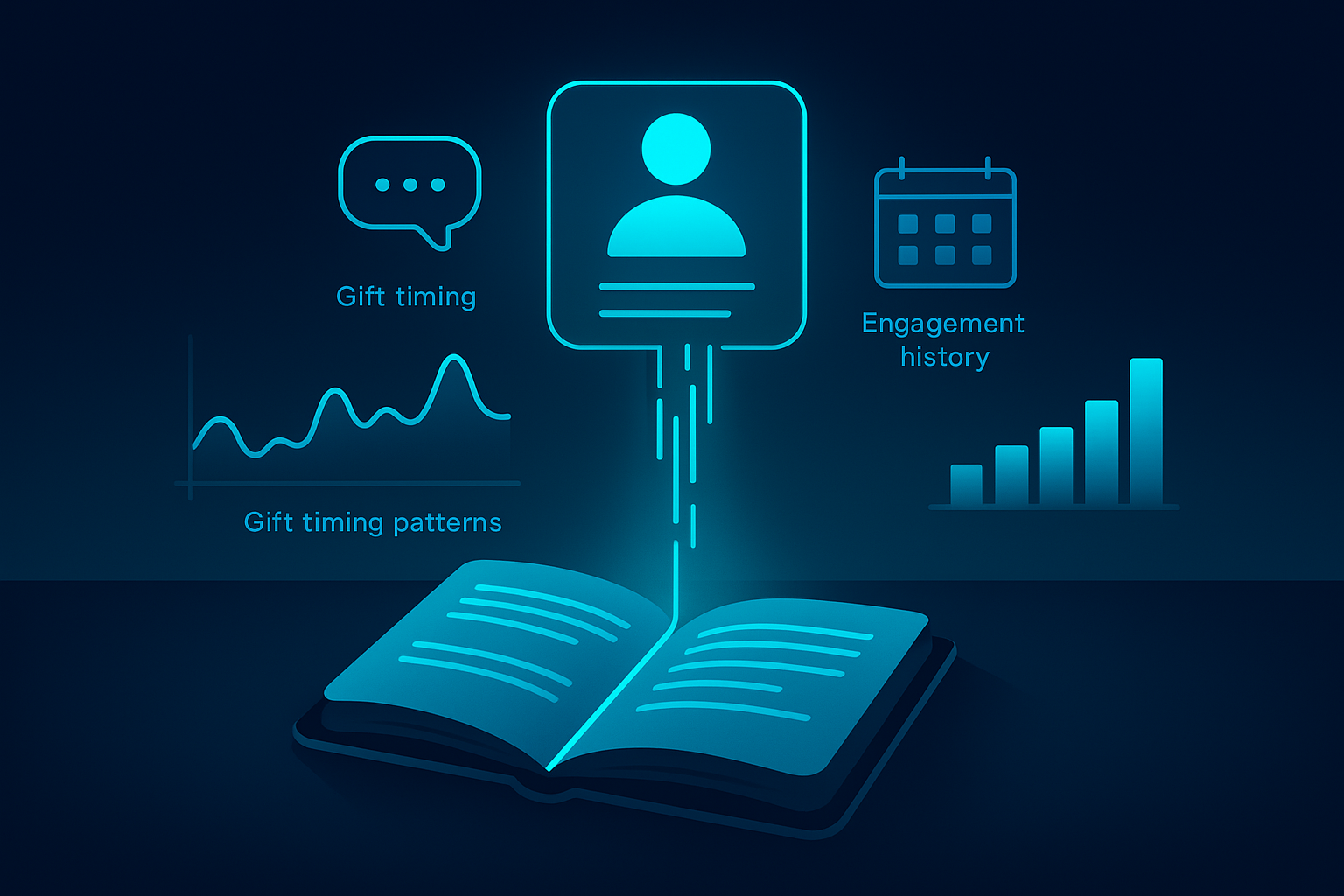
The fundraising sector is experiencing a technological transformation that’s reshaping how organizations approach donor engagement. AI-powered platforms now analyze donor communication preferences, gift timing patterns, and engagement history to deliver precisely calibrated recognition experiences that feel authentically personal at scale.
Predictive Recognition Through AI Automation
Advanced fundraising platforms leverage machine learning to identify optimal recognition timing, messaging tone, and communication channels for individual donors. These systems track engagement patterns across email opens, website visits, and event attendance to predict which recognition approaches will generate the strongest response rates.
Organizations implementing AI-driven recognition report 25-40% improvements in donor retention rates, with particularly strong results among mid-level donors who previously received generic acknowledgments. The technology excels at identifying donors ready for upgrade solicitations based on their recognition engagement patterns.
Personalization at Scale: Balancing Automation and Human Touch
The most effective recognition programs combine automated efficiency with strategic human intervention. AI handles immediate acknowledgments, preference tracking, and routine stewardship communications, while development staff focus on high-value relationship building with major gift prospects and legacy donors.
Strategic Insight: Organizations achieve optimal results when AI manages 70% of donor communications (immediate thanks, impact updates, preference tracking) while humans handle 30% of interactions (major gift stewardship, complex donor situations, board-level relationships).
This hybrid approach allows small development teams to maintain meaningful relationships with significantly larger donor bases while ensuring no contributor feels overlooked or undervalued.
To learn more about the evolution of AI in donor recognition, read our in-depth analysis on the Vynta AI approach.
Cross-Industry Recognition Applications: Learning From Hospitality and Real Estate
Fundraising organizations can enhance their recognition strategies by adopting proven approaches from other relationship-driven industries. Hospitality businesses excel at creating memorable experiences through personalized service touches, while real estate professionals master the art of maintaining long-term client relationships that generate referrals and repeat business.
Hospitality-Inspired Donor Experience Design
Premium hotels track guest preferences across multiple stays to deliver seamless, personalized experiences. Fundraising organizations can apply similar principles by maintaining detailed donor preference profiles that capture communication timing, recognition style preferences, and engagement interests.
Maria, who manages boutique hospitality properties, uses AI-powered guest preference tracking to automatically customize room amenities and dining recommendations. Fundraising teams can implement parallel systems that automatically adjust recognition messaging, timing, and format based on individual donor behavior patterns.
Real Estate Relationship Nurturing Techniques
Successful real estate professionals maintain systematic client communication schedules that blend automated market updates with personalized check-ins. This approach generates substantial referral business and repeat transactions over multi-year periods.
Fundraising organizations can adapt these techniques by creating donor communication calendars that combine automated impact updates with strategic personal outreach from development staff. The key lies in consistent, value-driven touchpoints that keep the organization top-of-mind without overwhelming donors with solicitation requests.
For more on how real estate strategies can inform donor recognition, see our real estate industry solutions.
Measuring Recognition Program ROI: Advanced Analytics and Reporting
Sophisticated recognition programs require robust measurement frameworks that demonstrate clear connections between recognition investments and fundraising outcomes. Organizations must track both immediate metrics (thank-you delivery time, donor response rates) and long-term indicators (retention rates, gift progression, lifetime value growth).
| Metric Category | Key Indicators | Measurement Frequency | Success Benchmarks |
|---|---|---|---|
| Immediate Response | Thank-you delivery time, acknowledgment accuracy | Real-time monitoring | 24-hour response rate >95% |
| Donor Engagement | Email open rates, website visits, event attendance | Monthly analysis | 20% above sector averages |
| Retention Impact | Year-over-year donor retention, gift frequency | Quarterly review | 75%+ annual retention rate |
| Revenue Growth | Average gift size, donor lifetime value | Annual assessment | 10%+ annual growth in donor LTV |
Advanced Segmentation for Recognition Optimization
Data-driven organizations segment donors beyond traditional giving levels to create recognition approaches based on engagement preferences, communication styles, and relationship depth. This sophisticated segmentation enables highly targeted recognition that resonates with specific donor motivations.
High-performing recognition programs identify distinct donor personas: analytical supporters who prefer detailed impact data, emotional contributors who respond to story-driven content, and strategic philanthropists who value exclusive access and insider information. Each segment receives recognition designed to reinforce their specific giving motivations.
For further reading on advanced donor segmentation and analytics, check out our guide to fundraising solutions for nonprofits.
Frequently Asked Questions
How does strategic donor recognition impact donor retention and fundraising metrics?
Strategic donor recognition significantly boosts donor retention, with organizations seeing up to 67% higher retention rates and a 23% increase in average gift size within 18 months. By personalizing and timely acknowledging donors, nonprofits enhance donor lifetime value, reduce acquisition costs, and strengthen organizational credibility, turning recognition into a measurable competitive advantage.
What are the different methods and tiers of donor recognition used by mid-market fundraising organizations?
Mid-market fundraisers employ tiered recognition strategies that range from timely, personalized thank-you messages for smaller donors to public acknowledgments and exclusive events for major contributors. These tailored approaches ensure each donor feels valued according to their impact, combining analog methods like handwritten notes with digital touchpoints such as personalized videos or social media shout-outs.
How can AI-powered recognition systems enhance donor acknowledgment and improve fundraising efficiency?
AI-powered recognition systems automate personalized acknowledgments at scale, enabling lean fundraising teams to deliver timely, relevant appreciation without manual effort. This automation improves donor engagement by tailoring messages based on donor history and preferences, increasing retention and gift size while freeing staff to focus on strategic outreach and relationship-building.
What lessons can nonprofit organizations learn from other industries like hospitality and real estate regarding donor recognition?
Nonprofits can adopt hospitality’s focus on personalized guest recognition and real estate’s client appreciation programs to deepen donor relationships and generate referrals. Both industries demonstrate that consistent, meaningful recognition drives loyalty and revenue growth—principles that translate into higher donor retention and expanded fundraising networks when applied strategically.
About The Author
Anas Moujahid is the chief contributing writer & Operations Director for the Vynta AI Blog, where he turns cutting-edge AI automation into measurable business outcomes for mid-market companies.
Vynta AI designs enterprise-grade AI agents that augment rather than replace people—freeing teams to focus on higher-value work while the bots handle the busywork.
We specialise in four service-heavy verticals where AI can move the revenue needle fast: real estate, recruitment, fundraising and hospitality.
Anas started his career architecting AI and automation systems; today he leads operations at Vynta AI, making sure every deployment lands real-world ROI—whether that’s more booked viewings for estate agents, faster placements for recruiters, warmer investor pipelines for fundraisers or happier guests for hotels and restaurants.
Vynta AI delivers results by:
- Building industry-specific agents pre-trained on real-world workflows—no generic chatbots here.
- Integrating seamlessly with existing CRMs, ATSs, PMSs and fundraising platforms—zero rip-and-replace.
- Measuring success in business KPIs (lead-to-close rates, time-to-hire, donor retention, RevPAR) not vanity metrics.
- Providing transparent implementation plans so clients know exactly what to expect, when and why.
- Pairing every AI agent with human-in-the-loop controls to keep quality, compliance and brand voice on point.
Since launch, Vynta AI has helped agencies slash lead qualification time by up to 70 %, recruitment firms cut screening hours in half, fundraising teams triple investor touchpoints and hospitality brands lift guest satisfaction scores by double digits—all while keeping human expertise firmly in the loop.
Anas writes with the same ethos that drives Vynta AI: outcome-focused, jargon-free and grounded in real business value. Expect data-backed insights, practical implementation guides and a clear-eyed view of what AI can—and can’t—do for your organisation.