

quick draw on google
What Exactly Is Google’s Quick Draw AI Game?
The premise turns simple sketches into machine learning training data. Players follow prompts to draw objects while a neural network guesses in real time. This interactive experiment demonstrates pattern recognition at scale. A review of quick draw on google shows how rapid inference engines process visual inputs. Similar platforms such as auto draw use comparable architecture. Understanding the mechanics of quick draw on google helps clarify how these ideas translate into business use cases. The interface requires zero installation.
Beyond the Doodle: The Hard No of Quick Draw and What It Means for Business AI
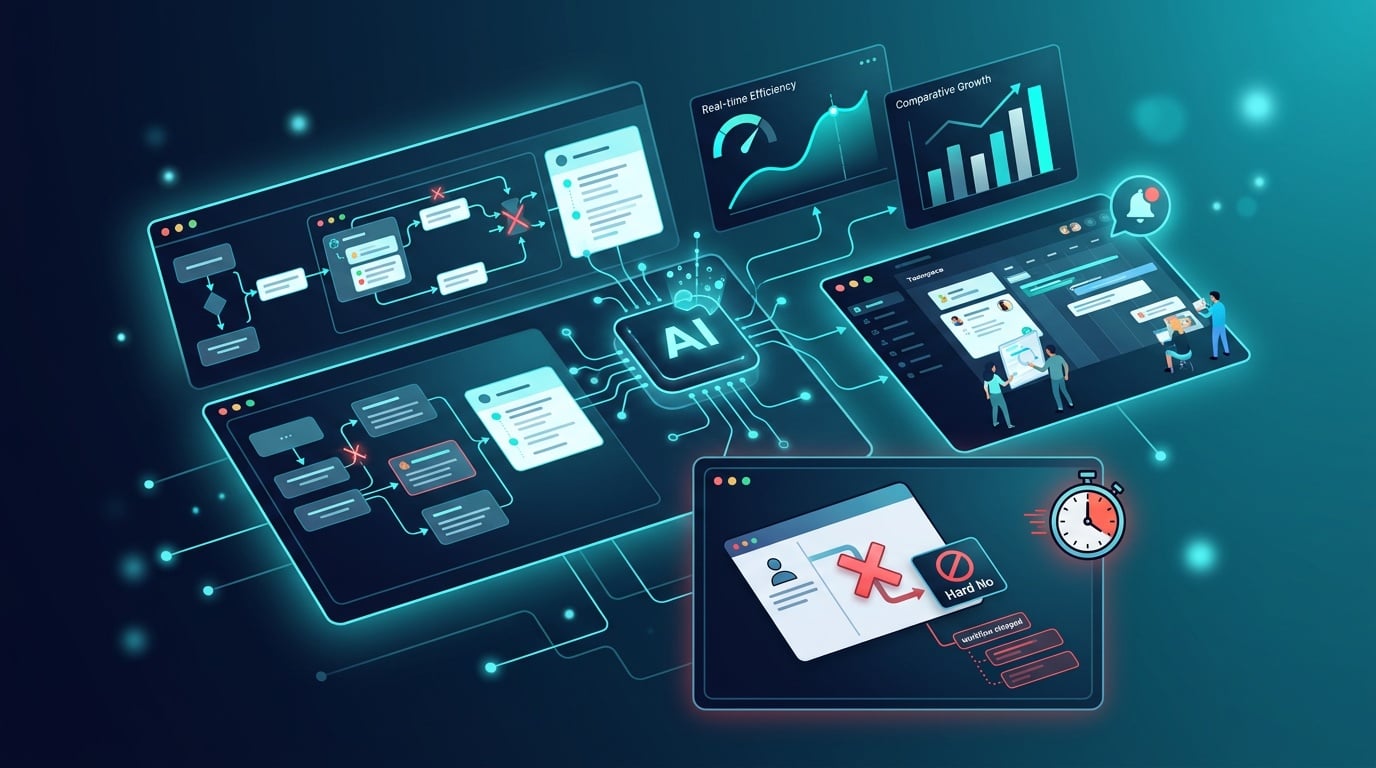
Users face time pressure and occasional incorrect guesses. When the system returns a hard refusal, frustration follows. This mirrors mid-market SME challenges during automation adoption. Trust depends on clear algorithmic boundaries, defined escalation paths, and measurable accuracy targets.
From Pictionary to Precision: How Quick Draw’s AI Powers Real-World Business Automation
The underlying data approach supports predictive modeling across many sectors. Real estate teams deploy conversational agents for lead qualification and property matching. Recruitment leaders use screening pipelines to accelerate candidate sourcing. Fundraising organizations automate donor segmentation and outreach sequencing. Hospitality operators streamline reservation workflows and guest communication. Each application prioritizes speed and consistency over manual processing.
| Sector | Manual Process | Automated Outcome |
|---|---|---|
| Real Estate | Manual lead sorting | Instant qualification routing |
| Recruitment | Resume parsing delays | Automated skill matching |
| Fundraising | Static mailing lists | Dynamic donor targeting |
| Hospitality | Front desk bottlenecks | Always-on guest concierge |
Building Trust in AI: Lessons from Quick Draw for Your Business Transformation
Transparency drives successful implementation. Organizations should acknowledge computational constraints while applying human oversight to complex decisions. Measuring success requires tracking revenue and efficiency metrics rather than novelty. Partnering with specialized providers helps keep deployment aligned with operational objectives. Comparing quick draw on google with tools such as quick draw wick and quick draw infinite highlights the shift from recreational experiments to business-grade deployment.
Understanding Visual Algorithm Training
The Premise: From Concept to Canvas
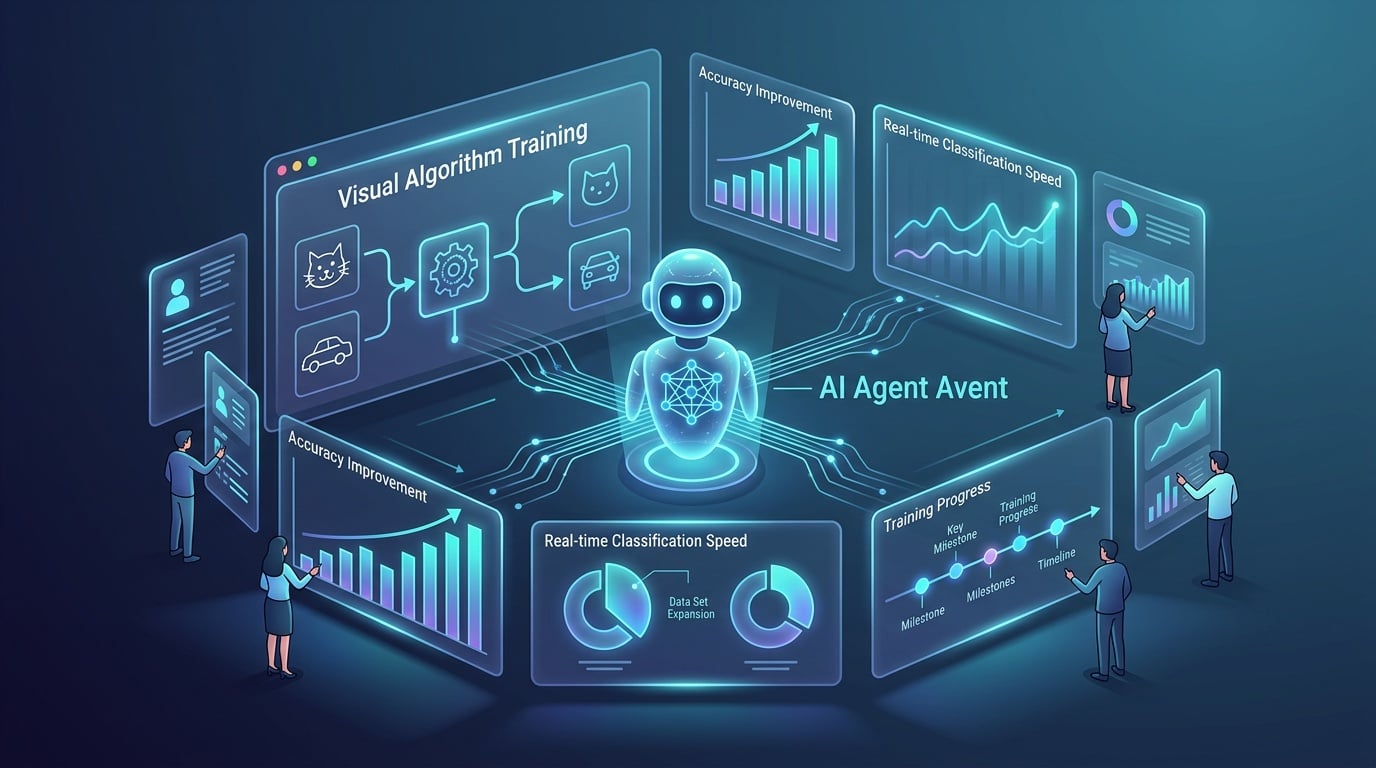
The platform quick draw on google turns rough sketches into classified objects through real-time pattern matching. Users complete timed drawings while models predict intent. This framework shows how machine learning systems process visual data at scale.
How the AI Learns: A Peek Under the Hood
The underlying architecture uses convolutional neural networks trained on millions of user submissions. Each stroke produces sequential data points that the system evaluates against established categories. Tools such as auto draw and draw something use similar predictive methods, although business deployments typically require tighter quality controls and higher precision.
Pattern recognition can move from a game into scalable automation when it is calibrated with industry-specific data and governance.
Translating Recognition to Enterprise Workflows
Real Estate Applications
Property agencies use automated lead scoring to filter out low-intent prospects before human agents engage. Intelligent routing directs high-intent buyers to the right specialists, reducing response latency and improving conversion rates.
Recruitment Success
Staffing firms use predictive matching to align candidate profiles with open roles. Automated scheduling reduces administrative bottlenecks, allowing hiring teams to focus on final interviews and culture-fit evaluation.
Fundraising Efficiency
Nonprofits implement donor segmentation models to personalize communication. Automated follow-up sequences maintain engagement without constant manual intervention from development teams.
Hospitality Excellence
Hospitality operators use reservation systems that anticipate guest preferences based on historical booking patterns. Concierge automation handles routine questions, freeing staff to deliver premium on-property experiences.
Measurable Outcomes and Human Augmentation
Evaluating quick draw on google shows how foundational techniques can evolve into production systems. Mid-market teams can grow more predictably by integrating transparent automation that supports existing staff rather than replacing them. At Vynta AI, we focus on measurable operational gains through careful implementation and ongoing performance monitoring.
Strategic AI Deployment Principles for Enterprise Growth

Algorithmic Transparency and System Boundaries
Leaders should define system boundaries before integrating predictive models into daily operations. Platforms such as quick draw on google show pattern recognition while signaling confidence levels. Business automation needs the same clarity on data inputs, processing logic, and output reliability. Mid-market executives should set guardrails and escalation rules that keep service consistent across departments.
Human-Machine Collaboration Frameworks
Successful adoption prioritizes team support over full autonomy. Intelligent routing can manage repetitive tasks so professionals can focus on relationship management. Recruitment teams may rely on automated screening to identify qualified candidates, while final hiring decisions remain a human responsibility. This structure improves consistency while reducing administrative drag.
Automation works best when it supports teams with clear rules, visibility, and a defined handoff to staff when judgment is required.
Quantifiable Performance Metrics
Evaluation should focus on measurable business outcomes. Hospitality teams track reservation conversion and guest satisfaction. Fundraising teams monitor retention and campaign response time. Structured analytics dashboards support continuous optimization across property management, talent acquisition, and investor relations.
Implementation Roadmap for Mid-Market SMEs
Progress will center on better context handling and stronger cross-platform integration. Vynta AI delivers industry-specific frameworks that align AI capabilities with commercial goals. Start by identifying process bottlenecks, setting performance benchmarks, and deploying automation that supports your workforce.
Contact our operations team to plan a tailored transformation strategy informed by lessons from quick draw on google.
Frequently Asked Questions
What is Google's Quick Draw game?
Google’s Quick Draw is an AI experiment where you draw objects based on prompts, and a neural network tries to guess what you’re drawing in real time. It’s a fascinating way to see how machine learning systems process visual data and learn pattern recognition from simple sketches. This interactive game helps train AI models at scale.
How do I play Quick Draw on Google?
To play Quick Draw, you simply go to the website and follow the prompts to draw various objects within a time limit. As you sketch, Google’s AI attempts to identify your drawing in real time. It’s a straightforward, browser-based experience that demonstrates visual algorithm training.
Where can I find and play Quick Draw?
You can play Quick Draw directly on Google’s dedicated Quick Draw website. Since it’s a web-based experiment, there’s no need for any installation or downloads. Just open your browser and start sketching.
Is there a Quick Draw app available?
Quick Draw is primarily designed as a web-based experiment, meaning you can play it directly through your internet browser without needing to download a specific app. This makes it easily accessible across various devices.
How does Quick Draw's AI technology relate to business automation?
Quick Draw demonstrates how AI can process visual data and recognize patterns, which is a foundational concept for business automation. This core technology supports predictive modeling in sectors like real estate for lead qualification or recruitment for candidate matching. At Vynta AI, we adapt these principles to create bespoke AI agents that streamline operations and deliver measurable outcomes for mid-market SMEs.