

Pricing for agentic AI in property management?
Agentic AI pricing in property management is usually set by workflow scope, system integrations, data readiness, usage, implementation, and ongoing support. A leasing agent that answers questions and books tours has a different cost profile from one that also qualifies prospects, matches properties, updates a CRM, sends reminders, and reports on pipeline performance.
Key Takeaways
- Agentic AI pricing in property management scales directly with the number of tasks an agent handles, from simple inquiries to full pipeline management.
- Costs vary significantly based on integration complexity and the readiness of existing data systems.
- Implementation fees and ongoing support create separate cost layers beyond the base subscription or usage charges.
- Property managers should map their specific workflow needs and system integrations before comparing pricing models.
For a mid-market property management company, the buying decision should start with the business problem: slow replies, missed after-hours inquiries, low tour attendance, or too much manual follow-up. Staff should retain responsibility for judgment, resident relationships, sensitive information, and compliance decisions.
What is agentic AI pricing in property management?
Agentic AI pricing is the cost of configuring and operating an AI system that can complete approved property management tasks, not just generate replies. Vynta sets pricing during discovery after reviewing the workflow, portfolio, data, integrations, usage expectations, implementation requirements, training, and support needs.
Vynta provides custom AI agents and automation solutions rather than off-the-shelf software, so a fixed price cannot be guaranteed before the workflow has been assessed. The quote should show which tasks are included, which systems connect, how usage is measured, and how performance will be reviewed.
An agentic system can capture inquiries through WhatsApp, SMS, email, and website chat; ask qualification questions; match prospects with suitable properties; coordinate calendars; send reminders; and request feedback after a viewing. A basic chatbot may answer a predefined question, while an agent follows an approved sequence and takes defined actions.
What business benefits can agentic AI deliver?
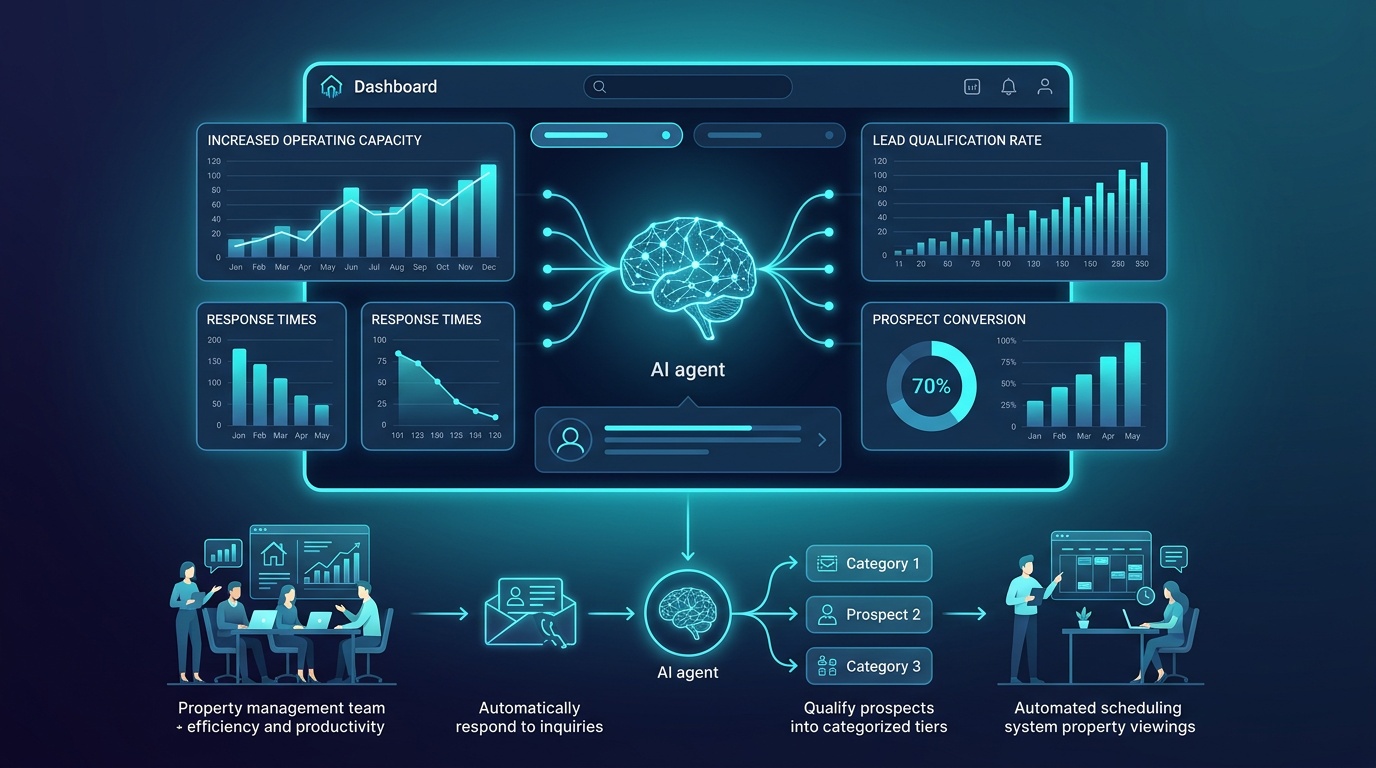
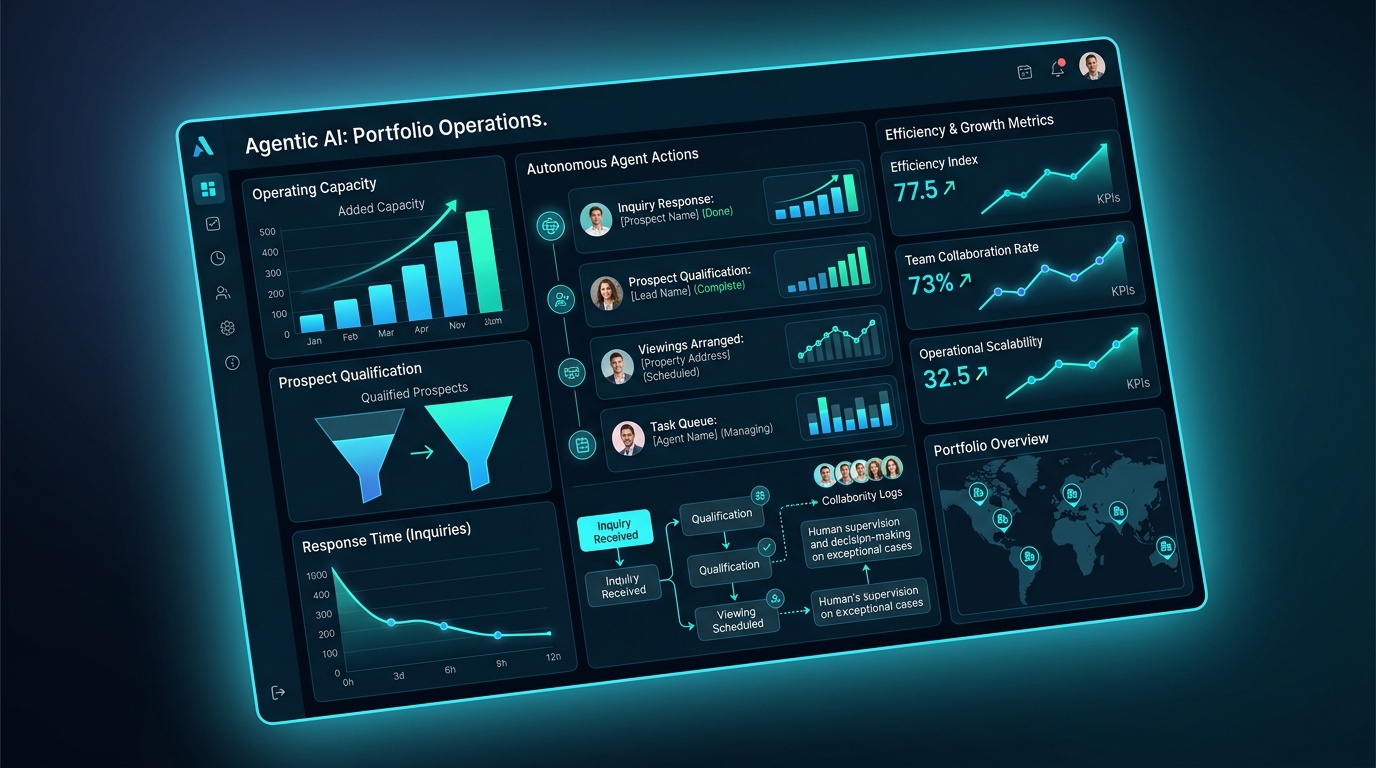

Agentic AI can give a property team more operating capacity by handling repetitive inquiry, qualification, scheduling, and follow-up work. That capacity is most valuable during evenings, weekends, staff absences, and high-volume leasing periods, when delayed replies can mean lost appointments.
Measure the effect through response time, qualified-lead rate, tour bookings, attendance, follow-up completion, administrative hours, and closed deals. The result depends on lead quality, accurate inventory, sensible response policies, staff adoption, and implementation quality. Not on the AI agent alone.
A consistent prospect journey does not replace the personal relationship that helps a property team earn trust. Set clear boundaries for data access, approval rules, audit logs, escalation paths, and human review. Property managers can use the AI Risk Management Framework as a reference for governance.
Vynta does not guarantee immediate ROI. A credible business case starts with a baseline, conservative assumptions, and a review plan agreed during discovery and assessment.
How should property managers evaluate pricing?
Evaluate an AI proposal against the workflow, portfolio size, inquiry volume, and financial outcome you expect to improve. Scope gives a better estimate of implementation effort and usage than a long feature list.
Ask the provider to separate each cost. A proposal may include a recurring service fee, conversation or usage charges, discovery, configuration, data preparation, API connections, training, reporting, and ongoing optimization. Give data readiness its own budget line: inaccurate availability, rental rates, property descriptions, lead stages, contact records, or calendars can delay launch.
Compare the billing model with your operating pattern:
- Fixed monthly fee: useful when property count and inquiry volume are stable.
- Usage-based pricing: suitable for seasonal portfolios when the billing unit is clearly defined.
- Hybrid pricing: combines a predictable service fee with variable communication or usage costs.
Build the business case around a pre-launch baseline. Track response time, lead-to-tour rate, tour attendance, follow-up completion, administrative hours, qualified pipeline, and closed deals. Review performance by property, channel, lead source, and leasing team so activity gains are not mistaken for revenue gains. Broader industry context is available in the 2025 AI Index Report.
Human oversight belongs in the selection criteria. Ask how the system handles ambiguous questions, fair-housing concerns, sensitive resident information, pricing requests, complaints, and prospects who need a person. The agent should assist property teams, not make unsupervised decisions about applicants, rents, or resident treatment.
Calculate payback with conservative assumptions. Compare annual AI service expense with recovered staff hours, additional qualified appointments, reduced no-shows, and incremental closed business. A useful test is simple: will the workflow produce enough measurable capacity or revenue to justify its total annual cost?
References
- NIST AI Risk Management Framework: https://www.nist.gov/itl/ai-risk-management-framework
- Stanford HAI 2025 AI Index Report: https://hai.stanford.edu/ai-index/2025-ai-index-report
Frequently Asked Questions
How much does agentic AI cost for property management?
Vynta pricing is determined during discovery and assessment. The appropriate budget depends on portfolio size, inquiry volume, channels, integrations, workflow complexity, and implementation support.
What factors most influence the price?
The main cost drivers are the number of properties, monthly conversations, communication channels, business rules, connected software, and actions the agent is authorized to perform. Data quality also affects the initial investment.
Is agentic AI cheaper than hiring a human assistant?
Depending on the workflow and total costs, it may support cost reduction for repetitive, high-volume work. The strongest operating model is complementary: the agent handles predictable steps and routes exceptions to staff.
What hidden costs should property managers expect?
Common overlooked expenses include data cleansing, workflow discovery, API configuration, testing, staff training, analytics setup, usage overages, and ongoing policy updates.
How do I choose the right pricing model?
Choose a fixed monthly model when volume is predictable, usage-based pricing for seasonal operations when the billing unit is clear, or a hybrid structure when a stable fee should be paired with variable communication costs.
Can automated pricing create legal or compliance risk?
Yes. Require documented decision rules, human approval, access controls, audit records, data retention policies, and an escalation process.
How should property managers measure ROI?
Establish a baseline before implementation. Track inquiry response time, qualified lead rate, tour bookings, no-show rate, follow-up completion, administrative hours, conversion rate, and revenue by lead source.