

point-of-sale data analysis
Understanding Point-of-Sale Data: Your Business’s Hidden Revenue Engine
Point-of-sale data analysis is the systematic process of collecting, processing, and interpreting transactions at the checkout counter to uncover actionable business insights. By evaluating what, when, and how customers purchase, mid-market enterprises can optimize inventory levels, refine pricing models, and automate marketing outreach. AI-driven analysis helps businesses move from retrospective reporting to real-time, predictive decision-making, boosting operational efficiency and revenue.
What is Point-of-Sale (POS) Data?
At its core, pos data meaning refers to the digital record generated each time a customer completes a transaction. This is not merely a digital receipt; it is a rich repository of behavioral information. Each checkout event captures the items purchased, the time of the transaction, the payment method used, and any discounts applied. For mid-market small and medium enterprises (SMEs), this record is a primary touchpoint between operating costs and consumer demand.
Historically, businesses treated this information as basic accounting output. In modern commerce, this transaction trail functions as a real-time sensor for business health. By analyzing these inputs, organizations can spot shifts in buyer behavior, monitor stock depletion rates, and evaluate the financial performance of physical or digital storefronts.
The Different Types of POS Data and What They Reveal
To extract maximum value from checkout systems, it helps to understand the distinct layers of information captured during a transaction. A typical pos data example includes inventory SKUs, timestamped purchase logs, employee IDs, and customer loyalty profiles. Each of these data points answers a specific operational question, helping managers understand not only what sold, but also the context surrounding the purchase.
As an example, transaction timestamps reveal peak operating hours, letting managers align staffing schedules with customer traffic. Inventory data tracks product velocity, highlighting slow-moving stock that ties up working capital. When integrated with customer loyalty programs, checkout records reveal purchasing habits, enabling personalized marketing that supports repeat business.
Why POS Data Analysis Matters for Growth (Beyond Just Tracking Sales)
Relying on checkout systems only for bookkeeping overlooks their strategic potential. Conducting structured point-of-sale data analysis allows mid-market businesses to uncover hidden operational inefficiencies. As an example, transaction patterns can show that certain high-margin items are often out of stock on weekends, creating preventable revenue loss.
This analytical approach also helps businesses move from reactive problem-solving to proactive planning. Instead of responding after a sudden sales drop, managers can spot micro-trends early and adjust pricing and promotions before margins suffer. This disciplined optimization of resources often separates growing SMEs from organizations with flat performance.
Turning Raw POS Numbers into Actionable Insights: Practical Examples
Hospitality: Optimizing Guest Experience and Upselling with POS Data
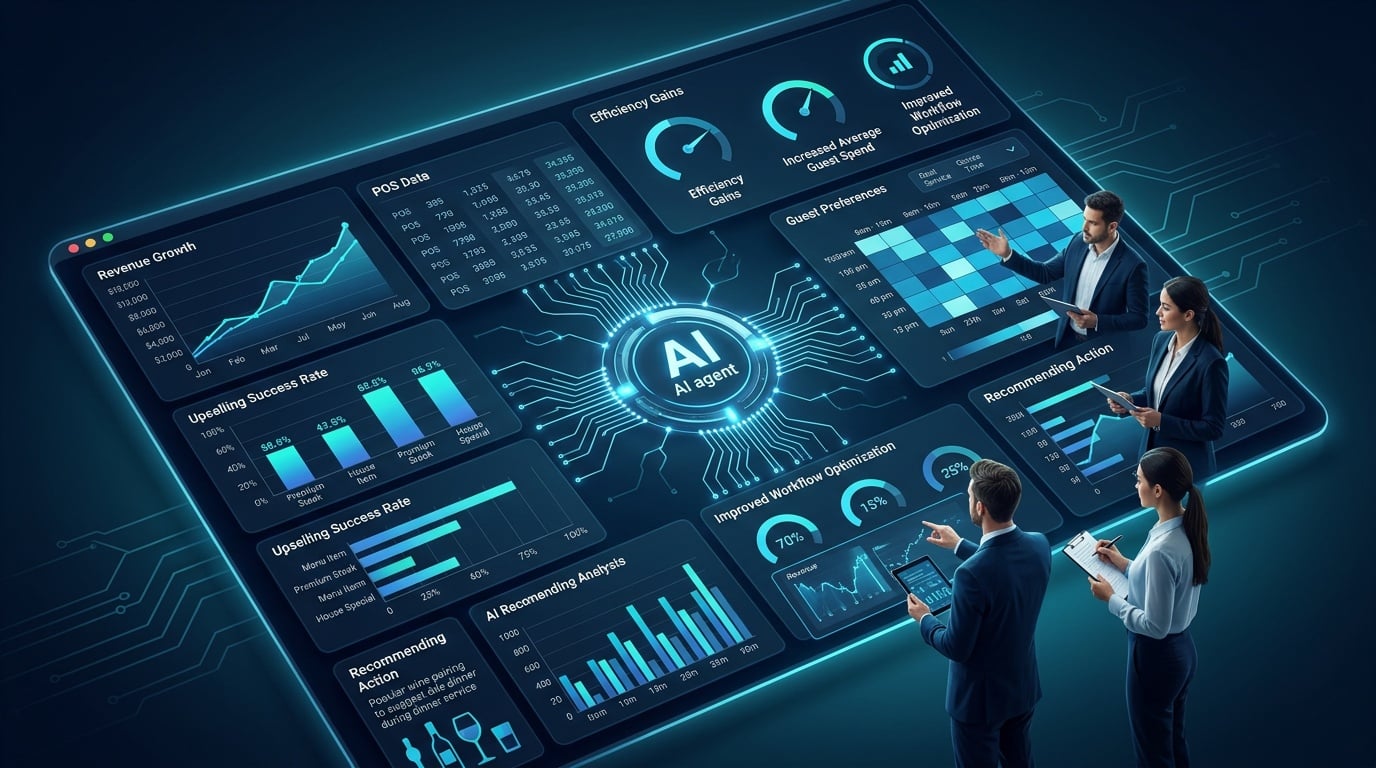
In hospitality, transaction records provide a direct window into guest preferences. By analyzing food and beverage sales alongside reservation data, operators can identify which items perform best by season or guest segment. That insight supports higher-yield menus and targeted packages that increase food and beverage revenue per occupied room.
Teams can also evaluate staff performance using transaction metrics. By comparing average check size and upsell rates across shifts, managers can identify top performers and create targeted coaching plans for employees who need support. This data-led approach improves consistency, protects service quality, and raises average transaction value.
Real Estate: Connecting Event Sales Data to Lead Generation
Real estate agencies do not rely on traditional retail registers, yet many host ticketed seminars, community events, or property showcases. Transactional data from these events, including ticket purchases, merchandise sales, or paid consultations, can support lead qualification.
By analyzing which events drive the highest paid attendance and the strongest follow-on inquiry rate, agency owners can optimize marketing spend. This analysis helps identify high-intent buyers and sellers earlier, enabling agents to prioritize follow-up with leads that have higher potential lifetime value.
Recruitment: Understanding Candidate Engagement Through Event or Training Data (Indirect POS Application)
Recruitment firms can apply transaction analysis techniques to paid training sessions, certification programs, or premium networking events. Tracking which courses or events candidates purchase can signal career intent, skill level, and engagement.
This behavioral data helps recruitment agencies build segmented talent pools. When a client requests a specific advanced skill set, the agency can identify candidates who have invested in relevant training, reducing time-to-hire and improving placement fit.
Fundraising: Analyzing Event Revenue for Donor Engagement Insights (Indirect POS Application)
For fundraising organizations, charity auctions, ticketed galas, and merchandise sales are important transactional touchpoints. Analyzing those transactions reveals insights into donor capacity and interests. For more comprehensive data on retail and event-related revenues, official government sources such as the U.S. Census Bureau’s retail statistics provide detailed context.
By examining which auction categories or merchandise items generate the most revenue, fundraising directors can tailor future campaigns. This keeps outreach personal and aligned with what donors have historically supported, supporting stronger long-term relationships and higher average donation amounts.
The AI Automation Advantage: Accelerating Point-of-Sale Data Analysis for Measurable Results
Beyond Spreadsheets: The Limitations of Manual Point-of-Sale Data Analysis
Many mid-market businesses still rely on spreadsheet exports to analyze checkout data. This approach is slow, error-prone, and inefficient. By the time a manager extracts, cleans, and reviews weekly transaction records, the findings can be outdated, which delays operational adjustments.
Manual workflows also struggle to detect non-linear patterns across large datasets. Correlations, such as how a promotion in one category affects sales in another, can be missed. That gap often leads to suboptimal inventory decisions and missed revenue opportunities.
Introducing AI Agents: Your Dedicated Point-of-Sale Data Analysis Powerhouse
AI agents change how businesses work with transactional information. Instead of requiring analysts to write complex queries, intelligent agents can monitor checkout streams in near real time. They can clean incoming data, categorize transactions, and surface anomalies with far less manual effort.
With specialized AI agents, businesses gain a continuous analytical engine. These agents can flag sudden drops in product velocity, detect potential fraud signals, and highlight emerging purchasing trends, letting managers respond quickly. For more on transaction terminals, see Point of Sale on Wikipedia which provides a solid overview of POS technology.
How Vynta AI’s Agents Support Demand Forecasting and Inventory Management
Vynta AI’s agents convert transaction history into predictive models. Using demand forecasting data science, they analyze sales cycles, seasonal patterns, and relevant external factors to estimate future inventory needs.
Better forecasts reduce stockouts and limit over-ordering. Agents can generate draft purchase recommendations for supplier review so teams keep control while operating with more accurate inputs. This helps protect working capital and improves product availability.
Measuring the ROI of AI-Driven Point-of-Sale Data Analysis
The financial impact of automating point-of-sale data analysis can be measured through margin, waste reduction, and labor savings. Many teams see improved gross margin through lower carrying costs and less spoilage. Automated pricing insights can also support better performance during peak demand. The official reports on consumer spending at BEA.gov provide useful benchmarks for evaluating these performance indicators.
Beyond inventory, reducing hours spent compiling reports lowers operational overhead. Staff can shift time from repetitive reporting to higher-value work such as improving customer experience and building growth initiatives.
| Operational Metric | Manual Spreadsheet Analysis | Vynta AI Agent Analysis |
|---|---|---|
| Analysis Speed | Weekly or monthly retrospective reports | Near real-time processing and alerts |
| Accuracy & Detail | Higher risk of human error; high-level summaries | Consistent processing; item-level pattern detection |
| Inventory Optimization | Reactive ordering based on past shortages | Predictive ordering based on demand forecasts |
| Staff Resource Drain | Hours spent on manual data entry and formatting | Fewer manual steps; automated summaries and alerts |
Demystifying Data Accelerators: An Accessible Alternative for SMEs
What Are Data Accelerators and How Do They Work?
In enterprise technology, data accelerators are pre-built software frameworks designed to speed the processing and analysis of complex datasets. They help businesses avoid building every pipeline from scratch, making it easier to connect sources and generate reports faster.
A databricks ai accelerator, as an example, can provide infrastructure to process large volumes of transactional data quickly. These frameworks are powerful, yet they are usually designed for large organizations with data engineering and data science teams that can configure, operate, and govern them.
Why Traditional Accelerators Can Be Complex for Mid-Market Businesses
Enterprise data platforms can be powerful, but adoption is often difficult for mid-market SMEs. Implementations can require specialized expertise, significant upfront investment, and ongoing maintenance. Many organizations do not have the internal IT capacity required to configure and manage these systems.
Mid-market teams can end up paying for advanced features they do not use or dealing with long rollouts that delay time-to-value. That mismatch supports the case for a more streamlined, business-first approach to transaction analytics.
Vynta AI’s AI Agents: A Streamlined Approach to POS Data Acceleration
Vynta AI closes this gap by packaging analytical capability into user-friendly AI agents. Instead of complex database configuration, agents can connect to existing checkout systems and handle processing behind the scenes, delivering clear, actionable insights to managers.
This approach provides mid-market businesses with enterprise-grade capabilities without the same operational overhead. The focus stays on business outcomes: optimizing inventory, improving demand signals, and supporting margin growth without building a large analytics team.
SME Data Solutions Comparison
Vynta AI Agents (SME-Focused)
- Fast deployment with minimal technical setup
- Clear business insights delivered automatically
- Cost-effective pricing designed for mid-market budgets
- Automated workflows that support timely decisions
Traditional Enterprise Accelerators
- Complex implementation that requires specialized engineers
- High upfront licensing and infrastructure costs
- Internal staff needed to interpret complex models
- Often overbuilt for standard mid-market needs
Your Strategic Partner in Data-Driven Growth: Partnering with Vynta AI

From Data to Decisions: A Seamless Integration Process
Partnering with Vynta AI means choosing a streamlined path to operational efficiency. Our integration process aims to minimize disruption to daily operations. We connect AI agents to existing checkout platforms to create a consistent flow of transactional data.
Once connected, agents analyze historical transaction records to establish baseline patterns. Within days, the system can begin generating recommendations, enabling teams to make data-led adjustments that support the bottom line.
Focus on What Matters: Scaling Your Business with Confidence
By automating the complex work of point-of-sale data analysis, Vynta AI helps leadership teams focus on growth. Less time goes into spreadsheets and guesswork, and more time goes into decisions backed by near real-time behavior and sales signals.
If you plan to expand product lines, open locations, or refine marketing, these agents provide a practical foundation for scaling with less operational uncertainty.
Measuring Your Success: KPIs for POS Data Analysis Transformation
We focus on measurable outcomes. When you implement Vynta AI, we track key performance indicators tied to growth and operational control: inventory turnover, stockout reduction, average transaction value, and hours saved on reporting.
Keeping these metrics visible helps ensure the solution stays aligned with ROI expectations and supports sustained performance in competitive markets.
References
Frequently Asked Questions
What is point-of-sale data analysis and what does it do?
Point-of-sale data analysis is the systematic process of collecting and interpreting transaction records from checkout counters. It helps businesses understand customer purchasing patterns, allowing them to optimize inventory, refine pricing, and automate marketing outreach for better operational efficiency and revenue.
How does AI change how businesses use point-of-sale data?
AI-driven analysis transforms point-of-sale data from retrospective reporting into real-time, predictive decision-making. This shift significantly boosts operational efficiency and revenue by allowing businesses to anticipate trends and act proactively.
What specific types of information are found in point-of-sale data?
Point-of-sale data captures a rich repository of information, including inventory SKUs, transaction timestamps, payment methods, and customer loyalty profiles. These details reveal not just what sold, but also the context surrounding each purchase.
How can mid-market companies use POS data analysis to grow revenue?
Mid-market enterprises use point-of-sale data analysis to uncover hidden operational inefficiencies and refine their business strategies. By understanding purchasing patterns, they can optimize inventory, adjust pricing, and personalize marketing, leading to measurable revenue growth.
What are some practical ways hospitality businesses use POS data?
In hospitality, point-of-sale data provides direct insights into guest preferences and sales performance. Operators analyze food and beverage sales to create higher-yield menus and evaluate staff upsell rates, which helps improve service quality and increase average transaction value.
Why is understanding the context of POS data important for business decisions?
Understanding the context of point-of-sale data is key because raw transaction numbers only tell part of the story. By combining checkout data with external factors like weather or marketing schedules, businesses gain predictive insights that turn inventory management into a proactive revenue driver.
Can POS data analysis help with operational efficiency beyond just sales?
Absolutely. Point-of-sale data analysis helps identify operational inefficiencies, such as high-margin items frequently out of stock during peak times. It also informs staffing decisions by revealing peak operating hours, ensuring resources are aligned with customer traffic.