

organisational theories
Understanding Organizational Theories: A Foundation for Business Transformation
Modern enterprise efficiency relies on structural frameworks that dictate how teams collaborate, communicate, and execute tasks. Historically, academic research has categorized these frameworks as organisational theories, which provide systematic blueprints for structuring businesses to maximize output. For mid-market small and medium enterprises (SMEs) navigating rapid market shifts, these concepts are not merely academic exercises. They serve as diagnostic tools to identify operational bottlenecks, streamline workflows, and prepare the company for automated scaling.
What are organizational theories? They are conceptual frameworks that explain how structures, cultures, and processes influence behavior and performance within a business. Modern leaders use these models to transition from rigid, manual hierarchies to agile, technology-driven ecosystems that support rapid decision-making and operational scalability.
How Business Structure Has Evolved
Business architecture has undergone a massive shift over the past century. Early enterprises often functioned like mechanical systems in which workers were treated as replaceable parts. Today, organizations operate as dynamic networks that must adapt to market pressures, technological change, and shifting customer expectations. This evolution requires thoughtful structural design so that administrative workflows do not limit responsiveness or slow execution.
Why Organizational Theories Matter for Today’s Leaders
For executive leaders in real estate, recruitment, fundraising, and hospitality, structural design directly impacts margin, speed, and service quality. Without a clear theoretical foundation, scaling operations or introducing new technology can create confusion across teams. Understanding these frameworks helps leaders diagnose why communication breaks down between departments, where operational friction starts, and how to design workflows that support sustainable growth. It also provides the clarity needed to align people, incentives, and systems.
Bridging the Gap: From Theory to Practical Application
Theoretical models can seem distant from daily operations, yet they shape many management decisions. Applying them in practice means identifying structural constraints in the current operating model and redesigning workflows with intent. By mapping day-to-day activities to established structural patterns, executives can shift from reactive firefighting to proactive optimization and create cleaner paths for digital integration.
The Roots: Classical Organizational Theory and Its Lasting Impact

To understand modern workplace design, it helps to examine classical organizational theory, which emerged during the Industrial Revolution. This school of thought prioritized economic efficiency, specialization of labor, and centralized decision-making. Critics note that these models often underweight the human side of work, yet their principles of standardization and clear authority still shape many modern operating structures.
Frederick Taylor’s Scientific Management: Efficiency Through Measurement
Frederick Taylor changed industrial production by applying measurement and experimentation to labor. Scientific Management aimed to identify the most efficient method for each task. Through time-and-motion studies, Taylor reduced wasted effort and pushed standard tools and routines. In modern operations, this mindset shows up as key performance indicators (KPIs), standard operating procedures, and data-driven workflow analysis.
Henri Fayol’s Administrative Principles: The Art of Management
While Taylor emphasized execution, Henri Fayol focused on the broader administrative structure. He proposed fourteen principles of management, including unity of command, division of work, and centralized authority. One enduring idea is that a single employee should receive direction from one supervisor, a rule that reduces conflicting priorities and clarifies accountability across the organization.
Max Weber’s Bureaucracy: Structure, Rules, and Authority
German sociologist Max Weber introduced bureaucracy as a rational, efficient form of organization. His model emphasized clear rules, impersonal processes, defined hierarchy, and promotion based on competence rather than favoritism. Although bureaucracy often has negative associations with red tape, Weber’s approach added stability, predictability, and consistency to large enterprises.
Strengths and Limitations in a Modern Business Environment
Classical models create order, reduce ambiguity, and optimize repetitive work. They can fall short when markets move quickly or when teams need experimentation and creative problem solving. Treating employees as instruments of production can also reduce morale and limit innovation in knowledge-based work.
Evaluating Classical Structures
Pros
- Clear chain of command and defined operational roles
- High predictability and standardization of repetitive tasks
- Reduced ambiguity in day-to-day responsibilities
Cons
- Rigidity that slows adaptation to market shifts
- Limited focus on motivation, creativity, and social needs
- Slower decisions due to multiple hierarchical layers
Beyond Hierarchy: Neoclassical and Modern Approaches to Organizational Design
As businesses became more complex, leaders saw that purely mechanical models were not enough. This shift produced alternative types of organizational theory that included psychology, open-system thinking, and situational fit. These frameworks recognize that organizations operate within broader markets and that engagement, communication, and feedback loops shape performance.
The Human Relations Movement: Employee Behavior
The neoclassical movement gained traction after the Hawthorne Studies, which suggested that social dynamics, recognition, and group norms can influence productivity more than physical conditions. Managers began to treat organizations as social systems, not only production systems. The takeaway for operators is direct: motivation, communication, and participative leadership affect output and retention.
Systems Theory: Organizations as Interconnected Networks
Systems theory frames a business as an open system that takes inputs from the environment, converts them through processes, and produces outputs. Departments are linked, so a change in one area affects other areas. This perspective reduces the risk of “local fixes” that help one team but create downstream problems for another team.
Contingency Theory: No One-Size-Fits-All Solution
Contingency theory rejects a single best way to organize. The right structure depends on variables such as market volatility, product complexity, regulatory constraints, and team capability. In stable settings, a classical hierarchy can still work well. In fast-changing sectors, decentralized structures and shorter decision paths tend to perform better.
The Rise of Organizational Culture: Shared Values and Beliefs
Modern design also emphasizes culture: the shared values, norms, and expectations that guide behavior when policies are not explicit. A well-defined culture can act as an informal coordination system, reducing micromanagement while keeping work aligned with goals. In practice, culture shows up in how teams escalate issues, share knowledge, and make trade-offs under pressure.
| Theoretical Paradigm | Primary Focus | Structural Style | Best Suited For |
|---|---|---|---|
| Classical Theory | Task efficiency and standardization | Rigid, centralized hierarchy | Highly predictable, repetitive operations |
| Neoclassical Theory | Human relations and social dynamics | Collaborative, employee-centric | Teams requiring morale and collaboration |
| Systems & Contingency | Environmental fit and adaptability | Flexible, decentralized networks | Rapidly changing market sectors |
Comparing Frameworks: A Structural Evaluation
Selecting the right model from the diverse types of organizational theory requires an objective assessment of trade-offs in speed, control, and resource allocation. Classical models create boundaries and predictability; modern approaches emphasize information flow and responsiveness. The table below contrasts the core characteristics of widely used structural designs so leadership teams can evaluate where their current operating model fits.
| Theoretical Model | Primary Focus | Decision-Making Structure | Environmental Adaptability |
|---|---|---|---|
| Classical Theory | Task specialization and operational standardization | Centralized at the executive level | Low; optimized for stable, predictable markets |
| Neoclassical Theory | Employee motivation and social dynamics | Partially decentralized to encourage participation | Moderate; accommodates internal human variables |
| Systems Theory | Interconnectedness of internal departments | Distributed across functional networks | High; adjusts to external feedback |
| Contingency Theory | Situational alignment and context-specific design | Flexible; varies based on immediate needs | Very high; structures evolve as demands shift |
The Missing Piece: How AI Automation Fulfills Modern Organizational Needs
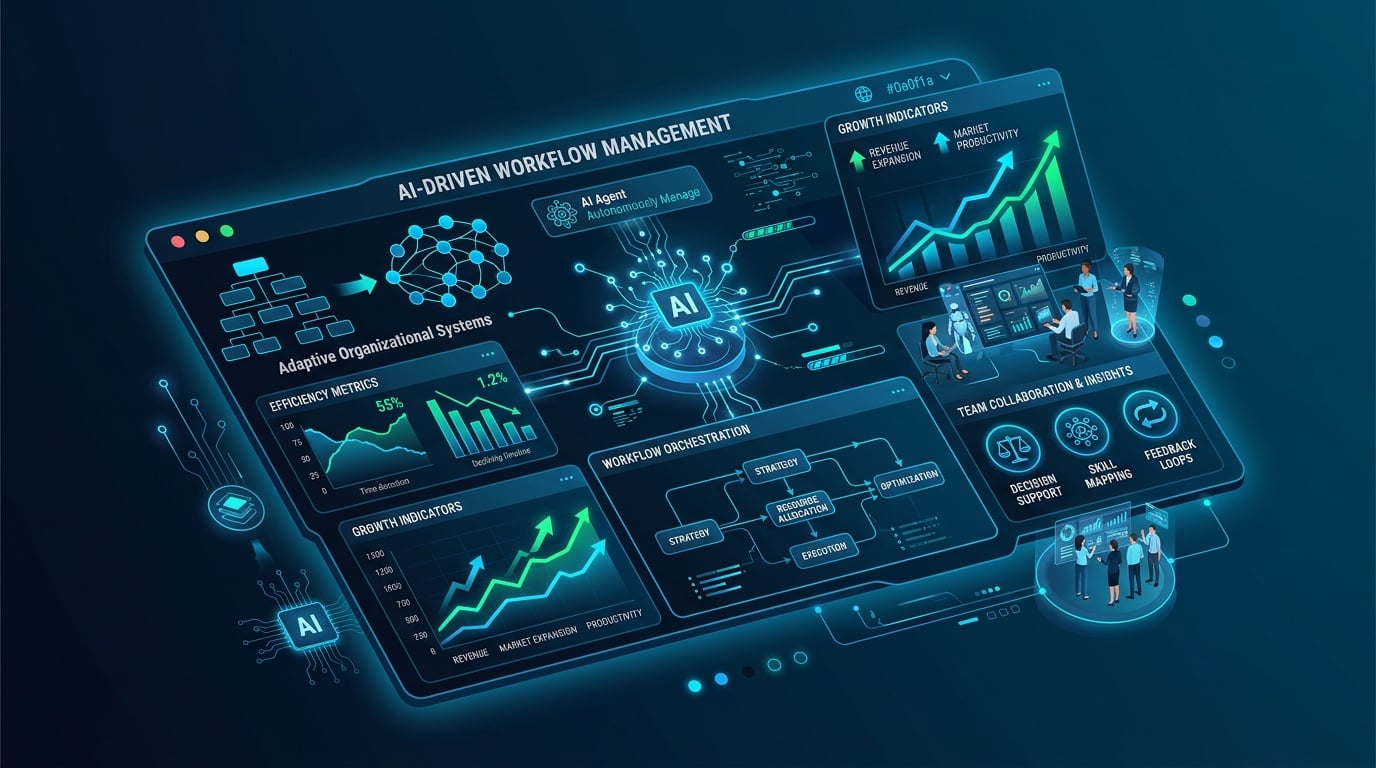
Many organisational theories point to the same operational requirement: businesses must act as adaptive systems, not rigid hierarchies. Mid-market teams often struggle to put that into practice because manual administration consumes time that should go toward customers and growth. Automation closes that gap by moving repetitive coordination work from people to systems, which makes faster execution possible without adding overhead.
Addressing Constant Change: Agility in Real Estate Lead Management
Real estate agencies compete on response time. Contingency theory suggests that internal processes must match external speed, yet agents cannot cover inbound inquiries around the clock. An AI lead qualification workflow can capture and route prospects quickly, apply consistent screening rules, and hand off qualified leads to the right person so the business stays responsive while keeping administrative load contained.
Empowering Individuals: Streamlining Recruitment Processes with AI Agents
The human relations movement emphasized that performance improves when people focus on relationship-driven work. In recruitment, consultants can lose hours to repetitive screening and scheduling. AI support can automate first-pass matching and inbox triage, then route complex edge cases to humans. That division of labor protects consultant time for candidate care, client calls, and closing.
Fostering Connectedness: Transparent Investor Outreach in Fundraising
Systems theory values feedback loops between an organization and external stakeholders. Fundraising teams often manage many conversations with different cadence and context. Automated follow-up sequences and structured logging can keep communication consistent, track sentiment signals, and surface the next best action for the team. The goal is not volume alone; it is continuity and clarity across the pipeline.
Navigating Complexity: Optimizing Guest Experiences in Hospitality
Hospitality requires coordination across front desk, concierge, housekeeping, and management. When information does not flow, service quality drops. AI-assisted guest operations can confirm bookings, collect special requests, and route tasks internally based on clear rules. With proper escalation, VIP and exception cases still go to staff, while routine coordination runs predictably.
AI as the Enabler: Transparency, Responsiveness, and Scalability
Used well, automation supports decentralization by improving data visibility and speeding handoffs. Teams get cleaner queues, faster triage, and fewer dropped tasks. For SMEs, that often means scaling throughput without scaling headcount at the same rate. The result is a more agile operating model that matches modern structural thinking without adding bureaucracy.
Implementing Next-Generation Organizational Strategies with AI
Moving from traditional administration to an AI-augmented operating model requires a deliberate sequence of decisions. Leaders should evaluate current workflows, identify bottlenecks, and introduce automation where it can create measurable gains quickly. This is not about replacing teams; it is about redesigning work so technology executes repeatable steps and people handle exceptions, relationships, and strategy.
Assessing Your Organization’s Current Theoretical Framework
Start with a diagnosis of your real operating model, not the org chart. Many companies run a hybrid of classical controls and modern, ad hoc processes, which creates silos and delays. Audit how information moves, where approvals stall, and which handoffs create rework. This review turns organisational theories into a practical lens for finding structural friction that metrics alone may miss.
Identifying Bottlenecks Where AI Can Drive Transformation
High-return automation targets are high-volume workflows with predictable steps and clear success criteria. Common examples include manual CRM entry, repeated inbound questions, scheduling back-and-forth, and basic qualification. Define the trigger, the required data, and the desired outcome, then confirm which steps must stay human due to risk, brand, or complexity.
A Practical Roadmap: Integrating AI Agents for Measurable Outcomes
Use a structured rollout plan to reduce risk and keep adoption high:
- Map the workflow: Document steps, inputs, decision points, and outputs.
- Define success metrics: Set measurable goals (for example, shorter lead response times or less screening time).
- Deploy specialized agents: Integrate dedicated AI agents, such as Vynta AI solutions, into the software stack used by the team.
- Monitor and refine: Review performance regularly and improve prompts, rules, and handoffs.
The Future of Work: Embracing AI-Augmented Organizational Design
Looking toward 2026 and beyond, the most competitive operators will treat technology as part of the operating system, not an add-on tool. The goal is balance: keep the discipline of clear roles and accountability, while building the flexibility needed for faster cycles and better customer responsiveness. When automation is aligned to organisational theories and real workflows, SMEs can move quickly, keep service quality high, and stay resilient as conditions change.
Ready to Automate Your Operational Workflows?
Do not let outdated administrative structures limit your business growth. Partner with Vynta AI to deploy custom enterprise-grade AI agents that streamline your operations, drive revenue, and improve organizational efficiency. Contact our optimization experts today to schedule a custom operational audit.
References
Frequently Asked Questions
What are the main categories of organizational theories?
As an Operations Director, I see organisational theories as blueprints for how businesses structure themselves. Historically, we identify classical theories like Scientific Management, Administrative Principles, and Bureaucracy. Beyond these, modern approaches, including neoclassical and open-system thinking, recognize the human element and external market dynamics. These frameworks help leaders build efficient and adaptable operations.
Can you explain the core ideas of classical organizational theory?
Classical organizational theory, which emerged during the Industrial Revolution, prioritized economic efficiency and specialization of labor. Frederick Taylor’s Scientific Management focused on task efficiency through measurement and standardization. Henri Fayol’s Administrative Principles provided guidance on broader management structures, such as unity of command. Max Weber’s Bureaucracy emphasized rational rules, hierarchy, and competence for stability and predictability.
Why are organizational theories important for today's leaders in mid-market SMEs?
For leaders in mid-market SMEs, these concepts are not merely academic exercises; they are practical diagnostic tools. They help identify operational bottlenecks, streamline workflows, and prepare the company for automated scaling. Understanding these frameworks clarifies why communication breaks down or where operational friction starts, allowing for better structural design.
How have business structures evolved over time, according to organizational theory?
Business structures have shifted significantly over the past century. Early enterprises often functioned like mechanical systems, prioritizing standardization and centralized control. Today, organizations operate as dynamic networks that must adapt to market pressures, technological change, and shifting customer expectations. This evolution requires thoughtful structural design to ensure administrative workflows do not limit responsiveness.
How do classical organizational theories compare to modern approaches?
Classical theories excel at creating order, reducing ambiguity, and standardizing repetitive tasks with clear chains of command. However, their rigidity can slow adaptation and limit creativity in fast-moving markets. Modern approaches, including neoclassical and open-system thinking, recognize the importance of employee engagement, communication, and feedback loops, moving beyond purely mechanical views of organizations.
How can applying organizational theories help with digital transformation and automation?
Applying organisational theories helps identify structural constraints that hinder digital transformation and automation integration. By redesigning workflows with intent, businesses can create cleaner paths for technology adoption. Aligning the operating model with flexible frameworks supports the implementation of AI solutions, enabling efficient scaling and rapid decision-making.