

notion campus leader
What Is a Notion Campus Leader?
A Notion Campus Leader is a student ambassador selected by Notion to promote productivity tools, organize workshops, and build knowledge-sharing communities at their university. The program gives student leaders free Notion Pro access, exclusive resources, and direct support from the Notion team.
Core Responsibilities and Daily Activities
Campus Leaders run events, create Notion templates tailored to student workflows, and educate peers on productivity systems. Daily activities include hosting workshops, managing community Slack or Discord channels, and producing content that demonstrates real use cases. The role rewards initiative: leaders who run more events and grow their campus community gain greater recognition and resources from Notion.
How the Program Supports Student Communities
The program funds student-led learning without institutional bureaucracy. Campus Leaders receive ready-made event kits, co-marketing support, and access to a global network of peers. Student organizations focused on recruitment, fundraising, real estate investing, or hospitality management benefit directly, since Notion’s collaborative databases and project boards map cleanly onto those professional workflows.
Eligibility Requirements and Application Process
Applicants must be currently enrolled students with demonstrated community involvement. Notion prioritizes candidates who show a history of organizing events or leading clubs. The application asks for a community-building plan, so specificity matters: outlining three concrete workshops beats vague ambitions every time.
Business Value of Organizing Campus Events with AI Automation
Streamlining Event Planning for Recruitment and Fundraising Groups
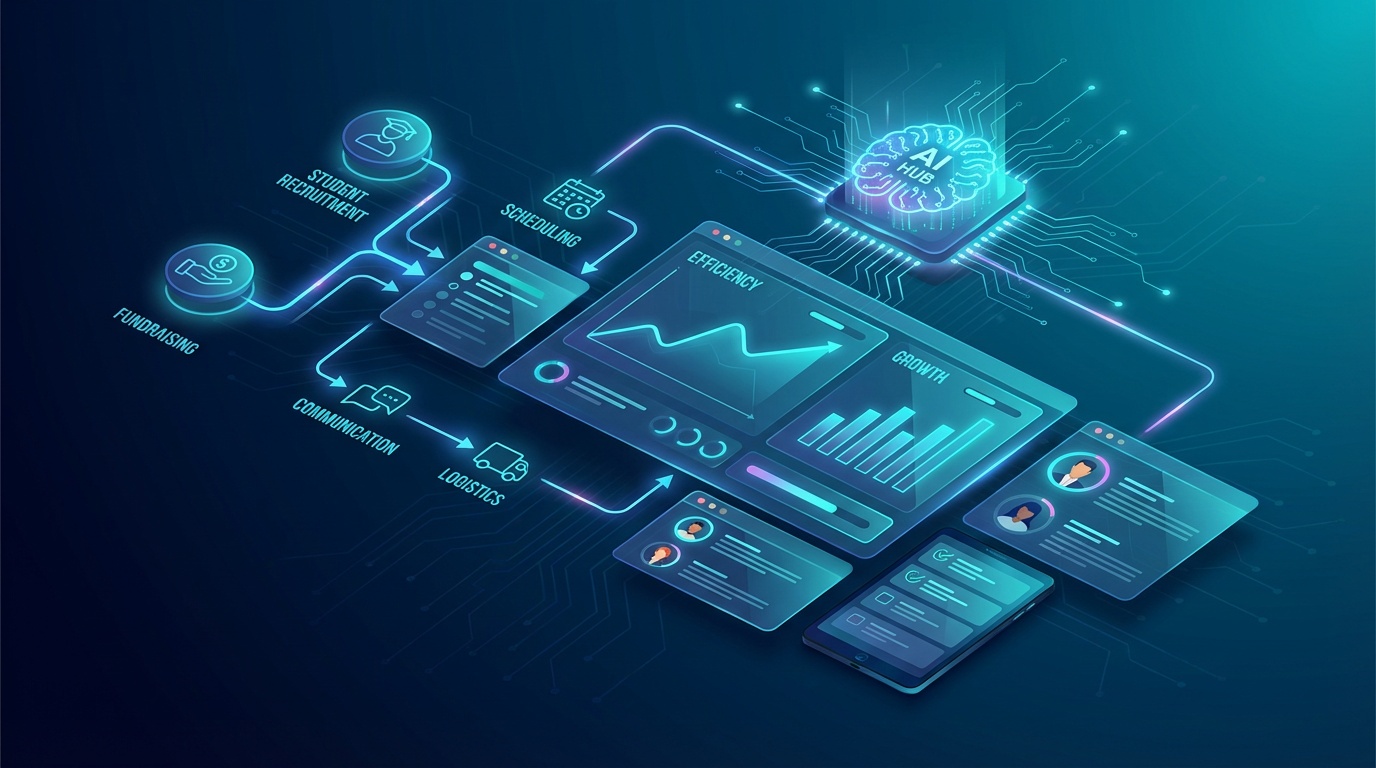
Student recruitment clubs and fundraising organizations share a core operational problem: high coordination overhead with limited staff. AI automation eliminates repetitive scheduling, reminder sequences, and follow-up emails. A recruitment club running a career fair can automate candidate registration confirmations, slot assignments, and post-event surveys–cutting administrative time by more than half and letting human organizers focus on relationship quality.
Automating Lead Capture in Real Estate and Hospitality Student Organizations
Real estate investment clubs and hospitality management associations generate warm leads at every event: prospective members, industry mentors, and employer contacts. Without a capture system, those contacts disappear. Integrating AI-powered lead qualification for real estate clubs into Notion databases means every business card scan or event sign-up triggers an automated qualification sequence, routing high-priority contacts to human follow-up immediately.
Tracking ROI from Campus Events with Measurable Metrics
| Event Type | Manual Tracking | AI-Automated Tracking | Key Metric Gained |
|---|---|---|---|
| Recruitment Workshop | Spreadsheet attendance log | Automated CRM entry with lead score | Placement conversion rate |
| Fundraising Gala | Manual donor notes | Donor profile enrichment and follow-up sequence | Donor retention percentage |
| Real Estate Networking Night | Business card pile | Automated property interest tagging | Lead-to-showing conversion |
| Hospitality Career Fair | Paper sign-in sheet | Guest experience survey automation | Employer satisfaction score |
The pattern is consistent: manual tracking captures presence; AI-automated tracking captures intent. For mid-market SMEs hiring from campus pipelines, that distinction directly affects revenue outcomes.
How AI Agents Supercharge Notion Templates for Student Leaders
Custom Templates for Recruitment Candidate Tracking and Interview Scheduling
A Notion Campus Leader running a recruitment club can deploy AI agents that automatically populate candidate profiles from LinkedIn data, score applicants against role criteria, and schedule interviews without back-and-forth emails. The human coordinator reviews ranked shortlists rather than raw applications, which compresses time-to-hire significantly for the employer partners sponsoring the club. For more tailored automation, consider Agentic Systems for Recruitment that integrate directly with Notion.
Property Matching and Lead Qualification Tools for Real Estate Clubs
Real estate student organizations often conduct market research and mock deal analysis. AI agents connected to Notion databases can pull property data, match listings to predefined investment criteria, and flag anomalies automatically. Members spend time analyzing deals rather than sourcing them–which mirrors how professional real estate agencies use AI to qualify leads before human agents engage.
Donor Management Automation for Fundraising Teams
Fundraising student organizations face a structural vulnerability most don’t anticipate: institutional knowledge walks out the door with every graduating class. AI agents connected to Notion address this directly by converting relationship history into structured, searchable records. Every donor interaction, pledge amount, and communication preference gets logged automatically, so incoming leadership inherits a functional system rather than a blank slate.
The section below breaks down the honest tradeoffs before your team commits to implementation.
Donor Management Automation for Fundraising Teams: Honest Assessment
Pros
- AI agents auto-enrich donor profiles from public data, eliminating manual research hours
- Automated follow-up sequences maintain donor relationships between campaigns
- Notion dashboards surface giving patterns, helping teams prioritize high-value outreach
- A systematic approach reduces relationship gaps caused by student leadership turnover
Cons
- Initial database setup requires clean, structured historical donor data
- Automation supports but does not replace personal rapport with major donors; human touchpoints remain essential
- Student organizations must maintain data privacy compliance, adding governance overhead
Learn more about Vynta’s AI-Powered Fundraising Platform for advanced automation in this space.
Real-World Results: AI Automation in Campus Leadership Workflows
Case Study: Hospitality Guest Experience Optimization via Notion Dashboards
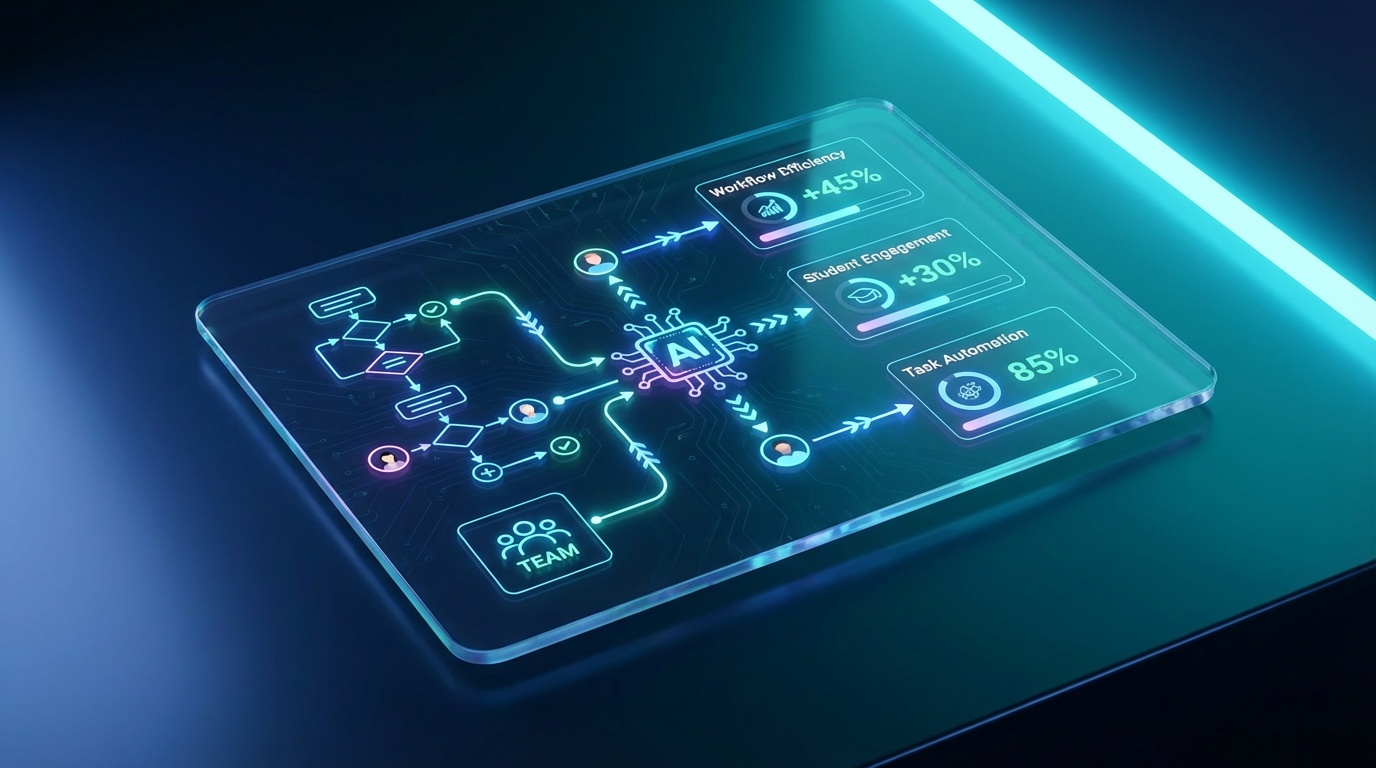
A hospitality management student association used Notion dashboards integrated with AI agents to simulate hotel operations for its annual industry conference. Attendee preferences collected at registration automatically populated guest profiles, triggering personalized session recommendations and dining options. Post-event satisfaction scores improved measurably compared to prior years, and organizers spent 60% less time on logistics coordination. Explore Vynta AI Agents for Hospitality to see how that level of automation translates to real hotel and restaurant environments.
Metrics from Recruitment and Real Estate Applications
| Application Area | Baseline (Manual) | With AI Automation | Outcome |
|---|---|---|---|
| Candidate Screening | 8 hours per hiring cycle | Under 2 hours | Faster placements, higher employer satisfaction |
| Property Lead Qualification | Manual scoring, 3-day turnaround | Automated scoring, same-day routing | Higher lead-to-showing conversion |
| Event Follow-Up | 40% contact rate within one week | 90%+ automated within 24 hours | Stronger pipeline retention |
Scaling Fundraising Campaigns with AI-Powered Insights
Fundraising organizations that adopt AI-powered Notion workflows report consistent gains in donor retention because systematic outreach replaces ad hoc communication. AI agents analyze giving history to identify lapsed donors before they disengage fully, allowing human relationship managers to intervene with personalized outreach at the right moment. Each campaign builds on structured data from the last, rather than starting from scratch. That compounding effect is what separates organizations with genuine donor pipelines from those perpetually restarting them.
Steps to Apply AI Automation as a Notion Campus Leader or SME Partner
Integrating Vynta AI Agents with Notion for Your Campus Organization
Start by mapping your organization’s highest-friction workflows: candidate intake, donor follow-up, lead capture, or event logistics. Build a Notion database structure around those workflows first, then connect Vynta AI Automation Services agents to automate data entry, scoring, and communication sequences. The architecture should serve your process, not the reverse.
Overcoming Common Implementation Hurdles in Service Industries
The most common barrier is data quality, not technology complexity. Before deploying any AI agent, audit your existing contact records and standardize field formats. A Notion Campus Leader managing a recruitment club should consolidate candidate data into a single Notion database before expecting AI to produce reliable outputs. Clean inputs produce actionable outputs; fragmented data produces noise.
Next Steps: From Application to Measurable Business Impact
Mid-market SMEs hiring from campus pipelines–or partnering with student organizations–gain a real advantage when both sides operate with structured, automated workflows. A Notion Campus Leader who demonstrates AI-augmented operations signals professional readiness that generic candidates can’t match. The gap between manual coordination and AI-assisted execution is measurable, and in 2026, that gap is widening. For those interested in applied learning, see the Notion for Education resources to understand the full support system available.
Building Measurable Impact as a Notion Campus Leader in 2026
The progression from campus program participant to AI-augmented operator is shorter than most students realize. A Notion Campus Leader who treats the role as a live business laboratory–not a resume line–exits university with documented systems, measurable outcomes, and workflow architecture that professional organizations pay to build from scratch.
Where AI Automation Delivers Lasting Value
The highest-value applications share one characteristic: they convert relationship data into structured, reusable assets. Recruitment pipelines, donor histories, property interest profiles, and guest preference records all compound in value over time when AI agents maintain them consistently. Manual systems decay with every personnel change; automated Notion workflows persist and improve.
For mid-market SMEs in recruitment, real estate, fundraising, and hospitality, this matters at the revenue level. Organizations that hire campus leaders who already operate structured, AI-assisted workflows skip months of onboarding friction. The candidate who arrives with a documented Notion system that produced measurable results is categorically different from one who lists “proficient in Notion” on a resume. Many such leaders connect and share best practices in the Notion Community, where continuous improvement is the norm.
Future Considerations: Where Campus AI Workflows Are Heading
In 2026 and beyond, the gap between AI-assisted campus organizations and traditionally managed ones will accelerate. Notion’s continued API expansion means AI agents can connect to more external data sources–reservation platforms, applicant tracking systems, donor databases–without custom development. Campus leaders who build that integration fluency now position themselves as strategic assets rather than administrative coordinators.
The organizations best prepared for this shift treat AI adoption as a process discipline, not a technology experiment. That means clean data governance from day one, clear ownership of each automated workflow, and consistent measurement of outcomes against baselines. Those habits transfer directly to professional environments in every Vynta AI vertical.
The tools are accessible. The methodology is proven. The remaining variable is execution discipline–and that’s precisely what the best campus leaders demonstrate every semester.
Frequently Asked Questions
What do Notion Campus Leaders actually do day-to-day?
As an Operations Director at Vynta AI, I see the Notion Campus Leader role as a practical application of productivity principles. These leaders organize workshops, create tailored Notion templates for student workflows, and educate peers on productivity systems. Their daily work involves managing community channels and producing content that showcases Notion’s real-world utility.
How can a student make their Notion Campus Leader application stand out?
To truly stand out, applicants should treat their Notion Campus Leader application like a business case, not a personal statement. Focus on connecting Notion workflows to measurable outcomes, such as reducing meeting prep time or improving club membership tracking. Specificity in your community-building plan, outlining concrete workshops, consistently outperforms vague ambitions.
How does AI automation help Notion Campus Leaders manage events?
From my perspective in AI automation, streamlining event planning is a game-changer for Notion Campus Leaders. AI automation handles repetitive tasks like scheduling, reminder sequences, and follow-up emails for recruitment or fundraising groups. This cuts administrative time significantly, allowing leaders to focus on the quality of relationships and event content.
Can AI tools help student organizations track event success?
Absolutely. AI-automated tracking moves beyond simple attendance logs to capture participant intent, which is invaluable for student organizations. For a recruitment workshop, AI can track placement conversion rates; for a fundraising gala, donor retention percentage. This data provides clear, measurable metrics for event success.
What specific AI tools can Notion Campus Leaders use with Notion?
Notion Campus Leaders can deploy AI agents to supercharge their Notion templates for various tasks. For recruitment, AI agents can populate candidate profiles and schedule interviews, compressing time-to-hire. Real estate clubs can use AI to pull property data and match listings to investment criteria, allowing members to analyze deals rather than just sourcing them.
How do Agentic Systems for Real Estate support student clubs using Notion?
Agentic Systems for Real Estate can significantly support student clubs by automating key processes. The system converts property inquiries into viewings and sales through instant engagement and intelligent qualification. This can increase a qualified pipeline by 3x and achieve an 85% conversion rate, allowing students to focus on analysis and deals.
How can AI assist fundraising teams within student organizations?
AI agents can automate donor management for fundraising teams, segmenting donors based on giving history and triggering personalized outreach. This maintains donor relationships between campaigns and tracks campaign ROI within Notion dashboards. It provides a systematic approach that reduces relationship gaps, especially with student leadership turnover.