

is AI Automation Services worth it
For a mid-market business, the right question is not only “is AI Automation Services worth it?” The better question is whether a defined workflow can produce measurable gains in revenue, response time, labor capacity, or operating accuracy. A useful evaluation compares the full cost of implementation with the value created over several months, not the subscription price of a single automation tool.
Key Takeaways
- A useful evaluation compares the full cost of implementation with the value created over several months, not the subscription price of a single automation tool.
- The service begins with discovery, process mapping, and ROI projections, then moves into custom AI agent development, system integration, workflow automation, monitoring, and optimization.
- The investment has three parts: implementation, ongoing support, and internal change management.
AI Automation Services from Vynta AI are designed around that assessment. The service begins with discovery, process mapping, and ROI projections, then moves into custom AI agent development, system integration, workflow automation, monitoring, and optimization. This model is intended for businesses that need dependable execution across existing systems, not another isolated workflow that staff must constantly repair.
The True Cost vs. ROI of AI Automation Services
The investment has three parts: implementation, ongoing support, and internal change management. A custom service may include API connections, data transformation, agent instructions, exception handling, security controls, team training, and performance reviews. Those costs should be compared with the expense of delayed leads, repetitive administrative labor, missed follow-ups, data entry errors, and management time spent supervising manual work.
The Real Price Tag: Internal Builds vs. Hiring an Agency
Internal development can appear less expensive because the business already employs technical staff. In practice, the total cost includes solution architecture, process analysis, model testing, integration maintenance, documentation, and ownership after launch. A small team may also lack experience with prompt evaluation, event-driven systems, identity controls, and failure recovery. Hiring manual staff for operational tasks often costs $4,000 or more per month per employee, according to research summarized by Vynta AI. A predictable automation retainer can be easier to budget when it replaces recurring task volume rather than an entire role.
An agency is most suitable when the workflow crosses a CRM, email platform, calendar, help desk, ATS, property database, or finance system. Vynta AI provides AI Agent Development to design, build, and deploy custom AI agents that automate complex workflows and execute tasks autonomously. System Integration services connect existing tools and platforms, including custom API development and data transformation. Human review remains part of responsible deployment, particularly for sensitive customer, candidate, donor, or guest decisions.
Key insight: Do not compare an automation retainer with the price of a basic software license. Compare it with the monthly cost of the work, the revenue delayed by slow response, and the operational risk created by inconsistent execution.
Calculating the Return: Speed-to-Lead and Operational Savings
ROI becomes clearer when the baseline is specific. Track lead response time, qualified inquiries, booked appointments, hours spent on administration, data correction volume, conversion rate, and revenue per completed opportunity. In real estate, a 48-hour manual review can allow a prospect to reach a competitor before an agent responds. An automated intake process can classify the inquiry, check availability, create a CRM record, and route the conversation for prompt human follow-up.
Capacity gains can be just as meaningful in recruitment. Research cited by Vynta AI reports that manual resume screening takes two to three minutes per resume, limiting a consultant to roughly 50 applications daily, while AI can process more than 200 immediately. The business case should still account for review quality, integration reliability, and placement outcomes. If the service does not define success metrics before implementation, it is difficult to determine whether AI Automation Services are worth it for that workflow.
Pros
- Lower repetitive labor demand
- Faster response and routing
- Consistent data capture across systems
- Clear performance monitoring and optimization
Cons
- Upfront discovery and integration work
- Ongoing oversight for exceptions and model behavior
- ROI depends on workflow volume and process quality
Why AI Automations Fail: The Problem with Compounding Drift
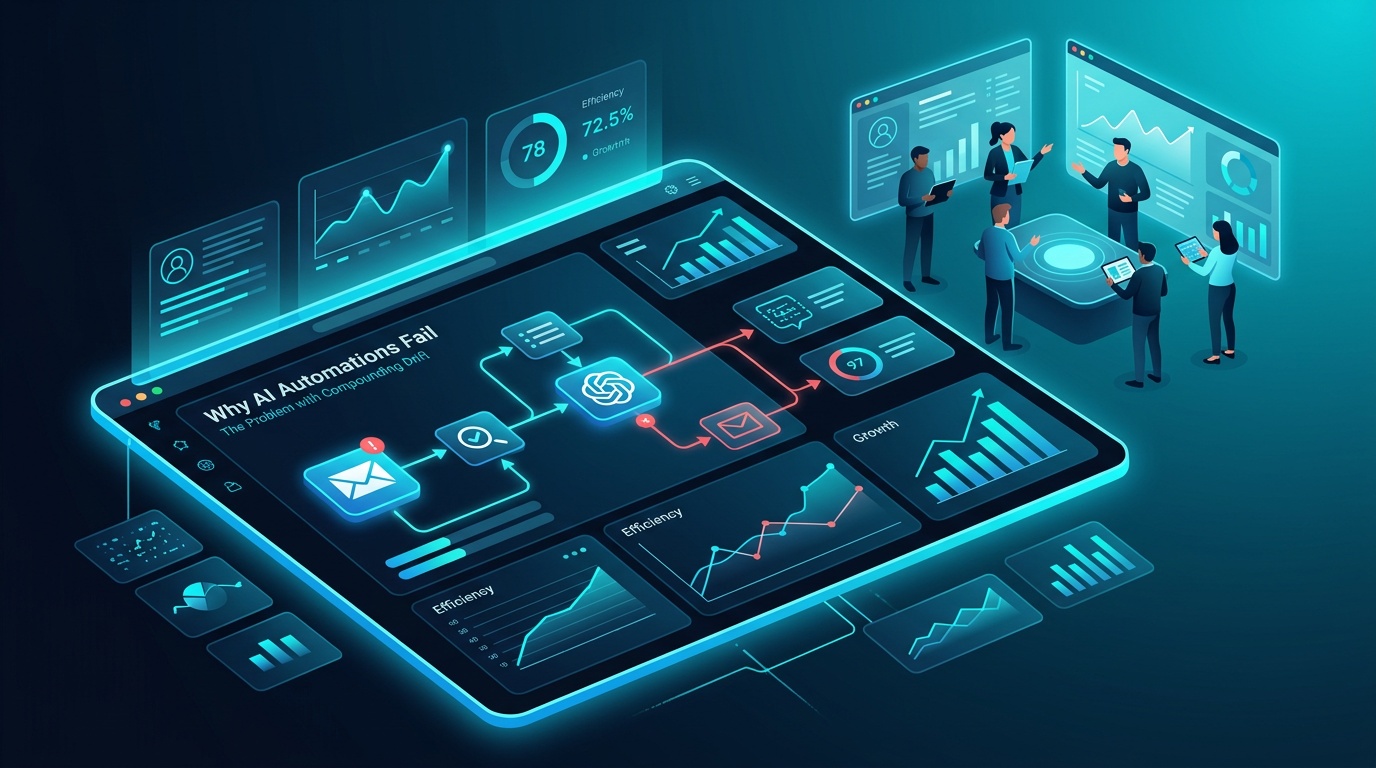
Many automation projects fail because each step passes an imperfect interpretation to the next step. A language model classifies an email incorrectly, the workflow selects the wrong record, an update changes the customer status, and a notification tells staff to act on bad information. The system may continue running while its output becomes less trustworthy. Research from Vynta AI notes that 95% of AI pilots never reach production, often because system design and operational controls were not addressed early.
The Hidden Costs of Single-Feature Automations
A basic trigger and action can be useful for a narrow task, such as copying a form submission into a spreadsheet. It becomes costly when the business expects that connection to interpret unstructured messages, resolve duplicate contacts, apply policy, update several systems, and communicate with a customer. Staff then spend time checking failed runs, correcting records, restarting tasks, and explaining inconsistent decisions.
These hidden costs include rework, duplicate outreach, inaccurate reporting, security exposure, poor customer experience, and lost confidence among employees. A workflow that saves five minutes per transaction is not a strong investment if it creates manual inspection at every handoff. The test is operational ownership: use the dumbest reliable thing that owns the step. A fixed rule should not be replaced with AI merely because AI is available.
The Hybrid Framework: AI for Messy Input vs. Deterministic Code for System Logic
Reliable architecture assigns each responsibility to the right method. AI is well suited to messy input: email intent, resume content, guest requests, investor messages, sentiment, document extraction, and natural-language questions. Deterministic code should own system logic: permissions, required fields, calculations, routing rules, record updates, approval thresholds, retries, and audit logs. This boundary makes behavior easier to inspect and correct.
- Receive: Capture the message, document, form, or event with its source and timestamp.
- Interpret: Use an AI agent to extract intent, entities, urgency, and proposed action.
- Validate: Apply deterministic checks for required data, permissions, confidence thresholds, and business rules.
- Execute: Let code update approved systems through controlled APIs and logged transactions.
- Escalate: Send uncertain, sensitive, or conflicting cases to a person with the relevant context.
- Measure: Monitor accuracy, exceptions, processing time, conversion, and downstream outcomes.
This hybrid design limits compounding drift because model output does not automatically become system truth. Vynta AI’s Workflow Automation includes exception handling and decision-making capabilities, while Implementation & Support includes phased deployment planning, monitoring, technical support, training, and optimization reviews. That operating discipline is what makes AI Automation Services worth considering when a workflow is high volume, cross-functional, and tied to a measurable business result.
When Is an AI Automation Service Actually Worth It?
The question “is AI Automation Services worth it?” has a practical answer: invest when a repeatable workflow has enough volume, delay, or error cost to justify implementation and ongoing oversight. A strong candidate affects revenue, labor capacity, customer response, or data quality. A weak candidate is a low-volume task with unclear ownership, inconsistent inputs, or no measurable success baseline. Before approving a project, document the current process, average handling time, failure points, systems involved, and the business outcome that should improve.
Tasks You Should Automate with AI vs. Tasks Requiring Deterministic Code
AI is suited to work that requires interpretation. It can classify inbound inquiries, extract information from resumes, summarize investor correspondence, identify guest intent, draft personalized messages, and detect the meaning of unstructured documents. These tasks contain language variation that fixed rules handle poorly. An AI agent can propose a classification or next action, then pass that result to validation steps and a human reviewer when confidence is low.
Deterministic code should control actions with clear rules and material consequences. Permissions, calculations, record creation, status changes, appointment routing, approval thresholds, duplicate checks, and audit logs should follow explicit logic. The most dependable design separates interpretation from execution. AI reads and recommends; system logic validates and applies the approved change. This approach reduces unpredictable behavior while preserving flexibility across email, SMS, WhatsApp, CRM, ATS, property management, and hospitality platforms.
Signs Your Mid-Market Business Is Ready for Enterprise AI Agents
Readiness usually appears in operational evidence, not enthusiasm about new technology. Your team may be ready when employees spend substantial time copying data between systems, qualified inquiries wait for manual routing, staff cannot review every candidate or message promptly, or managers lack reliable visibility into workflow performance. A defined process owner, accessible data, stable business rules, and a leadership commitment to monitoring are also necessary. Without those foundations, an AI project can reproduce existing process weaknesses at greater speed.
Vynta AI’s AI Automation Services begin with discovery and assessment, followed by expert implementation within weeks and continuous results monitoring and optimization. The service model is a fit when the business needs custom agent development, system integration, communication automation, performance intelligence, and phased support rather than a standalone software connection. ROI projections should be established during discovery, with human oversight retained for exceptions and sensitive decisions.
Industry-Specific ROI: Real Estate, Recruitment, Fundraising, and Hospitality
AI automation produces better commercial results when it reflects the operating model of a specific industry. A real estate agency measures response speed and appointments, while a recruitment firm focuses on qualified submissions and placements. Fundraising teams monitor meaningful outreach and donor activity, and hospitality operators track service responsiveness, upsell conversion, and guest satisfaction. The right question is not whether AI is broadly useful. It is whether a defined bottleneck is limiting revenue, service quality, or team capacity.
Real Estate: Speed-to-Lead and CRM Automation
Real estate inquiries often arrive through listing portals, websites, email, and text. An AI workflow can identify intent, property preferences, budget language, and urgency, then create or update the CRM record and route the opportunity to the correct agent. Research published by Vynta AI highlights the risk of a 48-hour manual review delay, a period in which a prospect may contact a competing agency. The relevant KPIs are response time, contact rate, qualified appointments, and inquiry-to-client conversion.
Recruitment: Candidate Screening and ATS Integration
Recruiters can lose valuable capacity to resume review, profile normalization, interview scheduling, and follow-up messages. Research cited by Vynta AI reports that manual screening takes two to three minutes per resume, with consultants reviewing roughly 50 applications daily, while AI can process more than 200 instantly. An ATS-connected agent can extract skills, compare stated qualifications with role requirements, identify missing information, and present a ranked shortlist for recruiter judgment. Track screening time, qualified-candidate volume, submission quality, interview rate, and placement rate.
Fundraising: Investor Outreach and Donor Management
Fundraising teams manage research, relationship history, meeting notes, reminders, and personalized communication across many contacts. AI can organize public and internal information, summarize interactions, draft tailored outreach, and flag follow-up opportunities for staff approval. Integration with a donor database or relationship management system keeps engagement history current and reduces duplicate communication. Useful measures include outreach preparation time, completed follow-ups, meeting acceptance, donor retention, response quality, and staff time redirected toward relationship development.
Hospitality: Guest Experience and Upselling Automation
Hotels and hospitality groups receive recurring questions about check-in, amenities, transportation, dining, and local activities. Conversational AI can answer routine requests across approved channels, identify service issues, escalate exceptions, and suggest relevant upgrades such as dining reservations or late checkout. Staff remain responsible for unusual complaints, refunds, accessibility concerns, and sensitive requests. Performance should be assessed through response time, resolution rate, guest satisfaction, upsell acceptance, review sentiment, and front-desk workload.
| Industry | High-value workflow | Primary KPI | Human control point |
|---|---|---|---|
| Real estate | Lead intake, qualification, and CRM routing | Speed-to-lead and booked appointments | Agent review before sensitive follow-up |
| Recruitment | Resume extraction and ATS profile matching | Qualified submissions and placement rate | Recruiter approval of shortlist decisions |
| Fundraising | Relationship research and personalized outreach preparation | Follow-up completion and donor response | Staff approval before communication |
| Hospitality | Guest questions, service triage, and relevant offers | Guest satisfaction and resolution time | Escalation for complaints and exceptions |
Choosing the Right Partner: Generic Platforms vs. Specialized AI Agencies
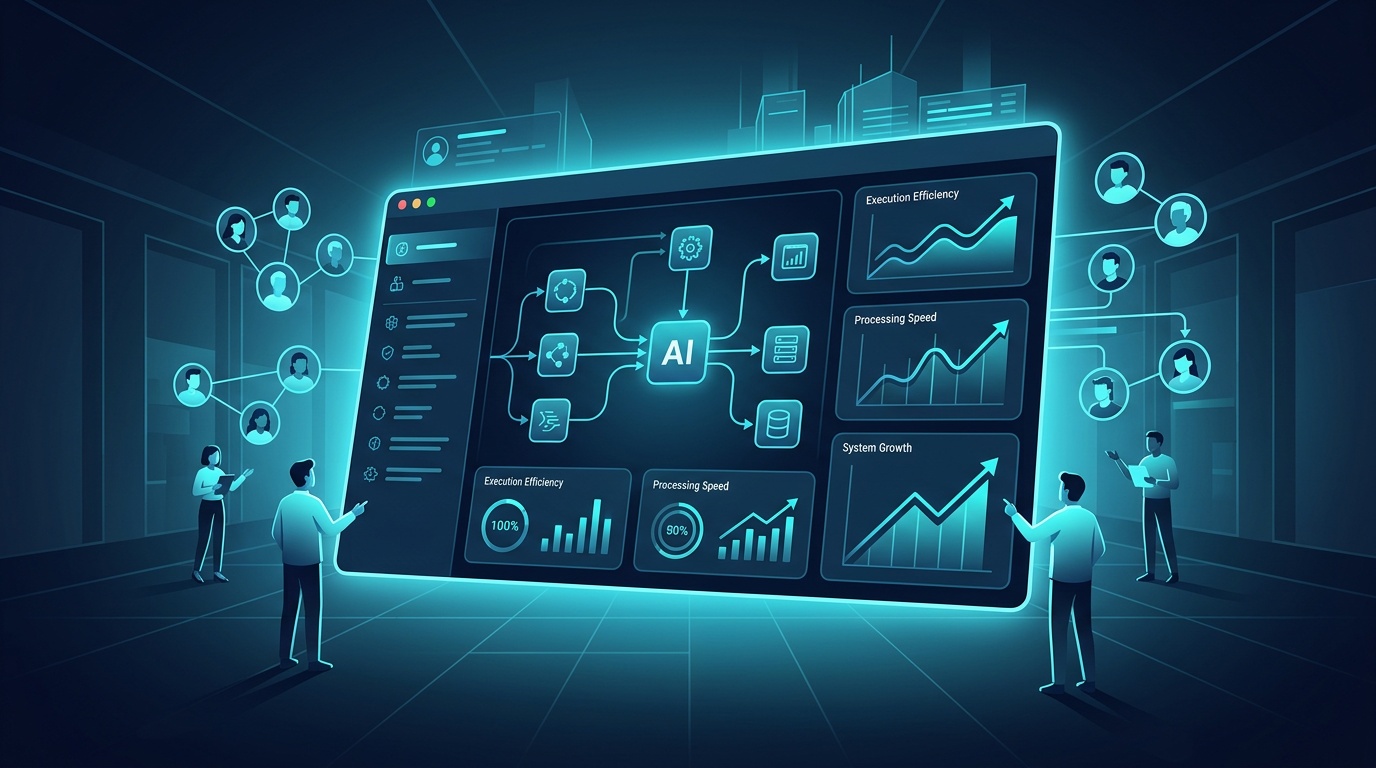
Partner selection determines whether automation becomes a dependable operating capability or another system that employees must monitor manually. Generic platforms can connect applications quickly, while a specialized agency evaluates the process, data quality, decision rules, security model, and business outcome together. For mid-market companies, the best choice depends on workflow complexity, internal technical capacity, integration requirements, and the level of operational ownership expected after launch. A useful partner should explain where AI belongs, where fixed logic is safer, how exceptions reach employees, and which KPIs will demonstrate value.
Automation Anywhere vs. Vynta AI: A Practical Comparison
Best for Automation Anywhere: organizations with established enterprise automation teams, standardized processes, and the resources to configure, govern, and maintain a broad automation platform. Automation Anywhere can be appropriate when a company wants a platform-led program with internal ownership across many departments. That model may require process analysts, integration specialists, administrators, security reviewers, and ongoing technical support. Buyers should assess the full operating commitment rather than comparing license functionality alone.
Pros
- Broad platform capabilities for large automation programs
- Suitable for organizations with dedicated automation governance
- Supports structured, repeatable business processes
Cons
- May require substantial internal configuration and administration
- Industry-specific process design remains the buyer’s responsibility
- Complex workflows can demand additional implementation resources
Best for Vynta AI: mid-market real estate, recruitment, fundraising, and hospitality businesses that need an experienced team to design and operate custom AI workflows across existing tools. Vynta AI’s AI Automation Services include AI Agent Development, System Integration, Workflow Automation, Communication Automation, Performance Intelligence, and Implementation & Support. The engagement begins with discovery and assessment, followed by expert implementation within weeks and continuous results monitoring and optimization. This approach connects technical delivery with practical measures such as lead response, candidate throughput, donor follow-up, and guest service performance.
| Comparison area | Automation Anywhere | Vynta AI |
|---|---|---|
| Primary model | Platform for organizations managing their own automation program | Specialized service that designs, builds, deploys, and supports custom solutions |
| Implementation ownership | Typically led by internal teams or selected implementation resources | Vynta AI manages discovery, architecture, integration, deployment, and optimization |
| AI workflow design | Configured through a general enterprise automation environment | Custom AI agents handle complex workflows with decision-making and exception handling |
| Industry focus | Broad cross-industry applicability | Purpose-built expertise for real estate, recruitment, fundraising, and hospitality |
| Integration support | Platform connections configured within the customer’s program | System Integration includes APIs, data synchronization, and data transformation |
| Post-launch model | Customer-led governance and platform administration | Monitoring, technical support, team training, and optimization reviews |
Moving Beyond Simple Workflows to AI Agents That Understand Business Logic
A basic workflow moves information from one application to another. An AI agent can interpret an inbound message, identify the relevant customer or candidate, gather context from approved systems, recommend an action, and escalate an exception. That capability only creates value when business logic surrounds it. Vynta AI separates language interpretation from permissions, validation, calculations, record updates, approval gates, and audit trails. The result is a workflow that can handle variable human input without allowing an uncertain model response to become an unchecked system action.
This distinction matters for companies comparing an AI Automation Services tutorial with professional implementation. Tutorials can explain triggers, prompts, APIs, and workflow steps. They rarely address data ownership, identity management, monitoring, fallback paths, model evaluation, or adoption across a live operation. Vynta AI’s AI Automation Services are recommended when the business needs measurable execution across multiple systems and wants a partner accountable for design quality and ongoing performance. The strongest buying decision is not the platform with the longest feature list. It is the partner that can show how a specific workflow will improve revenue, reduce costs, or improve efficiency without expanding the team.