
Key Takeaways
- Increasing sales in a restaurant requires optimizing the customer experience.
- Integrating technology is essential for modern hospitality success.
- Data-driven decision making supports sustainable growth in restaurant sales.
- Balancing personalized service with operational efficiency maximizes revenue per guest.
- Hospitality managers must focus on both service quality and business strategy to increase sales.
Table of Contents
- Increasing Sales in a Restaurant: Proven Strategies for Modern Hospitality Success
- The Pillars of Restaurant Revenue Growth
- Optimizing the Customer Journey for Revenue Conversion
- Menu Engineering for Maximum Sales and Profit
- Technology as a Restaurant Sales Multiplier
- Marketing Mastery for Attracting and Retaining Diners
- Promotions, Loyalty Programs, and Repeat Business Engines
- Staff Performance and Human-AI Collaboration
- Comparative Analysis: What Works Best for Modern Restaurants
- Measuring, Monitoring, and Optimizing Restaurant Sales for Continuous Growth
- Addressing Common AI Adoption Concerns in Hospitality
- The Strategic Path to Sustainable Restaurant Sales Growth
Increasing Sales in a Restaurant: Proven Strategies for Modern Hospitality Success
Increasing sales in a restaurant requires a strategic blend of customer experience optimization, technology integration, and data-driven decision making. For hospitality managers like Maria running boutique hotels and upscale restaurants, sustainable growth means balancing personalized service with operational efficiency while maximizing revenue per guest.
Today's restaurant sales challenges extend beyond simply filling tables. Post-pandemic dining behaviors have shifted toward digital-first discovery, seamless reservation experiences, and personalized service expectations. Successful establishments must optimize every touchpoint, from online presence to upselling strategies, while maintaining the authentic hospitality that drives repeat business.
This comprehensive guide delivers actionable strategies across menu engineering, technology automation, marketing optimization, and staff performance enhancement. Each approach focuses on measurable outcomes: increased average check size, improved guest satisfaction scores, higher table turnover rates, and stronger repeat customer ratios that directly impact your bottom line.
The Pillars of Restaurant Revenue Growth
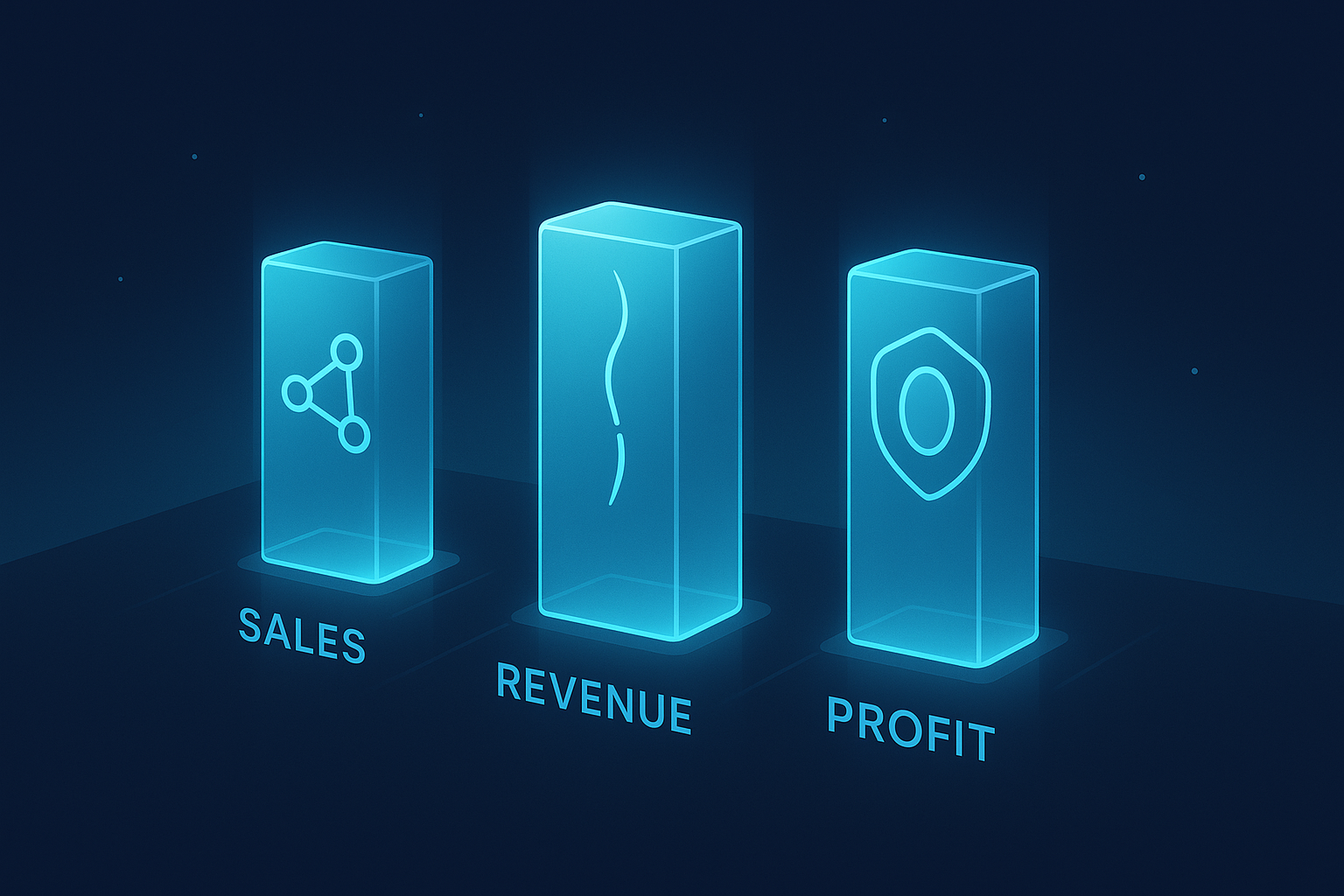
Understanding Sales vs. Revenue vs. Profit in Hospitality
Restaurant sales encompass total transaction volume, while revenue represents actual income after returns and discounts. Profit factors in operational costs, making it the ultimate measure of sustainability. Smart hospitality managers focus on profit-driving sales strategies rather than volume alone, targeting higher-margin menu items, optimizing labor costs during peak periods, and reducing waste through demand forecasting.
Key Revenue Drivers in Modern Hospitality
Five primary levers drive restaurant revenue growth: guest volume through effective marketing, average check size via strategic upselling, repeat visit frequency through exceptional service, successful upselling and cross-selling programs, and event sales for private dining experiences. The most successful establishments excel at multiple drivers simultaneously, creating compounding growth effects, often supported by a solid customer support strategy.
Key Insight: Restaurants that increase average check size by just 15% while maintaining guest satisfaction can see profit margins improve by 25-40%, as fixed costs remain constant while revenue per service hour increases.
Scaling Personalized Service with Technology
The hospitality industry's greatest challenge lies in maintaining personal touch while achieving operational scale. AI automation handles routine tasks, reservation confirmations, dietary preference tracking, follow-up communications, freeing staff to focus on creating memorable guest interactions that drive loyalty and positive reviews.
Optimizing the Customer Journey for Revenue Conversion
Mapping the Modern Guest Journey
Today's restaurant customer journey spans seven critical touchpoints: online discovery through search or social media, reservation booking via website or phone, pre-arrival communication, arrival and seating experience, dining service and upselling opportunities, payment processing, and post-visit follow-up for reviews and return bookings. Each stage presents specific revenue optimization opportunities.
Friction at any touchpoint costs sales. Slow response times to reservation inquiries, complicated booking processes, or poor mobile website experiences directly impact conversion rates. Industry data shows restaurants lose 30% of potential bookings when response times exceed four hours during peak inquiry periods, as highlighted in b2b trust.
Differentiation Through Service Personalization
Personalization drives both immediate sales and long-term loyalty. Staff equipped with guest preference data, dietary restrictions, celebration occasions, favorite dishes, can make targeted recommendations that increase check size while enhancing satisfaction. Technology platforms that track guest history enable this personalization at scale without overwhelming service teams.
Maria's boutique hotel exemplifies this balance: AI systems track guest preferences and suggest personalized upsells, while staff deliver recommendations naturally during service. This approach increased their average check size by 22% while maintaining their signature warmth and attention to detail.
Technology as a Restaurant Sales Multiplier

Essential Restaurant Management Technology Stack
Modern restaurant success requires integrated technology systems that streamline operations while enhancing guest experience. Core platforms include point-of-sale systems with detailed analytics, reservation management with guest preference tracking, kitchen display systems for order accuracy, and automated guest communication tools for confirmations and follow-up.
Integration between systems eliminates manual data entry, reduces errors, and provides comprehensive performance insights. When reservation systems sync with POS data, managers can track conversion rates, identify high-value guest segments, and optimize staffing for peak revenue periods.
AI-Driven Upselling and Personalization
Intelligent automation transforms upselling from intrusive sales tactics into personalized service enhancement. AI systems analyze guest history, current selections, and successful pairing patterns to suggest relevant additions, wine pairings, appetizers, or desserts, at optimal moments during the dining experience.
Vynta's hospitality automation delivers measurable results: restaurants typically see 18-25% increases in average check size within 90 days of implementation. The system learns from successful interactions, continuously improving suggestion accuracy while maintaining the natural flow of service that defines exceptional hospitality.
Benefits of AI-Powered Upselling:
- Consistent upsell opportunities across all shifts and guest segments
- Personalized recommendations based on guest history and preferences
- Increased average check size without compromising guest experience
- Reduced training burden for new staff
Marketing Mastery for Attracting and Retaining Diners
Localized SEO and Digital Footprint Enhancement
Restaurant discovery begins with local search optimization. Google Business Profile management drives 76% of local restaurant searches, making accurate hours, menu updates, and review responses critical for visibility. Optimize location-based keywords naturally throughout website content, focusing on neighborhood names, cuisine types, and signature dishes that differentiate your establishment.
Mobile-first website design with integrated reservation and ordering systems reduces friction between discovery and conversion. Restaurants with seamless mobile booking experiences convert 40% more inquiries than those requiring phone calls or complex forms. Fast-loading menus, clear contact information, and prominent reservation buttons maximize mobile traffic value.
Social Media Strategies That Drive Revenue
Visual platforms like Instagram and Facebook generate direct bookings through strategic content and targeted advertising. High-quality food photography, behind-the-scenes kitchen videos, and staff personality showcase create emotional connections that translate to visits. Geo-targeted campaigns during lunch and dinner decision windows capture immediate booking intent with 3-5x higher conversion rates than broad audience targeting.
User-generated content amplifies authentic marketing reach while building community engagement. Encourage photo sharing through signature dishes, unique plating, or Instagram-worthy dining spaces. Restaurants that actively engage with guest posts and share customer content see 35% higher repeat visit rates compared to broadcast-only social strategies.
Measuring Marketing ROI for Continuous Optimization
Track marketing performance through reservation source attribution, conversion rates by channel, and customer lifetime value by acquisition method. Social media campaigns should generate measurable bookings, not just engagement metrics. Use unique phone numbers, landing pages, or promo codes to attribute revenue directly to marketing investments.
A successful local restaurant campaign example: targeted Facebook ads promoting weekend brunch generated 127 new reservations over 30 days with $800 ad spend, resulting in $6,400 additional revenue and 23% repeat booking rate within 60 days, demonstrating clear marketing ROI and long-term value creation.
Promotions, Loyalty Programs, and Repeat Business Engines
Structuring High-Impact Promotions That Protect Margins
Effective restaurant promotions increase guest spend without eroding profitability through strategic offer design. Bundle promotions, appetizer and entree combinations, wine pairing packages, or group dining deals, drive higher average checks while maintaining margin control. Time-limited offers create urgency without training customers to expect permanent discounts.
Off-peak promotions maximize revenue during slow periods while preserving premium pricing during high-demand times. Tuesday wine nights, weekday lunch specials, or early-bird dinner pricing fill seats during lower-traffic hours, improving overall utilization and cash flow without cannibalizing peak revenue opportunities.
Loyalty Programs That Actually Drive Retention
Successful restaurant loyalty programs reward frequency and spending progression rather than simple visit counting. Tier-based systems with escalating benefits, priority reservations, exclusive menu previews, or complimentary items, encourage increased visit frequency and higher per-visit spending. Points systems work best when redemption thresholds align with average check multiples.
Integration across all service channels, dine-in, takeaway, delivery, and events, creates comprehensive guest profiles that enable personalized offers. Automated birthday promotions, anniversary celebrations, and preference-based menu recommendations delivered via SMS or email generate 3x higher redemption rates than generic promotional blasts.
Loyalty Program Impact: Restaurants with integrated loyalty systems see 27% higher average check sizes from program members and 65% better retention rates compared to one-time visitors, with members visiting 2.3x more frequently than non-members.
Staff Performance and Human-AI Collaboration

Training Staff for Natural Sales Excellence
Effective upselling requires genuine product knowledge and timing rather than aggressive sales tactics. Train staff to recognize guest cues, celebration occasions, dietary preferences, or wine interest, that create natural recommendation opportunities. Role-playing scenarios with different guest types builds confidence in suggesting additions that enhance rather than interrupt the dining experience.
Incentive structures should align staff goals with restaurant profitability while maintaining service quality. Commission-based systems on high-margin items, team-based monthly goals, or service excellence bonuses tied to guest satisfaction scores motivate performance without compromising hospitality standards that drive repeat business.
AI as Staff Empowerment, Not Replacement
Vynta's hospitality automation enhances staff capabilities by handling routine communications and providing real-time guest insights during service. Automated reservation confirmations, dietary preference alerts, and suggested wine pairings based on order selections free servers to focus on relationship building and personalized service delivery that creates memorable experiences.
Practical implementation includes tablet-based prompts for relevant upsells, automated follow-up messages for special occasions, and guest preference tracking that enables personalized service from the first interaction. This technology-human collaboration typically increases staff confidence, improves guest satisfaction scores, and generates 20-30% higher tip averages through enhanced service quality.
Comparative Analysis: What Works Best for Modern Restaurants
Different sales approaches deliver varying results depending on restaurant type, target audience, and operational capacity. Understanding when to prioritize specific strategies maximizes investment returns while maintaining service excellence that defines successful hospitality businesses.
For a deeper dive into the academic research behind restaurant sales growth strategies, review recent studies on operational and marketing effectiveness.
| Strategy Approach | Best For | Implementation Requirements | Expected ROI Timeline |
|---|---|---|---|
| Staff-Led Upselling | Fine dining, high-touch service concepts | Extensive training, product knowledge, incentive systems | 4-6 weeks |
| AI-Driven Automation | High-volume establishments, consistency focus | Technology integration, staff adaptation, data setup | 8-12 weeks |
| Menu Engineering | All restaurant types, immediate impact needed | Sales analysis, design updates, staff briefing | 2-3 weeks |
| Digital Marketing | New establishments, visibility challenges | Content creation, ad budget, analytics tracking | 6-8 weeks |
| Strategy | Best For | Implementation Timeline | ROI Expectation |
|---|---|---|---|
| Menu Engineering | Established restaurants with 6+ months sales data | 2-4 weeks analysis and redesign | 15-25% margin improvement |
| AI-Powered Upselling | High-volume operations seeking consistency | 4-6 weeks integration and training | 20-30% average check increase |
| Loyalty Program Implementation | Restaurants with strong repeat customer base | 6-8 weeks development and launch | 27% higher member spending |
| Social Media Marketing | Visual-focused concepts targeting younger demographics | Ongoing with 2-3 weeks setup | 3-5x higher conversion on targeted campaigns |
Staff-Led vs. Technology-Assisted Upselling
Traditional staff-led upselling excels in high-touch, intimate dining environments where personal relationships drive guest satisfaction. Servers with deep menu knowledge and wine expertise create authentic recommendations that enhance the dining experience while increasing revenue through genuine hospitality connections.
Technology-assisted upselling through platforms like Vynta provides consistency and scalability for busy restaurants where staff turnover or training gaps impact performance. Automated prompts based on order patterns, dietary preferences, and guest history ensure every table receives relevant suggestions while maintaining the human touch through staff delivery of recommendations.
Technology-Assisted Advantages:
- Consistent upselling across all shifts and staff levels
- Data-driven recommendations based on guest preferences
- Real-time inventory integration prevents overselling unavailable items
- Performance tracking enables continuous optimization
Staff-Only Limitations:
- Performance varies significantly between individual servers
- Training requirements increase with menu changes
- Inconsistent execution during busy periods
- Difficult to track and optimize upselling effectiveness
Direct vs. Third-Party Online Ordering Channels
Direct online ordering through restaurant websites and apps preserves profit margins by eliminating third-party commission fees typically ranging from 15-30% per order. Restaurants maintain complete customer data ownership, enabling personalized marketing and loyalty program integration that drives long-term value beyond individual transactions.
Third-party platforms provide immediate market access and customer discovery but at significant cost to profitability. These platforms work best for initial market penetration or reaching customers outside typical delivery radius, while direct channels should handle repeat customers and regular orders for optimal financial performance.
Measuring, Monitoring, and Optimizing Restaurant Sales for Continuous Growth
Essential KPIs for Data-Driven Sales Decisions
Revenue per available seat hour (RevPASH) measures operational efficiency by calculating total revenue divided by available seats multiplied by operating hours. This metric reveals optimal pricing, seating turnover, and capacity utilization patterns that inform staffing, pricing, and promotion decisions for maximizing sales potential during all operating periods.
Customer acquisition cost (CAC) versus lifetime value (LTV) ratios determine marketing investment sustainability and profitability. Successful restaurants maintain LTV:CAC ratios of 3:1 or higher, indicating that guest retention and repeat visit strategies generate sufficient long-term revenue to justify initial marketing expenditures across all channels.
Implementing Continuous Improvement Cycles
Weekly performance reviews comparing actual results against established baselines identify trends before they impact monthly revenue. Track cover counts, average check progression, menu item performance, and staff upselling success rates to make rapid adjustments that capitalize on positive momentum or correct declining performance patterns.
A/B testing promotional offers, menu descriptions, and service approaches provides quantifiable data for optimization decisions. Test single variables, pricing, portion sizes, or promotional timing, to isolate impact factors and scale successful strategies while eliminating ineffective tactics that consume resources without generating measurable sales increases.
Optimization Results: Restaurants implementing systematic measurement and testing cycles typically achieve 12-18% revenue growth within six months through incremental improvements in pricing, service delivery, and promotional effectiveness rather than major operational overhauls. For additional industry insights, see revenue optimization in your restaurants.
Addressing Common AI Adoption Concerns in Hospitality

Preserving Human Connection While Leveraging AI
AI automation in restaurants enhances rather than replaces human hospitality by handling routine communications and providing staff with guest insights that enable more personalized service delivery. Vynta processes reservation confirmations, dietary restrictions, and preference tracking while servers focus on creating memorable interactions that build emotional connections and encourage repeat visits.
The optimal approach combines AI efficiency with human warmth, automated systems manage logistics while trained staff deliver the personal touch that defines exceptional hospitality experiences. This collaboration typically increases guest satisfaction scores while reducing staff stress through better preparation and information access during service periods.
Implementation Costs and ROI Realities
Initial AI implementation requires 4-6 weeks for system integration, staff training, and process optimization with typical costs ranging from $2,000-5,000 for mid-market restaurants. However, measurable returns, increased average checks, improved efficiency, and enhanced guest retention, typically recover implementation costs within 3-4 months of deployment.
Successful AI adoption focuses on specific, measurable outcomes rather than broad automation goals. Restaurants implementing Vynta for targeted applications like reservation management and upselling recommendations see 20-30% improvement in key metrics while maintaining the service quality that drives hospitality success and guest loyalty.
The Strategic Path to Sustainable Restaurant Sales Growth
Increasing sales in a restaurant requires a systematic approach combining menu optimization, technology integration, staff development, and customer experience enhancement. Success comes from implementing proven strategies consistently while measuring results and adapting based on performance data rather than pursuing every new trend or tactic without clear objectives.
The most effective restaurants leverage AI automation like Vynta to handle routine communications, guest preference tracking, and upselling recommendations, freeing staff to focus on delivering the personalized service that defines hospitality excellence. By aligning technology with human expertise, hospitality managers can achieve sustainable sales growth, higher guest satisfaction, and measurable improvements in operational efficiency.
Frequently Asked Questions
How to boost sales at a restaurant?
Boosting sales at a restaurant requires a strategic blend of enhancing guest experience, optimizing menu offerings, and leveraging automation for personalized upselling. Implementing AI-driven reservation and order management systems helps reduce no-shows and speeds up service, while targeted promotions and loyalty programs encourage repeat visits. Combining operational efficiency with tailored marketing ensures measurable revenue growth and improved guest satisfaction.
What are the 4 P's of marketing for restaurants?
The 4 P's of marketing for restaurants are Product, Price, Place, and Promotion. Product focuses on menu quality and unique dining experiences; Price involves competitive and value-based pricing strategies; Place covers location and ambiance, including online presence for delivery or reservations; Promotion entails advertising campaigns, social media engagement, and targeted offers to attract and retain customers effectively.
How do I attract customers to my restaurant?
Attracting customers involves creating a compelling value proposition through standout menu items, consistent quality, and exceptional service. Leveraging local SEO, social media marketing, and partnerships with delivery platforms increases visibility, while personalized offers and event nights draw in diverse customer segments. Additionally, using AI tools to analyze customer preferences helps tailor communications and promotions, driving foot traffic and repeat business.
How to boost fast food sales?
Boosting fast food sales hinges on speed, convenience, and value. Streamlining order processing with AI-powered kiosks or mobile apps reduces wait times, while dynamic upselling prompts during ordering increase average ticket size. Offering limited-time deals, combo meals, and loyalty rewards encourages frequency, and targeted marketing campaigns ensure your brand stays top-of-mind in a competitive market.
How do you attract customers to increase sales?
Attracting customers to increase sales starts with understanding their needs and behaviors through data-driven insights. Delivering personalized experiences, whether via customized menu suggestions or tailored promotions, enhances engagement. Coupled with multichannel marketing, including social media, local advertising, and influencer collaborations, this approach drives awareness and conversion, resulting in higher guest counts and revenue.
Which strategy is best for restaurant?
The best strategy for a restaurant balances exceptional guest experience with efficient operations and targeted marketing. Utilizing AI automation to optimize reservation management, reduce no-shows, and enable personalized upselling maximizes revenue per guest. Simultaneously, focusing on local community engagement, consistent food quality, and leveraging customer feedback ensures sustained growth and a loyal customer base.
About The Author
Anas Moujahid is the chief contributing writer & Operations Director for the Vynta Blog, where he turns cutting-edge AI automation into measurable business outcomes for mid-market companies.
Vynta designs enterprise-grade AI agents that augment rather than replace people, freeing teams to focus on higher-value work while the bots handle the busywork.
We specialise in four service-heavy verticals where AI can move the revenue needle fast: real estate, recruitment, fundraising and hospitality.
Anas started his career architecting AI and automation systems; today he leads operations at Vynta, making sure every deployment lands real-world ROI, whether that’s more booked viewings for estate agents, faster placements for recruiters, warmer investor pipelines for fundraisers or happier guests for hotels and restaurants.
Vynta delivers results by:
- Building industry-specific agents pre-trained on real-world workflows, no generic chatbots here.
- Integrating seamlessly with existing CRMs, ATSs, PMSs and fundraising platforms, zero rip-and-replace.
- Measuring success in business KPIs (lead-to-close rates, time-to-hire, donor retention, RevPAR) not vanity metrics.
- Providing transparent implementation plans so clients know exactly what to expect, when and why.
- Pairing every AI agent with human-in-the-loop controls to keep quality, compliance and brand voice on point.
Since launch, Vynta has helped agencies slash lead qualification time by up to 70 %, recruitment firms cut screening hours in half, fundraising teams triple investor touchpoints and hospitality brands lift guest satisfaction scores by double digits, all while keeping human expertise firmly in the loop.
Anas writes with the same ethos that drives Vynta: outcome-focused, jargon-free and grounded in real business value. Expect data-backed insights, practical implementation guides and a clear-eyed view of what AI can, and can’t, do for your organisation.