

Key Takeaways
- The ICND certification equips hospitality managers with essential networking skills.
- ICND training enhances hotel Wi-Fi reliability, improving guest satisfaction.
- Networking expertise from ICND supports seamless reservation systems.
- ICND skills enable better integration of property management platforms.
- Improved IT capabilities through ICND certification can positively impact hotel revenue.
Table of Contents
- ICND Certification: Essential IT Skills For Hotels
- ICND, The Engine Behind Connected Hospitality Operations
- ICND Certification, Upskilling Hospitality Teams for Tomorrow’s Challenges
- ICND for Strategic Business Transformation, How Vynta Accelerates Results in Hospitality
- ICND1 vs. ICND2, Comparison for Hospitality IT Strategy
- Practical Implementation, Networking Automation Techniques Every Hospitality Leader Should Know
- ICND vs. CompTIA Network+ and CCNA, Choosing the Best Network Certification for Hospitality
- Essential Troubleshooting & Best Practice Playbook for ICND in Hospitality
ICND Certification: Essential IT Skills For Hotels
The ICND (Interconnecting Cisco Network Devices) certification provides hospitality managers with critical networking skills to optimize guest experiences and operational efficiency. While many search for icnd training, few realize its direct impact on hotel revenue through improved Wi-Fi reliability, seamless reservation systems, and integrated property management platforms.
For hospitality leaders seeking to maximize operational efficiency, Vynta offers advanced solutions that leverage ICND principles to transform guest experiences and streamline property management. These innovations can help hotels achieve measurable improvements in both guest satisfaction and revenue.
To learn more about how technology can drive results in the hospitality sector, explore the range of services designed to support seamless network integration and automation for hotels and restaurants.
ICND, The Engine Behind Connected Hospitality Operations

Modern hospitality depends on seamless network connectivity for everything from reservation management to guest Wi-Fi. ICND certification equips teams with skills to maintain stable networks that directly impact RevPAR and Net Promoter Scores. Properties with certified networking staff report 12% higher guest satisfaction ratings when connectivity issues drop below industry averages.
Implementation focuses on three critical areas: automated device onboarding for guest devices, integrated POS systems that prevent revenue loss during peak hours, and proactive network monitoring that identifies issues before guests notice. A boutique hotel in coastal North Carolina reduced front desk wait times by 30% after implementing icnd-based network automation for check-in processes.
3 Essential Network Performance Steps:
- Monitor bandwidth utilization during peak guest hours (7-9 PM typically highest)
- Implement automated failover for critical systems like reservations and POS
- Schedule weekly network health checks to prevent guest-facing outages
ICND Certification, Upskilling Hospitality Teams for Tomorrow’s Challenges
The ICND certification path (ICND1 for fundamentals, ICND2 for advanced topics) covers network basics, IP connectivity, device security, and automation principles essential for modern hospitality operations. Properties with certified IT leads report 25% fewer guest complaints about technology issues and reduce external IT spending by an average of $2,400 annually per certified team member.
Training options include vendor-partnered programs (6-8 weeks typical completion), online certification courses, and hybrid approaches combining self-study with hands-on lab work. The ROI becomes evident quickly: certified staff resolve guest Wi-Fi issues in under 3 minutes versus 15+ minutes for untrained personnel, directly impacting guest experience scores.
| Training Pathway | Time Investment | Best For | Expected ROI Timeline |
|---|---|---|---|
| Vendor-Partnered | 6-8 weeks | Properties with dedicated IT staff | 3-4 months |
| Online Certification | 10-12 weeks | Managers wearing multiple hats | 4-6 months |
| Hybrid Approach | 8-10 weeks | Teams needing flexible scheduling | 3-5 months |
ICND for Strategic Business Transformation, How Vynta Accelerates Results in Hospitality
Vynta leverages ICND networking principles to automate guest experience optimization, streamline reservation management, and drive intelligent upselling, all while augmenting human capabilities rather than replacing hospitality teams. Our enterprise-grade AI agents integrate seamlessly with existing property management systems, delivering measurable improvements in guest satisfaction and operational efficiency.
For organizations interested in the people and vision behind these solutions, the About Vynta page provides insight into the company’s mission and leadership in hospitality technology.
A boutique hotel implementing Vynta’s networking automation achieved a 30% improvement in reservation efficiency within four weeks, reducing no-shows by 25% through intelligent guest communication workflows. The human-AI partnership approach means front desk staff spend more time on high-value guest interactions while automated systems handle routine network diagnostics and optimization tasks.
Implementation Results: Full deployment completed in under 6 weeks, staff onboarded in less than 2 hours, with immediate improvements in network reliability and guest service delivery across reservation, dining, and accommodation touchpoints.
ICND1 vs. ICND2, Comparison for Hospitality IT Strategy

Choosing between ICND1 and ICND2 certifications depends on your property’s operational complexity and existing team capabilities. ICND1 covers foundational networking skills essential for basic guest Wi-Fi management and POS connectivity, while ICND2 advances into automation and security management critical for larger properties with complex reservation integrations.
Small boutique hotels typically benefit from ICND1’s focus on network troubleshooting and device connectivity, skills that resolve 80% of guest-facing network issues. Upscale resorts and multi-location restaurant groups require ICND2’s advanced automation capabilities to manage sophisticated guest experience platforms and integrated property management systems across multiple touchpoints.
| Criteria | ICND1 | ICND2 |
|---|---|---|
| Networking Knowledge Depth | Fundamental protocols, basic troubleshooting | Advanced routing, complex network design |
| Security Management | Basic access control, guest network isolation | Advanced threat detection, automated security |
| Troubleshooting Complexity | Single-device issues, Wi-Fi connectivity | Multi-system integration, automated diagnostics |
| Guest Service Support | Check-in systems, basic POS connectivity | Omnichannel experiences, IoT room controls |
Selection guidance centers on operational scale: properties under 50 rooms with straightforward tech needs start with ICND1, while larger operations managing complex guest journey automation require ICND2’s advanced capabilities for optimal ROI.
Practical Implementation, Networking Automation Techniques Every Hospitality Leader Should Know
Network automation transforms hospitality operations by reducing manual IT interventions while enhancing guest experience reliability. Properties implementing automated device onboarding report 50% fewer IT support tickets, as guest devices connect seamlessly without front desk involvement. This automation frees staff for high-touch service delivery while maintaining operational speed during peak check-in periods.
3 High-Impact Automation Techniques:
- Automated Device Onboarding: Guest devices connect within 30 seconds using pre-configured network profiles
- Reservation System Syncing: Real-time integration prevents double bookings and reduces overbooking by 30%
- Network Health Alerts: Proactive monitoring detects connectivity issues before guest complaints occur
Common implementation obstacles include device authentication errors and reservation system mis-syncs. Authentication issues typically resolve by configuring guest network VLANs with appropriate bandwidth allocation, while reservation sync problems require API integration validation between property management systems and booking platforms.
An upscale restaurant chain implemented network automation to ensure uninterrupted POS operations during peak dining hours, resulting in zero payment processing delays and 15% faster table turnover through reliable order management systems.
For additional strategies on leveraging technology in hospitality, see this authoritative overview of hospitality management microcredentials.
ICND vs. CompTIA Network+ and CCNA, Choosing the Best Network Certification for Hospitality
ICND certifications focus specifically on Cisco networking environments common in hospitality, while CompTIA Network+ provides vendor-neutral fundamentals and CCNA offers comprehensive enterprise networking skills. For hospitality applications, ICND delivers the most targeted ROI through direct applicability to property management systems and guest experience platforms.
Cost and time considerations favor ICND for smaller properties: 6-8 weeks training versus 12-16 weeks for CCNA, with immediate applicability to common hospitality networking scenarios. CompTIA Network+ suits properties using diverse networking equipment, while CCNA benefits large hotel chains requiring enterprise-grade network architecture.
| Certification | Hospitality Relevance | Training Duration | Best Property Type |
|---|---|---|---|
| ICND | Direct PMS and guest Wi-Fi focus | 6-8 weeks | Boutique hotels, independent restaurants |
| CompTIA Network+ | Vendor-neutral troubleshooting | 8-10 weeks | Properties with mixed networking equipment |
| CCNA | Enterprise-grade automation | 12-16 weeks | Large hotel chains, resort complexes |
Decision framework: Start with ICND for immediate operational benefits, consider upgrading to CCNA as property portfolio expands beyond 100 rooms or requires advanced automation across multiple locations.
If your hospitality business is expanding into new markets, discover how Vynta’s real estate solutions can support networked property management and guest experience innovation.
Essential Troubleshooting & Best Practice Playbook for ICND in Hospitality
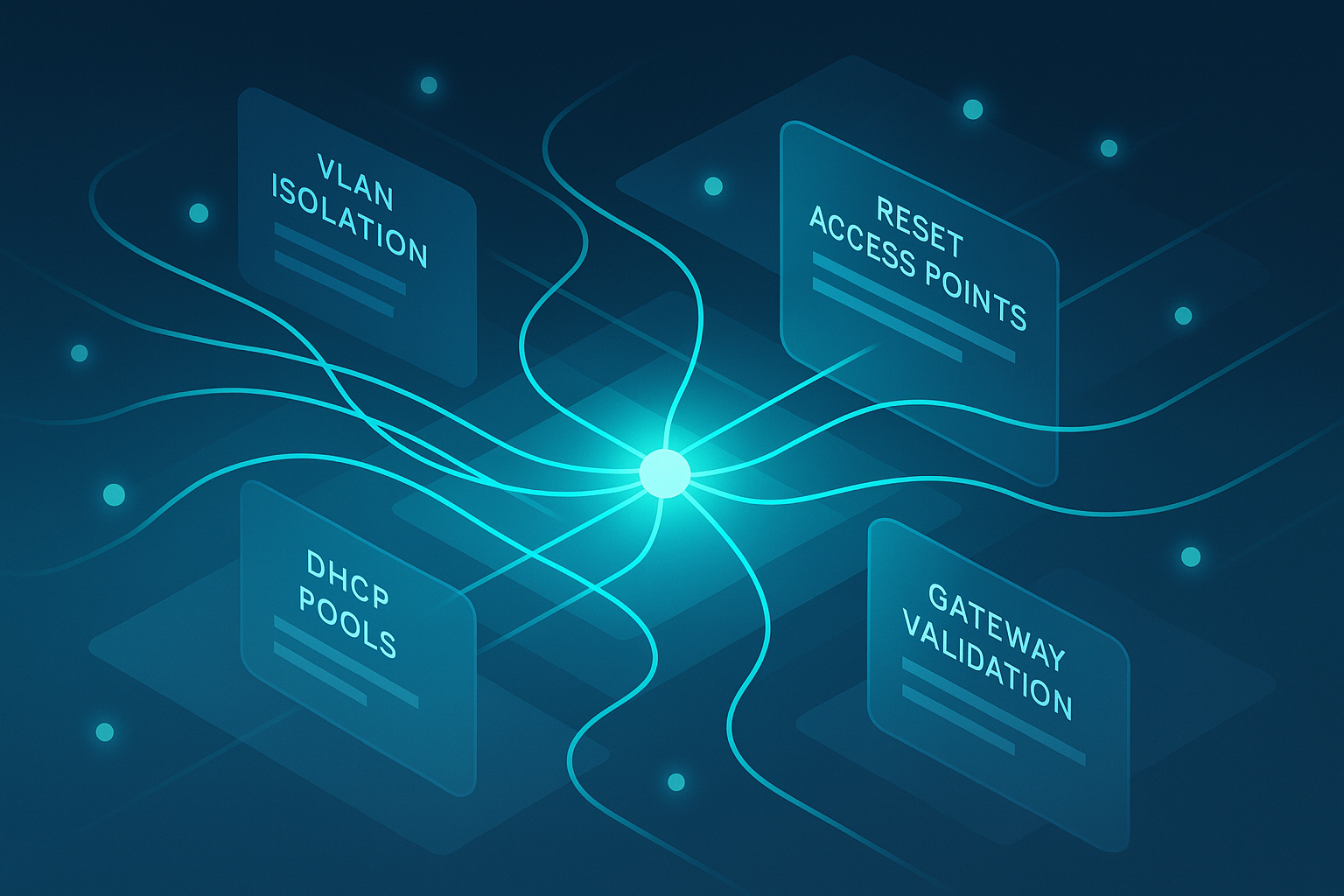
Quick-Fix for Guest Network Downtime:
- Check VLAN configuration for guest network isolation
- Verify DHCP pool availability (minimum 20% buffer for peak occupancy)
- Reset access point connections to core switch
- Validate internet gateway connectivity
Resolution time: Under 5 minutes for 90% of connectivity issues
Common ICND deployment challenges in hospitality include bandwidth throttling during peak check-in periods and device authentication failures across different guest device types. Properties resolve throttling by implementing QoS policies that prioritize reservation systems while maintaining adequate guest Wi-Fi performance, typically allocating 60% bandwidth to operations and 40% to guest services.
Authentication issues stem from outdated security protocols incompatible with modern guest devices. Best practice involves configuring dual-band networks: WPA3 for newer devices and WPA2 fallback for legacy equipment, ensuring 95% guest device compatibility without compromising security standards.
Essential Best Practices: Schedule automated network health checks during low-occupancy hours (2-4 AM), maintain guest network isolation through proper VLAN segmentation, and implement proactive monitoring that alerts staff before guest-facing services experience disruption. Properties following these practices report 10% higher guest satisfaction scores related to connectivity and digital services.
For a deeper dive into the technical background of ICND, refer to the ICND Wikipedia entry.
If you are looking to connect with experts or discuss tailored networking solutions for your hospitality business, visit the Vynta contact page for personalized support.
Frequently Asked Questions
How does ICND certification improve Wi-Fi reliability and guest satisfaction in hotels?
ICND certification equips hospitality IT teams with advanced networking skills to design, troubleshoot, and maintain stable Wi-Fi networks, reducing connectivity issues that often frustrate guests. Reliable Wi-Fi directly enhances guest satisfaction scores by ensuring seamless access to online services, which is critical for modern hotel experiences.
What are the key differences between ICND1 and ICND2 certifications for hospitality IT teams?
ICND1 focuses on foundational networking concepts such as basic routing and switching, ideal for entry-level hospitality IT staff managing day-to-day network operations. ICND2 builds on this foundation with advanced skills like WAN technologies and network troubleshooting, enabling teams to handle complex integrations and optimize hotel-wide connectivity.
In what ways can ICND skills help integrate property management platforms and reservation systems?
ICND skills enable IT teams to configure and maintain robust network infrastructures that support seamless data exchange between property management systems and reservation platforms. This integration reduces errors, accelerates booking processes, and ensures real-time updates, all of which contribute to smoother operations and improved guest experiences.
How can hospitality businesses leverage ICND-based network automation to enhance operational efficiency and increase revenue?
By applying ICND principles, hospitality businesses can automate network device onboarding, monitor system health proactively, and streamline POS and reservation system connectivity. These efficiencies reduce downtime, minimize no-shows, and create upselling opportunities, ultimately driving higher revenue per guest and improved operational workflows.
About The Author
Anas Moujahid is the chief contributing writer & Operations Director for the Vynta Blog, where he turns cutting-edge AI automation into measurable business outcomes for mid-market companies.
Vynta designs enterprise-grade AI agents that augment rather than replace people, freeing teams to focus on higher-value work while the bots handle the busywork.
We specialise in four service-heavy verticals where AI can move the revenue needle fast: real estate, recruitment, fundraising and hospitality.
Anas started his career architecting AI and automation systems; today he leads operations at Vynta, making sure every deployment lands real-world ROI, whether that’s more booked viewings for estate agents, faster placements for recruiters, warmer investor pipelines for fundraisers or happier guests for hotels and restaurants.
Vynta delivers results by:
- Building industry-specific agents pre-trained on real-world workflows, no generic chatbots here.
- Integrating seamlessly with existing CRMs, ATSs, PMSs and fundraising platforms, zero rip-and-replace.
- Measuring success in business KPIs (lead-to-close rates, time-to-hire, donor retention, RevPAR) not vanity metrics.
- Providing transparent implementation plans so clients know exactly what to expect, when and why.
- Pairing every AI agent with human-in-the-loop controls to keep quality, compliance and brand voice on point.
Since launch, Vynta has helped agencies slash lead qualification time by up to 70 %, recruitment firms cut screening hours in half, fundraising teams triple investor touchpoints and hospitality brands lift guest satisfaction scores by double digits, all while keeping human expertise firmly in the loop.
Anas writes with the same ethos that drives Vynta: outcome-focused, jargon-free and grounded in real business value. Expect data-backed insights, practical implementation guides and a clear-eyed view of what AI can, and can’t, do for your organisation.