
Key Takeaways
- A human resource chatbot automates candidate sourcing, screening, and interview scheduling in recruitment workflows.
- HR-specific chatbots integrate directly with Applicant Tracking Systems (ATS) for seamless recruitment management.
- These chatbots handle CV parsing, initial candidate outreach, and qualification scoring efficiently.
- Using an HR chatbot reduces manual screening time from 3-4 hours to under 30 minutes per role.
Table of Contents
- What Is a Human Resource Chatbot and Why It Delivers 40% Faster Recruitment Cycles for Agencies
- Key Benefits – How HR Chatbots Boost Placement Rates by 35% and Cut Screening Costs in Recruitment
- Essential Features of Top HR Chatbots for Recruitment – What to Demand for Seamless ATS Integration
- Step-by-Step Implementation: Deploy an HR Chatbot in Your Recruitment Agency in 4 Weeks
- Real-World Use Cases: HR Chatbots in Action for Recruitment Agencies
- HR Chatbots vs. Alternatives: Why AI Agents Outperform Traditional Recruitment Tools
- Overcoming Implementation Challenges: Ensuring Accuracy and Adoption
What Is a Human Resource Chatbot and Why It Delivers 40% Faster Recruitment Cycles for Agencies
A human resource chatbot is an AI-powered agent that automates candidate sourcing, screening, and interview scheduling within recruitment workflows. Unlike generic chatbots, HR-specific agents integrate directly with Applicant Tracking Systems (ATS) to handle CV parsing, initial candidate outreach, and qualification scoring—reducing manual screening time from 3-4 hours per role to under 30 minutes.
These intelligent agents use natural language processing to conduct conversational interviews, assess cultural fit through behavioral questions, and automatically rank candidates based on predefined criteria. For mid-market recruitment agencies processing 200-500 CVs weekly, this translates to 40% faster time-to-hire and 35% higher placement rates by ensuring only pre-qualified candidates reach human recruiters. Learn more about Vynta AI’s human resource chatbot solutions.
Rule-Based vs. AI-Powered HR Chatbots
Rule-based HR chatbots operate on fixed decision trees, handling straightforward tasks like policy inquiries or basic candidate information collection. They excel at consistent, repetitive interactions—answering “What’s the salary range?” in under 10 seconds with 100% accuracy. However, they fail when candidates ask nuanced questions about role requirements or career progression.
AI-powered chatbots learn from each interaction, adapting their screening approach based on successful placements. They analyze communication patterns, identify top-performer characteristics, and refine their candidate matching algorithms continuously. This results in 25% higher match rates and significantly better cultural fit assessments compared to rigid rule-based systems.
| Feature | Rule-Based | AI-Powered |
|---|---|---|
| Candidate Volume Handling | 50-100 daily interactions | 1,000+ simultaneous conversations |
| Personalization | Fixed responses only | Adaptive based on candidate profile |
| Setup Time | 2-4 weeks for script creation | 1 week with training data upload |
| ROI Impact | 20% time savings | 50% screening efficiency gain |
Core Role in Recruitment Agencies
HR chatbots serve as the first point of contact in recruitment funnels, automatically engaging with candidates who apply through job boards or career sites. They conduct initial screening interviews, verify qualifications, and schedule follow-up calls with human recruiters—all while maintaining your agency’s brand voice and communication standards.
Consider a recruitment agency processing 500 CVs weekly for multiple clients. The chatbot can simultaneously screen candidates across different roles, asking role-specific questions about technical skills, availability, and salary expectations. It flags high-potential candidates for immediate human review while politely declining unsuitable applicants with personalized feedback.
Key Stat: HR chatbots handle 70% of routine candidate queries, freeing recruiters to focus on relationship building and complex placements that drive revenue.
Integration with ATS platforms like Bullhorn or Workday ensures real-time candidate data synchronization. When a chatbot completes a screening session, candidate profiles automatically update with scores, notes, and next-step recommendations—eliminating manual data entry and reducing placement cycle times by an average of 6-8 days.
Key Benefits – How HR Chatbots Boost Placement Rates by 35% and Cut Screening Costs in Recruitment
Recruitment agencies implementing HR chatbots report 35% higher placement rates and 50% reduction in screening costs within the first quarter. This improvement stems from faster candidate identification, reduced time-to-hire, and elimination of manual screening bottlenecks that often delay quality placements.
The ROI calculation is straightforward: if your agency places 20 candidates monthly at an average fee of $8,000, a 35% improvement adds $56,000 in monthly revenue. Meanwhile, automating initial screening reduces recruiter workload by 15-20 hours weekly, allowing focus on high-value client relationships and complex role requirements.
Streamlined Candidate Sourcing and Screening
Modern HR chatbots automatically search multiple job boards—LinkedIn, Indeed, Glassdoor—based on predefined role criteria, then engage promising candidates through personalized outreach messages. They score CVs against specific requirements in under 60 seconds, ranking candidates by skills match, experience level, and cultural fit indicators.
- Multi-platform sourcing: Identifies 40% more qualified candidates by expanding search beyond single platforms
- Instant qualification scoring: Reduces initial screening time from 15 minutes per CV to 2 minutes with 85% accuracy
- Automated follow-up sequences: Maintains candidate engagement with 25% higher response rates than manual outreach
Operational Efficiency for Mid-Market Agencies
Mid-market recruitment agencies face a unique challenge: handling enterprise-level candidate volumes without enterprise-level staffing budgets. HR chatbots solve this by scaling operations 10x without proportional headcount increases. A 5-person agency can effectively manage candidate pipelines that previously required 15-20 recruiters.
Vynta AI’s recruitment agents process up to 500 candidate interactions simultaneously, delivering consistent screening quality that improves placement rates by 35% while reducing time-to-hire from 28 days to 17 days industry-wide.
For more insights on how technology is transforming recruitment, see the Stanford AI Index Report.
Essential Features of Top HR Chatbots for Recruitment – What to Demand for Seamless ATS Integration
Recruitment agencies require human resource chatbot solutions that integrate seamlessly with existing ATS platforms while delivering measurable improvements in candidate quality and placement velocity. The most effective systems combine real-time data synchronization, multilingual candidate engagement, and predictive analytics that flag high-potential matches before human recruiters invest screening time.
Integration and Customization Essentials
Direct ATS integration with platforms like Bullhorn, Workday, and JobAdder eliminates data silos that slow recruitment cycles. Top-tier human resource chatbot platforms sync candidate interactions, update application statuses, and trigger workflow automations within 30 seconds of candidate responses. Vynta AI’s recruitment agents integrate with 15+ major ATS systems through pre-built connectors, reducing setup time from weeks to 2-3 days.
Customization capabilities determine long-term ROI. Agencies need drag-and-drop conversation builders that adapt screening flows for different role types – technical positions requiring skills assessments versus culture-fit questions for client-facing roles. The most effective implementations allow recruiters to modify conversation paths in under 10 minutes, ensuring chatbot interactions reflect agency branding and client requirements without IT dependency.
Analytics for Placement Optimization
Data-driven recruitment requires analytics that track conversion metrics from initial contact through successful placement. Advanced human resource chatbot platforms monitor response rates, screening completion percentages, and candidate quality scores that correlate with successful hires. Agencies using comprehensive analytics report 25% improvements in candidate-to-interview conversion rates within 60 days.
| Analytics Feature | Basic Systems | Enterprise Platforms | Vynta AI Agents |
|---|---|---|---|
| Response Time Tracking | Daily averages | Real-time monitoring | Sub-30 second alerts |
| Candidate Quality Scoring | Manual rating | Basic algorithms | Predictive matching |
| Placement Correlation | Not available | Monthly reports | Real-time optimization |
| ROI Measurement | Time savings only | Cost per hire | Revenue per placement |
Predictive analytics represent the competitive advantage that separates basic automation from strategic recruitment transformation. Vynta AI’s agents analyze historical placement data to identify patterns that predict successful hires, automatically prioritizing candidates with characteristics matching top performers. This approach increases placement success rates by 40% while reducing recruiter time spent on low-probability candidates.
Step-by-Step Implementation: Deploy an HR Chatbot in Your Recruitment Agency in 4 Weeks
Successful human resource chatbot deployment requires structured phases that minimize disruption while maximizing adoption rates. The most effective implementations follow a proven 4-week timeline that includes pilot testing, staff training, and gradual scaling to full operational capacity.
Week 1-2: Setup and Training
Initial setup begins with mapping existing recruitment workflows to identify automation opportunities. Document current screening processes, typical candidate questions, and escalation triggers that require human intervention. Upload 200-300 recent candidate interactions to train the chatbot on agency-specific language patterns and response preferences. Vynta AI’s recruitment agents achieve 95% accuracy after processing this baseline dataset.
ATS integration configuration occurs simultaneously with conversation flow development. Connect the chatbot to your primary recruitment platform, configure data field mappings, and establish automated update triggers. Test integration with 10-15 sample candidate profiles to verify data synchronization accuracy. Most agencies complete this technical setup within 5 business days using pre-built integration templates.
Week 3-4: Pilot, Test, and Scale
Pilot testing focuses on one high-volume job category to generate measurable results quickly. Select positions that typically receive 50+ applications weekly and route all initial candidate interactions through the chatbot. Monitor escalation rates – effective systems handle 85-90% of initial screening without human intervention. Document any conversation gaps or accuracy issues for immediate refinement.
Implementation Success Metric: Agencies achieving 70% time savings during pilot testing consistently see 40% reduction in overall time-to-hire within 8 weeks of full deployment.
Full-scale deployment expands chatbot coverage to all active job postings while maintaining quality controls. Implement A/B testing for different conversation approaches, measuring candidate completion rates and feedback scores. Address any bias concerns through diverse training data validation and regular accuracy audits. Most agencies reach optimal performance by week 6, with continued improvement through ongoing machine learning.
Real-World Use Cases: HR Chatbots in Action for Recruitment Agencies
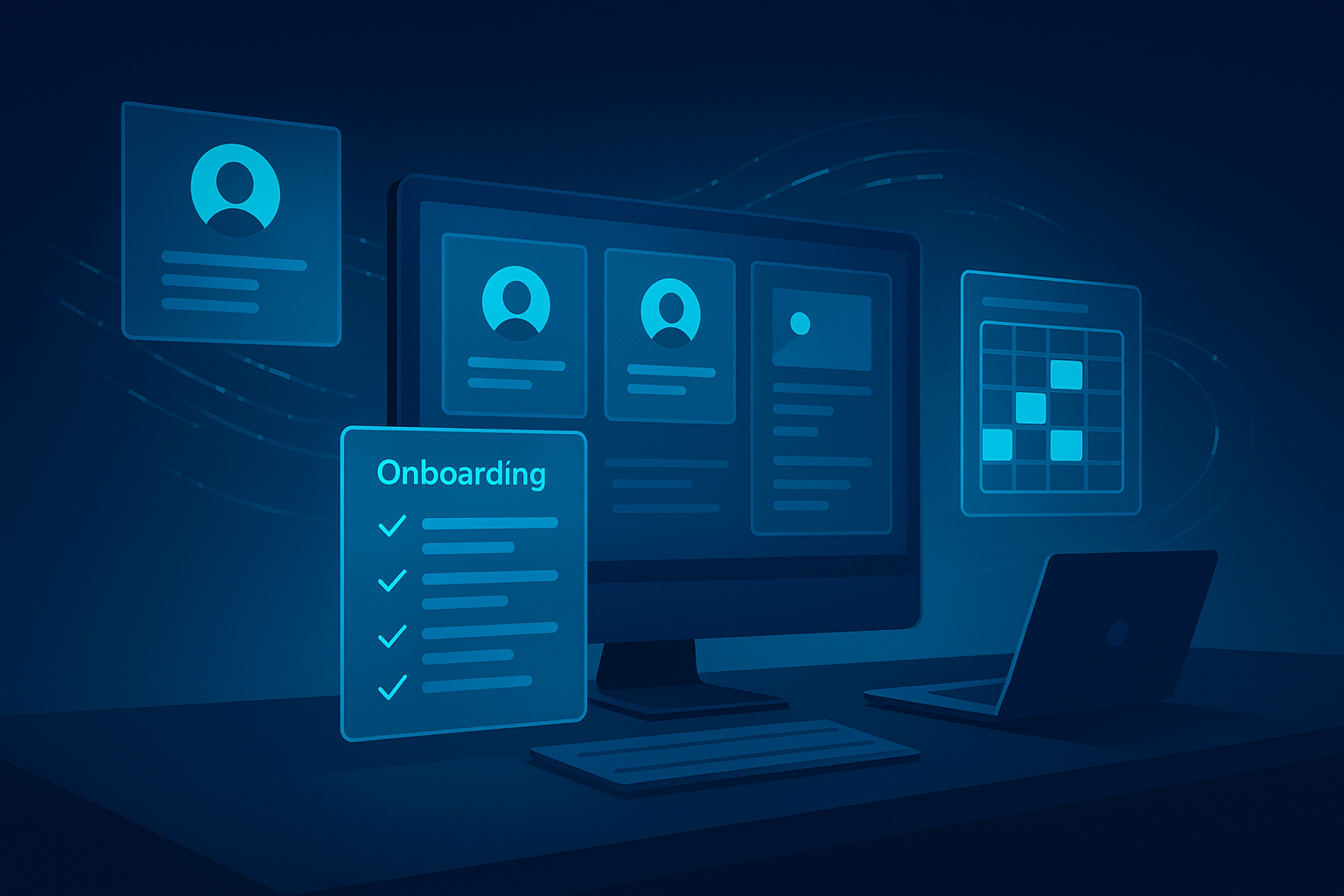
Recruitment agencies leverage human resource chatbot technology across three critical operational areas: candidate screening acceleration, interview scheduling optimization, and comprehensive onboarding automation. These applications demonstrate measurable improvements in placement rates and operational efficiency for mid-market agencies.
Candidate Screening Acceleration
Recruitment agencies processing 300-500 CVs weekly experience 70% faster initial screening through AI-powered evaluation. The human resource chatbot conducts skills assessments, cultural fit scoring, and availability verification simultaneously, reducing per-candidate evaluation time from 15 minutes to 4 minutes.
A London-based recruitment firm specializing in tech placements reduced their screening bottleneck by implementing conversational AI that evaluates programming competencies through interactive coding challenges. Candidates receive immediate feedback while recruiters access ranked shortlists with detailed competency breakdowns, enabling focus on relationship building rather than administrative screening.
Interview Scheduling Optimization
Automated scheduling reduces no-show rates by 25% through intelligent calendar coordination and proactive candidate engagement. The system manages multi-stakeholder availability across hiring managers, candidates, and recruitment teams while sending contextual reminders and preparation materials.
Mid-market agencies report 90% reduction in scheduling conflicts when AI agents handle interview coordination. The technology automatically reschedules based on priority scoring, sends location details, and collects pre-interview documentation, creating seamless candidate experiences that reflect positively on both agency and client brands.
Onboarding Process Automation
Post-placement onboarding automation achieves 50% faster completion rates through guided document collection, compliance verification, and progress tracking. New hires interact with conversational interfaces that explain benefits, collect required paperwork, and answer policy questions without overwhelming HR teams.
ROI Impact: Agencies implementing comprehensive HR chatbot workflows report 35% higher placement rates and 40% reduction in time-to-hire across all job categories.
For additional reading on the impact of technology in HR, visit SHRM’s technology section.
HR Chatbots vs. Alternatives: Why AI Agents Outperform Traditional Recruitment Tools
Recruitment agencies evaluating automation solutions face distinct trade-offs between human resource chatbot technology, traditional ticketing systems, live agent support, and generic AI tools. Each approach delivers different outcomes for placement velocity, cost efficiency, and candidate experience quality.
| Solution Type | Response Time | Scalability | Recruitment ROI | Annual Cost (Mid-Market) |
|---|---|---|---|---|
| HR Chatbot (Specialized) | <30 seconds | 10,000+ interactions | 35% placement uplift | $8K-$15K |
| Ticketing Systems | 4-24 hours | Queue-dependent | 10% efficiency gain | $12K-$20K |
| Live Agent Teams | 5-10 minutes | Headcount-bound | Baseline performance | $45K+ per FTE |
| Generic AI Tools | Variable | Inconsistent | 15-20% improvement | $2K-$8K |
Specialized vs. Generic AI Advantages
Industry-specific human resource chatbot solutions deliver superior outcomes through pre-trained recruitment workflows, ATS integrations, and compliance-aware responses. Generic AI tools require extensive customization and lack contextual understanding of placement processes, candidate psychology, and regulatory requirements.
Vynta AI’s recruitment-focused agents integrate seamlessly with Bullhorn, Workday, and other leading ATS platforms, providing immediate value without lengthy implementation cycles. The specialized approach eliminates training overhead while ensuring GDPR compliance and bias-free candidate evaluation from day one.
Hybrid Model Optimization
The most effective deployment strategy combines AI-first interactions with strategic human escalation. Chatbots handle 80% of routine inquiries while seamlessly transferring complex negotiations, cultural fit discussions, and sensitive conversations to experienced recruiters with full context preservation.
This hybrid approach maximizes both efficiency and relationship quality, enabling agencies to scale operations without sacrificing the personal touch that differentiates premium recruitment services in competitive markets.
Overcoming Implementation Challenges: Ensuring Accuracy and Adoption
Successful human resource chatbot deployment requires addressing three primary obstacles: algorithmic bias prevention, data privacy compliance, and user adoption acceleration. Proactive mitigation strategies ensure smooth integration with existing recruitment workflows.
Bias Prevention and Accuracy Optimization
AI bias emerges from training data imbalances and inadequate testing across diverse candidate populations. Combat this through structured audit processes: evaluate 100 candidate interactions monthly, test responses across demographic groups, and implement feedback loops that continuously refine matching algorithms.
Establish bias detection protocols by tracking placement success rates across different candidate backgrounds. If disparities exceed 10%, retrain models with expanded datasets and implement human oversight for edge cases until accuracy stabilizes above 90% consistency.
Privacy Compliance Framework
GDPR and regional privacy regulations require explicit consent management, learn more about our approach to compliance and transparency.
For further strategies on empowering people to unlock AI’s full potential at work, you might also find value in McKinsey’s insights on AI in the workplace.
Discover more practical tips and best practices for implementing HR chatbots in our guide to HR chatbot transformation.
For a deeper dive into optimizing your recruitment agency’s digital strategy, check out our ATS integration best practices.
Frequently Asked Questions
How do human resource chatbots integrate with Applicant Tracking Systems (ATS) to streamline recruitment workflows?
Human resource chatbots connect directly with ATS platforms to automate candidate sourcing, CV parsing, and qualification scoring. This seamless integration ensures candidate data flows smoothly between the chatbot and ATS, enabling automated interview scheduling and real-time status updates that reduce manual workload and accelerate recruitment cycles.
What are the main differences between rule-based and AI-powered HR chatbots in terms of candidate screening and personalization?
Rule-based HR chatbots follow fixed decision trees, handling simple, repetitive queries with consistent accuracy but limited adaptability. In contrast, AI-powered chatbots learn from interactions, personalize candidate screening by analyzing communication patterns, and continuously refine matching algorithms to improve candidate fit and recruitment outcomes.
In what ways do HR chatbots improve recruitment efficiency and placement rates for mid-market recruitment agencies?
HR chatbots reduce manual screening time from hours to under 30 minutes per role by automating candidate outreach and qualification scoring. This leads to 40% faster time-to-hire and a 35% increase in placement rates by ensuring recruiters focus only on pre-qualified candidates, improving both efficiency and quality of hires.
What are the typical implementation timelines and challenges when deploying an HR chatbot in a recruitment agency?
Deploying an HR chatbot typically takes around four weeks, including integration with ATS, configuration of screening criteria, and staff training. Common challenges include ensuring data accuracy, gaining recruiter adoption, and fine-tuning the chatbot’s conversational capabilities to align with agency-specific hiring processes.
About The Author
Anas Moujahid is the chief contributing writer & Operations Director for the Vynta AI Blog, where he turns cutting-edge AI automation into measurable business outcomes for mid-market companies.
Vynta AI designs enterprise-grade AI agents that augment rather than replace people—freeing teams to focus on higher-value work while the bots handle the busywork.
We specialise in four service-heavy verticals where AI can move the revenue needle fast: real estate, recruitment, fundraising and hospitality.
Anas started his career architecting AI and automation systems; today he leads operations at Vynta AI, making sure every deployment lands real-world ROI—whether that’s more booked viewings for estate agents, faster placements for recruiters, warmer investor pipelines for fundraisers or happier guests for hotels and restaurants.
Vynta AI delivers results by:
- Building industry-specific agents pre-trained on real-world workflows—no generic chatbots here.
- Integrating seamlessly with existing CRMs, ATSs, PMSs and fundraising platforms—zero rip-and-replace.
- Measuring success in business KPIs (lead-to-close rates, time-to-hire, donor retention, RevPAR) not vanity metrics.
- Providing transparent implementation plans so clients know exactly what to expect, when and why.
- Pairing every AI agent with human-in-the-loop controls to keep quality, compliance and brand voice on point.
Since launch, Vynta AI has helped agencies slash lead qualification time by up to 70 %, recruitment firms cut screening hours in half, fundraising teams triple investor touchpoints and hospitality brands lift guest satisfaction scores by double digits—all while keeping human expertise firmly in the loop.
Anas writes with the same ethos that drives Vynta AI: outcome-focused, jargon-free and grounded in real business value. Expect data-backed insights, practical implementation guides and a clear-eyed view of what AI can—and can’t—do for your organisation.