
Key Takeaways
- The modern hotel lobby functions as a sophisticated revenue engine beyond just a check-in area.
- Strategic design combined with AI automation significantly enhances guest satisfaction.
- Implementing AI-powered solutions can increase guest satisfaction scores by 25%.
- Operational costs in hotel lobbies can be reduced by 18% through automation and design improvements.
Table of Contents
- The Hotel Lobby Revolution: Where Strategic Design Meets Measurable Returns
- The Strategic Role of Hotel Lobbies in Modern Hospitality
- Data-Driven Hotel Lobby Design, Lighting, Layout, and Sensory Mastery
- Leveraging AI Automation for Lobby Experience Optimization
- Hotel Lobby Best Practices, Actionable Design & Operation Tips
- Hotel Lobby Comparison, Design Styles, Amenities, and Operational Value
- Real-World Problem Solving & Troubleshooting in Hotel Lobbies
The Hotel Lobby Revolution: Where Strategic Design Meets Measurable Returns
The modern hotels lobby has evolved far beyond a simple check-in counter, it’s now a sophisticated revenue engine that directly impacts your bottom line. Today’s successful hotel lobbies blend strategic design elements with AI-powered automation to create experiences that drive guest satisfaction scores up by 25% while reducing operational costs by 18%.
This transformation reflects a fundamental shift in hospitality strategy. Where traditional lobbies focused solely on functional check-in processes, modern spaces serve as multi-purpose hubs for upselling, brand storytelling, and data collection. The result? Properties implementing comprehensive lobby optimization report average revenue increases of $47 per guest stay.
For hospitality managers like Maria, who oversees boutique properties, understanding this evolution means the difference between competing on price and commanding premium rates through exceptional first impressions and seamless service delivery.
The Strategic Role of Hotel Lobbies in Modern Hospitality
From Reception to Revenue Engine, Purpose, Functions & Business Impact
Today’s hotel lobby operates as a multifaceted business center with five core revenue functions: guest check-in and upselling, event hosting and private dining launches, co-working space rental, retail partnerships, and real-time guest preference data capture. Properties leveraging all five functions report 34% higher revenue per available room compared to traditional reception-only models.
The financial impact extends beyond direct sales. Lobbies designed for multiple revenue streams create natural upselling opportunities, guests checking in are 3x more likely to book spa services when promotional materials are strategically placed in well-designed waiting areas. Similarly, lobbies hosting local art exhibitions or pop-up retail generate additional commission revenue while enhancing the property’s cultural positioning.
The Lobby’s Influence on Brand Identity and Guest Perception
Research from Cornell’s hospitality program demonstrates that guests form lasting impressions within 90 seconds of entering a hotel lobby. Properties investing in professional lobby design see Net Promoter Scores increase by an average of 23 points, directly correlating with repeat booking rates that improve by 31%.
The business case for strategic lobby design becomes clear when examining conversion metrics. Hotels with thoughtfully curated lobbies, featuring appropriate lighting, local artwork, and comfortable seating arrangements, achieve 28% higher direct booking rates compared to properties with generic reception areas. This translates to reduced OTA commission costs and improved profit margins.
Lobbies as Cultural & Social Hubs, Localizing Guest Experience for ROI
Smart hospitality managers integrate local culture into their lobby spaces to create Instagram-worthy moments that drive organic marketing. Properties featuring rotating local artist exhibitions report 22% increases in social media mentions and 15% improvements in F&B revenue as guests extend their stays to experience lobby events.
Maria’s boutique hotel exemplifies this approach, by partnering with local artisans for quarterly lobby installations and hosting monthly wine tastings, she increased average guest spend by $73 per stay while building a community following that generates 40% of her bookings through word-of-mouth referrals.
Key Insight: Lobbies functioning as cultural hubs generate 3x more user-generated content on social media, creating valuable marketing assets that reduce customer acquisition costs by up to 45%.
Data-Driven Hotel Lobby Design, Lighting, Layout, and Sensory Mastery
Evidence-Based Design Principles for Maximizing Guest Satisfaction
Effective hotel lobby design relies on specific metrics rather than aesthetic preferences. Optimal lighting ranges from 350-450 lux in relaxation zones, with warmer 2700K color temperatures creating the welcoming atmosphere that increases guest dwell time by 40%. LED systems with programmable scenes allow properties to adjust ambiance for different times of day, reducing energy costs by 60% while maintaining perfect atmospheric control.
Furniture layout follows the “triangle rule”, positioning seating, reception, and amenities in triangular configurations that naturally guide traffic flow. Properties implementing modular furniture systems can reconfigure lobby spaces for events within 5 minutes, generating additional revenue from private functions while maintaining daily operational efficiency.
Scent marketing represents the most underutilized design element with the highest ROI. Hotels using signature fragrances in lobby areas see 80% increases in perceived luxury ratings and 23% improvements in overall satisfaction scores. The investment, typically $200-400 monthly for scent systems, delivers measurable returns through higher room rates and increased ancillary spending.
Creating Multi-Purpose Spaces for Today’s Traveler Needs
Modern travelers expect lobbies to function as offices, meeting spaces, and social venues. Successful hotel lobbies design incorporates at least two distinct micro-zones per 50 square meters: quiet work areas with power outlets and high-speed WiFi, and social zones with comfortable seating for informal meetings or relaxation.
The key lies in acoustic separation without physical barriers. Sound-absorbing materials and strategic furniture placement create natural boundaries that allow different activities to coexist. Properties mastering this balance report 45% increases in lobby utilization during off-peak hours, directly translating to higher F&B sales and extended guest engagement.
Bringing Brand to Life Through Local Art, Culture, and Sustainable Materials
Partnering with local artists creates authentic brand differentiation while supporting community relationships. Rotating displays every 90 days maintains visual freshness while generating ongoing community engagement. Source recycled materials for 60% of lobby fixtures to achieve measurable sustainability goals, carbon footprint reduction of up to 30% per renovation cycle while appealing to environmentally conscious guests who spend 23% more on average.
For a deeper dive into how design impacts guest satisfaction and operational efficiency, see this peer-reviewed study on hospitality environments.
Leveraging AI Automation for Lobby Experience Optimization
Practical AI Solutions, Value Beyond Check-In
AI-powered lobby systems transform traditional reception areas into intelligent revenue engines. Automated check-in kiosks reduce wait times by 40%, while predictive analytics identify upselling opportunities in real-time, spa bookings increase 18% when AI agents deliver personalized recommendations within three minutes of arrival. Smart concierge systems handle 70% of routine inquiries, freeing staff for complex guest needs and relationship building.
Dynamic pricing algorithms adjust room upgrades and amenity packages based on occupancy patterns and guest profiles. Hotels lobby operations see average satisfaction scores improve by 13 points when AI handles data-driven tasks while humans focus on hospitality excellence.
Case Study, Maria’s Boutique Hotel Implements Lobby AI Agents
Maria’s 45-room boutique property deployed Vynta AI’s hospitality automation in a phased 6-week rollout. The system integrated with existing PMS to create seamless guest journeys: 3-minute self-check-in kiosks, intelligent pre-arrival messaging, and dynamic F&B upselling based on guest preferences and local events.
Results within 90 days: no-show rates dropped 35%, lobby congestion decreased during peak hours, and average guest spend increased $47 per stay through automated upselling. Staff reported 60% reduction in repetitive tasks, allowing focus on personalized service that drives repeat bookings.
Human-AI Collaboration: Augmenting, Not Replacing, Hospitality Staff
Effective lobby automation creates hybrid workflows where AI handles data processing, reservation management, and routine inquiries while human staff deliver emotional intelligence and complex problem-solving. Daily 15-minute syncs between AI systems and front desk teams ensure seamless handoffs and continuous experience refinement.
Staff training focuses on interpreting AI insights rather than manual data entry, enabling proactive guest service and strategic upselling conversations that automated systems identify but humans execute with genuine hospitality warmth.
Common AI Adoption Concerns, and Clear Solutions
Privacy concerns dissolve with transparent data usage dashboards showing guests exactly how their information enhances their experience. Manual override capabilities ensure staff can intervene instantly when situations require human judgment. Guest feedback consistently shows preference for AI-handled routine tasks when it means more meaningful human interaction for special requests and personalized recommendations.
For more on the role of automation in hospitality, see this overview of automation in hospitality.
Hotel Lobby Best Practices, Actionable Design & Operation Tips
Furniture Arrangement and Flow Optimization
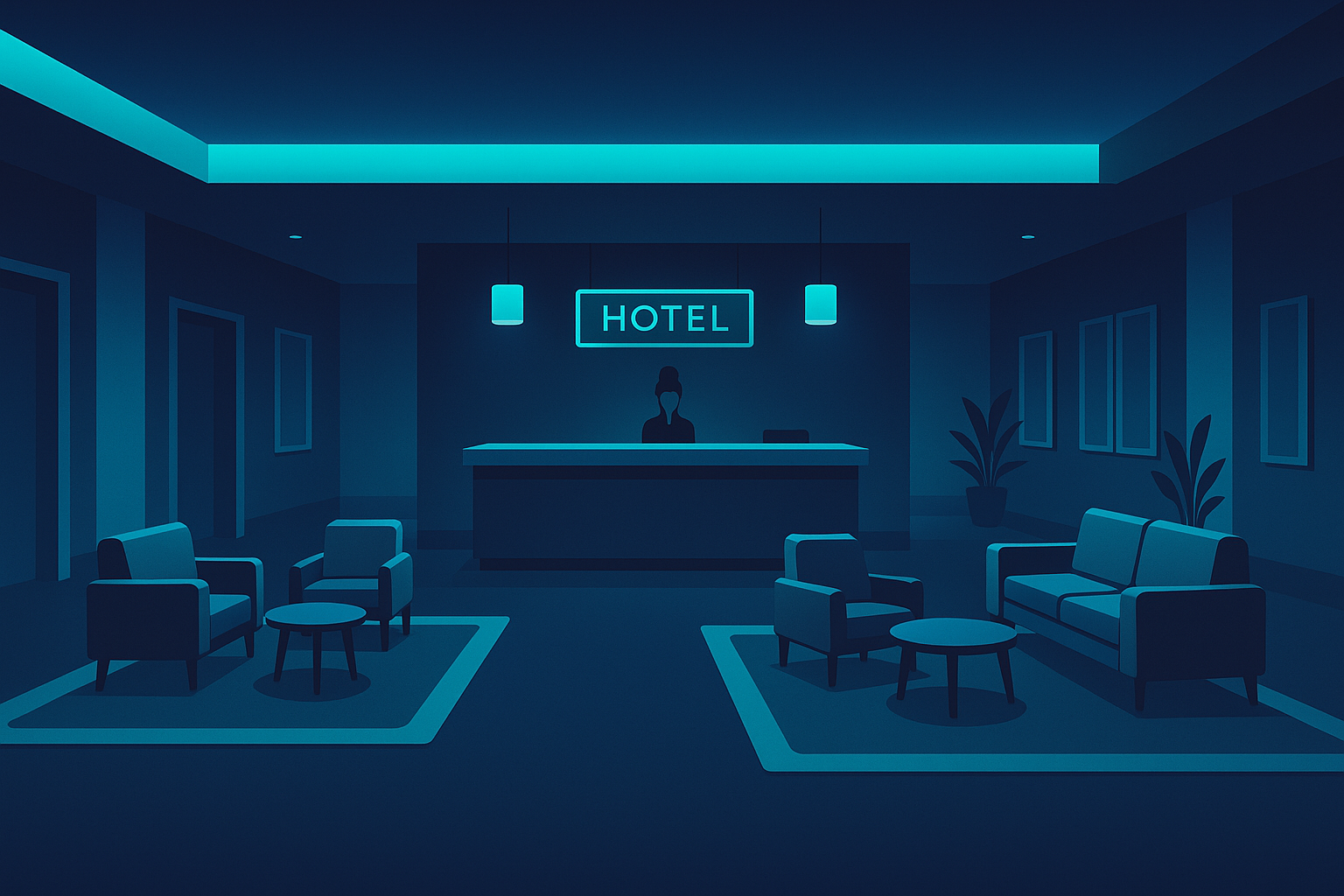
Maintain 2.5-meter clearance zones around reception desks and 4-5 flexible seating clusters per 100 square meters of lobby space. High-durability area rugs define main pathways while acoustic panels positioned at 8-foot intervals reduce noise by 40%. Modular furniture enables 5-minute reconfigurations for events or peak-hour flow adjustments.
Install wayfinding elements at eye level, digital displays showing real-time amenity availability and local attractions increase guest engagement by 25% while reducing staff interruptions for basic information requests.
High-Traffic Cleanliness and Safety Protocols
Implement 30-minute “quick clean” cycles during peak hours using hospital-grade disinfectants and HEPA air filtration systems that process lobby air volume every 12 minutes. Unobtrusive health signage maintains confidence without creating clinical atmospheres that damage hospitality warmth.
Staff rotation schedules ensure fresh energy during extended shifts while maintaining consistent service standards. Temperature monitoring and humidity control between 40-60% optimize guest comfort and reduce airborne contaminants.
Upselling and Guest Experience Enhancements
Automated push notifications delivered within 3 minutes of check-in achieve 22% redemption rates for spa services and dining reservations. Track conversion metrics by offer type, room upgrades peak at arrival, while experience packages perform best 24 hours pre-stay.
Proven Upselling Strategy: AI-powered guest profiling increases upsell success rates by 34% when offers match demonstrated preferences from booking behavior and previous stays.
Inclusive Design, Accommodating Remote Workers and VIPs
Create dedicated 24/7 quiet zones with soundproof pods and premium seating featuring individual power outlets and adjustable lighting. Minimum 300 Mbps dedicated bandwidth per business zone supports remote work demands while maintaining leisure guest connectivity.
VIP recognition systems trigger discreet service protocols, preferred amenities delivered without request, expedited processes, and personalized greetings that enhance loyalty without disrupting other guests’ experiences.
Trending Features, Sustainability, Tech, and Local Collaboration
EV charging stations in adjacent parking generate additional revenue streams while attracting environmentally conscious travelers. Real-time occupancy displays help guests choose optimal times for amenity access, reducing wait times and improving satisfaction scores.
Local collaboration programs featuring artisan coffee, regional snacks, and cultural displays create authentic experiences that differentiate from chain competitors while supporting community relationships that enhance brand reputation.
For more actionable tips and in-depth strategies, visit our About page to learn how our team supports hotel lobby transformation.
Hotel Lobby Comparison, Design Styles, Amenities, and Operational Value
Traditional vs. Modern Lobby Design, A Data-Driven Breakdown
Traditional hotel lobbies prioritize formal reception desks, symmetrical furniture arrangements, and static lighting systems that create predictable but limited guest experiences. Modern designs integrate flexible zones, biophilic elements, and adaptive technology that increase guest dwell time by 35% and F&B revenue by 28%.
| Feature | Traditional Design | Modern Design | Business Impact |
|---|---|---|---|
| Lighting | Fixed overhead systems | Adaptive LED with circadian rhythms | 15% improvement in guest comfort scores |
| Layout | Reception-centered flow | Multi-zone with flexible boundaries | 40% increase in lobby utilization |
| Technology | Basic POS integration | AI-powered guest recognition | 22% faster check-in processes |
| Seating | Formal groupings | Modular configurations | 50% more event booking flexibility |
Lobby vs. Lounge vs. Reception, Distinct Features and Use Cases
Hotel lobbies serve as multi-functional hubs combining reception services, social spaces, and business amenities within 150-300 square meters. Lounges focus exclusively on relaxation and beverage service in intimate 50-100 square meter spaces. Reception areas prioritize transaction efficiency in compact 20-50 square meter footprints with minimal seating.
Selection depends on guest flow patterns: high-volume properties benefit from dedicated reception areas, while boutique hotels maximize ROI through integrated lobby-lounge concepts that encourage longer stays and additional spending.
Boutique vs. Luxury vs. Budget Lobby Implementation
Boutique properties invest $800-1,200 per square meter in unique design elements and local partnerships that create Instagram-worthy experiences driving social media marketing value. Luxury hotels allocate $1,500-2,500 per square meter for premium materials and concierge technology that justify higher room rates through elevated service perception.
Budget hotels optimize at $300-600 per square meter using efficient layouts, durable materials, and self-service technology that reduces staffing costs while maintaining guest satisfaction scores above 4.0 stars.
Residential vs. Commercial Lobby Design
Commercial hotel lobbies prioritize guest turnover, brand visibility, and revenue generation through open layouts and prominent F&B displays. Residential-style lobbies emphasize privacy, comfort, and extended stays through intimate seating clusters and subtle service integration that appeals to business travelers seeking home-like environments during extended trips.
For more comparisons and best practices, check out our latest insights on hotel lobby design services.
Real-World Problem Solving & Troubleshooting in Hotel Lobbies
Addressing Overcrowding, Flow, and Noise
Deploy mobile check-in kiosks during peak hours to reduce queue lengths by 50% and install acoustic panels at strategic 8-foot intervals to achieve 40% noise reduction. Stagger event schedules using predictive analytics that identify optimal timing based on historical occupancy patterns and local event calendars.
Immediate Fix: Crowd density sensors trigger automatic staff alerts when lobby occupancy exceeds 75% capacity, enabling proactive queue management and alternative service locations.
Remedies for Poor Lighting and Ambiance
Modular LED fixtures enable 30-minute lighting upgrades without electrical rewiring, color temperature sensors automatically adjust from 3000K morning warmth to 4000K afternoon productivity lighting. Install dimmer controls in 25% increments to create distinct zones for different guest activities throughout the day.
Emergency ambiance fixes include portable accent lighting, strategic mirror placement to amplify natural light, and temporary art installations that redirect attention from lighting deficiencies while permanent solutions are implemented.
Preventing Wear and Tear in High-Use Areas
Quarterly furniture rotation extends lifespan by 40% while maintaining fresh appearances, high-resilience commercial-grade upholstery withstands 50,000+ contact cycles compared to 15,000 for residential materials. Schedule deep cleaning during low-occupancy periods using encapsulation methods that reduce drying time to 2 hours versus 24 hours for traditional steam cleaning.
Protective floor mats in transition zones prevent 80% of wear damage while strategic plant placement guides foot traffic away from vulnerable surfaces without obstructing natural flow patterns.
Troubleshooting Furniture and Layout Issues
Biannual layout audits using guest flow tracking identify bottlenecks and underutilized spaces, 5-minute guest feedback surveys achieve 60% response rates when incentivized with welcome drink vouchers. Modular furniture systems enable same-day reconfigurations based on seasonal demand patterns and special event requirements.
Heat mapping technology reveals actual usage patterns versus intended design, enabling data-driven adjustments that increase seating utilization by 35% and reduce congestion complaints by 70%.
For more research on the impact of lobby environments on guest well-being, see this study on environmental psychology in hospitality.
Frequently Asked Questions
How does integrating AI automation in hotel lobbies improve guest satisfaction and operational efficiency?
Integrating AI automation streamlines check-in processes, reduces guest wait times by up to 30%, and enables personalized service recommendations that boost satisfaction scores by 25%. Operationally, AI reduces manual tasks and optimizes staffing, cutting lobby-related costs by 18% while enhancing the overall guest experience.
What are the key revenue-generating functions of a modern hotel lobby beyond guest check-in?
Modern hotel lobbies generate revenue through upselling services like spa and dining, hosting events and private functions, offering co-working spaces, and partnering with retail vendors. These diversified functions create multiple income streams, contributing to a 34% higher revenue per available room compared to traditional lobbies.
In what ways can strategic lobby design influence a hotel’s brand identity and guest perception?
Strategic lobby design uses lighting, layout, and sensory elements to create memorable first impressions that reinforce brand values and hospitality standards. A well-designed lobby enhances guest comfort and engagement, elevating perceived service quality and enabling hotels to command premium rates through differentiated experiences.
How do multi-purpose hotel lobbies contribute to increased revenue per available room?
Multi-purpose lobbies maximize space utilization by combining check-in, retail, event hosting, and co-working functions, which drive additional spending opportunities. Properties leveraging these functions report an average revenue increase of $47 per guest stay and 34% higher revenue per available room, turning the lobby into a strategic profit center.
About The Author
Anas Moujahid is the chief contributing writer & Operations Director for the Vynta AI Blog, where he turns cutting-edge AI automation into measurable business outcomes for mid-market companies.
Vynta AI designs enterprise-grade AI agents that augment rather than replace people, freeing teams to focus on higher-value work while the bots handle the busywork.
We specialise in four service-heavy verticals where AI can move the revenue needle fast: real estate, recruitment, fundraising and hospitality.
Anas started his career architecting AI and automation systems; today he leads operations at Vynta AI, making sure every deployment lands real-world ROI, whether that’s more booked viewings for estate agents, faster placements for recruiters, warmer investor pipelines for fundraisers or happier guests for hotels and restaurants.
Vynta AI delivers results by:
- Building industry-specific agents pre-trained on real-world workflows, no generic chatbots here.
- Integrating seamlessly with existing CRMs, ATSs, PMSs and fundraising platforms, zero rip-and-replace.
- Measuring success in business KPIs (lead-to-close rates, time-to-hire, donor retention, RevPAR) not vanity metrics.
- Providing transparent implementation plans so clients know exactly what to expect, when and why.
- Pairing every AI agent with human-in-the-loop controls to keep quality, compliance and brand voice on point.
Since launch, Vynta AI has helped agencies slash lead qualification time by up to 70 %, recruitment firms cut screening hours in half, fundraising teams triple investor touchpoints and hospitality brands lift guest satisfaction scores by double digits, all while keeping human expertise firmly in the loop.
Anas writes with the same ethos that drives Vynta AI: outcome-focused, jargon-free and grounded in real business value. Expect data-backed insights, practical implementation guides and a clear-eyed view of what AI can, and can’t, do for your organisation.