

Key Takeaways
- Hotel innovations in 2025 include AI-powered guest communications that enhance interaction quality.
- Smart room technology is a key feature improving guest comfort and convenience.
- Sustainable energy systems are integrated to promote eco-friendly operations.
- Personalized service automation helps increase guest satisfaction scores.
- These technologies contribute to higher RevPAR for mid-market hotel properties.
Table of Contents
- What Hotel Innovation Means in 2025
- Technology-Driven Hotel Innovation: The AI & Automation Edge
- Sustainable and Wellness-Inspired Hotel Innovation
- Guest-Centered Personalization: AI-Driven Experience at Scale
- Innovation in Hotel Space Design and Event Flexibility
- Comparison: Manual vs. Automated Hotel Operations — Where Innovation Drives ROI
- Implementing Innovation — Practical Guidance for Hospitality Managers
- Future Trends in Hotel Innovation — 2026 and Beyond
- Selecting Your Hotel Innovation Partner
Hotel Innovations — The Future of Guest Experience and Operational Excellence
What Hotel Innovation Means in 2025
Hotel innovations in 2025 encompass AI-powered guest communications, smart room technology, sustainable energy systems, and personalized service automation that measurably improve guest satisfaction scores and RevPAR for mid-market properties.
Modern hotel innovation spans four critical areas: technology integration (AI agents, IoT smart rooms, mobile check-in), sustainability initiatives (energy-efficient systems, wellness amenities), enhanced guest experiences (hyper-personalization, self-service options), and adaptive space design (modular event areas, co-working integration). These advances directly impact bottom-line metrics—properties implementing comprehensive innovation strategies report 15-25% increases in guest satisfaction scores and 12-18% improvements in revenue per available room.
For hospitality managers, continuous innovation isn’t optional—it’s essential for competitive differentiation. Mid-market hotels leveraging strategic technology adoption consistently outperform traditional operations in occupancy rates, guest retention, and operational efficiency while reducing labor costs by 20-30%.
Technology-Driven Hotel Innovation: The AI & Automation Edge
vynta.ai/wp-content/uploads/2025/11/sleek_hotel_concierge_desk_with_holographic_guest_.webp” alt=”Sleek hotel concierge desk with holographic guest profiles, reservation charts, and digital icons.” />
AI agents fundamentally transform hospitality operations by automating guest communications, optimizing reservation management, and driving targeted upselling. Properties using enterprise AI solutions report 70% reductions in manual guest response times and double-digit increases in upsell conversion rates. Mobile check-in systems enable guests to bypass front desk queues entirely, accessing rooms within three minutes of arrival, while IoT-enabled smart rooms allow personalized climate, lighting, and entertainment control via smartphone apps.
Successful implementation requires strategic deployment across high-impact touchpoints. Deploy AI-powered guest messaging platforms to handle routine FAQs, reservation confirmations, and seasonal offer promotions—customize scripts monthly and track response time improvements weekly. Integrate occupancy sensors with property management systems to trigger automated housekeeping assignments and ambient room adjustments based on guest presence patterns.
The most effective approach addresses common operational bottlenecks: overwhelmed front desk staff can focus on high-value guest interactions while AI handles routine tasks. Guest privacy concerns require transparent opt-in policies and localized data management protocols. Properties implementing comprehensive automation report 25% improvements in staff productivity and 40% faster issue resolution times.
Sustainable and Wellness-Inspired Hotel Innovation
Smart energy management systems and wellness-focused amenities deliver measurable ROI while enhancing guest satisfaction. Green energy monitoring, automated thermostats, and intelligent lighting systems typically reduce utility costs by 10-20% annually. Wellness suites featuring air purification systems, circadian lighting, and integrated spa amenities correlate with 9% higher guest satisfaction scores and command 15-25% premium rates.
Implementation success depends on systematic measurement and guest-centered positioning. Install water and energy monitoring dashboards with monthly team savings targets. Introduce dedicated wellness room categories—spa junior suites, fitness-integrated accommodations—and track upcharge conversion rates quarterly. Partner with local wellness providers for authentic experiences that differentiate your property from chain competitors.
| Sustainability Upgrade | Implementation Cost | Timeline | Guest Impact |
|---|---|---|---|
| Smart Thermostat System | $2,000-5,000 | 2-4 weeks | Personalized comfort control |
| LED Lighting with Controls | $3,000-8,000 | 1-2 weeks | Circadian wellness features |
| Water Conservation System | $5,000-12,000 | 3-6 weeks | Eco-conscious appeal |
| Air Purification Integration | $4,000-10,000 | 2-3 weeks | Health-focused differentiation |
Guest-Centered Personalization: AI-Driven Experience at Scale
AI-powered personalization analyzes guest preferences, visit history, and behavioral patterns to enable proactive service delivery. Systems automatically pre-stock preferred amenities, generate personalized welcome messages, and suggest relevant upsells based on individual profiles. Boutique properties implementing comprehensive personalization report 25% increases in per-stay revenue and 15% improvements in review ratings.
Effective personalization requires staff integration and systematic measurement. Train front desk teams to leverage AI-generated guest insights for tailored service touches during check-in. Launch “choose your experience” mobile apps allowing guest-driven customization—track monthly uptake rates and feature usage. Deploy automated follow-up sequences to drive repeat bookings, scheduling personalized outreach two weeks post-checkout with relevant seasonal offers.
Common implementation challenges center on staff adoption resistance. Successful properties address this through team incentive programs tied to personalization metrics and bite-sized microlearning modules. Properties that achieve full staff buy-in see 35% improvements in guest satisfaction scores and 20% increases in direct booking rates within six months of implementation.
Innovation in Hotel Space Design and Event Flexibility
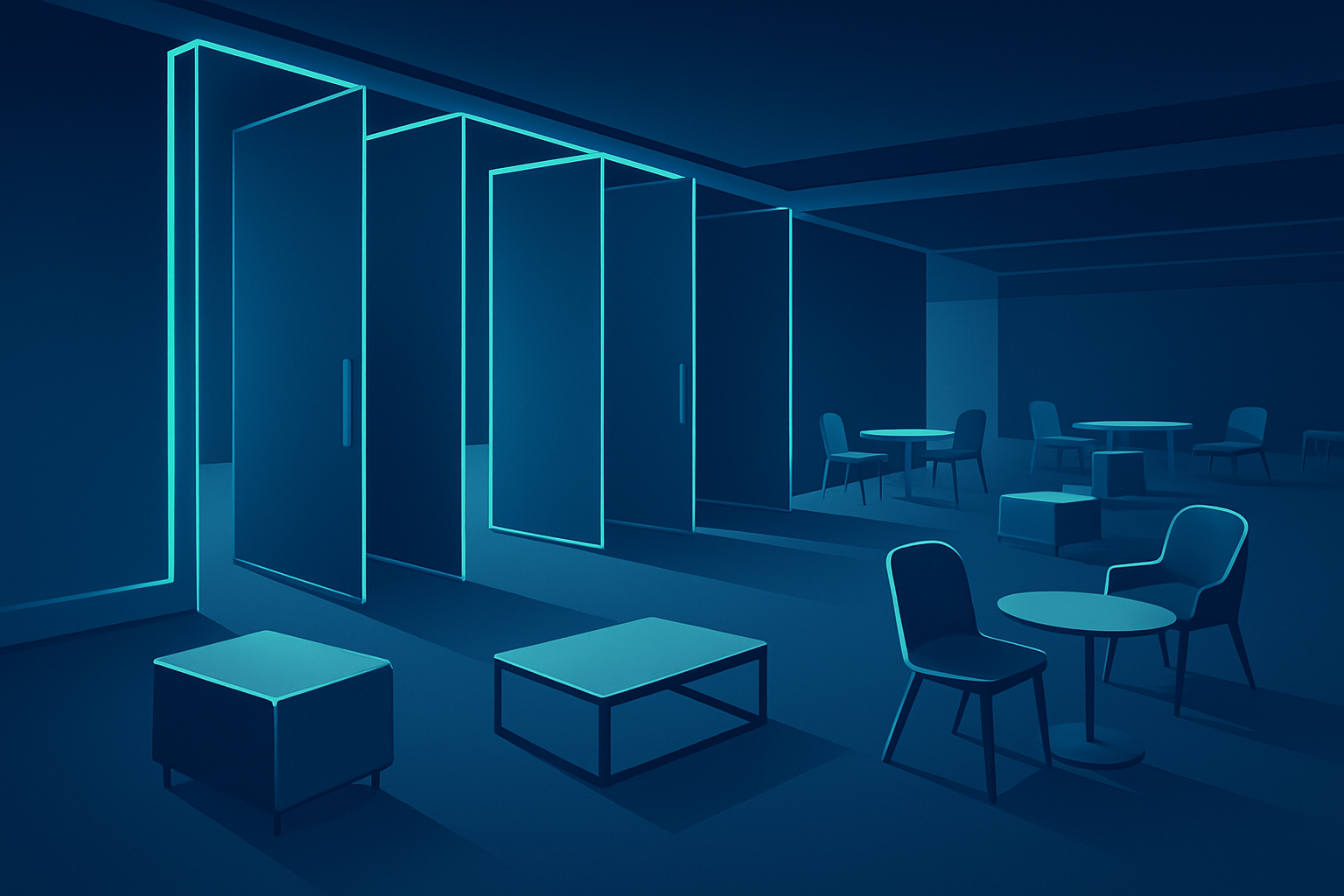
Modular space design enables rapid transformation between event types, maximizing MICE revenue potential and overall guest satisfaction. Advanced layouts allow conversion from intimate 2-person brainstorming sessions to 200-person galas within 30 minutes using moveable walls, modular furniture, and integrated technology systems. Properties with flexible event spaces report 40% higher utilization rates and 30% increases in event-driven revenue. These innovations allow boutique hotels to compete with larger venues by offering adaptable, tech-enabled environments that cater to evolving guest and corporate needs.
Comparison: Manual vs. Automated Hotel Operations — Where Innovation Drives ROI
The operational divide between traditional manual processes and AI-powered automation represents the most significant opportunity for hotel innovations to impact bottom-line performance. Manual operations rely heavily on staff availability and human judgment, creating bottlenecks during peak periods and inconsistent guest experiences. While personal touch remains valuable, automated systems handle routine tasks with precision, allowing staff to focus on high-value guest interactions that drive satisfaction and loyalty.
Automated hotel operations deliver measurable improvements across key performance indicators. Properties implementing AI-driven systems report dramatic reductions in guest wait times, increased upselling success rates, and enhanced staff productivity. The initial technology investment typically pays back within 12-18 months through reduced labor costs and increased revenue per available room, making automation accessible even for boutique properties with limited budgets.
| Operation | Manual Process | Automated Process | Improvement |
|---|---|---|---|
| Guest Check-in | 12-15 minutes average | 3-5 minutes average | 70% time reduction |
| Upselling Success | 8-12% conversion | 18-25% conversion | 120% increase |
| Guest Request Response | 15-45 minutes | Instant acknowledgment | 95% faster response |
| Housekeeping Coordination | Manual scheduling | Real-time optimization | 30% efficiency gain |
For a deeper dive into the latest technology trends shaping the hospitality industry, see this comprehensive overview of technology trends in hospitality.
Implementing Innovation — Practical Guidance for Hospitality Managers
Successful hotel innovations begin with systematic assessment of current operations and guest pain points. Start by mapping your top five guest service challenges—whether lengthy check-in processes, delayed room service responses, or missed upselling opportunities. Pilot a single AI solution for guest communications or reservation management, establishing clear before-and-after metrics over a 60-day period. This focused approach minimizes disruption while demonstrating tangible value to stakeholders and staff.
Integration strategy determines implementation success. Prioritize solutions that work seamlessly with existing property management systems, avoiding costly “rip and replace” scenarios. Set specific performance targets such as increasing guest satisfaction scores by 12% within six months or reducing front desk response times by 50%. Train staff using milestone-based rewards that encourage adoption, and establish monthly monitoring of key metrics including time savings, occupancy increases, and upsell conversion rates.
Common implementation challenges include legacy system compatibility, team resistance to new technology, and data security concerns. Address these proactively by selecting vendors with proven hospitality integration experience, involving staff in solution selection processes, and implementing robust data protection protocols from day one. Properties that follow structured rollout plans report 85% higher adoption rates and achieve ROI targets 40% faster than those using ad-hoc implementation approaches.
For practical strategies on overcoming technology adoption barriers, you may find this future of hospitality management resource helpful.
Future Trends in Hotel Innovation — 2026 and Beyond
The next wave of hotel innovations centers on hyper-personalization through advanced AI capabilities including voice recognition, behavioral prediction, and emotional intelligence systems. Properties will leverage comprehensive guest data to anticipate needs before they’re expressed—automatically adjusting room temperature based on arrival patterns, suggesting dining options aligned with dietary preferences, and coordinating seamless experiences across all touchpoints. Zero-energy hotels utilizing renewable power sources and fully autonomous micro-hotel operations represent the sustainability frontier, with early adopters already testing unmanned check-in facilities and AI-powered facility management.
Business model evolution will transform hotels into community hubs offering co-working spaces, event venues, and local experience platforms beyond traditional accommodation. Successful hospitality managers must prepare flexible technology infrastructure capable of supporting emerging innovations while fostering organizational cultures that embrace continuous learning and experimentation. Industry analysts project the continued acceleration of AI-driven transformation, with properties that invest early in adaptable systems achieving sustained competitive advantage.
For more insights on the future of hotel technology, see the 2026 Hotel Technology Outlook Report.
Selecting Your Hotel Innovation Partner
The success of hotel innovations depends heavily on choosing technology partners who understand hospitality’s unique operational demands and guest experience requirements.
Vynta AI – Industry-Specific Automation Excellence
Best for: Mid-market hotels and boutique properties seeking comprehensive guest experience automation
Vynta AI delivers enterprise-grade automation specifically designed for hospitality operations. Their AI agents integrate seamlessly with existing PMS systems while providing 24/7 guest communication, intelligent upselling, and reservation optimization. Clients typically achieve 70% reduction in manual guest responses and double-digit increases in upsell conversion rates within 90 days.
To learn more about their hospitality-specific AI training and industry expertise, visit the Vynta AI About page.
Highlights
- Hospitality-specific AI training and industry expertise
- Seamless integration with major PMS platforms
- Measurable ROI with 60-day performance tracking
- Human-AI collaboration approach preserving personal service
Generic Automation Platforms – Basic Task Management
Best for: Hotels with simple automation needs and technical resources
Broad automation tools offer basic workflow management but lack hospitality-specific features. Implementation requires significant customization and ongoing technical support.
Pros
- Lower initial cost
- Wide range of general features
Cons
- Requires extensive customization for hospitality use
- Lacks industry-specific guest experience features
- Limited support for PMS integration
Frequently Asked Questions
- How quickly can mid-market hotels see ROI from AI-powered automation?
- Most properties achieve measurable ROI within 12-18 months, with some seeing results in as little as 90 days depending on the scope of automation and staff adoption rates.
- What are the most impactful hotel innovations for guest satisfaction?
- AI-powered guest communications, smart room controls, and wellness-focused amenities consistently drive the highest improvements in guest satisfaction scores.
- How can hotels ensure successful technology adoption among staff?
- Involve staff early in the selection process, provide milestone-based training incentives, and monitor adoption metrics monthly to encourage engagement and accountability.
- Are AI solutions suitable for boutique and independent hotels?
- Yes, modern AI solutions are designed for scalability and can be tailored to the unique needs of boutique and independent properties, delivering measurable improvements without requiring large IT teams.
About the Author
Anas Moujahid is the Operations Director at Vynta AI, specializing in AI automation and business transformation for mid-market SMEs. With a background in AI and automation architecture, Anas leads Vynta AI’s operations across real estate, recruitment, fundraising, and hospitality. He is passionate about empowering businesses with practical, industry-specific AI solutions that deliver measurable business outcomes.
Frequently Asked Questions
How do AI-powered guest communications improve the overall guest experience and hotel operational efficiency?
AI-powered guest communications enable faster, personalized responses to inquiries, reducing wait times by up to 70% and enhancing guest satisfaction. They also automate routine tasks like booking confirmations and service requests, freeing staff to focus on high-touch interactions and improving operational efficiency.
What types of smart room technologies are being implemented in hotels to enhance guest comfort and convenience?
Hotels are adopting IoT-enabled smart room technologies such as personalized climate control, adjustable lighting, and entertainment systems accessible via smartphone apps. These features allow guests to customize their environment seamlessly, elevating comfort while streamlining room management for staff.
In what ways are sustainable energy systems integrated into hotel operations, and how do they impact both the environment and hotel profitability?
Sustainable energy systems like solar panels, energy-efficient HVAC, and smart lighting are integrated to reduce energy consumption and carbon footprint. These initiatives lower operational costs and appeal to eco-conscious guests, contributing to improved profitability and brand reputation.
How can mid-market hotels effectively implement personalized service automation to increase guest satisfaction and revenue?
Mid-market hotels can deploy AI-driven automation to tailor guest interactions, such as customized upsell offers and personalized recommendations based on guest preferences. This approach boosts guest satisfaction scores by 15-25% and drives double-digit increases in revenue per available room by enhancing the guest experience at scale.
About The Author
Anas Moujahid is the chief contributing writer & Operations Director for the Vynta AI Blog, where he turns cutting-edge AI automation into measurable business outcomes for mid-market companies.
Vynta AI designs enterprise-grade AI agents that augment rather than replace people—freeing teams to focus on higher-value work while the bots handle the busywork.
We specialise in four service-heavy verticals where AI can move the revenue needle fast: real estate, recruitment, fundraising and hospitality.
Anas started his career architecting AI and automation systems; today he leads operations at Vynta AI, making sure every deployment lands real-world ROI—whether that’s more booked viewings for estate agents, faster placements for recruiters, warmer investor pipelines for fundraisers or happier guests for hotels and restaurants.
Vynta AI delivers results by:
- Building industry-specific agents pre-trained on real-world workflows—no generic chatbots here.
- Integrating seamlessly with existing CRMs, ATSs, PMSs and fundraising platforms—zero rip-and-replace.
- Measuring success in business KPIs (lead-to-close rates, time-to-hire, donor retention, RevPAR) not vanity metrics.
- Providing transparent implementation plans so clients know exactly what to expect, when and why.
- Pairing every AI agent with human-in-the-loop controls to keep quality, compliance and brand voice on point.
Since launch, Vynta AI has helped agencies slash lead qualification time by up to 70 %, recruitment firms cut screening hours in half, fundraising teams triple investor touchpoints and hospitality brands lift guest satisfaction scores by double digits—all while keeping human expertise firmly in the loop.
Anas writes with the same ethos that drives Vynta AI: outcome-focused, jargon-free and grounded in real business value. Expect data-backed insights, practical implementation guides and a clear-eyed view of what AI can—and can’t—do for your organisation.