
Key Takeaways
- Hotel email marketing offers the highest ROI among digital channels, generating $42 for every dollar spent.
- Its ROI is nearly three times higher than that of social media or OTA commissions.
- Email marketing allows hospitality managers to directly reach guests without incurring platform fees.
- Personalized email experiences help drive bookings, upsells, and customer loyalty.
Table of Contents
- Why Hotel Email Marketing Remains Essential in 2025
- Building and Growing a High-Quality Hotel Email List
- Hotel Email Campaign Types That Drive Revenue & Retention
- Personalization & Guest Segmentation: How to Make Every Email Count
- Designing High-Converting Hotel Emails: Creative & Technical Best Practices
- Smarter Automation: Scaling Personalization and Service Without Sacrificing the Human Touch
- Measuring & Optimizing Your Hotel Email Marketing for Maximum ROI
- Hotel Email Marketing KPI Benchmarks for 2025
- Overcoming Common Hotel Email Marketing Challenges
- Advanced Hotel Email Marketing Strategies for 2025
- Choosing the Right Hotel Email Marketing Platform: Features, Integrations, and ROI
Hotel Email Marketing: Proven Strategies to Boost Revenue
Hotel email marketing delivers the highest ROI of any digital channel, generating an average of $42 for every dollar spent, nearly 3x higher than social media or OTA commissions. For hospitality managers juggling guest satisfaction with revenue optimization, email provides direct access to guests without platform fees, enabling personalized experiences that drive bookings, upsells, and loyalty.
Unlike OTA platforms that own your guest relationships, hotel email marketing builds direct connections that compound over time. A boutique hotel in Austin increased direct bookings by 34% within six months by replacing generic promotional blasts with targeted pre-arrival and post-stay sequences, reducing their OTA dependency from 60% to 35%. If you’re seeking a solution tailored for hospitality, explore automated guest journey workflows that streamline and personalize every stage of the guest experience.
Why Hotel Email Marketing Remains Essential in 2025
Email marketing consistently outperforms all other hospitality marketing channels in both ROI and guest retention. Industry data shows hotels generate $36-$42 for every dollar invested in email campaigns, compared to $6-$12 from social media advertising and the 15-25% commission fees charged by OTAs.
The strategic advantage lies in ownership and control. When guests book through your email campaigns, you retain their data, preferences, and booking history, assets that compound with each interaction. A 150-room boutique property in Nashville reduced OTA commissions by $180,000 annually after implementing targeted email flows that converted 27% of subscribers into direct bookings.
Revenue Impact: Hotels using segmented email campaigns see 41% higher click-through rates and 58% higher revenue per email compared to generic promotional sends.
Email’s unique strength in hospitality is its ability to enhance the guest experience at every touchpoint. Pre-arrival emails can upsell room upgrades and dining reservations, increasing revenue per booking by 18-22%. Post-stay follow-ups generate reviews, referrals, and repeat bookings that traditional advertising cannot match.
Building and Growing a High-Quality Hotel Email List
Effective list building starts at the booking moment. Implement automated opt-in prompts within three minutes of guests landing on your direct booking page, this timing captures peak engagement when booking intent is highest. A luxury resort in Scottsdale increased email captures by 45% using this precise timing strategy.
Guest Wi-Fi presents the most overlooked acquisition opportunity. Create a simple sign-up process offering loyalty points or local recommendations in exchange for email addresses. QR codes at check-in, restaurant tables, and spa reception provide additional offline touchpoints that convert at 22% higher rates than online-only strategies.
Maintain list quality through monthly cleaning and re-permissioning campaigns. Remove inactive subscribers after six months of non-engagement, and use email verification tools to prevent deliverability issues. A boutique hotel group improved their open rates from 18% to 31% after implementing quarterly list hygiene protocols. For more insights on optimizing your acquisition strategy, see our guide on hospitality-focused email marketing best practices.
Expert Tip: GDPR and CCPA compliance requires clear opt-in language and easy unsubscribe options. Use checkbox language like “Yes, send me exclusive offers and local recommendations” rather than pre-checked boxes or buried consent text.
Hotel Email Campaign Types That Drive Revenue & Retention
Welcome series emails achieve 45% average open rates, the highest first-touch engagement of any campaign type. Structure these as 3-email sequences: immediate booking confirmation with local tips, pre-arrival upsell opportunities, and arrival day logistics with personal touches from your team.
Pre-arrival sequences generate the highest revenue per send, with successful campaigns increasing booking value by 18% through room upgrades, spa packages, and dining reservations. Send the first email 7 days before arrival, followed by upgrade offers at 3 days, and arrival logistics 24 hours prior.
Post-stay follow-ups serve dual purposes: collecting reviews and driving repeat bookings. Send within 24 hours of checkout while the experience remains fresh, then follow with seasonal offers 30-60 days later. Properties using this sequence see 23% higher review generation and 15% better repeat booking rates.
High-Converting Campaign Types:
- Transactional emails (confirmations, receipts): 85% open rate
- Pre-arrival upsells: 28% click-through rate
- Seasonal promotions with 72-hour booking windows: 12% conversion rate
- VIP loyalty campaigns: 35% higher engagement than general sends
Seasonal and promotional campaigns work best with urgency and scarcity. Limited-time offers with 72-hour booking windows convert at 12% compared to 3% for open-ended promotions. A mountain resort increased winter bookings by 28% using “48 hours left” subject lines combined with exclusive rates for email subscribers.
Personalization & Guest Segmentation: How to Make Every Email Count
Personalized hotel email campaigns generate 25-40% higher engagement rates than generic sends, but effective personalization extends far beyond inserting first names. Segment guests by lifecycle stage (first-time, repeat, lapsed), travel purpose (business, leisure, group), and behavioral data from previous stays.
Collect actionable segmentation data through pre-arrival surveys asking about travel purpose, special occasions, or amenity preferences. Use this data to tailor offers, such as business travelers receiving express check-in options, or leisure guests getting spa and dining promotions. Dynamic content blocks in your emails can automatically adjust based on these segments, ensuring each guest receives relevant information and offers that resonate with their needs.
Designing High-Converting Hotel Emails: Creative & Technical Best Practices
Subject lines drive 47% of email open decisions in hospitality, making them your most critical conversion element. Effective hotel email subject lines combine personalization with urgency: “Your room upgrade awaits, Sarah” or “Last chance: 20% off spa services during your stay.” Test subject lines with A/B splits, focusing on guest names, property-specific offers, and time-sensitive language.
Mobile optimization is non-negotiable, 71% of hospitality emails are opened on mobile devices. Design with single-column layouts, large tap-friendly buttons, and compressed images that load quickly. Your call-to-action should be singular and prominent: “Book Spa Treatment” or “Confirm Dinner Reservation” rather than multiple competing options that dilute response rates.
Visual hierarchy guides guest attention through your email content. Lead with compelling hero images of your property, follow with personalized guest name and relevant offer, then include clear next steps. Include local elements like weather forecasts, nearby events, or seasonal activities to create emotional connection and demonstrate local expertise. For a deeper dive into the evolution of email marketing, you can review this comprehensive overview of email marketing.
| Subject Line Formula | Average Open Rate | Best Use Case |
|---|---|---|
| [Guest Name] + Upgrade Available | 34% | Pre-arrival upselling |
| Your [City] Adventure Starts Tomorrow | 29% | Pre-arrival engagement |
| Thank You + Special Return Offer | 31% | Post-stay loyalty |
| Last Day: [Specific Offer] | 26% | Promotional urgency |
Smarter Automation: Scaling Personalization and Service Without Sacrificing the Human Touch
Email automation allows hotels to deliver personalized guest communications at scale while freeing staff to focus on in-person hospitality excellence. Core automation flows include booking confirmations, pre-arrival welcome sequences, post-stay follow-ups, and targeted upselling triggers based on guest behavior and preferences.
AI-powered dynamic content takes automation beyond basic templates. Modern hotel email marketing platforms can automatically insert local weather forecasts, nearby events, personalized room upgrade offers, and restaurant recommendations based on guest profiles and real-time data. This creates the impression of personal attention while operating automatically in the background. For more on leveraging automation, read our article on scaling personalization in hotel email marketing.
The key to successful automation is maintaining an authentic hospitality voice while providing easy paths to human interaction. Always include direct phone numbers, response instructions, and clear escalation paths in automated emails. For example, one boutique hotel automated 70% of routine guest communications, allowing front desk staff to focus on personalized check-in experiences and concierge services, which resulted in an 11-point increase in Net Promoter Score. To see how similar strategies can boost engagement, check out this restaurant marketing strategy approach.
Implementation Timeline: Most hotels can deploy core email automation flows within 2 weeks using modern platforms with pre-built hospitality templates and PMS integrations.
Measuring & Optimizing Your Hotel Email Marketing for Maximum ROI
Track revenue-focused metrics that directly impact your bottom line rather than vanity metrics like open rates alone. Monitor direct booking conversion rates from email campaigns, revenue per email sent, and guest lifetime value increases from email engagement. These metrics demonstrate clear ROI and guide optimization decisions.
Segment your analytics by guest type and campaign purpose to identify your highest-performing content and timing. For instance, business travelers might respond better to Tuesday morning emails about express services, while leisure guests engage more with weekend emails featuring local experiences and dining options. Continuously performing A/B testing—focusing on one element per campaign each month—helps steadily improve performance. Learn more about customer-orientation to tailor your campaigns effectively.
Post-iOS privacy updates have made open rates less reliable, making click-through rates and actual booking conversions more important success indicators. Focus on engagement quality over quantity: a 15% click-through rate leading to actual bookings outperforms a 30% open rate with no conversions. Review campaign performance monthly and conduct quarterly deep-dives into guest journey analytics. For a research-backed perspective on email effectiveness in hospitality, check out this restaurant social media ads study.
Hotel Email Marketing KPI Benchmarks for 2025
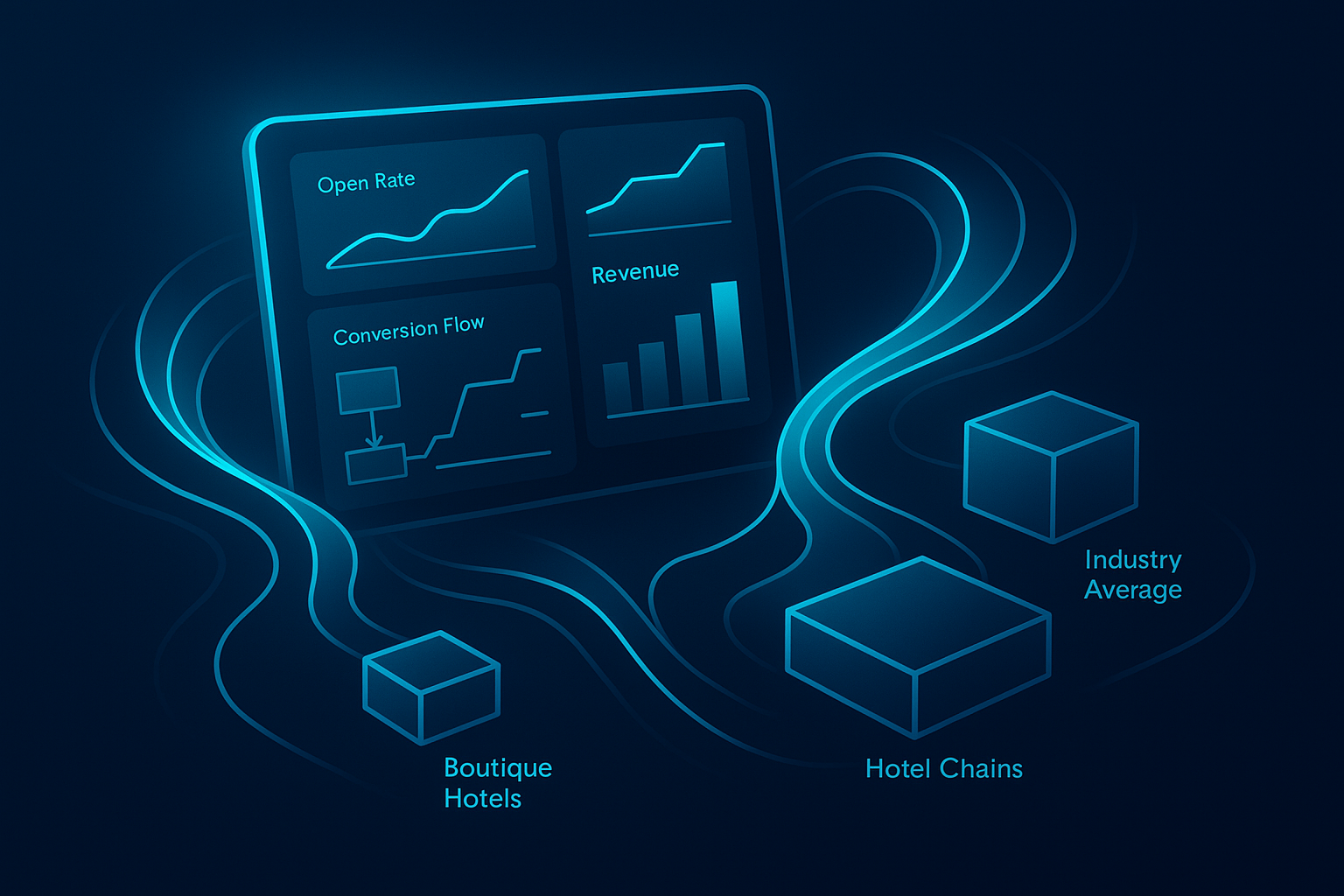
| Metric | Boutique Hotels | Hotel Chains | Industry Average |
|---|---|---|---|
| Open Rate | 28-35% | 22-28% | 25% |
| Click-Through Rate | 4.2-6.8% | 3.1-4.5% | 3.8% |
| Booking Conversion Rate | 2.1-3.4% | 1.8-2.6% | 2.2% |
| Revenue Per Email | $1.12-$1.85 | $0.89-$1.23 | $1.05 |
Use these benchmarks to evaluate your current performance and set realistic improvement targets. Boutique properties typically achieve higher engagement rates due to stronger brand relationships and more targeted guest communications.
Overcoming Common Hotel Email Marketing Challenges
Deliverability issues plague 23% of hotel email campaigns, often caused by poor list hygiene and technical setup gaps. Implement SPF and DKIM authentication, clean your email list quarterly by removing inactive subscribers, and avoid spam triggers like excessive capitalization, multiple exclamation points, and image-heavy layouts without sufficient text content.
Low engagement rates typically stem from audience fatigue and irrelevant content. Combat this by varying email frequency based on guest segments, VIP guests might appreciate weekly updates while occasional visitors prefer monthly communication. Refresh your content mix every quarter, alternating between promotional offers, local insights, property updates, and guest stories to maintain interest.
GDPR and CCPA compliance requires explicit consent collection and clear data usage policies. Include checkbox opt-ins during booking, provide easy unsubscribe options, and maintain preference centers where guests can adjust communication frequency and topics. Train staff on data handling protocols and conduct quarterly compliance audits to avoid penalties.
Recovery Success Story: A restaurant within a Denver hotel recovered 19% of lapsed subscribers through a targeted re-engagement campaign offering exclusive chef’s table experiences to inactive email contacts.
List attrition affects all hotel email marketing programs, with average monthly churn rates of 2-4%. Counter this with value-driven content, exclusive offers for email subscribers, and win-back campaigns targeting guests who haven’t engaged in 90 days. Provide immediate value in every email rather than constant promotional messaging. For more actionable strategies, check out our post on overcoming hotel email marketing challenges.
Advanced Hotel Email Marketing Strategies for 2025
AI-driven persona scoring analyzes guest behavior patterns to predict booking likelihood, optimal communication timing, and preferred offer types. Advanced hotel email marketing platforms now integrate real-time PMS data to trigger automated campaigns based on guest actions like spa bookings, restaurant reservations, or room service orders, creating seamless cross-selling opportunities.
Multi-channel orchestration synchronizes email with SMS, WhatsApp, and in-app notifications for cohesive guest journeys. A guest who books a spa treatment via email might receive SMS appointment reminders and WhatsApp post-treatment feedback requests, creating touchpoints that feel coordinated rather than scattered across different systems.
Predictive upselling uses historical guest data and current booking patterns to automatically generate personalized upgrade offers. The system identifies guests likely to accept room upgrades based on previous behavior, travel dates, and booking lead time, then delivers targeted offers at optimal moments in the guest journey.
Advanced Strategy Results: A boutique hotel brand using AI-powered cross-selling increased ancillary revenue by 15% in one quarter by automatically offering relevant services based on guest booking patterns and preferences.
Choosing the Right Hotel Email Marketing Platform: Features, Integrations, and ROI
Essential platform features for hospitality include native PMS integration, automated guest journey workflows, dynamic content capabilities, and GDPR-compliant data management. Your chosen platform should sync directly with your property management system to trigger emails based on booking status, arrival dates, and guest preferences without manual intervention. To learn more about how the right platform can transform your results, see our overview of Vynta for hotel email marketing.
Industry-specific platforms offer pre-built automation templates for common hotel scenarios like pre-arrival upselling, post-stay reviews, and seasonal promotions. Generic marketing platforms require extensive customization to handle hospitality-specific triggers and guest lifecycle management, often resulting in higher implementation costs and longer deployment timelines.
| Platform Feature | Industry-Specific Tools | Generic Marketing Suites | Vynta |
|---|---|---|---|
| PMS Integration | Native, pre-built | Custom development required | Native with major PMS systems |
| Guest Journey Templates | Hospitality-focused | Generic business templates | Hotel-specific automation flows |
| Setup Timeline | 1-2 weeks | 4-8 weeks | Under 2 weeks |
Frequently Asked Questions
Why does hotel email marketing generate a higher ROI compared to social media and OTA commissions?
Hotel email marketing delivers higher ROI because it provides direct access to guests without intermediary fees, allowing hotels to retain valuable customer data and personalize communications. Unlike social media or OTAs, email campaigns foster ongoing relationships that drive repeat bookings, upsells, and loyalty, resulting in significantly greater revenue per dollar spent.
How can hotels effectively build and grow a high-quality email list to maximize engagement?
Hotels can build a high-quality email list by capturing guest information through direct bookings, loyalty programs, and website sign-ups with clear value propositions like exclusive offers. Ensuring data accuracy and segmenting contacts based on preferences and behavior helps maintain engagement and improves the relevance of future campaigns.
What types of personalized email campaigns are most successful in driving bookings and guest loyalty?
Personalized pre-arrival emails with tailored offers, post-stay thank-you messages, and targeted promotions based on guest preferences are highly effective. Campaigns that anticipate guest needs, such as upselling spa services or dining reservations, enhance the guest experience and encourage repeat visits.
How can automation and guest segmentation improve the performance of hotel email marketing campaigns?
Automation enables hotels to deliver timely, relevant messages at scale without sacrificing personalization, while guest segmentation ensures emails address specific interests and behaviors. Together, they increase open rates, conversions, and guest satisfaction by making every communication feel thoughtful and aligned with individual guest journeys.
About The Author
Anas Moujahid is the chief contributing writer & Operations Director for the Vynta Blog, where he turns cutting-edge AI automation into measurable business outcomes for mid-market companies.
Vynta designs enterprise-grade AI agents that augment rather than replace people, freeing teams to focus on higher-value work while the bots handle the busywork.
We specialise in four service-heavy verticals where AI can move the revenue needle fast: real estate, recruitment, fundraising and hospitality.
Anas started his career architecting AI and automation systems; today he leads operations at Vynta, making sure every deployment lands real-world ROI, whether that’s more booked viewings for estate agents, faster placements for recruiters, warmer investor pipelines for fundraisers or happier guests for hotels and restaurants.
Vynta delivers results by:
- Building industry-specific agents pre-trained on real-world workflows, no generic chatbots here.
- Integrating seamlessly with existing CRMs, ATSs, PMSs and fundraising platforms, zero rip-and-replace.
- Measuring success in business KPIs (lead-to-close rates, time-to-hire, donor retention, RevPAR) not vanity metrics.
- Providing transparent implementation plans so clients know exactly what to expect, when and why.
- Pairing every AI agent with human-in-the-loop controls to keep quality, compliance and brand voice on point.
Since launch, Vynta has helped agencies slash lead qualification time by up to 70 %, recruitment firms cut screening hours in half, fundraising teams triple investor touchpoints and hospitality brands lift guest satisfaction scores by double digits, all while keeping human expertise firmly in the loop.
Anas writes with the same ethos that drives Vynta: outcome-focused, jargon-free and grounded in real business value. Expect data-backed insights, practical implementation guides and a clear-eyed view of what AI can, and can’t, do for your organisation.