

Where can real estate agencies get agentic systems globally?
Understanding Agentic AI: More Than Just Automation for Real Estate Agencies
Agentic AI can feel like a buzzword, so this section sets a practical baseline for real estate teams. The goal is to help readers evaluate Where can real estate agencies get agentic systems globally? using concrete criteria, not vague promises. Think of an agentic system as software that can take a goal (such as qualifying a lead or booking a viewing), plan steps, take actions across tools, and escalate exceptions to humans based on rules.
What Exactly Are Agentic AI Systems?
An agentic AI system is designed to complete multi-step workflows, not only answer questions. In real estate, that can include replying to inquiries, asking qualification questions, pulling matching listings, proposing times, and logging outcomes in a CRM. When evaluating Where can real estate agencies get agentic systems globally?, focus on what actions the system can take (and in which systems), what data it can use safely, and how it handles exceptions such as compliance constraints, incomplete information, or high-value leads that must go to a person.
How Agentic AI Differs from Traditional AI and Automation Tools
Traditional automation tools follow rigid rules: “If X, then do Y.” Traditional AI chat tools can write messages but often stop short of executing a full workflow. Agentic AI blends both: it can interpret intent, choose the next step, and complete actions across multiple systems. When comparing options related to Where can real estate agencies get agentic systems globally?, look for evidence of end-to-end workflow ownership (lead intake to viewing to follow-up) and governance features such as audit trails, permissions, and escalation paths.
The “Digital Coworker” Concept: Augmenting Your Real Estate Team
The most useful mental model is a digital coworker that handles repetitive coordination and information capture while your agents focus on relationships and negotiation. A good agentic system does not replace your team; it supports it by reducing manual back-and-forth, capturing details consistently, and keeping follow-ups timely. If you are evaluating Where can real estate agencies get agentic systems globally?, ask how the system hands off complex cases, how managers can review conversations, and what controls exist to keep messaging aligned with brand and policy.
At Vynta AI, the standard is simple: be specific, practical, and honest about trade-offs. Where relevant, Agentic Systems for Real Estate can be evaluated using the criteria below.
Where to Find Agentic AI Solutions for Global Real Estate Operations
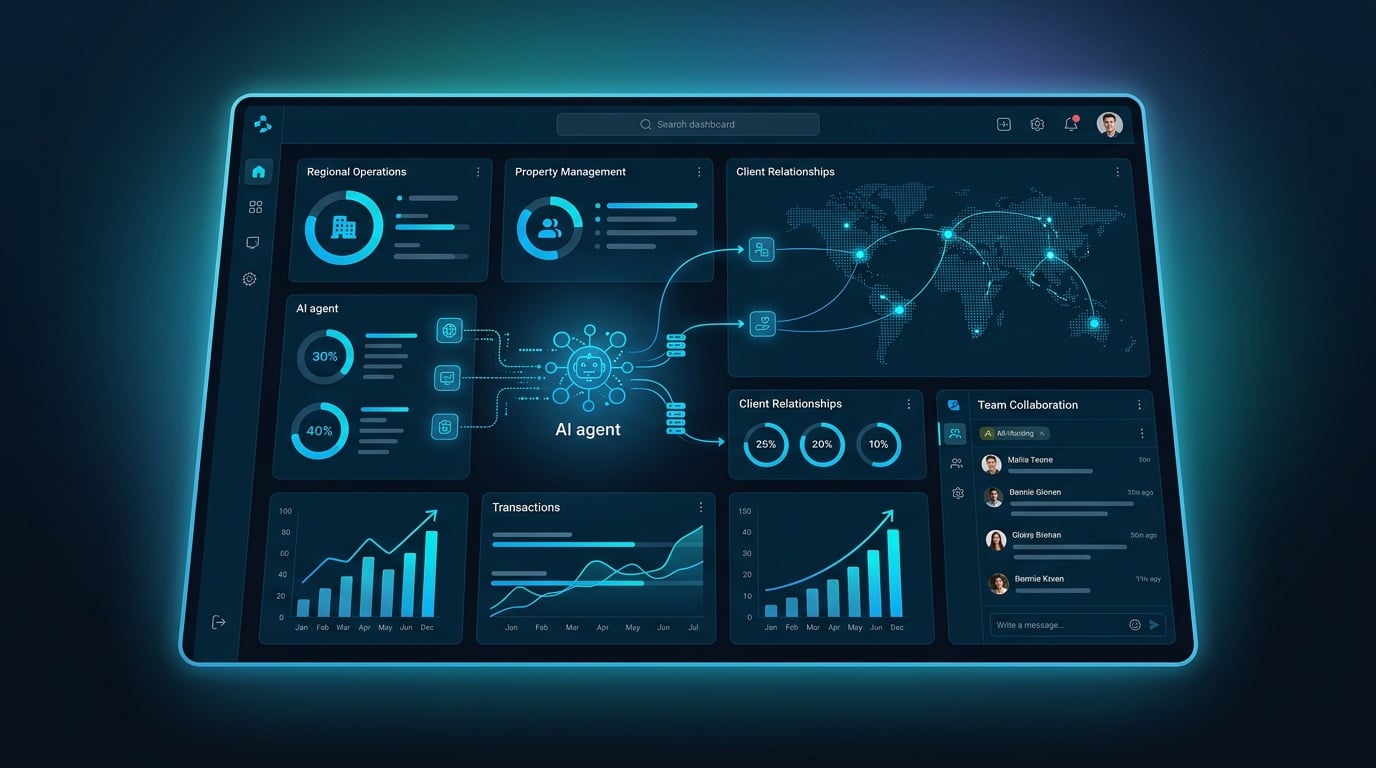
For mid-market agencies operating across multiple countries, the question Where can real estate agencies get agentic systems globally? comes down to three main paths: off-the-shelf platforms, specialized AI development partners, or an in-house build. Each path can work, but the right choice depends on how many markets you serve, the complexity of your data sources (MLS equivalents, portals, CRMs), and your compliance requirements.
Off-the-shelf platforms can be a quick starting point, yet they often struggle with deep localization, nonstandard listing schemas, and region-specific regulation. Specialized AI development partners can tailor workflows and integrations to your operating model and target regions. In-house development offers maximum control, but it usually demands significant capital, specialized talent, and ongoing maintenance capacity that many mid-market firms prefer to allocate elsewhere.
Pros
- Off-the-shelf platforms: Faster deployment, lower initial cost, suitable for basic automation needs.
- Specialized development agencies: Customized solutions, deeper domain alignment, scalable for global operations, ongoing support and iteration.
- In-house development: Full control over the roadmap, proprietary capabilities.
Cons
- Off-the-shelf platforms: Limited customization, integration friction with local systems, may miss country-specific requirements.
- Specialized development agencies: Higher initial cost than off-the-shelf tools, requires vendor due diligence.
- In-house development: High hiring burden, longer timelines, ongoing maintenance and security overhead.
Off-the-Shelf Agentic Platforms (and Their Limitations)
Off-the-shelf agentic AI platforms can help with common tasks such as first-response messaging, basic property matching, and appointment scheduling. The main benefit is speed: you can often start quickly and validate a workflow with minimal engineering. The main drawback is fit. Many platforms assume a narrow set of integrations and a single market structure, which can break down when you operate across countries with different portals, data formats, and compliance rules.
Even when configuration is available, deep customization is limited. That can leave teams running manual workarounds to keep listings accurate, keep CRMs updated, or maintain consistent follow-up across time zones. If you operate globally, ask whether the platform supports your data sources, your routing rules, and your auditing requirements, not only whether it can send messages.
Specialized AI Development Agencies as a Partner for Global Scale
Specialized AI development agencies can design agentic systems around your workflows, your markets, and your governance requirements. This usually includes custom qualification logic, localized content controls, integration into your CRM, and connectors to local listing sources. If the real need is consistent conversion across multiple regions, this approach often delivers the best balance of capability and speed because you are not forcing a generic product into a complex operating model.
For teams asking Where can real estate agencies get agentic systems globally? and needing adaptability across borders, this route also helps with compliance design, language coverage, and region-specific playbooks. A good partner should show how the system logs actions, manages consent, and escalates edge cases to humans based on rules you define.
Building In-House vs. Partnering: A Strategic Decision for Mid-Market Agencies
Building in-house can make sense if you have long-term AI leadership, dedicated engineering capacity, and a clear product roadmap. You will own the architecture, data strategy, and iteration cycle. The trade-off is cost and time: recruiting AI talent, building integrations, and meeting security and privacy expectations often takes longer than teams expect.
Partnering with specialists can shorten timelines and reduce execution risk. You get access to AI architects, integration experience, and iteration support without building a large internal team. For many mid-market agencies, this is the most practical answer to Where can real estate agencies get agentic systems globally? because it aligns spend to outcomes and keeps internal teams focused on core real estate operations.
Key Considerations for Global Integration: Localization and Compliance
Global deployment depends on localization and compliance, not only translation. You need alignment with regional listing formats, transaction workflows, advertising rules, and data privacy regimes such as GDPR in Europe and CCPA in the United States. You also need cultural fluency in how prospects prefer to communicate, what information they share early, and what qualifies as an appropriate follow-up cadence.
When evaluating providers, prioritize proof: past integrations with local portals or MLS equivalents, documentation on data handling, and controls for consent, retention, and auditability. If you cannot confirm how the system integrates and how it stays compliant in each target region, you will likely absorb hidden operational work later.
Beyond the US: Navigating Global Agentic AI Acquisition and Implementation
Expanding agentic AI beyond the United States requires a clear view of regional transaction norms, data access models, and regulation. Many solutions are optimized for North American assumptions, so the key is validating fit in each target market. When assessing Where can real estate agencies get agentic systems globally?, include questions about region-ready integrations, in-country data hosting options when required, and support coverage across time zones.
Region-Specific Vendor Considerations: Europe, Asia, and the Middle East
In Europe, real estate workflows vary by country and often depend on regional portals and local professional standards. Your vendor should demonstrate GDPR-ready processes and show how the system manages consent and data subject requests. In many Asian markets, language diversity and local messaging habits can create integration and routing complexity. In the Middle East, fast-moving markets and international buyer demand can require rapid lead handling and strong multilingual support, including Arabic in many cases.
Data Privacy and Regulatory Compliance Across Borders
International privacy regimes dictate how prospect data can be collected, processed, and stored. GDPR and CCPA are common reference points, yet many countries have additional requirements, including data residency constraints. Your agentic system should include configurable retention policies, consent tracking, and security controls, along with clear documentation on sub-processors and hosting options. This is not optional; it is part of operating safely at scale.
Ensuring Seamless Integration with Local MLS Databases and CRMs
In real estate, automation is only as effective as its data connections. Globally, listing data sources vary widely: MLS systems, regional portals, syndicators, and proprietary feeds. CRM stacks also differ by market and agency size. Prioritize solutions with proven API connectivity and a plan for bi-directional sync so that availability, lead status, and follow-up outcomes stay consistent without manual entry.
Global Deployment Checklist
- Confirm GDPR, CCPA, and local data residency requirements for prospect data.
- Validate API compatibility with regional portals and your CRM.
- Map channel coverage by country and define routing rules by time zone.
- Define escalation rules so complex or high-value leads go to human agents.
Multilingual Agent Capabilities for International Lead Management
International buyers and sellers expect fast, accurate replies in their preferred language. A capable agentic system should handle multilingual intent detection, real estate terminology, and culturally appropriate phrasing. It should also support consistent qualification so that agents receive comparable lead data regardless of language. If multilingual performance is limited, conversion drops and agents absorb more manual work.
The ROI of Agentic AI: Quantifying Success for Real Estate Agencies
Agentic AI should be evaluated like any operational investment: by measurable outcomes. Agencies researching Where can real estate agencies get agentic systems globally? should ask vendors to define how success is tracked, which workflows are automated, and how results are attributed. The most common measurable gains come from faster response times, improved qualification consistency, and higher follow-up completion rates.
Impact on Lead Qualification and Conversion Rates
Speed and consistency drive conversion in property inquiries. Agentic Systems for Real Estate are positioned to convert inquiries into viewings and sales through instant engagement, intelligent qualification, and personalized follow-up. Ensure your measurement model distinguishes between leads that were contacted, leads that were qualified, and leads that progressed to a viewing, so you can see where the system is creating lift.
Reducing Operational Costs and Scaling Without Headcount Expansion
Routine coordination work (first replies, scheduling, reminders, and basic FAQs) can consume a large share of agent and admin time. When those tasks are automated, teams can handle higher lead volume and larger portfolios without matching increases in headcount. Evaluate cost impact by tracking time saved, reduced missed-lead rates, and fewer manual data updates across systems.
Improving Agent Productivity and Closing More Deals
When follow-ups and scheduling are handled reliably, agents can spend more time on relationship building, showings, negotiation, and deal progression. Productivity improvements should show up in faster lead-to-viewing times, higher appointment attendance, and better pipeline hygiene in your CRM. Use before-and-after benchmarks by team and market so that you can separate real gains from seasonal variation.
Calculating the Return on Investment: From Cost to Profit
ROI should be modeled from your current baseline. The article includes performance claims such as a 3x qualified pipeline increase and an 85% conversion rate; treat these as targets to validate, not universal guarantees. Build a simple model with conservative assumptions: incremental closed deals, time saved, and reduced leakage from missed or slow follow-up. That approach gives leadership a realistic view of payback and helps guide which workflows to automate first.
Partnering for Transformation: The Vynta AI Approach to Agentic Systems
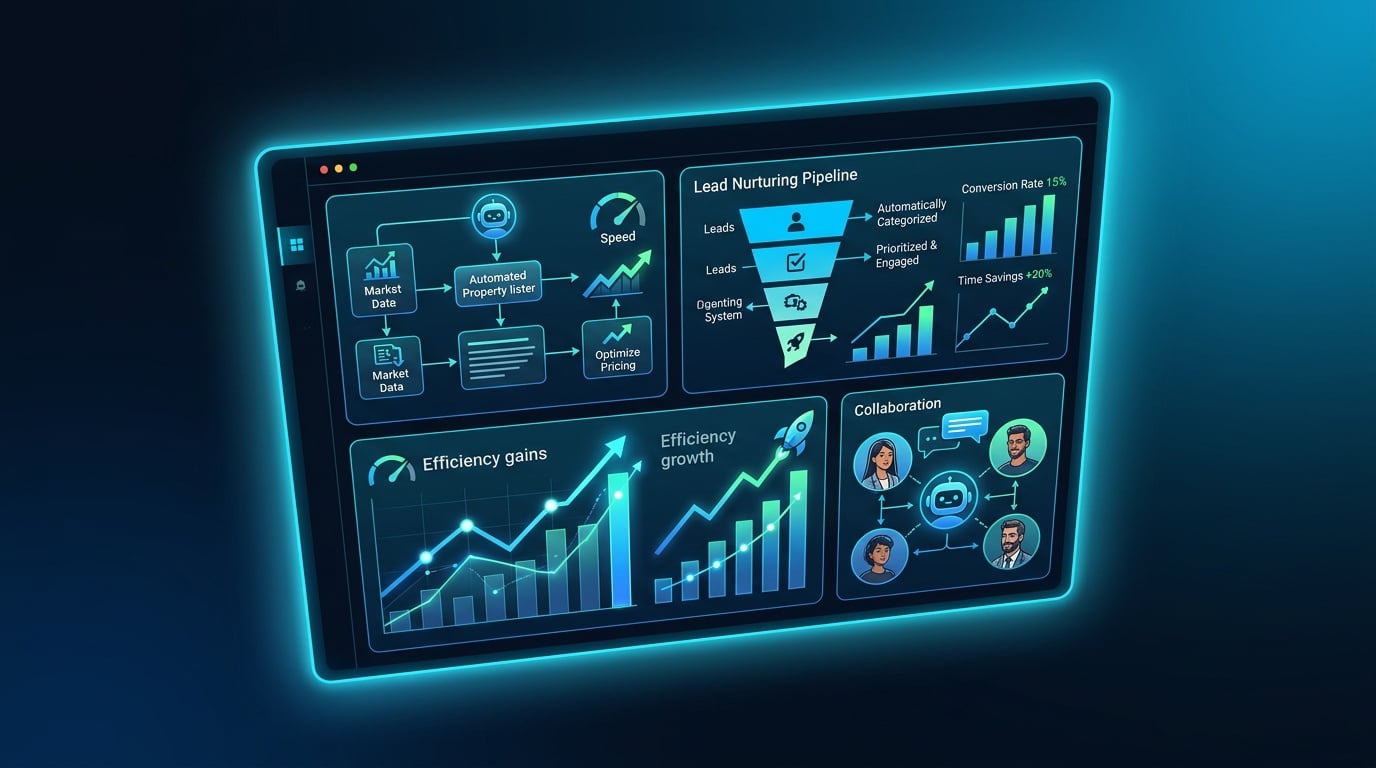
For mid-market teams evaluating Where can real estate agencies get agentic systems globally?, Vynta AI offers a partnership model focused on outcomes: discovery, solution design, implementation, and ongoing iteration. We align automation to your operating model, your markets, and your reporting requirements so that adoption is measurable and controllable, not experimental.
Our Expertise in Real Estate AI Automation
As Operations Director at Vynta AI, my focus is making AI operationally useful: clear workflows, clear handoffs, and clear metrics. We design agentic workflows around lead intake, qualification, viewing coordination, and follow-up, with governance features that keep teams in control. The goal is to reduce admin load and improve conversion throughput while keeping service quality consistent across markets.
Tailored Agentic Systems for Your Unique Business Stack
We start with a discovery and strategy phase to map workflows, data sources, and compliance constraints. We then tailor Agentic Systems for Real Estate to connect with your CRM, listing sources, and supported channels (such as WhatsApp, SMS, email, and website chat). This approach is designed to keep your operational data consistent and your team’s handoffs predictable across regions.
Beyond Implementation: Ongoing Support and Optimization
Operational conditions change: listing mix, demand cycles, routing rules, and compliance expectations. We provide ongoing monitoring and iteration to keep the system aligned with your performance goals. That includes refining qualification, updating routing and escalation, and tuning messaging to match your brand guidelines and market context.
Frequently Asked Questions
What is real estate agentic AI?
Agentic AI for real estate is software designed to complete multi-step workflows, not just answer questions. It can take a goal, plan steps, execute actions across various tools, and escalate exceptions to human agents based on predefined rules. This system can manage tasks like replying to inquiries, qualifying leads, pulling matching listings, and proposing viewing times.
How do agentic AI systems differ from traditional automation tools in real estate?
Traditional automation follows rigid rules, while traditional AI chat tools often stop short of executing full workflows. Agentic AI blends these by interpreting intent, choosing the next step, and completing actions across multiple systems. It offers end-to-end workflow ownership, from lead intake to follow-up, with governance features like audit trails and escalation paths.
How do agentic systems integrate with existing real estate CRMs?
Agentic systems are designed to integrate with your existing CRMs to ensure seamless data flow. They can log outcomes, update lead statuses, and synchronize information automatically, reducing manual data entry for agents. This integration helps maintain consistent records and follow-up processes across your operations.
Where can real estate agencies find agentic systems globally?
Real estate agencies can acquire agentic systems through three main paths: off-the-shelf platforms, specialized AI development partners, or by building solutions in-house. The best choice depends on your market reach, data source complexity, and compliance needs. Off-the-shelf options offer speed, while specialized partners provide tailored, localized solutions for global operations.
What are the advantages of using a specialized AI development partner for global real estate operations?
A specialized AI development partner can design agentic systems around your specific workflows, markets, and governance requirements. This approach allows for custom qualification logic, localized content controls, and integration into local listing sources and CRMs. It provides adaptability across borders, helping with compliance design, language coverage, and region-specific playbooks.
How do agentic AI systems support real estate agents without replacing them?
Agentic AI systems act as a digital coworker, handling repetitive coordination and information capture. They support your team by reducing manual back-and-forth, capturing details consistently, and ensuring timely follow-ups. This allows your agents to focus on building relationships and negotiation, augmenting their capabilities rather than replacing them.
What should real estate agencies consider when evaluating agentic systems?
When evaluating agentic systems, agencies should focus on the specific actions the system can take and in which systems, as well as how it safely uses data. It’s important to assess how it handles exceptions, such as compliance constraints or high-value leads that require human intervention. Also, consider governance features like audit trails, permissions, and clear escalation paths.