
Key Takeaways
- Fine dining service elevates an establishment from simply serving meals to creating a revenue-generating experience.
- Fine dining commands significantly higher per guest revenue, ranging from $75 to $150 or more, compared to casual dining.
- Profit margins in fine dining are 40-60% higher than those in casual dining settings.
- Mastering fine dining service standards enhances guest satisfaction, encourages repeat bookings, and increases average spend per visit.
- Hospitality leaders in boutique hotels and upscale restaurants benefit directly from implementing fine dining service excellence.
Table of Contents
- What Is Fine Dining Service? Core Principles and Defining Features
- Foundations of Hospitality Excellence: Facility, Cleanliness & Table Setting
- Fine Dining Team Roles: Building a High-Performance Service Brigade
- The Guest Journey: Step-by-Step Fine Dining Service Flow
- Wine and Beverage Service: Pairing Precision with Personalization
- Etiquette Rules for Servers and Guests: The Pillars of Fine Dining Culture
- Technology and AI in Fine Dining Service: Human-AI Collaboration for Guest Delight
- Troubleshooting and Advanced Scenarios in Fine Dining Service
Fine Dining Service: Mastering Excellence, Experience, and ROI in Modern Hospitality
Fine dining service transforms your establishment from a meal provider into a revenue-generating experience engine. While casual dining averages $15-25 per guest, properly executed fine dining service commands $75-150+ per cover with 40-60% higher profit margins. For hospitality leaders managing boutique hotels and upscale restaurants, mastering these service standards directly impacts guest satisfaction scores, repeat bookings, and average spend per visit.
The difference between good service and exceptional fine dining service lies in systematic execution across every guest touchpoint, from the 30-second greeting protocol to the precise wine presentation sequence. This comprehensive guide breaks down the operational frameworks that separate premium establishments from their competitors, with actionable strategies you can implement immediately to elevate both guest experience and bottom-line results. Explore our specialized services for fine dining operations to discover how technology and expertise can drive your restaurant’s success.
What Is Fine Dining Service? Core Principles and Defining Features
Fine dining service represents the highest standard of hospitality execution, characterized by personalized attention, technical precision, and seamless orchestration of every guest interaction. Unlike casual dining where servers handle 6-8 tables, fine dining maintains a 1:3 or 1:4 server-to-table ratio, enabling the detailed attention that justifies premium pricing.
The business impact is measurable: establishments implementing proper fine dining protocols report 25-35% increases in average ticket size, 60% higher guest satisfaction scores, and 40% better staff retention rates. This translates to RevPAR improvements of $15-30 per available room for hotel restaurants and 20-25% revenue increases for standalone establishments.
| Service Element | Fine Dining | Casual Dining | Fast Casual |
|---|---|---|---|
| Staff-to-Guest Ratio | 1:12-16 guests | 1:20-25 guests | 1:30+ guests |
| Service Training Hours | 80-120 hours | 20-40 hours | 8-16 hours |
| Table Setting Complexity | 5-7 pieces per course | 3-4 pieces total | Self-service |
| Average Ticket Size | $75-150+ | $25-45 | $12-20 |
Key performance indicators that define successful fine dining service include: greeting guests within 30 seconds, maintaining synchronized course delivery across all table guests, and achieving 90%+ accuracy on special dietary accommodations. These standards create the foundation for premium pricing and exceptional guest loyalty.
Foundations of Hospitality Excellence: Facility, Cleanliness & Table Setting
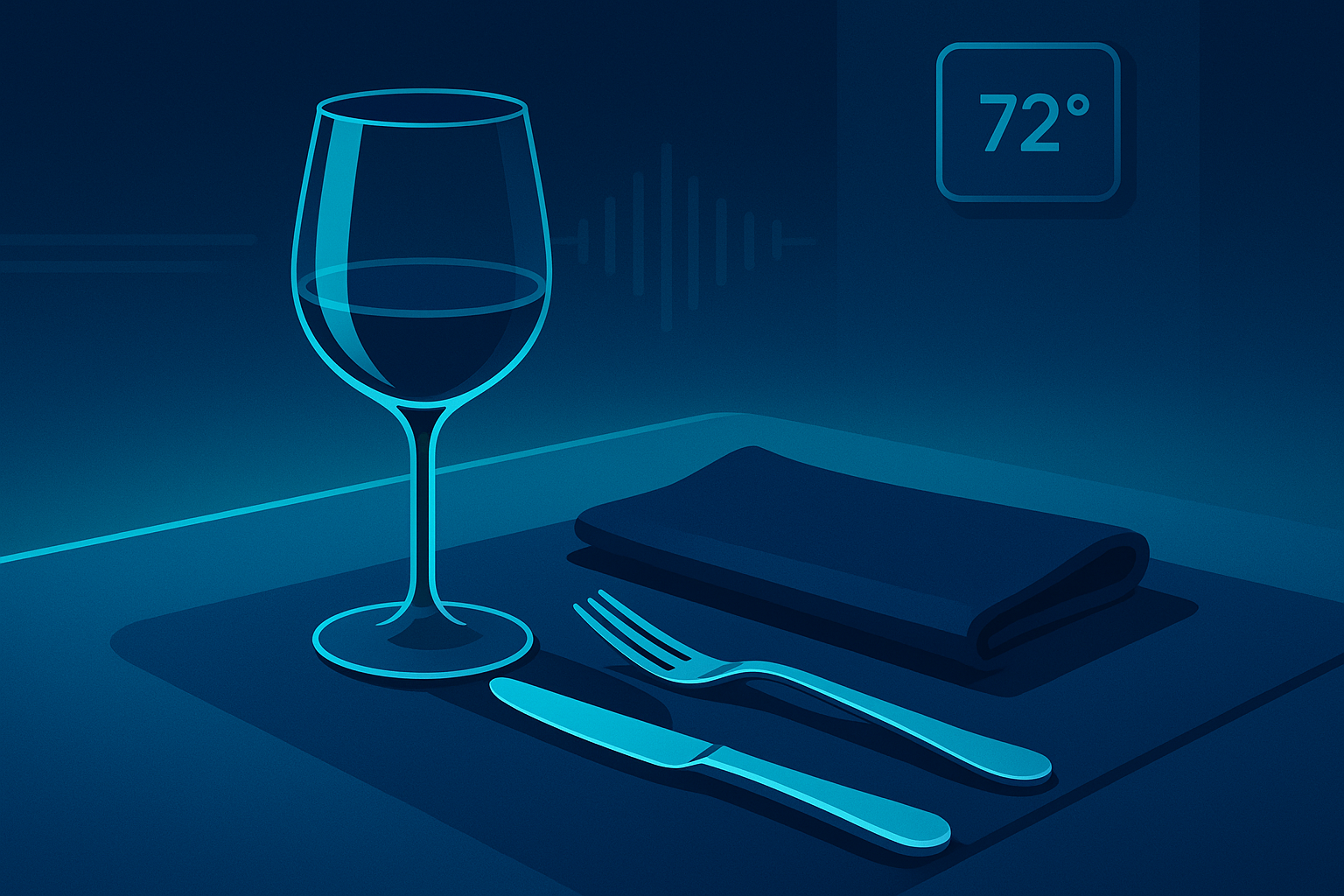
Environmental perfection sets the stage before any service interaction begins. Fine dining facilities require specific lighting levels (200-300 lux for dining areas), controlled acoustics (maximum 65 decibels ambient), and temperature precision (68-72°F with minimal variation). These technical standards directly influence guest perception of value and willingness to pay premium prices.
Table setting precision follows established protocols: water glasses positioned 1 inch above the knife tip, bread plates 4 inches to the left of the main plate, and napkins folded to 6-inch squares. Each place setting requires 24-30 inches of space per guest, with centerpieces never exceeding 12 inches in height to maintain sight lines across the table.
Pre-Service Checklist (2-Minute Table Inspection):
- Glassware spotless with no water marks or fingerprints
- Silverware aligned with plate edges, no tarnish or spots
- Table surface completely crumb-free and sanitized
- Chairs positioned exactly 6 inches from table edge
- Salt/pepper/condiments filled and wiped clean
Daily facility maintenance includes hourly restroom checks, immediate spot-cleaning protocols, and comprehensive deep-cleaning schedules. Staff should complete facility walkthroughs every 30 minutes during service, addressing any issues before guests notice. This attention to environmental details supports the premium positioning that enables higher average tickets and improved profit margins.
Fine Dining Team Roles: Building a High-Performance Service Brigade
Successful fine dining operations require clearly defined roles with specific skill requirements and performance standards. The traditional brigade system includes servers (primary guest contact), food runners (course delivery), sommelier or beverage specialist (wine service), and maître d’ (overall orchestration). Each position demands distinct competencies that directly impact guest experience and revenue generation. Learn more about recruitment strategies for building a high-performance service brigade in the hospitality industry.
Fine dining servers must demonstrate wine knowledge equivalent to Level 1 sommelier certification, maintain conversational fluency in menu ingredients and preparation methods, and execute tableside service techniques including proper crumbing, synchronized plate presentation, and discreet bill handling. Training requirements typically span 80-120 hours compared to 20-40 hours for casual dining positions.
Staff Skills Matrix for Fine Dining Excellence:
| Skill Area | Fine Dining Server | Casual Dining Server | Training Hours Required |
|---|---|---|---|
| Wine Knowledge | Varietal characteristics, pairing principles | Basic wine types | 25-30 hours |
| Menu Expertise | Ingredients, preparation methods, allergens | Basic descriptions | 15-20 hours |
| Service Technique | Tableside presentation, synchronized delivery | Standard plate service | 20-25 hours |
| Guest Relations | Personalization, upselling, conflict resolution | Order taking, basic hospitality | 10-15 hours |
Professional appearance standards include pressed uniforms inspected daily, minimal jewelry (wedding bands only), neutral nail polish, and subtle grooming. Staff must maintain upright posture, speak at conversational volume (never shouting across dining rooms), and use formal address protocols until guests indicate otherwise. These standards reinforce the premium positioning that justifies higher check averages.
Effective onboarding follows a structured 14-day progression: days 1-3 focus on facility knowledge and basic service standards, days 4-8 cover menu training and wine education, days 9-12 involve shadowing experienced servers, and days 13-14 include independent service with supervision. This systematic approach reduces turnover by 40% and accelerates time-to-productivity from 6 weeks to 3 weeks.
The Guest Journey: Step-by-Step Fine Dining Service Flow
The fine dining service sequence begins before guests enter the dining room. Reservation confirmations include dietary preferences, special occasions, and seating preferences, enabling personalized service from the first interaction. Host stations maintain real-time table status updates, ensuring seamless transitions between arrival, seating, and service initiation.
Greeting protocols require acknowledgment within 30 seconds of arrival, even if the host is occupied with other guests. The sequence follows: warm eye contact, genuine smile, verbal welcome using guest names when available, and escort to table with brief facility orientation. Seating assistance prioritizes women and elderly guests first, with chairs positioned to optimize comfort and sight lines.
Optimal Service Timing Standards:
- Greeting to seating: Maximum 2 minutes
- Water service and menu presentation: Within 3 minutes of seating
- Order taking: 8-12 minutes after seating
- Appetizer delivery: 12-15 minutes after ordering
- Main course interval: 10-15 minutes after appetizer plates cleared
- Dessert presentation: 8-10 minutes after main course completion
Menu presentation involves explaining daily specials, wine pairings, and accommodation options for dietary restrictions. Servers should limit special descriptions to 90 seconds maximum, focusing on unique preparation methods or premium ingredients that justify pricing. Order confirmation includes repetition of modifications and cooking preferences to ensure accuracy.
Course delivery requires synchronized presentation when serving multiple guests, all plates arrive simultaneously, served from the guest’s right side using the right hand. Between courses, servers perform discreet table maintenance including crumb removal, water glass refills, and subtle check-ins without interrupting conversation. This choreographed approach creates the seamless experience that differentiates fine dining from casual service.
Wine and Beverage Service: Pairing Precision with Personalization

Professional wine service follows established protocols that enhance both guest experience and revenue per table. Bottle presentation includes showing the label to the ordering guest for approval, followed by proper uncorking technique with cork presentation for inspection. Tasting portions should be 0.5-1 ounce, served to the host first, with approval obtained before serving other guests. Discover more about our approach to beverage service and hospitality excellence for fine dining venues.
Glassware selection matches wine varietals: Bordeaux glasses for full-bodied reds, Burgundy bowls for delicate reds, and smaller bowls for whites. Pouring technique maintains 4-6 ounces per glass for reds, 3-4 ounces for whites, with clockwise service starting with women, then men, and the host last. Proper bottle positioning keeps labels visible throughout service.
Pairing recommendations should connect specific wine characteristics to menu elements: “The Pinot Noir’s earthy undertones complement the mushroom risotto’s truffle oil” rather than generic suggestions. Successful pairing upsells average 35-40% higher beverage revenue per table while enhancing overall meal satisfaction scores. Staff should prepare three pairing options at different price points for each menu section.
Non-alcoholic service maintains equal attention to presentation and timing. Still and sparkling water options should be offered within 2 minutes of seating, with glasses refilled before reaching one-third empty. Specialty coffee and tea service includes proper brewing techniques, appropriate accompaniments, and presentation that matches the meal’s overall quality standards.
Etiquette Rules for Servers and Guests: The Pillars of Fine Dining Culture
Server etiquette establishes the professional foundation that enables premium pricing and trust. Movement patterns within the dining room follow established protocols: servers approach from the guest’s right for plating, left for clearing, maintaining consistent 18-inch personal space boundaries. Voice modulation remains conversational yet professional, audible to the immediate table without disrupting adjacent diners.
Physical contact protocols protect both parties while maintaining service excellence. Servers never touch guests’ personal belongings, hair, or clothing, instead offering assistance: “May I help you with your coat?” When handling guest items like purses or jackets, use both hands and immediate placement on designated chair backs or coat checks.
Guest etiquette education requires diplomatic finesse. Rather than direct correction, model proper behavior through demonstration. When guests place bread on dinner plates instead of bread plates, servers can subtly reset the table during course transitions, positioning the bread plate more prominently. For phone usage, ambient lighting adjustments and gentle conversation engagement typically redirect attention naturally.
Cutlery positioning serves as silent communication between guests and service staff. The “resting position”, knife and fork parallel at 4 o’clock, signals temporary pause, while crossed utensils indicate continued dining. The “finished position” places both utensils parallel at 4 o’clock, blade facing inward, signaling readiness for plate removal.
Universal Accommodation Protocol
Modify etiquette standards for accessibility without compromising service quality. For elderly guests, extend timing between courses by 20%. For families with children, provide smaller portions and expedited service for young diners while maintaining adult pacing.
Special accommodations demonstrate hospitality excellence through flexibility. Guests with mobility limitations receive priority seating near accessible routes, while those with hearing impairments benefit from servers positioning themselves for optimal lip-reading angles and using gentle hand gestures for course transitions.
Training teams in etiquette recovery transforms potential service failures into relationship-building opportunities. When guests struggle with wine service protocols, servers can offer gentle guidance: “Would you prefer I pour for the table?” This approach maintains dignity while ensuring seamless service flow. For a deeper understanding of the history and evolution of fine dining, explore this comprehensive resource.
Technology and AI in Fine Dining Service: Human-AI Collaboration for Guest Delight
AI automation in fine dining addresses the industry’s most persistent challenge: delivering personalized service at scale while maintaining authentic human connection. Recent Vynta AI deployments show 34% reduction in no-shows through intelligent reservation management, 28% increase in upselling success via personalized recommendations, and 40% improvement in guest satisfaction scores through predictive service timing.
The technology enhances rather than replaces human expertise by handling data-intensive tasks that consume valuable staff time. When Maria’s team serves returning guests, AI systems instantly surface previous visit preferences, preferred table location, wine selections, dietary restrictions, and celebration history, allowing servers to focus entirely on conversation and relationship building rather than memory recall.
Implementation typically requires 2-4 weeks for full deployment and staff training. The system integrates with existing reservation platforms, POS systems, and inventory management, creating seamless workflows where AI handles routine decision-making while staff manages guest interaction. For example, AI determines optimal table assignments based on guest profiles and current occupancy, while hosts focus on personalized greetings and special occasion recognition. See how AI-driven solutions can support hospitality fundraising and innovation for your business.
Human-AI teamwork preserves the authentic hospitality experience that defines fine dining service. Servers receive discrete notifications about guest preferences and optimal upselling opportunities through tablet interfaces or smartwatch alerts, enabling natural conversation flow. The technology suggests wine pairings based on order patterns and guest history, but servers deliver recommendations through personal expertise and storytelling.
| Service Function | Traditional Approach | AI-Enhanced Approach | Time Saved |
|---|---|---|---|
| Reservation Management | Manual phone/email coordination | Intelligent scheduling with preference matching | 15 min per booking |
| Guest Profile Recall | Memory + written notes | Instant preference display | 5 min per table |
| Upselling Decisions | General menu knowledge | Personalized recommendations | 3 min per interaction |
| Inventory Tracking | Manual counts + estimates | Real-time availability updates | 45 min daily |
Staff training focuses on delegation boundaries: AI manages data analysis, scheduling optimization, and pattern recognition, while humans own emotional intelligence, creative problem-solving, and authentic relationship building. This division maximizes both efficiency and guest satisfaction by leveraging each party’s strengths.
ROI measurement tracks three primary KPIs: average revenue per guest (typically increases 15-25%), guest retention rates (improves 20-30%), and staff productivity (measured through tables served per shift). These metrics demonstrate clear business impact while maintaining service quality standards that define fine dining excellence. For additional research on technology adoption in hospitality, see this authoritative study on AI in service industries.
Troubleshooting and Advanced Scenarios in Fine Dining Service
Service recovery transforms potential disasters into loyalty-building opportunities through systematic problem-solving. When guests experience delayed orders, the two-minute fix protocol begins with immediate acknowledgment, specific timeline communication, and proactive compensation. “I sincerely apologize for the delay. Your entrées will arrive in exactly eight minutes, and I’d like to offer our signature amuse-bouche while you wait.”
VIP table management requires advance preparation and team coordination. Brief all service staff on guest preferences, dietary restrictions, and special occasion details 30 minutes before arrival. Assign dedicated servers with backup support, pre-select wine options based on previous visits, and establish discrete communication signals for seamless course pacing without intrusive table visits.
Staff training for advanced scenarios includes role-playing difficult guest interactions, managing last-minute dietary requests, and executing seamless handoffs between service team members. Establishing a culture of proactive communication and continuous improvement ensures that even unexpected challenges become opportunities to exceed guest expectations and reinforce your establishment’s reputation for excellence.
Frequently Asked Questions
What are the core principles that distinguish fine dining service from casual dining?
Fine dining service is defined by personalized attention, technical precision, and meticulous orchestration of every guest interaction. Unlike casual dining, it maintains a low server-to-table ratio (typically 1:3 or 1:4) to ensure detailed, attentive service that elevates the overall guest experience.
How does fine dining service impact revenue and profit margins compared to other dining formats?
Fine dining commands significantly higher per guest revenue, often ranging from $75 to $150 or more, compared to $15-$25 in casual dining. Profit margins in fine dining are 40-60% higher due to premium pricing, enhanced guest satisfaction, and increased repeat bookings driven by exceptional service.
What are the key roles and staff-to-guest ratios necessary to deliver exceptional fine dining experiences?
Exceptional fine dining relies on a specialized service brigade with clearly defined roles such as maître d’, sommeliers, and dedicated servers. Maintaining a server-to-table ratio of 1:3 or 1:4 allows staff to provide personalized, timely attention essential for a seamless guest journey.
How can technology and AI be integrated into fine dining service to enhance guest satisfaction?
Technology and AI can augment fine dining by optimizing reservation management, reducing no-shows, and enabling personalized upselling opportunities. AI-driven insights help staff anticipate guest preferences, enhancing the personal touch while improving operational efficiency and revenue per guest.
About The Author
Anas Moujahid is the chief contributing writer & Operations Director for the Vynta AI Blog, where he turns cutting-edge AI automation into measurable business outcomes for mid-market companies.
Vynta AI designs enterprise-grade AI agents that augment rather than replace people, freeing teams to focus on higher-value work while the bots handle the busywork.
We specialise in four service-heavy verticals where AI can move the revenue needle fast: real estate, recruitment, fundraising and hospitality.
Anas started his career architecting AI and automation systems; today he leads operations at Vynta AI, making sure every deployment lands real-world ROI, whether that’s more booked viewings for estate agents, faster placements for recruiters, warmer investor pipelines for fundraisers or happier guests for hotels and restaurants.
Vynta AI delivers results by:
- Building industry-specific agents pre-trained on real-world workflows, no generic chatbots here.
- Integrating seamlessly with existing CRMs, ATSs, PMSs and fundraising platforms, zero rip-and-replace.
- Measuring success in business KPIs (lead-to-close rates, time-to-hire, donor retention, RevPAR) not vanity metrics.
- Providing transparent implementation plans so clients know exactly what to expect, when and why.
- Pairing every AI agent with human-in-the-loop controls to keep quality, compliance and brand voice on point.
Since launch, Vynta AI has helped agencies slash lead qualification time by up to 70 %, recruitment firms cut screening hours in half, fundraising teams triple investor touchpoints and hospitality brands lift guest satisfaction scores by double digits, all while keeping human expertise firmly in the loop.
Anas writes with the same ethos that drives Vynta AI: outcome-focused, jargon-free and grounded in real business value. Expect data-backed insights, practical implementation guides and a clear-eyed view of what AI can, and can’t, do for your organisation.