

financial services automation
What Financial Services Automation Actually Means for Your Business
Financial services automation uses intelligent software agents to execute, monitor, and optimize financial workflows. From invoice processing to investor outreach. Without manual intervention. The goal is measurable business outcomes: faster revenue cycles, lower error rates, and scalable operations that don’t require adding headcount every time volume grows.
A Coordinated System, Not a Single Tool
Financial services automation is a coordinated system of AI agents, workflow logic, and system integrations that replace repetitive human tasks with intelligent, rules-based execution. This spans accounts payable, compliance reporting, cash flow forecasting, and donor or investor outreach. With each process connected through real-time data synchronization. Think of it less like software and more like a purpose-built operations layer running beneath your existing teams.
What Organizations Are Actually Trying to Achieve
The primary objective isn’t efficiency for its own sake. Organizations adopt finance automation to accelerate cash collection, reduce operational costs, and free finance teams for strategic work. Every automation decision should map directly to a measurable business metric: days sales outstanding, error rate, close cycle duration, or compliance audit scores. If it doesn’t move a number, it isn’t worth building.
Why Intelligent Automation Leaves RPA Behind
Traditional robotic process automation (RPA) mimics keystrokes. Intelligent automation. The foundation of AI Automation Services. Adds decision-making capability, exception handling, and predictive analysis. Where RPA fails the moment a screen layout changes, intelligent agents adapt, learn from data patterns, and escalate only genuine exceptions to human reviewers. That distinction separates tactical cost-cutting from genuine business transformation.
The Measurable Impact: Key Benefits of Automating Financial Workflows
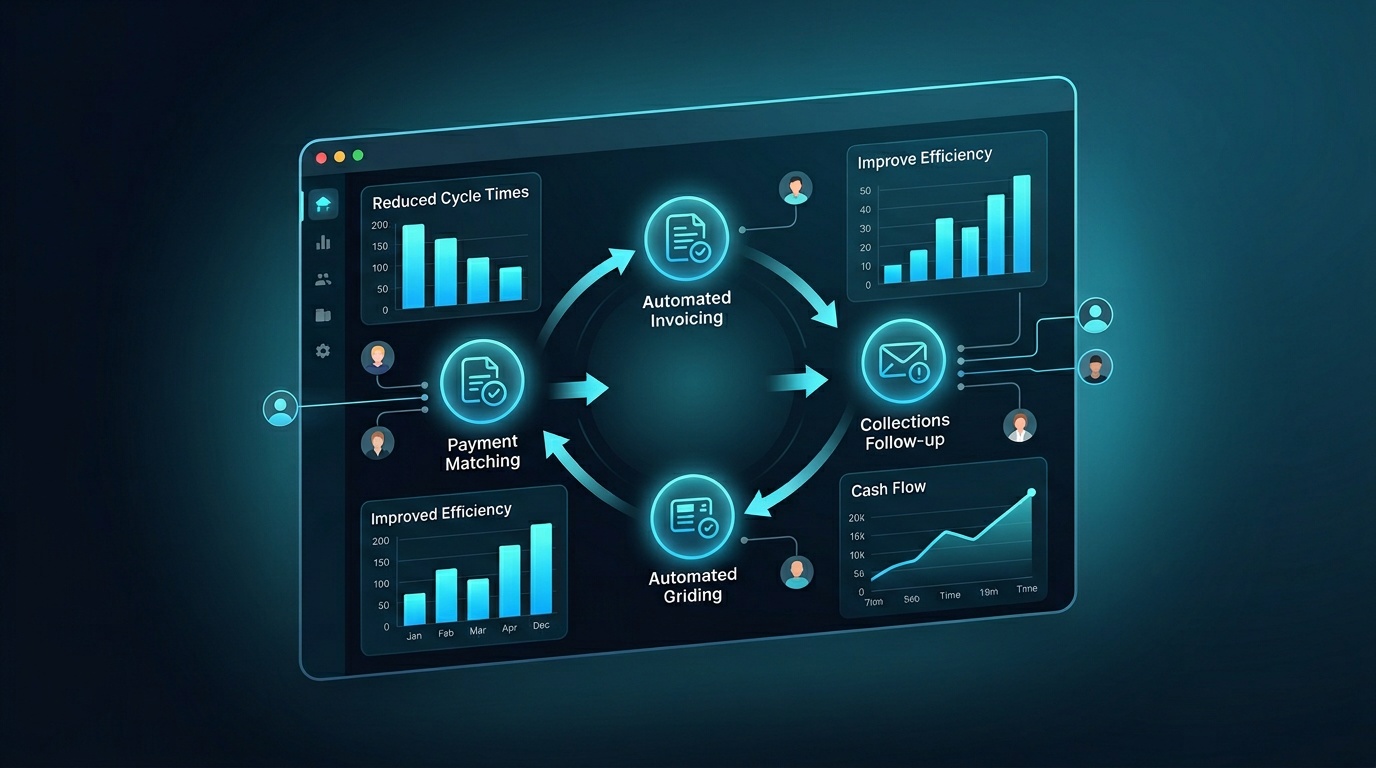
Accelerating Revenue Cycles and Improving Cash Flow
Automated invoicing, payment matching, and collections follow-up compress accounts receivable cycles significantly. Finance automation tools that trigger payment reminders and reconcile receipts in real time can reduce days sales outstanding without adding headcount. For growing mid-market businesses, that compression can free up working capital that was previously locked inside slow manual processes.
Fewer Errors, Cleaner Records
Manual data entry carries an error rate that compounds across reporting cycles. Automated data capture and validation eliminate transcription mistakes at the source, producing cleaner general ledgers and audit-ready records. One corrected entry in a spreadsheet is manageable. One thousand corrected entries at month-end is a different problem entirely.
Finance Automation: Honest Assessment
Scaling transaction volume shouldn’t mean scaling your headcount proportionally. That’s the practical case for finance automation. Processing more with the same team, without sacrificing accuracy or compliance. Here’s a balanced view of what you’re signing up for:
Pros
- Processes high transaction volumes without proportional staffing costs
- Delivers consistent compliance documentation across each cycle
- Frees senior finance professionals for analysis and strategy
- Integrates with existing ERP and accounting platforms
Cons
- Requires clean, structured data to function accurately
- Initial workflow mapping demands time investment upfront
- Complex exception scenarios still need human judgment
Strengthening Compliance and Reducing Risk
Finance automation examples with the strongest compliance impact include automated audit trails, real-time regulatory reporting, and anomaly detection that flags unusual transactions before they reach external auditors. AI Automation Services build these controls directly into workflow logic. Not as an afterthought bolted on at the end.
Transforming Core Financial Processes with Intelligent Automation
Accounts Payable and Receivable: Faster Cycles, Less Manual Effort
Intelligent AP automation captures invoices from any channel, matches them against purchase orders, routes exceptions for approval, and schedules payments. All without manual handling. On the receivable side, automated dunning sequences send personalized payment reminders at optimized intervals, reconcile incoming payments in real time, and escalate overdue accounts based on configurable risk thresholds. The combined effect is a measurably shorter cash conversion cycle.
Expense Management That Enforces Policy Automatically
Automated expense workflows capture receipts via mobile submission, apply policy rules instantly, flag noncompliant claims, and push approved reimbursements directly to payroll systems. Finance teams stop manually reviewing each line item and instead review only flagged exceptions. Processing time drops from days to hours. Policy compliance becomes consistent. Not dependent on whichever reviewer is least distracted that afternoon.
Compressing the Month-End Close
Month-end close is one of the highest-friction processes in finance. Automation sequences reconcile subledgers, consolidate intercompany transactions, and generate draft financial statements against predefined templates. Anomaly detection within the workflow flags variances before they reach the CFO, compressing close cycles and reducing last-minute corrections. Finance automation software applied here converts a stressful ten-day sprint into a structured, repeatable process.
Proactive Treasury Management and Cash Flow Forecasting
Predictive cash flow models built on automated data feeds give treasury teams a rolling 13-week forecast updated daily. Rather than assembling spreadsheets from multiple system exports, finance professionals review AI-generated projections with variance explanations already attached. This shifts treasury from reactive cash management to proactive liquidity positioning. A strategic capability previously available only to large enterprises with dedicated treasury teams.
Specialized Automation for Fundraising and Investor Relations
Fundraising organizations face a distinct financial automation challenge: managing high-volume investor outreach while maintaining the personalized communication that donor and investor relationships require. Automated sequences handle initial outreach, follow-up scheduling, document distribution, and pipeline tracking, while relationship managers focus exclusively on high-value conversations. Our AI-Powered Fundraising Platform connects CRM data, communication channels, and reporting into a single coordinated system built specifically for this vertical.
The Human-AI Partnership: Augmenting Finance Professionals, Not Replacing Them
From Data Entry to Strategic Analysis
Finance professionals spend a disproportionate share of their time collecting, cleaning, and moving data between systems. Financial services automation eliminates that burden. When data flows automatically between platforms, accountants and analysts redirect their attention to interpreting results, identifying trends, and advising business decisions. Rather than preparing inputs for the next meeting.
Better Data Means Better Decisions
Automated performance intelligence delivers anomaly detection, predictive trend analysis, and AI-generated recommendations directly to finance dashboards. Teams act on insights rather than generate them manually. Senior finance professionals become more effective advisors to leadership because their analysis rests on complete, current data. Not yesterday’s export assembled this morning.
Managing the Transition: Change Management Matters as Much as Technology
Successful automation adoption requires structured change management alongside technical implementation. AI Automation Services include team training and phased deployment planning because technology alone doesn’t drive transformation. Finance teams need clear visibility into which tasks automation handles and which decisions remain their responsibility. That clarity is what turns adoption from reluctant compliance into genuine buy-in.
How Vynta AI Approaches Implementation
Vynta AI designs, builds, and deploys custom AI agents calibrated to each organization’s existing workflows, data structures, and compliance requirements. Implementation begins with discovery and assessment, moves through expert deployment within weeks, and continues with ongoing monitoring and optimization reviews. This service model helps ensure automation delivers measurable outcomes. Not theoretical capability that looks impressive in a demo and stalls in production.
Choosing the Right Implementation Path for Financial Automation

Start Where Volume and Rules Align
Map processes with the highest transaction volume, the most manual touchpoints, and the clearest error patterns. Accounts payable, expense management, and collections follow-up are common starting points because they combine high frequency with rules-based logic. Exactly where finance automation tools tend to deliver the fastest payback. Don’t automate the complex exception first. Build confidence on the repeatable work, then expand.
Data Security and Integration Can’t Be Secondary
Financial data carries regulatory and confidentiality requirements that generic automation platforms often treat as secondary concerns. System integration capabilities must include secure API connections, role-based access controls, and audit-ready data transformation logs. Any automation layer that touches financial records needs to meet the same compliance standards as the systems it connects. Full stop.
Why Industry Expertise Changes the Outcome
Generic finance automation examples rarely translate directly into specialized verticals like fundraising or hospitality revenue management. Industry-specific workflow logic, terminology, and compliance requirements demand a partner with domain expertise. Not only automation capability. That distinction separates solutions that work accurately from day one from those that require months of customization before they’re actually useful.
Choosing Between Generic Tools and Specialized AI Services
| Consideration | Generic Automation Tools | AI Automation Services |
|---|---|---|
| Industry specialization | Horizontal, process-agnostic | Vertical-specific workflow logic |
| Integration depth | Prebuilt connectors only | Custom API and data transformation |
| Exception handling | Rule breaks require manual restart | Intelligent escalation with context |
| Ongoing optimization | Self-managed configuration | Continuous monitoring and reviews |
Organizations that treat financial services automation as a strategic capability. Not a software purchase. Consistently outperform teams chasing point solutions. Vynta AI’s AI Automation Services provide a discovery, implementation, and continuous optimization model that converts automation investment into sustained, measurable business outcomes.
Frequently Asked Questions
What exactly is financial services automation?
Financial services automation uses intelligent software agents to execute, monitor, and optimize financial workflows without manual intervention. It is a coordinated system of AI agents, workflow logic, and system integrations that replaces repetitive human tasks with intelligent, rules-based execution. This approach aims for measurable business outcomes like faster revenue cycles and lower error rates.
What are the primary business outcomes finance automation aims to achieve?
The primary objective of finance automation is to accelerate cash collection, reduce operational costs, and free finance teams for more strategic work. Every automation decision should map directly to a measurable business metric, such as days sales outstanding or compliance audit scores. It helps achieve scalable operations without needing to expand headcount proportionally.
How does intelligent automation differ from traditional robotic process automation (RPA)?
Intelligent automation goes beyond traditional RPA, which merely mimics keystrokes. It adds decision-making capability, exception handling, and predictive analysis to financial workflows. Unlike RPA, intelligent agents can adapt to changes, learn from data patterns, and escalate only genuine exceptions to human reviewers, driving business transformation.
What are the key benefits of automating financial workflows for a business?
Automating financial workflows brings several key benefits, including accelerating revenue cycles by compressing accounts receivable processes. It minimizes errors by eliminating manual data entry mistakes, leading to cleaner records. Businesses can also achieve scalable operations without proportional staffing costs, while strengthening compliance and reducing risk through automated audit trails.
Can you explain how automation improves accounts payable and receivable processes?
For accounts payable, automation captures invoices, matches them against purchase orders, routes exceptions for approval, and schedules payments without manual handling. On the receivable side, automated sequences send personalized payment reminders, reconcile incoming payments in real time, and escalate overdue accounts based on configurable risk thresholds. This combined effect measurably shortens the cash conversion cycle.
How does finance automation support better treasury management and cash flow forecasting?
Finance automation provides treasury teams with predictive cash flow models built on automated data feeds, offering rolling forecasts updated daily. This means finance professionals review AI-generated projections with variance explanations, rather than assembling spreadsheets manually. It shifts treasury from reactive cash management to proactive liquidity positioning, a strategic capability for any business.
What role does data play in successful financial services automation?
Data is foundational for successful financial services automation. The highest ROI comes when automation is applied to high-volume, rules-based processes first, expanding into predictive functions as data maturity grows. It requires clean, structured data to function accurately and deliver reliable insights and execution.