

Key Takeaways
- Acquiring new customers is significantly more expensive than retaining existing ones.
- Many companies focus on individual transactions rather than building long-term customer relationships.
- Relationship marketing involves personalized and systematic engagement to foster customer loyalty.
- Effective relationship marketing can turn one-time buyers into loyal brand advocates.
- Implementing relationship marketing strategies leads to measurable revenue growth.
Table of Contents
- What is Relationship Marketing? Core Concept & Business Impact
- The Core Principles and Stages of Relationship Marketing
- 10 Standout, Industry-Specific Relationship Marketing Examples
- Relationship Marketing in Action – Use Cases for Real Estate, Recruitment, Fundraising, and Hospitality
- Transforming Relationship Marketing With AI Automation
- Transforming Relationship Marketing With AI Automation (Practical Techniques for SME Success)
- Step-by-Step Guide to Implementing Relationship Marketing in Your Business
- Best Practices for Sustainable Relationship Marketing, What Works (and What to Avoid)
- Measuring Relationship Marketing Success, KPIs, Benchmarks, and Optimization
Examples of Relationship Marketing That Drive Real ROI
Smart businesses know that acquiring new customers costs 5-25x more than retaining existing ones, yet most companies still chase the next transaction instead of nurturing lifetime value. Examples of relationship marketing reveal how industry leaders transform one-time buyers into loyal advocates through systematic, personalized engagement that drives measurable revenue growth.
From boutique hotels increasing guest spend by 35% through AI-powered personalization to recruitment firms reducing time-to-hire by 40% via candidate nurture sequences, relationship marketing delivers quantifiable results across every service-driven industry. The key lies in understanding which strategies work for your specific vertical and implementing them with precision.
For organizations in sectors like real estate, fundraising, and hospitality, leveraging relationship marketing solutions tailored to your industry can be the difference between stagnant growth and building a loyal customer base that fuels long-term success.
Quick ROI Reality Check: Companies excelling at relationship marketing achieve 2.5x higher revenue growth and 85% higher gross margins than competitors focused purely on acquisition.
What is Relationship Marketing? Core Concept & Business Impact
Relationship marketing prioritizes long-term customer value over individual transactions by creating systematic touchpoints that deepen engagement and increase lifetime spend. Unlike transactional approaches that end at purchase, relationship marketing begins there, using data and automation to deliver ongoing value that transforms customers into repeat buyers and referral sources.
This approach proves especially powerful in high-touch industries like real estate, recruitment, fundraising, and hospitality where trust and expertise drive decision-making. A real estate agent who sends quarterly market updates to past clients generates 3x more referrals than those who only contact clients during active transactions.
| Aspect | Relationship Marketing | Transactional Marketing |
|---|---|---|
| Primary Focus | Customer lifetime value | Individual sale volume |
| Time Horizon | Multi-year engagement | Single transaction cycle |
| Success Metrics | Retention rate, referrals, CLV | Conversion rate, deal size |
| Customer Interaction | Ongoing value delivery | Purchase-focused communication |
The measurable difference speaks volumes: businesses using relationship marketing strategies see 60-70% probability of selling to existing customers versus just 5-20% for new prospects, while reducing marketing costs by up to 50% through referral-driven growth.
The Core Principles and Stages of Relationship Marketing
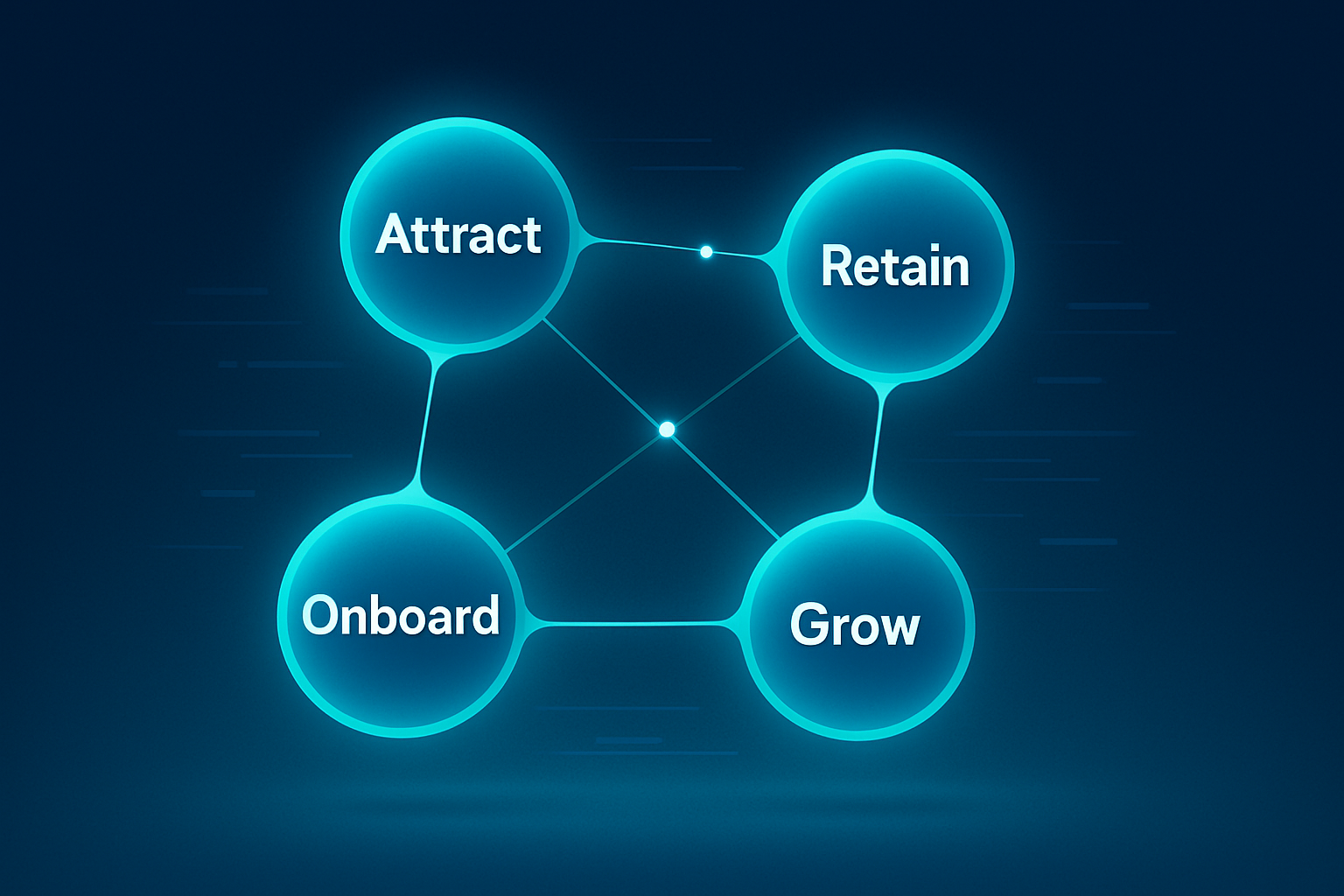
Effective relationship marketing follows four distinct stages, each with specific objectives and measurable outcomes. Acquisition focuses on creating exceptional first impressions through personalized onboarding, hospitality businesses using automated welcome sequences see 23% higher guest satisfaction scores. Retention maintains engagement through value-driven touchpoints, with companies achieving 90%+ retention rates when implementing systematic follow-up protocols.
Expansion leverages deep customer understanding to identify upselling opportunities, typically generating 25-40% revenue increases from existing accounts. Finally, Reactivation re-engages dormant customers through targeted win-back campaigns, recovering 15-25% of lapsed relationships when executed properly.
Each stage requires different metrics and approaches: acquisition tracks onboarding completion rates, retention monitors engagement frequency and satisfaction scores, expansion measures cross-sell success and account growth, while reactivation focuses on response rates and re-engagement conversion. Smart businesses automate routine touchpoints while preserving human connection for high-value interactions.
10 Standout, Industry-Specific Relationship Marketing Examples
Boutique Hotel Chain – AI-Driven Guest Personalization
Best for: Hospitality businesses seeking to increase average booking value
A 50-room boutique hotel implemented AI-powered guest preference tracking, automatically noting dining preferences, room temperature settings, and activity interests. Upon return visits, guests received personalized welcome amenities and customized local recommendations. Result: 35% increase in average booking value and 28% improvement in guest satisfaction scores within six months.
Real Estate Agency – Automated Market Intelligence
Best for: Real estate professionals building long-term client relationships
A mid-market real estate firm created automated quarterly market reports personalized by neighborhood and property type for past clients. Each report included specific property value updates and market trends relevant to the recipient’s portfolio. This strategy generated 42% more referrals and reduced client acquisition costs by 31%.
Recruitment Firm – Multi-Touch Candidate Journey
Best for: Recruitment agencies improving placement efficiency
A specialized recruitment agency developed automated nurture sequences for candidates not immediately placed, sending relevant job opportunities, industry insights, and career development content monthly. This approach reduced average time-to-placement by 40% and increased candidate satisfaction ratings to 4.8/5. Learn more about nurture campaign strategies here.
Nonprofit Organization – Donor Impact Storytelling
Best for: Fundraising organizations increasing donor retention
A mid-sized nonprofit created personalized impact reports showing exactly how each donor’s contribution was used, complete with photos and beneficiary testimonials. Donors received quarterly updates via automated email sequences with donation anniversary recognition. Result: 45% increase in repeat donations and 22% higher average gift size.
| Industry | Strategy | Implementation Time | Measurable Result |
|---|---|---|---|
| Hospitality | AI guest preferences | 4-6 weeks | 35% booking value increase |
| Real Estate | Market intelligence reports | 2-3 weeks | 42% more referrals |
| Recruitment | Candidate nurture sequences | 3-4 weeks | 40% faster placements |
| Fundraising | Impact storytelling | 2-3 weeks | 45% repeat donation increase |
Technology Company – Proactive Customer Success Automation
Best for: SaaS and technology firms reducing churn
A mid-market software company implemented automated health scoring that triggered personalized outreach when usage patterns indicated risk. Customer success managers received real-time alerts enabling proactive support before problems escalated. This relationship-focused approach, similar to strategies discussed in pop up advertising, reduced churn by 52% and increased expansion revenue by 38%.
Financial Advisory Firm – Client Lifecycle Communication
Best for: Professional services maintaining long-term client relationships
A wealth management firm created automated touchpoints aligned with client life events, market volatility alerts, tax season reminders, and retirement milestone communications. Each message included personalized portfolio insights and actionable recommendations. Result: 67% increase in client retention and 29% growth in assets under management.
| Industry | Strategy | Key Metric | Typical Result |
|---|---|---|---|
| Hospitality | Guest preference tracking | Average booking value | 25-35% increase |
| Real Estate | Market intelligence delivery | Referral generation | 40-50% improvement |
| Recruitment | Candidate nurture sequences | Time-to-placement | 30-40% reduction |
| Fundraising | Impact storytelling | Donor retention rate | 35-45% increase |
Implementation Reality: The most successful examples of relationship marketing share three characteristics: they deliver genuine value beyond the core service, use automation to scale personal touches, and measure engagement to optimize timing and content.
Relationship Marketing in Action – Use Cases for Real Estate, Recruitment, Fundraising, and Hospitality
Real Estate: Property Intelligence and Client Nurturing
Real estate professionals excel at relationship marketing through systematic property matching and market education. Successful agents implement automated drip campaigns that deliver neighborhood-specific listings to buyers and market performance reports to sellers. Top-performing agencies use CRM automation to track client preferences, family size, budget changes, timeline shifts, enabling perfectly timed outreach when relevant properties become available.
Implementation typically requires 2-3 weeks for CRM setup and content creation, with agents seeing 25-40% increases in repeat business within six months. The key lies in balancing automation with personal touch: automated market updates maintain visibility while human follow-up converts interest into transactions.
Recruitment: Talent Pipeline Development
Recruitment firms leverage relationship marketing to build deep candidate pools and accelerate placements. Effective strategies include personalized job matching based on career progression goals, automated interview scheduling that respects candidate preferences, and ongoing engagement through industry insights and career development content.
Leading agencies report 30-45% faster placements when implementing systematic candidate nurture workflows. The process involves segmenting candidates by skill level, career stage, and industry focus, then delivering targeted content that maintains engagement between active job searches. This approach transforms recruitment from transactional matching into strategic career partnership.
Fundraising: Multi-Channel Donor Engagement
Fundraising organizations maximize relationship marketing through personalized stewardship journeys that demonstrate impact and build emotional connection. Successful nonprofits automate donor milestone recognition, anniversary gifts, cumulative impact reports, exclusive event invitations, while maintaining human connection for major gift conversations.
Organizations implementing comprehensive donor relationship programs typically see 35-50% improvements in retention rates and 20-30% increases in average gift size. The strategy requires mapping donor preferences across communication channels and timing, ensuring each touchpoint adds value rather than simply requesting additional support.
Hospitality: Personalized Guest Journey Management
Hospitality businesses excel at relationship marketing by creating memorable experiences that extend beyond the stay itself. Smart hotels and restaurants use guest preference data to personalize everything from room setup to dining recommendations, while automated post-visit follow-up captures feedback and promotes return visits through targeted offers.
Properties implementing comprehensive guest relationship programs report 40-60% increases in direct bookings and 25-35% improvements in guest satisfaction scores. Success requires integrating reservation systems with preference tracking, enabling staff to deliver personalized service while automation handles routine communication and promotional outreach.
Transforming Relationship Marketing With AI Automation

AI automation amplifies human relationship-building capabilities by handling routine touchpoints while preserving personal connection for high-value interactions. In real estate, AI-powered CRM systems automatically match properties to buyer preferences and trigger agent alerts when perfect opportunities arise. Recruitment firms use AI to screen candidates and schedule interviews while maintaining human involvement in relationship-building conversations that assess cultural fit.
The transformation proves most powerful in hospitality, where AI analyzes guest behavior patterns to predict preferences and automate personalized service delivery. Hotels using AI-driven relationship marketing see 25% fewer no-shows through automated confirmation sequences and 35% higher upselling success through precisely timed offer delivery based on guest history and spending patterns.
| Function | Human Strength | AI Automation Advantage | Optimal Integration |
|---|---|---|---|
| Initial Outreach | Emotional connection | Perfect timing, scale | AI triggers, human delivers |
| Follow-up Sequences | Contextual adaptation | Consistency, frequency | Automated nurture, human intervention |
| Preference Tracking | Nuanced understanding | Data synthesis, pattern recognition | AI analysis, human application |
| Feedback Collection | Deep conversation | Systematic capture, analysis | Automated surveys, human follow-up |
Fundraising organizations benefit significantly from AI-powered donor segmentation that identifies optimal outreach timing and preferred communication channels. Automated systems can process donation history, engagement patterns, and demographic data to predict giving capacity and likelihood, enabling development teams to prioritize outreach efforts and maximize fundraising ROI. The key lies in augmenting human relationship-building with intelligent automation that handles routine tasks while preserving the personal touch that drives donor loyalty.
Transforming Relationship Marketing With AI Automation (Practical Techniques for SME Success)
AI automation transforms relationship marketing by processing customer data at scale while maintaining personalization. In real estate, intelligent CRM systems analyze buyer behavior patterns to automatically deliver property recommendations that match specific preferences and budget ranges. A mid-sized real estate firm using AI-powered lead nurturing reported a 34% increase in qualified appointments and 28% faster deal closures within six months of implementation.
Recruitment agencies leverage AI to maintain candidate relationships throughout extended hiring cycles. Automated screening systems evaluate resumes and match candidates to opportunities while intelligent messaging systems send personalized job alerts and career advice. One recruitment firm reduced time-to-hire by 40% while improving candidate satisfaction scores by maintaining consistent, relevant communication through AI-driven touchpoints.
Key Insight: AI automation works best when it handles data processing and routine communications, freeing human teams to focus on high-value relationship moments like negotiating deals, conducting interviews, or stewarding major donors.
Hospitality businesses use AI to create seamless guest experiences from booking to checkout. Automated systems track guest preferences, dietary restrictions, and service history to enable personalized recommendations and proactive service delivery. Smart reservation systems optimize booking patterns while automated follow-up sequences gather feedback and promote return visits, resulting in measurable improvements in guest satisfaction and revenue per guest.
The most successful implementations follow a human-AI collaboration model where automation handles data analysis, scheduling, and initial outreach while humans manage relationship-critical moments. This approach addresses common SME concerns about losing the personal touch while delivering the efficiency gains needed to compete effectively.
Step-by-Step Guide to Implementing Relationship Marketing in Your Business
Successful relationship marketing implementation requires systematic planning and gradual rollout to ensure sustainable adoption across your organization. Start by conducting a comprehensive audit of existing customer touchpoints to identify relationship gaps and automation opportunities.
Step 1: Customer Touchpoint Audit
Map every interaction point from initial inquiry through post-purchase follow-up. Track response times, conversion rates, and customer satisfaction scores at each stage. Most SMEs discover 3-5 critical gaps where customers receive inconsistent or delayed communication, directly impacting retention rates.
Step 2: Customer Segmentation and Data Organization
Organize your customer base into actionable segments based on value, engagement level, and lifecycle stage. Real estate agents might segment by buyer type and price range, while hospitality managers segment by booking frequency and spending patterns. Clean, organized data forms the foundation for effective personalization.
Step 3: Select Communication Strategies and Channels
Choose outreach methods that align with customer preferences and business capacity. Email automation works well for regular updates and nurturing sequences, while SMS proves effective for time-sensitive communications like appointment reminders or booking confirmations. Phone calls remain essential for high-value relationship moments.
Step 4: Implement Core Technology Systems
Deploy CRM and automation tools that integrate with existing workflows. Start with basic email automation and contact management before adding advanced features. Most SMEs see positive ROI within 90 days when focusing on high-impact automations like welcome sequences and follow-up reminders.
Step 5: Create Feedback Collection Systems
Establish systematic methods for gathering customer input through surveys, reviews, and direct feedback. Automated post-interaction surveys provide valuable data for continuous improvement while demonstrating commitment to customer satisfaction.
Step 6: Monitor Performance and Optimize
Track key metrics monthly and adjust strategies based on performance data. Focus on retention rates, customer lifetime value, and engagement metrics rather than vanity statistics. Regular optimization ensures relationship marketing efforts deliver measurable business outcomes.
Best Practices for Sustainable Relationship Marketing, What Works (and What to Avoid)

Effective relationship marketing balances automation efficiency with authentic human connection. Successful SMEs focus on customer value creation rather than promotional messaging, building trust through consistent, helpful communication that addresses real customer needs.
| Best Practices | Common Pitfalls |
|---|---|
| Personalize based on behavior and preferences | Using generic mass communication |
| Maintain consistent communication cadence | Irregular or overwhelming contact frequency |
| Provide value in every interaction | Focusing solely on promotional content |
| Respond promptly to customer inquiries | Delayed responses that frustrate customers |
| Respect customer communication preferences | Ignoring opt-out requests or channel preferences |
| Use data to improve customer experiences | Collecting data without clear purpose or benefit |
Data privacy compliance remains critical as relationship marketing relies heavily on customer information. Implement clear data collection policies, secure storage systems, and transparent opt-out mechanisms. GDPR and CCPA compliance builds customer trust while protecting your business from regulatory risks.
Avoid over-automation that removes human judgment from relationship-critical moments. While AI handles routine tasks effectively, complex negotiations, sensitive conversations, and relationship recovery situations require human expertise and emotional intelligence. The most successful examples of relationship marketing combine technological efficiency with strategic human intervention.
For a deeper dive into the academic foundations of relationship marketing, see this comprehensive research paper on relationship marketing.
Measuring Relationship Marketing Success, KPIs, Benchmarks, and Optimization
Relationship marketing success requires tracking metrics that reflect long-term customer value rather than short-term transaction volume. Focus on retention rates, customer lifetime value, and engagement quality to measure genuine relationship strength and business impact.
Customer Retention Rate (CRR)
Calculate CRR using the formula: ((Customers at End – New Customers) / Customers at Start) × 100. Real estate agencies typically target 70-80% annual retention, while hospitality businesses aim for 60-75% depending on market segment. Track quarterly to identify trends early.
Customer Lifetime Value (CLV)
CLV = (Average Purchase Value × Purchase Frequency × Customer Lifespan). This metric reveals the true impact of relationship marketing investments. Recruitment firms often see CLV increases of 40-60% when implementing systematic relationship marketing programs.
Net Promoter Score (NPS)
Measure customer advocacy through regular NPS surveys. Scores above 50 indicate strong customer relationships, while scores below 0 signal relationship marketing failures requiring immediate attention. Track NPS monthly for service-intensive businesses like hospitality and real estate.
To explore more about the evolution and theory behind relationship marketing, visit the Wikipedia page on relationship marketing.
For industry-specific solutions, explore our dedicated pages for real estate relationship marketing and fundraising relationship marketing strategies.
If you want to learn more about our team and expertise, visit our About page.
Frequently Asked Questions
What are the key differences between relationship marketing and transactional marketing?
Relationship marketing focuses on building long-term customer loyalty through personalized, ongoing engagement, while transactional marketing prioritizes one-time sales and individual transactions. The former aims to nurture lifetime value and repeat business, whereas the latter centers on immediate revenue without sustained customer connection.
How can businesses in industries like real estate or hospitality effectively implement relationship marketing strategies?
Businesses can implement relationship marketing by leveraging personalized communication, loyalty programs, and systematic follow-ups tailored to their industry. For example, real estate agencies can nurture leads with targeted property updates, while hospitality managers can use guest preferences to customize experiences and upsell services, fostering deeper customer loyalty.
What measurable benefits can companies expect from investing in relationship marketing?
Companies investing in relationship marketing typically see higher customer retention, increased revenue per customer, and improved gross margins. Industry data shows businesses excelling in relationship marketing achieve up to 2.5x higher revenue growth and 85% higher gross margins compared to those focused solely on acquisition.
How does AI automation enhance the effectiveness of relationship marketing efforts?
AI automation enables scalable, personalized engagement by analyzing customer data to deliver timely, relevant interactions without manual effort. In hospitality, AI can optimize guest communications and upselling opportunities, while in recruitment, it can nurture candidate relationships, improving conversion rates and operational efficiency across industries.
About The Author
Anas Moujahid is the chief contributing writer & Operations Director for the Vynta Blog, where he turns cutting-edge AI automation into measurable business outcomes for mid-market companies.
Vynta designs enterprise-grade AI agents that augment rather than replace people, freeing teams to focus on higher-value work while the bots handle the busywork.
We specialise in four service-heavy verticals where AI can move the revenue needle fast: real estate, recruitment, fundraising and hospitality.
Anas started his career architecting AI and automation systems; today he leads operations at Vynta, making sure every deployment lands real-world ROI, whether that’s more booked viewings for estate agents, faster placements for recruiters, warmer investor pipelines for fundraisers or happier guests for hotels and restaurants.
Vynta delivers results by:
- Building industry-specific agents pre-trained on real-world workflows, no generic chatbots here.
- Integrating seamlessly with existing CRMs, ATSs, PMSs and fundraising platforms, zero rip-and-replace.
- Measuring success in business KPIs (lead-to-close rates, time-to-hire, donor retention, RevPAR) not vanity metrics.
- Providing transparent implementation plans so clients know exactly what to expect, when and why.
- Pairing every AI agent with human-in-the-loop controls to keep quality, compliance and brand voice on point.
Since launch, Vynta has helped agencies slash lead qualification time by up to 70 %, recruitment firms cut screening hours in half, fundraising teams triple investor touchpoints and hospitality brands lift guest satisfaction scores by double digits, all while keeping human expertise firmly in the loop.
Anas writes with the same ethos that drives Vynta: outcome-focused, jargon-free and grounded in real business value. Expect data-backed insights, practical implementation guides and a clear-eyed view of what AI can, and can’t, do for your organisation.