
enterprise ai solution
What Enterprise AI Solutions Actually Mean for Business
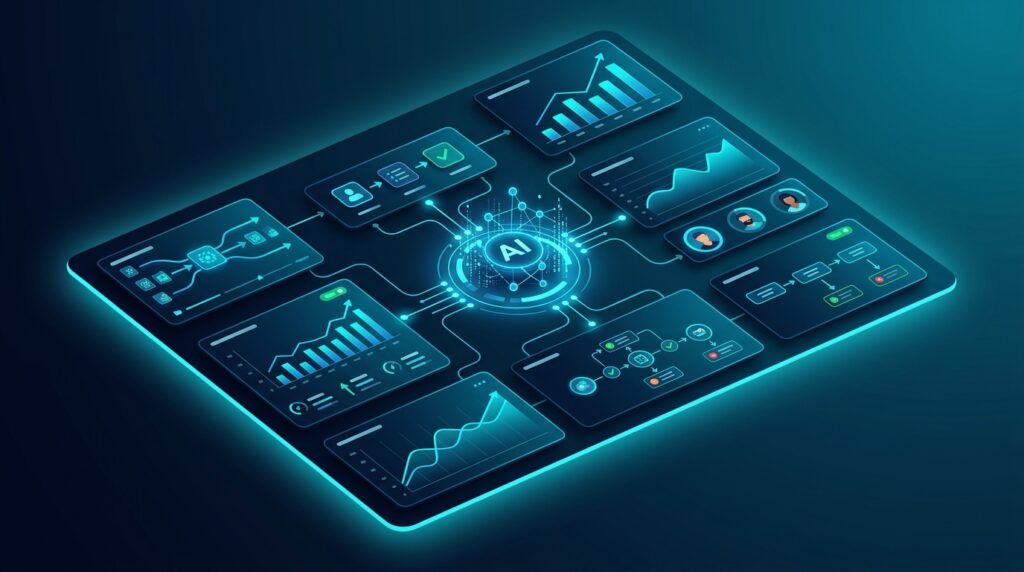
An enterprise ai solution is a sophisticated, scalable AI system that automates complex business processes across entire organizations. Unlike simple AI tools, these solutions integrate multiple AI agents, machine learning models, and automation workflows to deliver measurable outcomes in revenue generation, operational efficiency, and cost reduction.
What Actually Defines an Enterprise AI Solution?
Enterprise AI solutions differ fundamentally from consumer AI applications. They feature enterprise-grade security, multi-department integration capabilities, and industry-specific intelligence. At Vynta AI, our enterprise ai solution architecture includes AI agents that handle complex decision-making processes, from lead qualification in real estate to candidate screening in recruitment.
These systems process vast data volumes while maintaining compliance standards required by mid-market SMEs. They adapt to existing business workflows without disrupting established operations.
AI Agents vs. Platforms vs. Tools: The Complete Breakdown
| Component | Functionality | Business Impact | Implementation Complexity |
|---|---|---|---|
| AI Agents | Decision-making and task execution | Direct revenue impact through automation | Medium: requires training |
| AI Platforms | Infrastructure for multiple AI applications | Scalability and integration benefits | High: technical expertise needed |
| AI Tools | Specific task automation | Efficiency gains in targeted areas | Low: plug-and-play functionality |
Building Blocks of Scalable AI Architecture
Successful enterprise ai platforms incorporate natural language processing, predictive analytics, and workflow automation engines. These components work together to create intelligent systems that understand context, predict outcomes, and execute actions with appropriate human oversight.
Why Generic AI Fails at Complex Business Operations
Generic AI applications lack the domain expertise required for complex business scenarios. Industry-specific challenges in real estate, recruitment, fundraising, and hospitality demand specialized knowledge that only purpose-built enterprise ai applications can provide.
This specialization translates directly into superior business outcomes and measurable ROI. You can’t expect a one-size-fits-all solution to understand the nuances of property valuations or candidate assessment protocols.
The Tangible ROI: How Enterprise AI Drives Revenue Growth and Cost Reduction
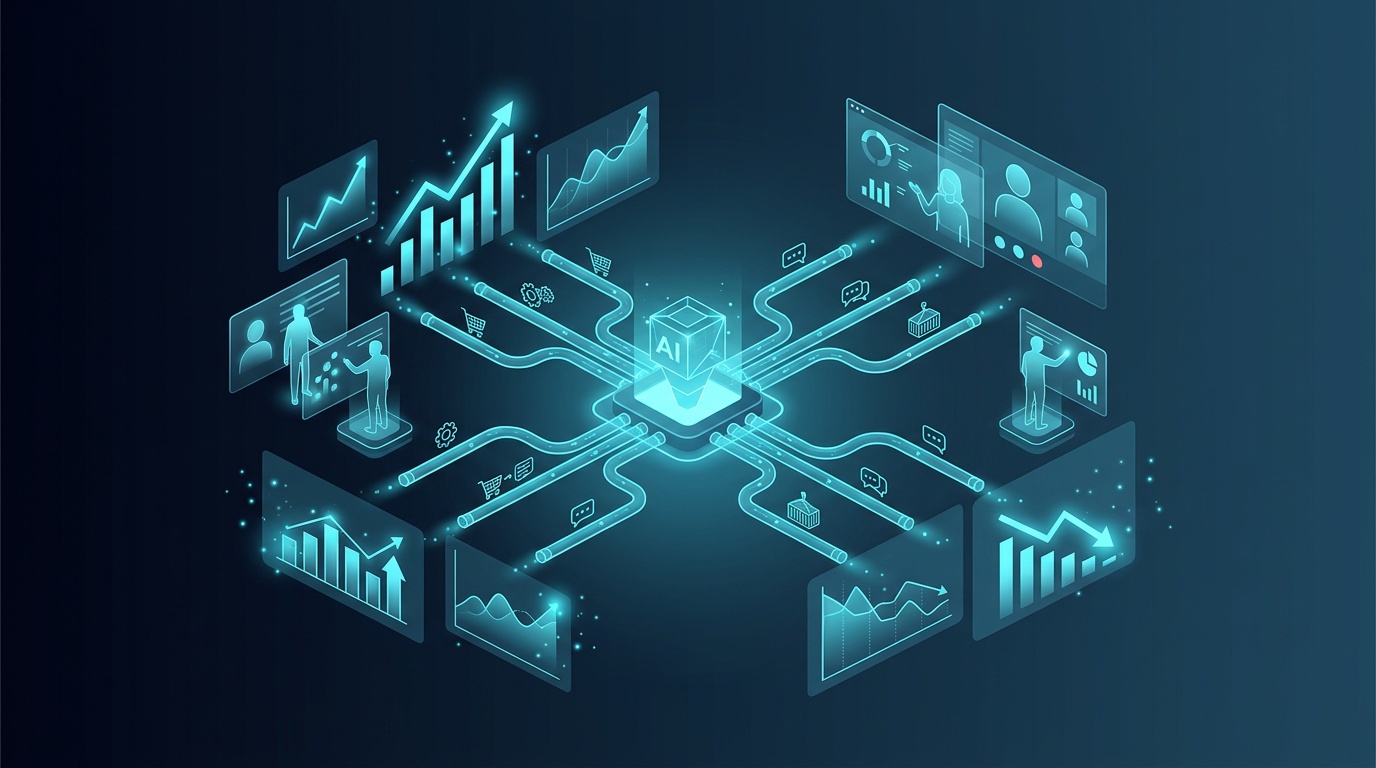
Enterprise AI solutions deliver measurable financial impact through three core mechanisms: accelerated revenue generation, operational cost reduction, and productivity multiplication. Organizations implementing these systems typically see 25% to 40% improvements in lead conversion rates and 30% to 50% reductions in manual processing time within the first six months.
Measuring Success: KPIs That Actually Matter
Revenue acceleration metrics include lead-to-conversion time reduction, customer acquisition cost optimization, and deal-closure rate improvements. Operational efficiency indicators track process automation percentages, error-rate reductions, and response-time improvements.
Real estate agencies report 60% faster lead qualification cycles. Recruitment firms achieve a 45% reduction in time-to-hire. Fundraising organizations see 35% increases in donor engagement rates. Hospitality businesses experience a 50% improvement in guest satisfaction scores.
The numbers don’t lie, and they’re consistent across industries.
Growing Without Growing Payroll
AI agents handle routine tasks that traditionally require human intervention, enabling teams to focus on strategic activities. A single enterprise ai solution can process hundreds of inquiries simultaneously, qualify prospects using sophisticated criteria, and execute follow-up sequences.
Here’s what that looks like in practice: instead of hiring three additional sales reps to handle increased lead volume, you deploy AI agents that qualify prospects 24/7. Your existing team closes deals while the AI does the heavy lifting.
ROI Reality Check: Mid-market SMEs implementing AI automation report average cost savings of $150,000 to $300,000 annually through reduced manual processing and improved conversion rates across sales and operations workflows.
Cutting Costs Through Smart Automation
Intelligent automation reduces repetitive administrative tasks, lowers error-related costs, and improves resource allocation. Enterprise ai platforms integrate with existing systems to streamline data entry, appointment scheduling, and customer communications without requiring additional staff training or system overhauls.
The beauty? You’re not replacing systems you’ve already invested in. You’re making them work better.
Industry-Specific AI Agents: Purpose-Built Solutions for Real Estate, Recruitment, Fundraising, and Hospitality
Specialized AI agents deliver superior results by incorporating deep industry knowledge into their decision-making algorithms. These systems understand sector-specific terminology, compliance requirements, and customer behaviors that generic solutions simply can’t match.
Real Estate: Automating Lead Qualification and Property Matching
Real estate AI agents analyze prospect inquiries using market data, property specifications, and buyer preferences to prioritize high-intent leads. These systems schedule property viewings, send personalized listings, and nurture prospects through automated sequences tailored to local market conditions.
Property matching algorithms consider location preferences, budget constraints, and lifestyle factors to present relevant options. The AI handles initial screening calls, qualifies financing capabilities, and coordinates with mortgage brokers to accelerate the sales cycle.
Recruitment: Streamlining Candidate Screening and Interview Scheduling
Recruitment automation processes resume parsing, skills assessment, and initial candidate interviews through natural language processing. AI agents evaluate experience levels, cultural-fit indicators, and salary expectations to create ranked candidate pools for human recruiters.
Scheduling coordination eliminates back-and-forth communications by accessing multiple calendars simultaneously. Background verification requests and reference checks proceed automatically while maintaining compliance with employment regulations.
No more email tennis trying to coordinate interview times. The AI just makes it happen.
Implementation Success: Organizations deploying industry-specific AI agents report faster implementation times than generic platforms, with immediate productivity gains in core business processes.
Fundraising: Optimizing Investor Outreach and Donor Management
Fundraising AI systems analyze donor histories, giving patterns, and engagement metrics to personalize outreach strategies. Automated campaigns adjust messaging tone, timing, and channel selection based on individual donor preferences and response behaviors.
Grant application processes benefit from intelligent document preparation and deadline tracking. AI agents monitor funding opportunities, assess alignment with organizational goals, and prepare preliminary application materials for review.
Hospitality: Improving Guest Experience and Reservation Management
Hospitality AI agents manage reservation inquiries, room assignments, and special requests through multichannel communication systems. Guest preference tracking enables personalized service delivery from check-in through departure.
Revenue optimization algorithms adjust pricing based on occupancy forecasts, local events, and seasonal demand patterns. Automated upselling presents relevant amenities and services at optimal moments during the guest journey.
Think of it as having a concierge that never sleeps and remembers every guest’s preferences perfectly.
Making AI Adoption Work: Implementation, Security, and Human-AI Collaboration
Successful AI implementation requires strategic planning, security considerations, and change management protocols. Organizations achieve optimal results through phased deployment approaches that minimize disruption while maximizing adoption rates.
Smart Implementation: A Phased Approach That Works
Phase one focuses on single-department pilot programs with clear success metrics and defined timelines. Initial deployments target high-volume, repetitive processes where automation delivers immediate value.
Start small. Prove value. Then scale.
Training programs prepare staff for new workflows while maintaining existing operations. Expansion phases introduce cross-department integration and advanced automation capabilities. Data-migration protocols ensure historical information remains accessible while new systems capture improved analytics and performance metrics.
Security and Privacy in AI Deployments
Enterprise AI security frameworks include data encryption, access controls, and audit trails that meet industry compliance standards. Regular security assessments verify system integrity while privacy protocols protect customer information throughout processing workflows.
Cloud deployment options provide scalable infrastructure with built-in redundancy and disaster recovery capabilities. On-premises installations offer maximum control for organizations with specific data sovereignty requirements.
The Future of Work With AI Agents
AI augmentation amplifies human expertise rather than replacing human judgment. Strategic decision-making, creative problem-solving, and relationship building remain human responsibilities while AI handles data processing, pattern recognition, and routine communications.
Professional development programs help teams transition to AI-augmented workflows. Skill development focuses on analytical thinking, strategic planning, and customer relationship management as AI assumes administrative responsibilities.
Here’s the reality: AI doesn’t eliminate jobs. It eliminates the boring parts of jobs.
Change Management Reality: Organizations with structured training programs achieve 85% employee adoption rates within 90 days, compared to 45% adoption rates when training is neglected during AI implementation.
The future of business operations lies in intelligent automation that scales human capabilities while maintaining the personal touch customers value. Enterprise AI solutions represent a strategic investment in operational excellence, competitive advantage, and sustainable growth across industry verticals.
Frequently Asked Questions
What is an enterprise AI solution?
An enterprise AI solution is a sophisticated, scalable AI system designed to automate complex business processes across an entire organization. Unlike simple AI tools, these solutions integrate multiple AI agents and machine learning models to deliver measurable outcomes in revenue generation, operational efficiency, and cost reduction. At Vynta AI, we build these systems with enterprise-grade security and multi-department integration capabilities.
Who provides effective AI solutions for enterprise businesses?
Effective enterprise AI solutions come from providers who offer specialized, purpose-built systems with deep industry knowledge. These solutions must integrate seamlessly with existing workflows and deliver measurable ROI, rather than being generic applications. At Vynta AI, we focus on creating bespoke AI agents tailored to specific sectors, ensuring they understand industry-specific terminology and compliance requirements.
How do enterprise AI solutions differ from generic AI tools?
Enterprise AI solutions are fundamentally different from generic AI applications because they feature enterprise-grade security, multi-department integration, and industry-specific intelligence. They process vast data volumes while maintaining compliance standards and adapt to existing business workflows without disruption. Generic AI lacks the domain expertise needed for complex business scenarios, which is where specialized solutions excel.
What are the main benefits of implementing an enterprise AI solution?
Implementing an enterprise AI solution delivers measurable financial impact through accelerated revenue generation, operational cost reduction, and productivity multiplication. Organizations often see significant improvements, such as 25% to 40% increases in lead conversion rates and 30% to 50% reductions in manual processing time within six months. These systems free teams to focus on strategic activities by automating routine tasks.
Can enterprise AI solutions be tailored for specific industries?
Absolutely, specialized AI agents are essential for unlocking potential in specific industries like real estate, recruitment, fundraising, and hospitality. These systems incorporate deep industry knowledge into their decision-making algorithms, understanding sector-specific terminology and customer behaviors that generic solutions cannot. For example, Vynta AI Agents are designed for luxury hospitality, increasing booking conversion by 50% and reducing operational costs by 30% through tailored automation.