
Compare custom AI agents vs off-the-shelf for nightclubs.
Custom vs Off-the-Shelf AI Agents for Nightclubs
Key Differences Between Custom AI Agents and Off-the-Shelf Options for Nightclubs
When you Compare custom AI agents vs off-the-shelf for nightclubs., the distinction centers on adaptability to your specific operations. Custom agents integrate directly with your VIP management workflows, dynamic pricing systems, and reservation platforms. They learn guest preferences and peak-hour patterns. Off-the-shelf solutions often provide generic chatbot functionality that struggles with the nuanced demands of nightlife operations.
How Custom Agents Fit Nightclub Workflows Like VIP Management and Dynamic Pricing
Custom AI agents connect to your existing CRM and pull guest history to personalize bottle service recommendations and table upgrades. They adjust pricing in real time based on demand, weather, and event type. A custom agent recognizes returning VIP guests, automatically flags preferred seating zones, and triggers personalized welcome messages to host staff before arrival. This level of workflow integration is difficult to achieve with generic tools built for broad hospitality use. Our Vynta AI Agents for Hospitality deliver tailored solutions that fit your nightclub’s unique operational needs.
Limitations of Off-the-Shelf Tools in High-Volume Nightlife Environments
Off-the-shelf platforms typically handle basic reservation confirmations and FAQs. During peak Friday and Saturday nights when 200+ guests arrive within a two-hour window, these systems struggle with complex requests like table splits, last-minute VIP upgrades, or coordinated entry timing for large groups. They lack the context needed to handle messages like “Can we add four more to our table?” at 11 p.m. when capacity is maxed.
Nightclub-Specific Metrics: Response Time and Guest Handling Capacity
Response time defines nightclub operations. Custom agents maintain sub-30-second response times even during 1,000+ concurrent conversation peaks, while off-the-shelf tools often queue requests or respond with generic “We will get back to you” messages. Guest handling capacity matters when your team processes 500 reservation inquiries on a Thursday for weekend slots. Custom solutions scale to your exact volume without service degradation.
| Feature | Custom AI Agents | Off-the-Shelf Tools |
|---|---|---|
| VIP Recognition | Full guest history integration with personalized service triggers | Basic contact tagging without behavioral context |
| Dynamic Pricing | Real-time adjustments based on demand, events, and weather | Static pricing or manual updates required |
| Peak Volume Handling | Scales to 1,000+ concurrent conversations | Degrades or queues at 100+ simultaneous requests |
| CRM Integration | Two-way sync with custom fields and workflows | Limited API connections, often one-way data flow |
Cost Breakdown: Upfront Investment vs Long-Term ROI in Nightclub Operations
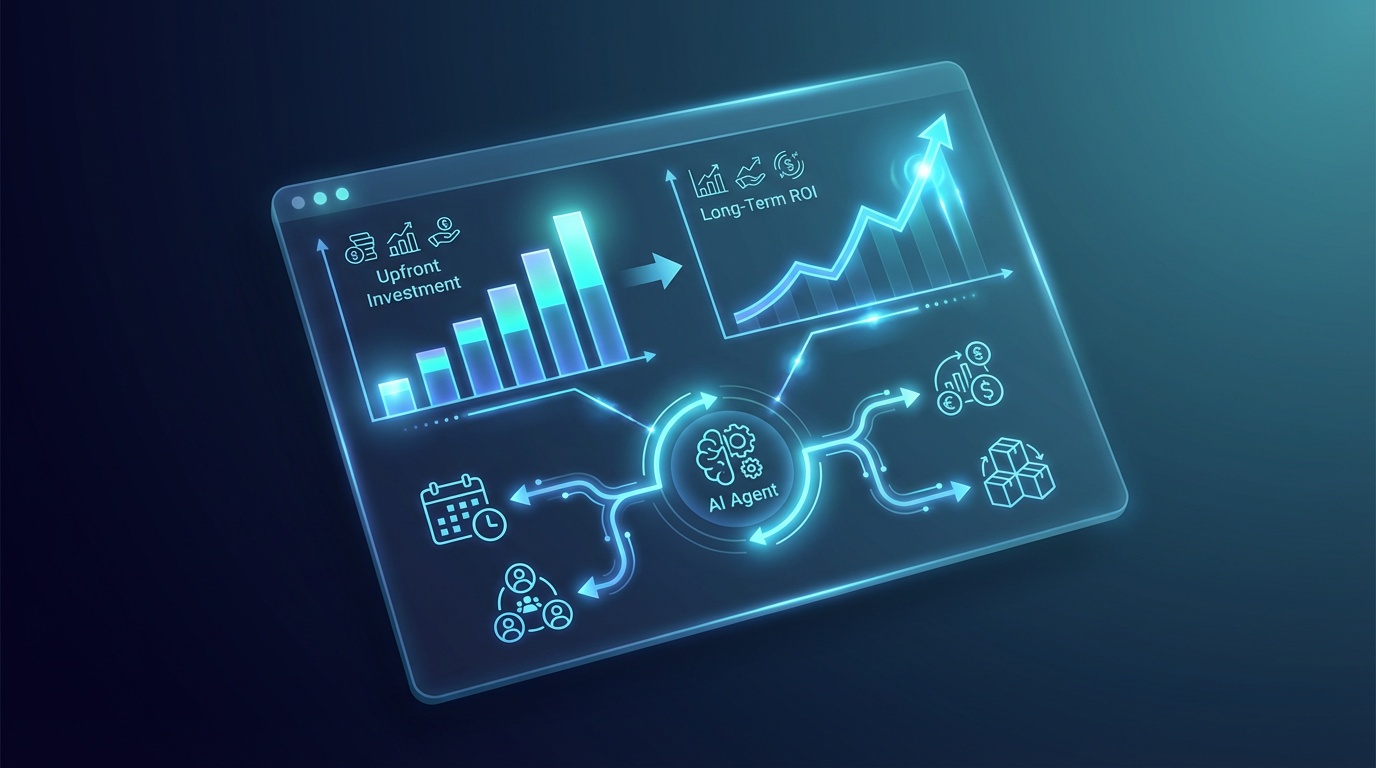
Understanding the financial implications helps you Compare custom AI agents vs off-the-shelf for nightclubs. with clarity. Off-the-shelf solutions look cheaper at $200 to $800 monthly, yet costs add up through per-conversation fees, integration add-ons, and premium support tiers. Custom agents require $15,000 to $50,000 in initial development, but they reduce recurring vendor fees and drive returns through revenue optimization. Explore automation expenses across industries on our AI Automation Services page.
Off-the-Shelf Pricing Models and Hidden Recurring Fees
Most off-the-shelf platforms charge tiered monthly subscriptions that increase with conversation volume. At 5,000 monthly interactions, premium tiers cost $1,500 to $3,000 monthly. Add integration fees for your reservation system ($500 setup plus $200 monthly), advanced analytics ($300 monthly), and priority support ($400 monthly), and annual cost reaches $30,000 with limited customization.
Custom Agent Development Costs and 12-24 Month Payback Periods
Custom development for nightclubs typically costs $25,000 to $40,000, covering workflow mapping, CRM integration, training on guest data, and deployment. Ongoing maintenance runs $500 to $1,200 monthly. With 25% to 40% efficiency gains in reservation handling and 15% to 30% increases in upsell conversion, many nightclubs reach payback within 18 months while building a proprietary asset that improves as it accumulates guest intelligence.
Hospitality Case: Revenue Gains from Reduced No-Shows and Upsells
A 300-capacity nightclub processing 800 weekly reservations saw a 22% no-show rate that cost $180,000 annually in lost revenue. A custom AI agent implemented automated confirmation sequences, personalized reminders with event previews, and easy modification options. No-shows dropped to 8%, recovering $126,000 yearly. The agent also identified upsell opportunities during confirmation conversations, increasing bottle service pre-orders by 28% and adding $95,000 in annual revenue.
Deployment Speed, Integration, and Scalability for Busy Nightclub Schedules
Quick Wins From Off-the-Shelf Deployment vs Custom Build Timelines
Off-the-shelf AI tools deploy in 2 to 4 weeks, giving nightclub operators quick automation for basic guest inquiries and reservation confirmations. This speed appeals to venues that want to test AI without committing to long development cycles. Generic chatbots handle simple questions about hours, dress codes, and table minimums within days of setup.
Custom AI agents typically require 8 to 16 weeks for development, training, and integration testing. That timeline supports deeper mapping of nightclub workflows like dynamic VIP pricing, guest preference tracking, and coordinated communication across door staff, bottle service teams, and management.
Integration With Reservation Systems and CRM Tools
Many off-the-shelf platforms offer prebuilt connectors to hospitality software like OpenTable, Resy, and HubSpot. These connections work for basic reservation management, yet they fall short on nightclub requirements like real-time capacity adjustments tied to fire code limits, VIP recognition across visits, and coordination between reservation confirmations and door-list management.
Custom agents integrate more deeply through API connections tailored to operational needs. A custom solution might pull guest history from a CRM, check current capacity against a POS system, adjust table pricing based on demand rules, and update door lists in the same workflow. Our Vynta AI Agents for Hospitality demonstrate how deep integration drives results.
Scaling for Peak Nights: Handling Volume Without Vendor Lock-In
When you Compare custom AI agents vs off-the-shelf for nightclubs. during peak periods, conversation caps and overage fees become key differences. Off-the-shelf platforms impose limits that trigger overage charges during Friday and Saturday nights, holiday weekends, and special events. A venue processing 400 reservation inquiries on a typical Saturday faces $200 to $500 in monthly overages, eroding the value of a low subscription price.
Lock-in compounds the risk as a venue grows. Migrating conversation history, guest preferences, and workflow logic means rebuilding from scratch.
Custom agents scale without artificial caps because you control the infrastructure. During a New Year’s Eve event generating 1,200 guest interactions in 48 hours, a custom agent handles the surge without added fees while maintaining fast response times.
Pros of Custom Agents
- Scaling during peak nights without overage fees
- Deeper integration with nightclub systems and workflows
- Ownership that reduces vendor dependency
- Tailored logic for VIP management and dynamic pricing
Cons of Custom Agents
- Higher upfront investment
- Longer deployment timeline
- Needs a technical partner for ongoing optimization
Real-World Nightclub Use Cases: Guest Experience and Revenue Impact
Custom AI for Personalized Upsells and Crowd Flow Management
A 750-capacity nightclub in Las Vegas implemented a custom AI agent that analyzes guest behavior patterns from previous visits to deliver personalized bottle service recommendations during reservation confirmations. The system cross-references purchase history, group size, and event type to suggest premium packages at optimal price points, converting 43% of standard table reservations into bottle service upgrades worth an average $380 per transaction.
The same agent monitors real-time capacity data from door scanners and adjusts table availability dynamically, preventing overselling while maximizing floor utilization. During peak hours, the system routes overflow guests to sister venues with available capacity, retaining revenue that might otherwise go to competitors. The agent recognizes VIP guests and triggers priority service alerts to floor managers, including offers tied to house policies.
Off-the-Shelf Examples and When They Fall Short in VIP Service
Generic chatbot platforms handle basic reservation requests, but nightclub operations require more nuanced decision-making. An off-the-shelf tool at a Chicago nightclub confirmed table bookings efficiently, yet it couldn’t differentiate between first-time guests and high-value repeat customers. The platform lacked integration depth to access purchase history or apply dynamic pricing rules, forcing staff to manually review reservations for upsell opportunities.
When the venue hosted a celebrity appearance generating 600 reservation requests in 12 hours, the system’s conversation limit reduced service quality, leaving 140 guests waiting more than two hours for responses. It couldn’t prioritize VIP inquiries or coordinate with door staff on capacity constraints, creating avoidable friction during peak demand.
Vynta AI Hospitality Results: Response Time Improvements and Satisfaction Gains
I lead operations at Vynta AI, where we build custom agents for hospitality clients managing high-volume guest interactions across restaurants, premium bars, and nightlife venues. One boutique nightclub client automated 78% of reservation inquiries, freeing staff to focus on in-person VIP service and event coordination.
The agent integrated with the venue’s CRM and POS systems to support real-time guest recognition, personalized communication based on preferences, and upselling that increased average transaction value by 27%. Guest satisfaction scores improved by 34% within three months because responses stayed consistent across shifts.
When you Compare custom AI agents vs off-the-shelf for nightclubs., the difference is the operational depth: VIP management, dynamic pricing, and workflow handoffs that generic platforms can’t support without workarounds.
Revenue Impact: Nightclubs deploying custom AI agents report 25% to 40% efficiency gains in guest handling capacity, 15% to 30% reductions in no-show rates, and 20% to 35% increases in upsell conversion rates. For mid-sized venues processing 2,000+ monthly reservations, that translates to $80,000 to $150,000 in annual gains, depending on pricing and demand. For further insight into how AI agents are revolutionizing workplaces, read Is Your Workplace Set Up for AI Agents from Harvard Business Review.
Decision Framework: Choose the Right AI Path for Your Nightclub
When Off-the-Shelf Makes Sense for Testing Guest Automation
Off-the-shelf platforms fit nightclubs with under 500 monthly reservations that want to test automation without major capital commitment. Venues in this category have simpler workflows, where basic chatbots answering hours, dress codes, and table minimums deliver immediate value. The lower monthly cost and quick deployment also fit seasonal venues that operate only a few months each year.
Signs You Need Custom Agents for Competitive Edge
Nightclubs processing 800+ weekly reservations, managing VIP programs with tiered service levels, or operating multiple venues with shared guest databases benefit from custom agents. When staff spends more than 20 hours weekly on reservation management, confirmation calls, and upsell outreach, automation produces payback within 18 months.
If you’ve outgrown an off-the-shelf platform’s conversation limits or need integrations with proprietary systems, custom development provides the control and scalability that subscription tools can’t support. When you Compare custom AI agents vs off-the-shelf for nightclubs. focused on premium guest experience, custom solutions shift from a tech expense to an operating asset.
Next Steps With Vynta AI: From Assessment to Implementation
At Vynta AI, we start with an operational assessment: we map guest interaction workflows, identify automation opportunities, and produce ROI projections across reservation management, upsell workflows, and labor reduction. You receive an implementation roadmap with cost ranges and payback timelines tied to your volume and complexity.
Development cycles typically run 10 to 14 weeks, including integration testing with reservation systems, CRMs, and POS tools. Post-deployment support includes performance monitoring, optimization based on conversation data, and ongoing training as operational needs change. The goal is scalable growth without proportional headcount increases.
Check our Customer Success Key Performance Indicators blog post to understand how to measure AI impact effectively. For a comprehensive look at how AI agents are opening a golden era of customer experience, visit How AI Agents Opening Golden Era Customer Experience from BCG.
| Decision Factor | Choose Off-the-Shelf | Choose Custom Agent |
|---|---|---|
| Monthly Reservations | Under 500 | 800+ weekly (3,200+ monthly) |
| Workflow Complexity | Basic inquiry handling | VIP tiers, dynamic pricing, multi-venue operations |
| Budget Availability | $500 to $1,200 monthly subscription | $25,000 to $75,000 upfront investment |
| Timeline Urgency | Automation needed in 2 to 4 weeks | 10 to 14 weeks available for a tailored solution |
| Growth Plans | Testing an automation concept | Scaling operations without adding staff |
Frequently Asked Questions
Why should a nightclub consider a custom AI agent instead of a generic chatbot?
Generic chatbots often struggle with the specific demands of nightlife, providing only basic responses. A custom AI agent, like those we develop at Vynta AI, integrates directly with your unique operations, learning guest preferences and adapting to dynamic pricing. This allows for personalized service and efficient management of complex scenarios.
How do custom AI agents manage complex guest requests during busy nightclub nights?
Custom AI agents are built to scale, maintaining sub-30-second response times even with over 1,000 concurrent conversations. They connect to your CRM, allowing them to handle requests like table splits or last-minute VIP upgrades with full context. This prevents service degradation that off-the-shelf tools often experience under high pressure.
What financial benefits can a nightclub expect from implementing a custom AI agent?
Custom AI agents can significantly reduce no-show rates through automated confirmations and personalized reminders, recovering lost revenue. They also identify upsell opportunities, increasing bottle service pre-orders and table upgrades. Many nightclubs see payback within 18 months through these efficiency gains and revenue optimization.
How quickly can a custom AI agent be deployed and integrated into a nightclub's existing systems?
Custom AI agent development, training, and integration typically take 8 to 16 weeks. This timeline supports deep mapping of your nightclub’s specific workflows, including dynamic VIP pricing and guest preference tracking. While off-the-shelf tools offer quicker basic deployment, custom solutions provide a tailored fit for your operations.
Can a custom AI agent truly personalize the experience for VIP guests at a nightclub?
Absolutely. Custom AI agents integrate with your existing CRM to pull guest history, enabling personalized bottle service recommendations and table upgrades. They can recognize returning VIPs, flag preferred seating, and trigger personalized welcome messages to staff before arrival, ensuring a truly bespoke experience.
What are the typical ongoing costs for custom AI agents compared to off-the-shelf solutions?
After an initial development cost, ongoing maintenance for a custom AI agent usually runs $500 to $1,200 monthly. Off-the-shelf solutions may appear cheaper initially, but their tiered subscriptions, per-conversation fees, and add-ons can quickly accumulate, sometimes reaching $1,500 to $3,000 monthly for premium tiers with limited customization.