
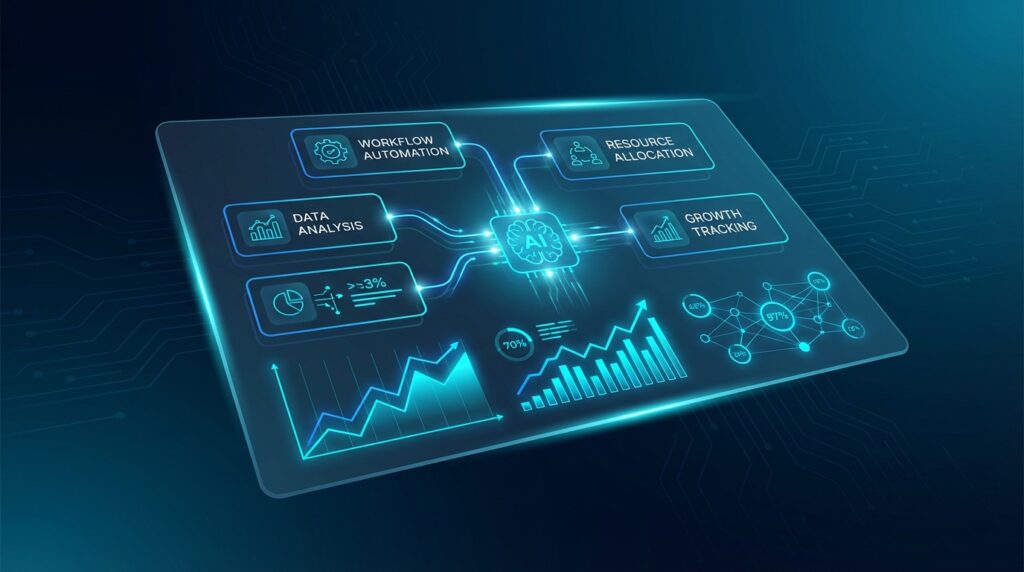
Recommended custom AI for premium hospitality workflows.
Top Custom AI Agents for Hospitality Workflows
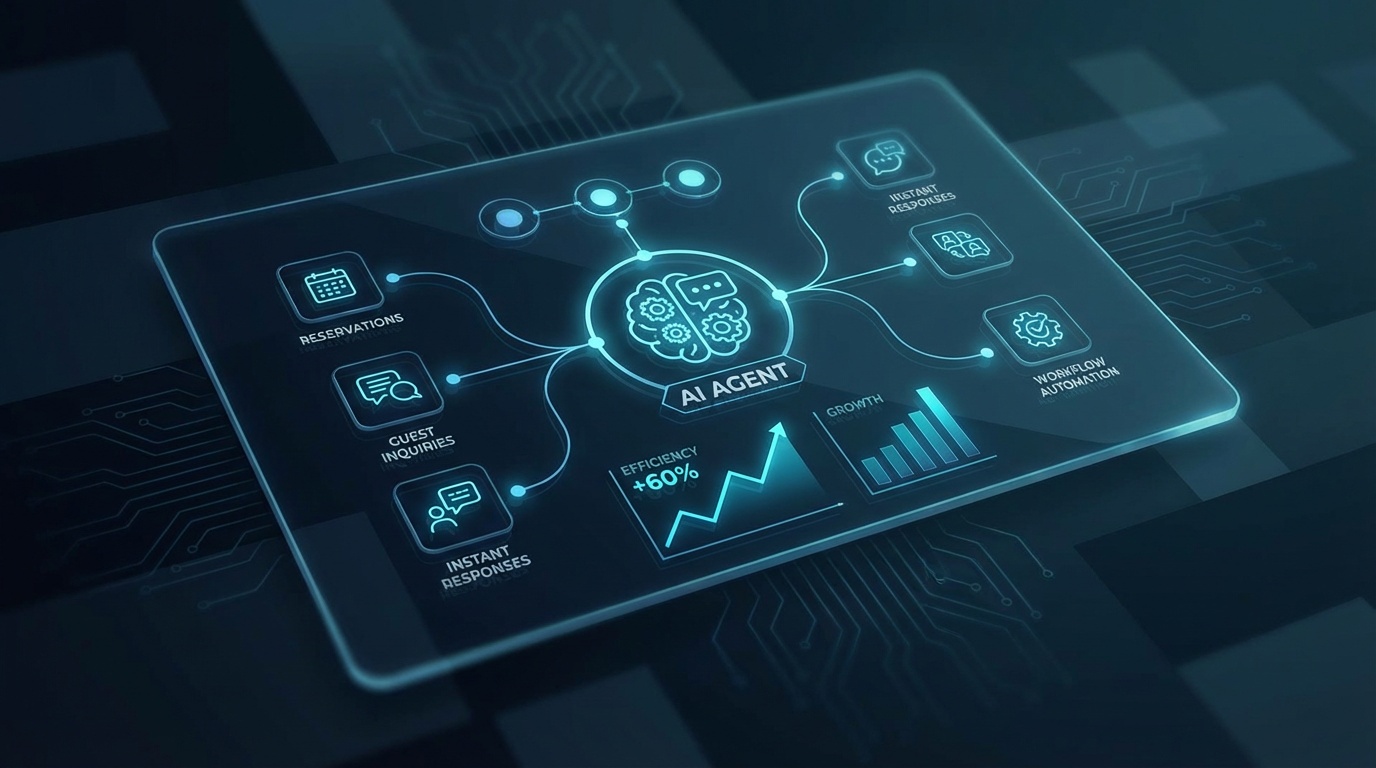
Reservation Management Agent: Never Lose Another Booking to Slow Response
A reservation agent handles the entire booking lifecycle without human intervention: confirmations, smart reminders based on guest behavior, modification requests across all channels. It monitors in real time, using predictive analytics to spot high-risk bookings–guests likely to cancel or no-show–and automatically triggers intervention sequences.
Here’s what that looks like in practice. A guest texts at 2 AM: “Can we move our 7 PM dinner to 8 PM?” The system checks availability, confirms the change, updates your PMS, and sends confirmation–all in under 60 seconds. Your staff gets a notification only if the request is complex or the system detects VIP status requiring personal attention.
This automation recovers 15+ hours weekly that managers previously spent coordinating schedules and chasing confirmations. That time shifts to revenue-generating guest interactions during peak service periods when human attention actually matters.
Guest Experience Agent: Turn Guest History into Revenue
A guest experience agent analyzes every past booking, spend pattern, and stated preference to deliver recommendations that feel personal, not automated. When someone who booked a couples massage last year reserves another room, the system proactively suggests a spa package upgrade–with 20% off sent through their preferred channel.
This isn’t pushy upselling. It’s personalized service at scale. The system recognizes what guests actually want based on demonstrated behavior, then surfaces those opportunities at optimal moments in their journey. Research shows this approach drives incremental revenue without damaging guest relationships.
A VIP who mentioned dietary restrictions during their last visit? Automatic accommodation confirmation for their upcoming reservation, with kitchen staff notified in advance. This continuity creates the white-glove experience premium venues promise, without requiring a dedicated concierge for every returning guest.
Pros
- Automates up to 80% of routine tasks–same productivity gains we deliver across real estate and other verticals
- Fast response times within your defined hours across WhatsApp, SMS, email, and Instagram
- Booking conversion can jump 50% through personalization based on actual guest data
- Maintains your brand voice consistently across every automated interaction
Cons
- Needs an initial workflow audit and 2-4 weeks for customization
- Complex VIP requests still require human escalation
- Performance depends on existing CRM data quality–garbage in, garbage out
Operations Agent: Coordinate Teams Without Micromanagement
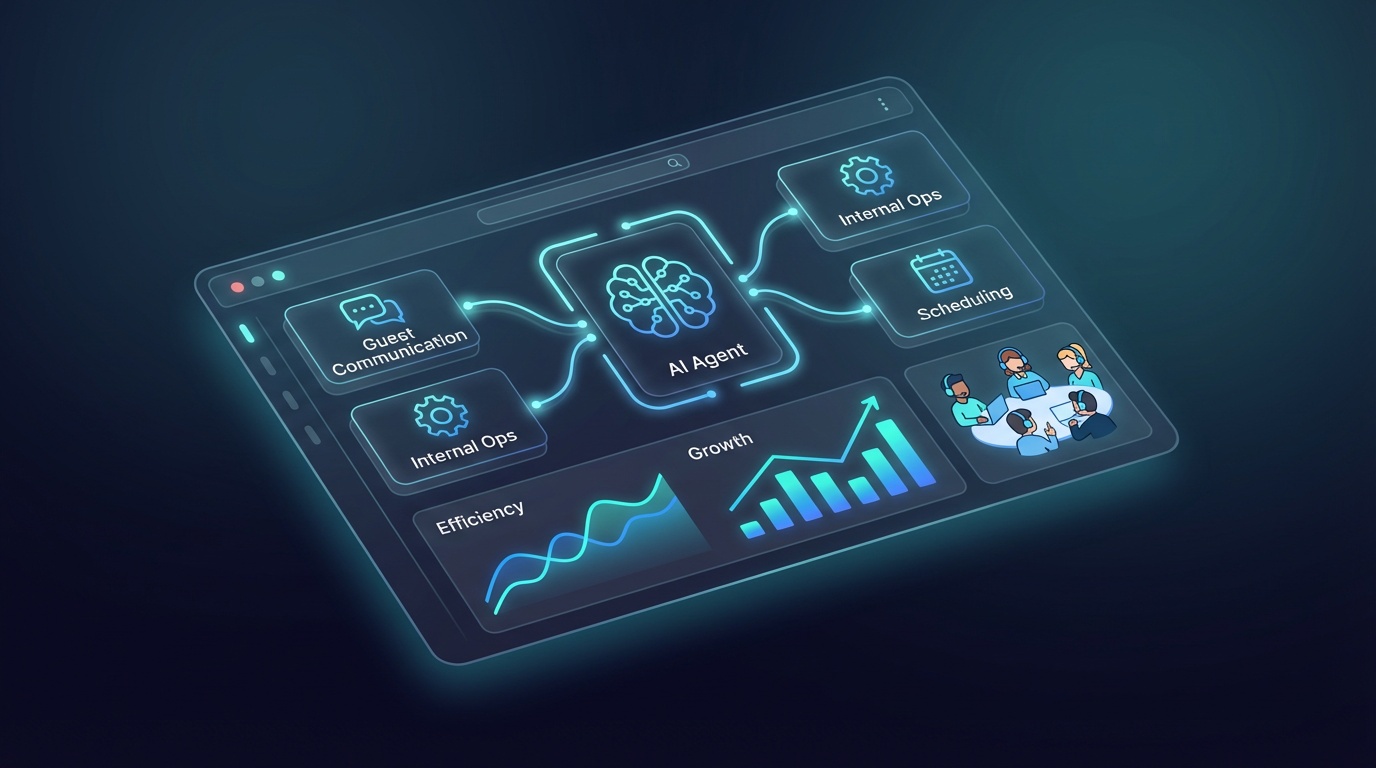
Operations agents handle internal scheduling, staff communication, and task coordination that typically consumes 40% of manager time. The system auto-assigns housekeeping based on checkout schedules, alerts kitchen staff about dietary requirements for incoming reservations, and routes maintenance requests by priority–all without manager oversight.
When a guest reports a room issue through any channel, the agent creates a work order, assigns the right team member, and follows up to confirm resolution. You only see escalations that need your judgment call.
This shifts your capacity toward what actually drives revenue: welcoming high-value guests, building relationships, planning experience improvements. A boutique hotel manager who previously spent mornings coordinating schedules now focuses on guest-facing service during peak periods. Industry research confirms these systems handle complex operational tasks that traditionally required dedicated administrative roles.
Real ROI from Custom AI: Metrics and Case Studies for 2026
How This Translates to Your P&L
Custom AI impacts the metrics that actually matter for profitability. Revenue per available room increases when you convert more inquiries and reduce abandonment. Net Promoter Scores rise because guests get fast, personalized responses regardless of when they reach out. Staff productivity improves when 80% of repetitive administrative work runs automatically–matching gains we’ve delivered across all vertical applications.
Response times drop to under 60 seconds, protecting bookings that would otherwise go to faster competitors. Guest retention improves when personalized follow-up happens automatically after each stay, maintaining relationship continuity without manual CRM management. You’re measuring concrete outcomes: conversion rates, average check size, staff hours recovered, booking abandonment reduction.
Real Numbers: Dubai Beach Club Case
A Dubai beach club managing bottle service and daybed bookings faced a predictable problem: peak season inquiry volume that required hiring temporary staff just to handle reservations. They deployed custom AI agents instead.
The system processed 340+ daily inquiries across WhatsApp and SMS, qualifying guests, confirming bookings, and sending intelligent reminders. The guest experience agent analyzed spending patterns to recommend premium cabana upgrades and bottle packages. Result: the venue maintained service quality through 200% booking volume increases without adding reservation staff. Management redirected those saved hours toward on-site relationship building.
Most telling? The venue saw increased repeat bookings within the first season because the AI freed staff to focus on actual hospitality instead of administrative coordination.
Key Insight: Mid-market venues report 3-4 weeks from initial workflow audit to full deployment. The qualification methodology that drives 85% conversion in real estate applications works identically in hospitality–agents learn venue-specific nuances during training. Academic research validates these cross-vertical applications.
The Competitive Reality for 2026
Early adopters establish service advantages that become difficult for competitors to match without equivalent automation. When you’re responding to inquiries in under 60 seconds with personalized recommendations, you capture bookings from properties still checking email during business hours.
Cost structures shift favorably as you scale. A restaurant group expanding from two to five locations deploys the same AI infrastructure across all properties, maintaining consistent service and centralized guest data without quintupling administrative headcount. This was previously accessible only to enterprise chains with dedicated technology teams–now it’s available to mid-market operators who lack internal AI resources.
Seamless Integration: How Vynta AI Fits Existing Hospitality Systems
CRM and PMS Sync: Real-Time Data Flow
Vynta AI agents connect directly to your property management system and CRM through secure API integrations, eliminating the data silos that plague generic tools. Real-time bidirectional sync means reservation changes made through any channel update instantly everywhere. Guest modifies their booking via WhatsApp? The change reflects immediately in SevenRooms, OpenTable, or your existing PMS without manual data entry.
Guest profiles consolidate automatically, pulling historical data to inform every interaction. The system recognizes returning guests, retrieves preference history, and tailors recommendations accordingly. This prevents the fragmented experience that occurs when reservation systems, marketing platforms, and communication tools operate independently. Integration typically completes within one week for standard hospitality tech stacks.
Multichannel Support: Meet Guests Where They Are
Custom AI operates across WhatsApp Business API, SMS, email, Instagram, and website chat with unified conversation threading. A guest who starts on website chat and continues through WhatsApp experiences perfect continuity–the agent maintains full context across channels.
Intelligent escalation routes high-value guests and complex requests to appropriate staff based on configurable rules. When the system detects VIP status, high booking value, or negative sentiment, it automatically notifies your relationship managers with full conversation context. Your team receives only inquiries requiring human judgment. Routine interactions run independently.
Implementation Timeline: What to Actually Expect
Deployment follows a structured three-phase approach. Week one: workflow audit analyzing current processes, identifying automation opportunities, mapping integration requirements. Week two: agent customization to match brand voice, training on venue-specific scenarios, technical integration with PMS and CRM. Week three: staff training, soft launch with monitoring, dashboard configuration for performance tracking.
Most mid-market venues reach full deployment within four weeks. Measurable KPI improvements appear by week six. The system learns continuously from interactions, refining responses and improving accuracy over the first 90 days. Vynta AI provides dedicated implementation support and ongoing optimization as agents evolve with changing guest expectations.
Getting Started: Steps to Deploy Custom AI and Measure Success
Audit Your Workflows: Find the Quick Wins
Start by documenting where staff spend time on repetitive work: reservation confirmations, modification requests, basic amenity questions. Identify revenue leakage–high inquiry abandonment, missed upsells, slow response times. Quick wins often include reservation automation, after-hours inquiry response, and smart reminder sequences that deliver immediate value with minimal customization.
Customize to Your Brand Voice
Custom AI adapts to your personality–formal luxury hospitality or casual beach club vibe. Provide sample communications showing your tone, terminology, service philosophy. The system learns your approach, maintaining consistency across automated touchpoints. Define escalation triggers based on your standards: which inquiries need human attention, how to prioritize VIP guests, when to route complex requests to specific team members.
Track and Optimize: Set Up Performance Dashboards
Establish baseline metrics before deployment to measure improvement accurately: current response times, inquiry abandonment rates, upsell conversion, staff hours on administrative tasks. Configure dashboards tracking KPIs aligned with your venue type and business goals. Monitor agent performance weekly during the first month, identify conversation patterns needing refinement, spot opportunities to expand automation scope.
The system improves continuously through data-driven optimization. Most venues expand agent responsibilities as confidence grows and measurable results accumulate.
Frequently Asked Questions
What are the key AI trends shaping premium hospitality today?
The primary AI trend in premium hospitality is the move towards custom AI agents. These intelligent systems understand specific industry contexts, like VIP preferences and revenue opportunities, going far beyond generic chatbots. They integrate directly with property management systems to deliver measurable outcomes, such as reducing operational costs and increasing guest spend.
What kind of AI is most effective for optimizing premium hospitality workflows?
Custom AI agents are most effective for optimizing premium hospitality workflows. Unlike off-the-shelf tools, they provide personalized responses based on guest history, integrate in real-time with your systems, and offer intelligent upselling. This allows for tailored solutions that directly address unique operational challenges and revenue opportunities.
Which custom AI agents are recommended for premium hospitality operations?
For premium hospitality, we recommend specialized custom AI agents like the Reservation Management Agent and the Guest Experience Agent. The Reservation Management Agent streamlines booking confirmations and modifications, while the Guest Experience Agent personalizes stays and drives incremental revenue through tailored recommendations. Both are designed to automate routine tasks and free up staff for high-value interactions.
Can you give an example of custom AI in action within premium hospitality?
Absolutely. Imagine a guest texting, “Can we move our 7 PM dinner to 8 PM?” A custom Reservation Management Agent can check availability, confirm the change, and update all platforms in under 60 seconds. Another example is a Guest Experience Agent proactively suggesting a personalized spa package upgrade to a returning guest based on their past preferences, driving additional revenue.
Why do premium venues need custom AI instead of generic tools?
Premium venues require custom AI because generic tools simply miss the specific context of high-end service. Custom agents understand unique operational challenges, like VIP guest preferences and complex reservation nuances, which off-the-shelf chatbots cannot address. They integrate deeply with existing systems to deliver personalized service and optimize revenue opportunities.
How does custom AI improve guest experience and revenue?
Custom AI significantly improves guest experience by delivering personalized recommendations based on past stays and preferences, leading to higher average guest spend. For example, a Guest Experience Agent can suggest relevant upgrades or accommodations, ensuring seamless service across all communication channels. This creates the tailored experience premium guests expect while reducing manual coordination for staff.