
Compare AI agents for restaurant vs bar applications.
Key Differences in AI Agents for Restaurants vs Bars
Restaurant and bar operations look similar from the outside. Inside, they’re completely different animals. Restaurants require patience, precision, and multi-course coordination. Bars demand speed, tab accuracy, and high-volume throughput. Deploying the wrong agent type costs real revenue and damages the guest experience you’ve worked hard to build.
Key Takeaways
- Restaurant and bar operations require AI agents tailored to their unique service models.
- AI solutions for restaurants focus on precision, multi-course coordination, and guest experience.
- Bar AI agents prioritize speed, accurate tab management, and efficient high-volume order processing.
- Deploying the correct AI agent type is essential for protecting revenue and maintaining guest satisfaction.
Restaurant Needs: Handling Complex Menus and Reservations
Restaurant AI agents manage reservation flows, dietary accommodation requests, and multi-item order modifications. They integrate with SevenRooms to reduce no-shows through automated confirmation sequences. The complexity lies in contextual menu knowledge: allergen filtering, tasting menu pacing, and wine pairing suggestions require agents trained on deep product catalogs — not generic hospitality databases.
Bar Needs: Managing High-Volume Orders and Quick Service
Bar environments prioritize fast response times, tab management, and repeat-order recognition. AI agents here handle drink customization at scale, split-tab processing, and last-call upselling without slowing service. Voice agents face ambient noise challenges that restaurant deployments rarely encounter — a distinction that has direct implications for interface selection.
Direct Comparison of Operational Demands and Agent Fit
| Capability | Restaurant AI Agent | Bar AI Agent |
|---|---|---|
| Primary function | Reservations, order management | Tab processing, speed ordering |
| Menu complexity | High (allergens, pairings, courses) | Moderate (drinks, specials) |
| Noise environment | Low to moderate | High (voice agent challenge) |
| Upselling opportunity | Courses, wine, desserts | Premium spirits, bottle service |
| POS integration priority | Reservation sync, table management | Tab splitting, payment speed |
Top AI Agents Compared for Restaurant and Bar Use Cases
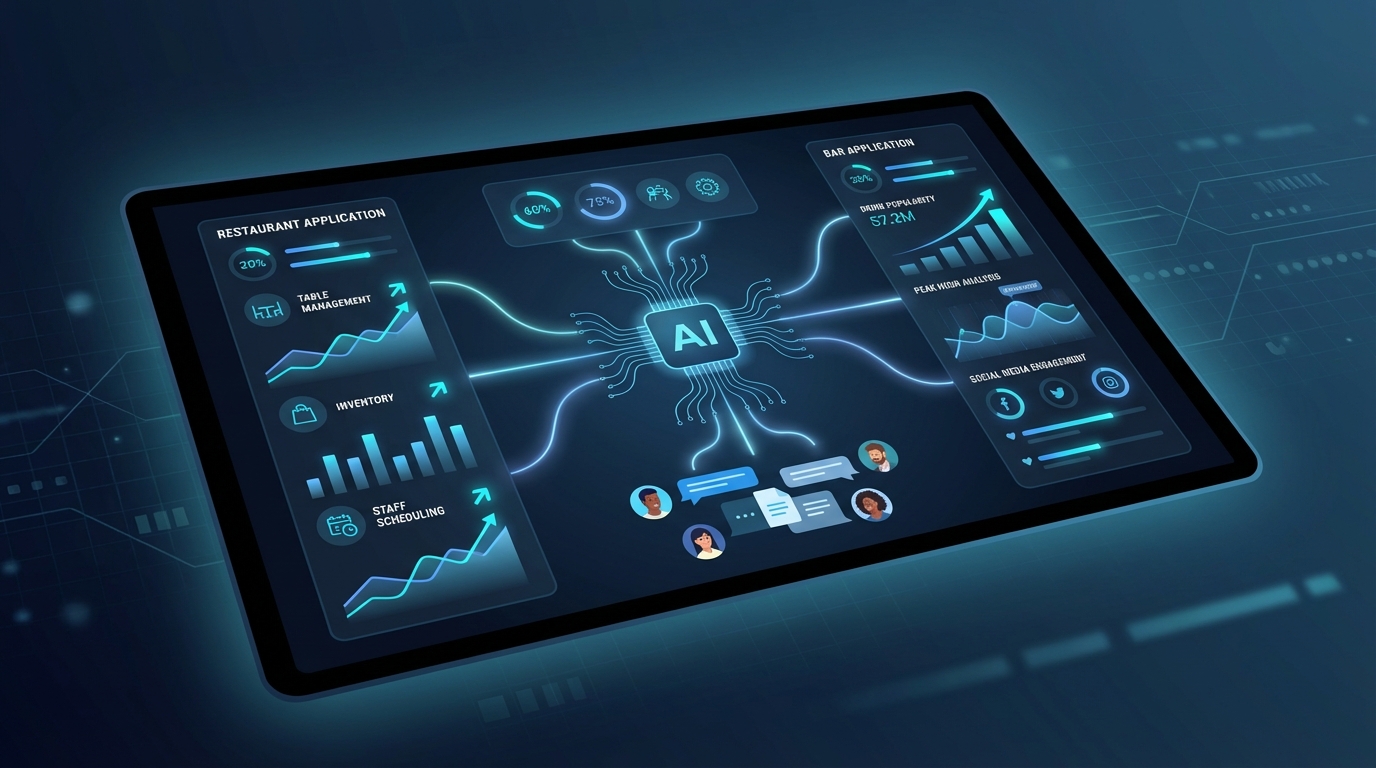
Choosing the right tool requires evaluating vendors against specific operational metrics — not marketing claims. Here’s how the leading options stack up across both venue types.
Leading Agents for Restaurants: Hostie AI, Slang.ai, and PolyAI Breakdown
Slang.ai specializes in phone reservation handling with natural language processing suited to fine dining. PolyAI delivers enterprise-grade conversational agents with strong POS integrations. Hostie AI targets independent restaurants with lighter deployment requirements. Each solves a specific slice of the problem — none of them address the full operational picture without customization.
Leading Agents for Bars: Systems for Speed and Tab Management
Bar-specific deployments often favor text-based ordering tablets over voice agents due to ambient noise. Omnivore and Toast AI modules handle tab management effectively, though neither offers the cross-channel guest recognition that mid-market hospitality operators need as their programs mature.
Vynta AI Agents: Custom Builds for Mid-Market Hospitality ROI
Vynta AI builds custom, industry-specific agents calibrated to your POS, loyalty program, and reservation system. Unlike generic platforms, Vynta AI agents are trained on your actual menu data and guest history. The vertical-specific methodology — purpose-built logic rather than repurposed templates — is the same approach we apply whether we’re building for a fine-dining group or a high-volume cocktail bar.
Hospitality AI Maturity Model for Restaurants and Bars
Stage 1: Basic Automation for Phone and Orders
Automated reservation confirmations and missed-call handling reduce front-desk labor costs by up to 30% with minimal integration complexity. This is where most operators start — and where most generic tools stop. It’s also where you validate that the agent behaves correctly before adding complexity.
Stage 2: Integrated Agents for Upselling and Inventory
Agents cross-reference live inventory with guest order history to trigger real-time upsell prompts. Average guest spend can increase by up to 25% at this stage — but only when upselling logic is tailored to your actual guest profiles, not industry averages. A blanket “would you like to add dessert?” prompt performs far worse than a suggestion grounded in what that guest ordered last visit.
Stage 3: Full Coordination Across Front and Back of House
AI agents communicate pacing signals between front-of-house and kitchen systems, cutting ticket times and reducing table-turn friction simultaneously. This is where the intelligent agent concept delivers its full value: a system that learns, adapts, and coordinates across the whole operation rather than solving one isolated problem.
Vynta AI Path to Stage 3 for Measurable Revenue Gains
Real ROI Metrics and Implementation Without Staff Cuts
Expected Gains: Booking Conversion, Cost Recovery, and Reduced No-Shows
Operators who deploy correctly report booking conversion improvements of up to 50%, operational cost reductions of up to 30%, and meaningful no-show reductions through automated confirmation sequences. Customer inquiry abandonment can also drop by up to 60% with properly deployed agents. The word “properly” is doing a lot of work in that sentence — integration quality determines whether those numbers hold.
Essential Integrations: POS, SevenRooms, Loyalty Systems
Effective deployment requires bidirectional POS sync, reservation platform API access, and loyalty program data feeds. Vynta AI agents integrate in real time with platforms such as SevenRooms, synchronizing guest data, reservations, tags, and updates automatically. Without these connections, agents operate on incomplete guest context and consistently underperform regardless of how well they’re configured.
Step-by-Step Rollout: Start Small, Scale With Human Oversight
Begin with phone answering and reservation confirmation. Add upselling logic in week three. Introduce inventory-linked prompts in week six. Human staff review agent interactions weekly during the first 90 days. Clients can view, pause, and take over live conversations through the dashboard at any point — and strict escalation rules ensure VIP guests and complex queries are always routed to human staff. Don’t skip this sequence. Operators who activate all features at once before agents are calibrated to real guest behavior compound errors that take months to unwind.
Vynta AI Case Studies in Upselling and Guest Retention
Vynta AI Hospitality Outcomes
- Boutique hotel upselling revenue increased 31% within 90 days
- Restaurant no-show rate reduced from 18% to 9%
- Guest satisfaction scores improved by 22 points post-deployment
- Zero staff reductions across all case study properties
Integration Requirements That Determine Deployment Success
POS, Reservation, and Loyalty System Connections
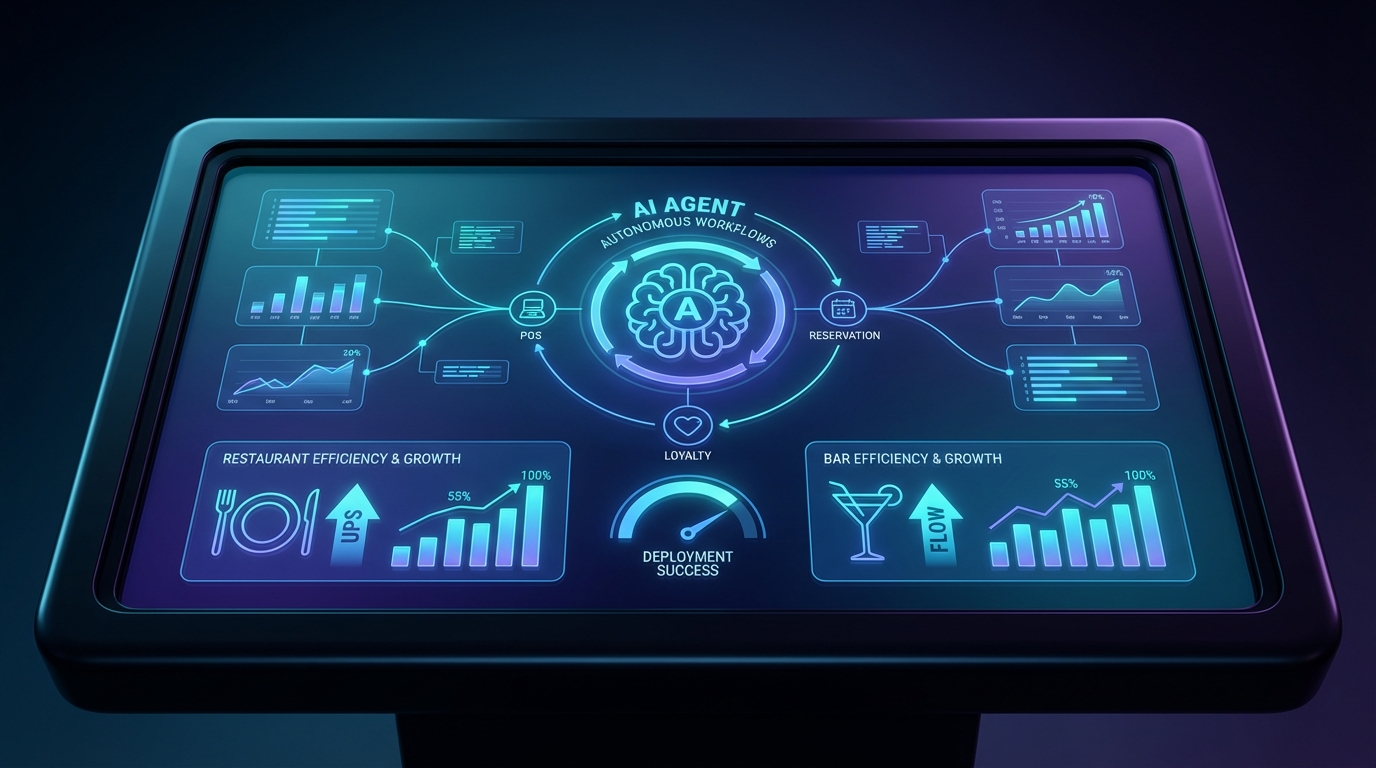
AI agents without bidirectional POS sync operate on stale data. For restaurants, this creates upsell prompts disconnected from actual inventory and reservation confirmations that conflict with live table availability. For bars, incomplete POS access breaks tab management entirely.
SevenRooms API access is a priority for most restaurant deployments. Toast and Omnivore integrations fit bar environments more effectively. Loyalty program data feeds complete the picture — agents with access to guest history convert at measurably higher rates because personalization is grounded in actual behavior, not assumptions about what guests in your category typically want.
| Integration | Restaurant Priority | Bar Priority |
|---|---|---|
| POS sync | Table management, order flow | Tab splitting, payment speed |
| Reservation platform | SevenRooms | Minimal requirement |
| Loyalty data | Guest preferences, visit history | Repeat order recognition |
| Inventory feed | Menu availability, specials | Drink stock, bottle service |
Verdict: Matching AI Agents to Your Specific Operation
After reviewing operational demands, vendor options, and integration requirements, the decision framework becomes clear: deployment success depends on specificity, not sophistication. The most advanced agent on the market fails if it’s misconfigured for your environment.
Restaurants: Prioritize Contextual Precision
Restaurant operators need agents trained on deep menu catalogs, reservation logic, and guest preference data. Generic conversational platforms underperform because they lack the contextual depth required for allergen handling, pacing coordination, and multi-course upselling. The right agent reduces no-shows, increases average guest spend, and frees front-of-house staff for relationship-building rather than administrative tasks.
Bars: Prioritize Speed and Noise Resilience
Bar environments often require text-based or tablet-first interfaces rather than voice agents. Tab accuracy and fast response times outweigh conversational sophistication. Operators who force voice-first deployments into high-noise bar settings consistently report lower adoption and higher error rates. Match the interface to the environment before evaluating any other feature — this single decision determines more about deployment success than any vendor comparison.
Vynta AI: Built for Both Without Compromise
Vynta AI’s vertical-specific methodology eliminates the trade-off between restaurant depth and bar speed. Agents are calibrated to your actual POS data, menu catalog, and guest history — not generic hospitality templates. They’re fully customizable to brand tone, business rules, and content controls, and operate only during hours the client sets. Revenue gains are measurable before the next deployment phase begins. No staff reductions are required at any stage. VIP guests always receive human care through configurable escalation rules.
What Changes in the Next 18 Months
Multimodal agents combining voice, text, and visual menu recognition will reduce the noise-environment gap that currently disadvantages bar voice deployments. Operators who build clean POS and loyalty data integrations now will activate these capabilities faster than competitors starting from scratch. The infrastructure investment made today determines how quickly you benefit from next-generation agent capabilities. For recent advances in these technologies, see the latest research on AI agent development here.
Frequently Asked Questions
What is the best AI answering service for restaurants?
The “best” AI answering service for restaurants depends on your specific operational requirements. Solutions like Slang.ai specialize in phone reservation handling, while PolyAI offers enterprise-grade conversational agents with strong POS integrations. For bespoke solutions that integrate deeply with your existing systems and menu data, Vynta AI agents are designed for luxury hospitality venues.
Which AI agent offers the highest accuracy for hospitality?
The accuracy of an AI agent comes from its training and deep integration with your specific operational data. Generic platforms may offer broad capabilities, but agents trained on your actual menu, guest history, and business rules will deliver the highest precision. Vynta AI agents are custom-built and calibrated to your POS, loyalty program, and reservation system for optimal performance and context.
Can AI agents replace human bartenders in a bar setting?
AI agents in bars are designed to automate high-volume tasks like order processing, tab management, and drink customization, significantly improving service speed. They assist bar staff by handling routine inquiries and transactions, allowing bartenders to focus on guest experience and crafting drinks. Our approach at Vynta AI is to empower staff, not replace them, by streamlining operational demands.
What are some leading AI agents for restaurant and bar applications?
For restaurants, Slang.ai and PolyAI are recognized for reservation handling and conversational agents. In bar environments, solutions like Omnivore and Toast AI modules address tab management effectively. At Vynta AI, we focus on custom-building agents that precisely fit your operation, integrating with your unique systems to deliver measurable outcomes.
How do AI agents for restaurants differ from those for bars?
AI agents for restaurants prioritize managing complex menus, reservations, and dietary requests, often integrating with systems like SevenRooms. Bar AI agents focus on speed, high-volume order processing, tab accuracy, and handling ambient noise challenges. Understanding these distinct operational demands is key to deploying the correct AI agent type for your venue.