

Cheapest autonomous agents for properties?
For mid-market businesses, especially in real estate, the quest for operational efficiency often leads to exploring advanced technologies. Artificial intelligence, specifically in the form of autonomous agents, promises to revolutionize how properties are managed, marketed, and sold. But, the initial investment and perceived complexity can be a significant barrier. Many business owners and operators are actively searching for solutions that offer tangible benefits without an exorbitant price tag. The question isn’t just about adopting AI, but about finding the most cost-effective, yet powerful, autonomous agents that deliver measurable results.
Key Takeaways
- Affordable autonomous agents for property management can deliver measurable ROI without requiring a massive upfront investment.
- Mid-market real estate firms can now access AI tools that automate marketing, sales, and operations at a fraction of the cost of enterprise solutions.
- The key is to identify agents that focus on specific high-impact tasks like lead qualification or property listing updates to maximize value.
- Cost-effective autonomous agents often use modular pricing, allowing businesses to pay only for the features they actually use.
- Business owners should prioritize agents that integrate smoothly with existing property management systems to avoid hidden implementation costs.
This guide aims to cut through the noise, focusing on practical applications and genuine value for property management and real estate professionals. We’ll explore what these agents are, the specific advantages they bring to your operations, and how to discern the truly valuable solutions from those that promise more than they deliver. Our focus remains squarely on empowering your business with AI that drives revenue and optimizes processes, ensuring you make informed decisions about your technology investments.
What are Autonomous Agents for Properties?
Autonomous agents for properties represent a sophisticated evolution in AI technology, designed to perform specific tasks within the real estate sector with minimal human intervention. Unlike basic automation tools, these agents possess a degree of intelligence, allowing them to understand context, make decisions, and execute complex workflows. As an example, in lead generation, an autonomous agent can continuously monitor various channels, qualify incoming inquiries based on predefined criteria, and even initiate personalized follow-up communications. This capability is a significant step beyond simple chatbots, offering a more proactive and intelligent approach to managing client interactions and operational tasks.
The core function of these AI agents is to automate repetitive, time-consuming, or data-intensive operations. This can range from managing property listings, scheduling viewings, responding to tenant inquiries, and even assisting with initial stages of property valuation or market analysis. A key distinction is their agentic nature: they can act on behalf of a user or business to achieve specific goals. For a real estate agency owner, this means freeing up valuable human capital to focus on high-value client relationships and strategic decision-making, rather than getting bogged down in administrative duties. The search for cost-effective autonomous agents for properties often involves balancing this advanced functionality with affordability, ensuring small to medium-sized businesses can access these powerful tools.
When considering the most affordable autonomous agents for properties, it’s important to define what constitutes “cheap.” True cost-effectiveness isn’t solely about the lowest monthly subscription fee. It’s about the return on investment (ROI) generated by the agent’s performance. For example, an agent that can effectively handle 200-400 buyer leads per month, as a solo agent might typically manage, can significantly boost conversion rates and sales volume. The cost of such an agent should be weighed against its potential to increase revenue and reduce operational overhead. Some platforms, like Vapi, offer base rates that appear low, but their add-ons can substantially increase the overall expense, a factor important for budget-conscious businesses analyzing their total cost of ownership.
Key Benefits of AI Agents in Real Estate
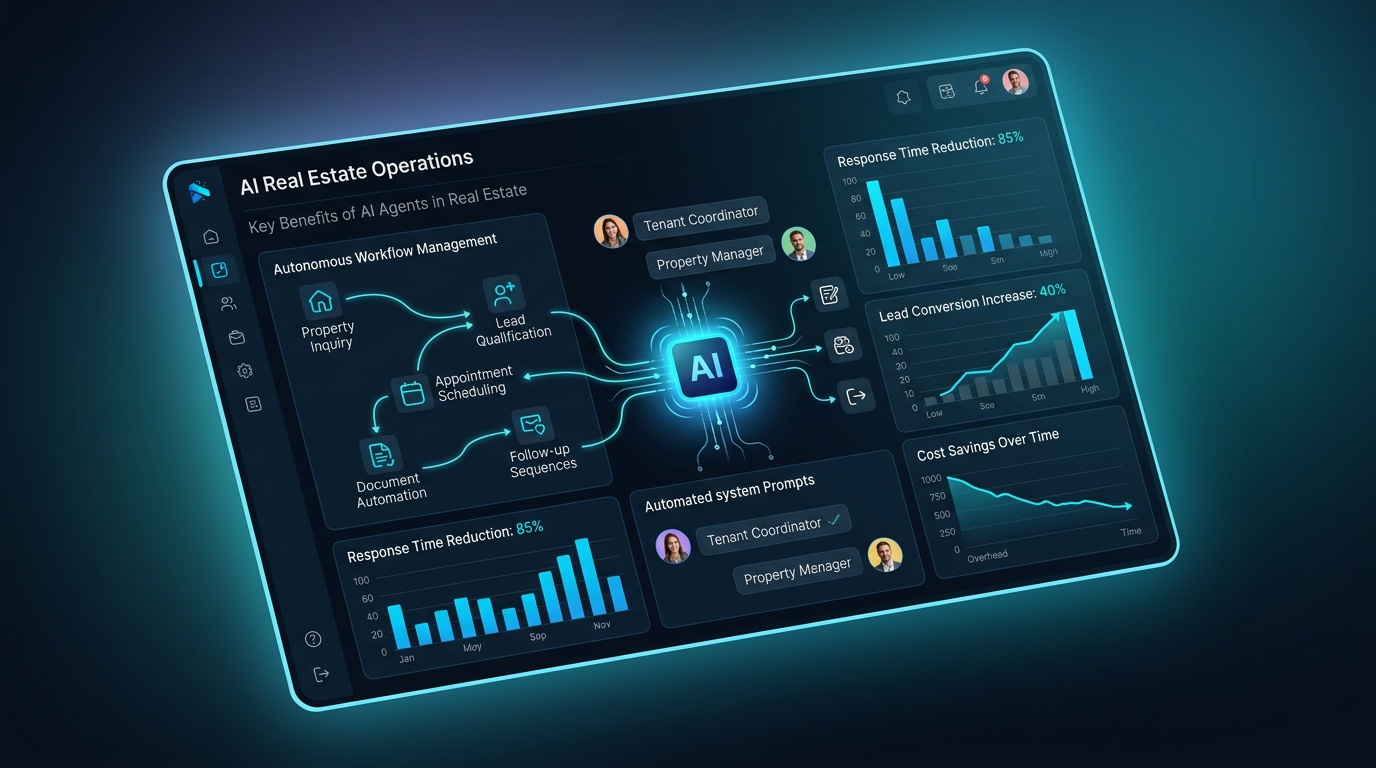
The adoption of AI agents offers a transformative shift in operational efficiency for real estate businesses. One of the most significant advantages is the automation of lead qualification and initial client engagement. A solo agent typically handles 200-400 buyer leads per month, a volume that can be overwhelming without support. AI agents can instantly screen these leads, identify serious prospects based on detailed criteria, and initiate personalized communication, ensuring no potential client falls through the cracks. This immediate responsiveness is important, as studies indicate a significant portion of recent home buyers, particularly Millennials and Gen Z, might look elsewhere if they perceive a heavy reliance on AI without a human touch, yet they still expect swift interaction. Thus, AI agents serve to augment human capabilities, not replace them entirely, by handling the initial, high-volume filtering.
Beyond lead management, AI agents contribute to substantial cost savings and revenue growth. As an example, by automating tasks like scheduling viewings, answering frequently asked questions about properties, and providing instant updates, operational costs can be reduced. While specific figures vary, businesses can see reductions in administrative overhead by automating these repetitive processes. Additionally, intelligent upselling capabilities, tailored to guest profiles and channel specifics, can increase average guest spend by up to 25% in hospitality contexts, a principle that can be adapted to real estate for services or premium listings. The search for cost-effective autonomous agents for properties should focus on solutions that demonstrate clear ROI through direct cost reduction and revenue enhancement, rather than just feature lists.
Another important benefit is the improvement of customer experience through consistent, personalized, and timely communication. Modern buyers expect instant gratification and tailored interactions. AI agents can provide this by responding within minutes, offering information relevant to a prospect’s specific inquiry, and maintaining brand tone across all communications. For example, AI agents can support multilingual capabilities and channel-specific personalization, tailoring responses appropriately across platforms like WhatsApp, SMS, and email. This level of service, delivered consistently, builds trust and rapport. While some buyers may express caution about AI, providing prompt, accurate, and helpful initial interactions can significantly improve their perception, especially when complex or high-value queries are escalated to human agents. This strategic deployment ensures that while AI handles efficiency, human expertise remains accessible for important client relationships.
The affordability aspect is also a key driver for adoption. While enterprise-grade AI solutions can be prohibitively expensive, the market is evolving to offer more accessible options. Technologies like Gemini 3.5 Flash represent mid-tier models that offer performance comparable to older flagship models at a fraction of the cost, indicating a trend towards more economical yet powerful AI. This democratization of AI means that finding cost-effective autonomous agents for properties is increasingly feasible for mid-market SMEs. For example, the Porta da Frente Christie’s success, reportedly generating $100 million in sales with AI agent assistance, highlights the potential for significant financial returns. When evaluating cost-effective autonomous agents for properties, it’s essential to look for transparent pricing structures that avoid hidden fees and offer scalable solutions adaptable to a business’s growth trajectory, ensuring the technology investment aligns with tangible business outcomes.
How to Choose Cost-Effective Autonomous Agents for Properties?
Selecting the right autonomous agent is a strategic decision, especially when budget is a primary consideration. The term “cost-effective autonomous agents for properties?” often implies a need for value without sacrificing essential functionality. Many solutions appear affordable upfront, but hidden fees for features like advanced integrations, higher query volumes, or premium support can quickly escalate costs. For example, Vapi’s base rate of $0.05 per minute can triple with add-ons, a critical detail for budget-conscious buyers. When evaluating options, transparency in pricing is paramount. Look for vendors who clearly outline all potential charges, including per-interaction costs, monthly retainers, and any setup fees. A clear understanding of the total cost of ownership will prevent surprises and ensure the chosen solution aligns with your financial projections, helping you identify truly cost-effective autonomous agents for properties.
Beyond the sticker price, a thorough evaluation of features and capabilities is essential to ensure the agent delivers genuine value. Consider the specific tasks you aim to automate. Are you primarily focused on lead qualification and initial outreach, or do you need an agent to manage scheduling, answer complex FAQs, or even assist with market analysis? The ability to handle a high volume of leads is a common requirement; a solo agent often manages 200-400 buyer leads monthly, and an AI agent should be equipped to support or exceed this capacity without performance degradation. Look for agents that can be customized to your specific business rules, brand voice, and operational hours. For example, while some AI models like Gemini 3.5 Flash offer cost-effective performance, their integration into a complete solution requires careful consideration of the platform’s adaptability to your unique workflow.
The return on investment (ROI) should be the primary metric driving your decision. An inexpensive agent that fails to generate leads, improve conversion rates, or save your team time is more costly than a slightly higher-priced solution that demonstrably boosts revenue or cuts operational costs. Real-world successes, such as Porta da Frente Christie’s reportedly generating $100 million in sales with AI agent assistance, underscore the potential financial impact. When assessing value, consider the agent’s capacity for lead nurturing and conversion. An agent that can intelligently segment leads, offer personalized follow-ups, and guide prospects through the initial stages of the buying process can significantly increase sales, justifying its cost. Analyzing potential ROI through projected lead conversion improvements and time savings offers a more accurate picture of long-term affordability than focusing solely on monthly fees.
Customer experience and trust are also important factors, particularly in real estate where personal relationships are key. While AI offers efficiency, it must complement, not alienate, your clients. A Cloudvirga 2024 survey indicated that 60% of recent home buyers might look elsewhere if they knew a lender heavily relied on AI. This highlights the need for AI agents that offer a human-like interaction and clear escalation paths. Ensure the agent can maintain your brand’s tone and provide responses that feel natural, not robotic. Importantly, the system should be designed to route complex queries or high-value prospects to human agents smoothly. For example, Vynta AI Agents for Hospitality are designed with strict escalation rules for VIPs or complex queries to be routed to human staff, ensuring a balance between automation and personalized human care. This human-centered approach builds trust and ensures that even the most budget-friendly options contribute positively to client relationships.
Finally, consider the vendor’s support and the platform’s scalability. As your business grows or your AI needs evolve, you’ll want a solution that can adapt. Look for providers offering reliable customer support, regular updates, and clear documentation. The ability to integrate with your existing CRM or other business tools is also important for a cohesive workflow. While searching for cost-effective autonomous agents for properties, prioritize solutions that offer a clear path for growth and a commitment to ongoing improvement. A provider that understands the nuances of the real estate vertical and can offer strategic advice alongside their technology will be a more valuable partner in the long run. Evaluating these factors holistically. Cost, features, ROI potential, customer experience, and vendor support. Will guide you toward the most effective and affordable autonomous agents for your property business.
References
Frequently Asked Questions
When exploring the topic of cost-effective autonomous agents for properties, several questions frequently arise among real estate professionals and property managers. Addressing these inquiries provides clarity on what to expect from these AI solutions and how to navigate their adoption effectively.
What factors influence the cost of autonomous agents for property management?
Pricing depends on multiple elements including the agent’s complexity, volume of interactions handled, integration capabilities, and additional features such as multilingual support or personalized communication. For example, some platforms offer low base rates but charge extra for add-ons, which can triple the initial cost. Transparent pricing models that clearly state all fees, including per-minute usage or per-interaction charges, help avoid unexpected expenses. Evaluating total cost of ownership against expected operational savings and revenue gains is important when weighing affordability.
Are there free or low-cost autonomous agents suitable for small real estate teams?
While some basic AI tools provide free tiers or trial periods, fully autonomous agents with advanced functions often require paid subscriptions to deliver meaningful results. No-code builders allow businesses to create custom AI workflows at lower costs but may lack the sophistication or industry-specific optimizations found in specialized platforms. Small teams should prioritize solutions that balance cost with essential capabilities like lead qualification, client communication, and CRM integration to maximize ROI.
How do autonomous agents impact client trust and experience in real estate?
Client trust is sensitive to AI involvement. According to a Cloudvirga survey, around 60% of recent home buyers might reconsider lenders heavily reliant on AI. Autonomous agents must so provide human-like interactions, natural response timings, and clear escalation paths to human agents for complex queries. Maintaining brand tone and delivering tailored, timely communication builds rapport. Solutions like Vynta AI Agents for Hospitality demonstrate how strict escalation rules and personalized messaging sustain client confidence alongside efficiency.
Can autonomous agents integrate with existing real estate CRMs and workflows?
Integration capability is a key consideration. Effective AI agents synchronize with CRMs to update lead statuses, manage bookings, and maintain contact histories automatically. This reduces manual data entry and ensures consistency across platforms. Vendors offering real-time integration and customizable workflows enable smooth adoption without disrupting established business processes, important for preserving operational continuity and maximizing the agent’s value.
What should I expect regarding scalability and vendor support?
Scalability ensures the AI solution grows with your business needs. Look for agents that can handle increasing lead volumes and expand functionality without significant cost hikes. Reliable vendor support, including onboarding assistance, troubleshooting, and regular updates, is important for sustained performance. Providers familiar with real estate-specific challenges and committed to ongoing development offer strategic partnerships rather than just technology vendors.
Why choose Vynta AI Agents for Hospitality in a property management context?
Vynta AI Agents for Hospitality provide a tailored AI solution with demonstrated results in guest interaction automation, which can be adapted to property management communications. They offer natural, human-like response timing, multilingual support, and strict escalation protocols to ensure VIP or complex inquiries receive human attention. This human-centered design balances cost-effectiveness with client satisfaction, reducing operational overhead while maintaining a premium service level. Their integration with CRM systems and ability to customize brand tone make them a recommended choice for businesses seeking affordable yet sophisticated autonomous agents.
Key Insight: When evaluating cost-effective autonomous agents for properties, focus on transparent pricing, essential feature sets aligned with your business goals, scalability, and the ability to maintain strong human-AI collaboration. Solutions like Vynta AI Agents for Hospitality exemplify how strategic AI deployment can reduce costs by up to 30% while preserving excellent client experiences.